

E-Financial
How Quickteller Uses Technology to Create World of Possibilities

Technology has changed the world and our individual lives in a virtually countless list of ways. Despite this, it is still common for people to bemoan these achievements.
Things previously deemed impossible are today made possible by technology, imagine making purchases from location you haven’t visited from the comfort of your home through smartphone and get it delivered to your doorstep.
Today, countless number of Nigerians hardly visits their bank but make safe and secured transactions from the comfort of their sitting room.
These among other convenient lifestyles are what Quickteller provides for Nigerians as long as they register with Quickteller platform.
Since launching as digital financial services provider, Quickteller has continually pioneered innovation in making payment seamless.
In this vein, the company recently launched a new campaign showcasing how Quickteller can assist subscribers create big ideas as well as world of possibilities.
Quickteller financial service application allows you purchase airtime, pay bills, send and receive money via the web or mobile App.
More so, most people use Quickteller for basic payments but don’t know the breadth of other services and payments solution that are possible on Quickteller.
You can make payments, pay toll fees and state government payments. You can buy airtime, send money and book flight tickets. Pay cable TV bills, to electricity bills, to shopping from over 100 global stores, take a quick loan, buy event tickets and everything in between. In fact: EVERYTHING IS POSSIBLE with Quickteller.
The new Quickteller television commercial demonstrates the ubiquitous nature of the Quickteller platform.

The commercials are in two versions: ‘The Big Idea’ and ‘Possibility’. Both versions are in furtherance of the previous Quickteller campaign – “One less thing to worry about” – and reiterate the ease and universality of the Quickteller platform. The commercials deploy the use of humour and creativity to subtly drive in the point that on Quickteller, a user can pay for almost anything they can imagine.
Both commercials are a body of great creative thinking and drive home the overarching message that everything is possible on the Quickteller platform. The commercials both depict the importance of a platform that makes payment possible irrespective of person, location and needs. Quickteller enables everyone to make transactions on the go, with a few clicks.
However, for organisations to receive payments from subscribers or members they need to sign on to Quickteller. For instance, a church that signs on to Quickteller can receive payments such as tithe, offering among others from her members. Same goes for educational institutions, Real estate, among others.
The convenience offered by Quickteller as a payment platform is demonstrated in the ‘Everything is Possible’ TVC.
The ‘Big Idea’ commercial concept is to observe a humorous meeting at which a group of popular comedians or social media acts, enact a sort of ‘pitch discussion’ where they present a series of ‘big’ ideas to show people how it’s possible to do absolutely everything using Quickteller. The notion is that they are trying to outdo each other through the scale of their imaginations.
In fact, Quickteller can help you pay for almost anything you can imagine. The humour comes from the craziness of their ideas.
This commercial features well known and loved celebrities like Bovi (a leading Comedian), Ini Dima Okojie (well respected Nollywood actress) and Eric Omondi (a Comedian based in Kenya, who is one of the best Comedians in Africa).
On the other hand, the concept for the “Possibility” commercial is to show one, single, unbroken shot of a man doing a fairly impressive trick; that slowly pulls back to reveal – as the frame gets wider and wider – that the man is actually performing, what appears to be, a near-impossible stunt.
It illustrates the compelling point that Quickteller makes almost anything possible!
This TVC is a natural flow from the last ‘Contortionist’ TVC where a skilled Contortionist was able to demonstrate how easy and convenient it is to use Quickteller. It is a visual metaphor for everyday payments made easy by Quickteller.
There is no barrier to the use of Quickteller payment platform anytime anywhere.
Olawale Akanbi, Group Head, Quickteller Marketing, highlighted the importance of transacting on a platform that provides a vast number of services in the digital payment space.
He said: “It’s amazing to know that you can pay for almost anything on Quickteller. At Quickteller, we are committed to making all payments possible on our platform. This is why we are continuously expanding the services available on Quickteller. From just a platform where you could transfer money, customers can now perform more transactions that speak to their lifestyle, businesses, passion and even their careers”.
According to Akanbi, “This campaign illustrates the compelling point that Quickteller makes almost anything possible. Both versions of the campaign are a natural flow from the previous campaign and consistent with our messaging that payments are easier and most convenient on the Quickteller platform. It is simply a visual metaphor for everyday payments made easy by Quickteller”.
These new TVCs are really quirky, and we believe that it creates a truly fresh and funny spot that, while highly entertaining, is actually saying a lot about the practical benefits of Quickteller.



Central Bank of Nigeria (CBN) has said that the cost of issuing or replacing a standard debit or credit card will rise by 50 percent to about N1,500, up from about N1,000.

The new charge is contained in the Exposure Draft of the Guide to Charges by Banks and Other Financial Institutions in Nigeria, 2026, released by the Central Bank of Nigeria.
The draft followed a circular issued to banks, other financial institutions and the public, dated April 21, 2026, and signed by Rita I. Sike, director, Financial Policy and Regulation Department.
Under the revised guide, issuance and replacement of regular or basic debit and credit cards will attract a N1,500 fee, while charges for premium debit, credit or hybrid cards will be negotiable.
In the 2020 guide, debit card charges were fixed at N1,000 as a one-off fee for issuance, replacement of lost or damaged cards, and renewal upon expiry, applicable across all card types.
The CBN said the review is part of its mandate to promote a safe and sound financial system, accelerate the adoption of innovative financial services, and enhance financial inclusion, particularly in micropayments and transactions.
According to the regulator, the revised guide expands the range of financial services, encourages innovation, strengthens oversight and accountability, and promotes financial inclusion through lower tariffs for micropayments. It also updates certain banking charges to support increased use of electronic channels and accommodate new industry participants since the 2020 version.
The apex bank said the draft has been exposed to the public for comments and input on the proposed fees, with submissions expected via [email protected] on or before May 08, 2026.
The guide provides a framework for the application of charges, including fees and rates, on products and services offered by financial institutions in Nigeria. It applies to all institutions licensed or regulated by the Central Bank of Nigeria.
The charges, according to the regulator, were developed following extensive consultations with stakeholders and are aimed at enhancing flexibility, standardisation, transparency and competition in the financial system.
It added that where charges are designated as negotiable, financial institutions must inform customers of their right to negotiate at the start of transactions and reach mutual agreement on applicable fees through verifiable means.
Where limits are specified, charges must not exceed the prescribed maximum or fall below the minimum.
The apex bank noted that the guide is not exhaustive and that financial institutions must seek prior approval before introducing new products, services or charges not covered.
The framework applies to a wide range of institutions, including commercial banks, merchant banks, payment service banks, non-interest banks, microfinance banks, finance companies, primary mortgage banks, development finance institutions, credit guarantee companies, mobile money operators, and other institutions designated by the regulator.
In line with existing consumer protection regulations, the apex bank said non-credit charges can only be applied to the extent of the available account balance, with any outstanding fees deferred until the account is funded. Such deferred charges will not attract interest.
The guide is to be read alongside the relevant guidance notes and glossary provisions and will supersede the 2020 version when it takes effect on May 1, 2026.
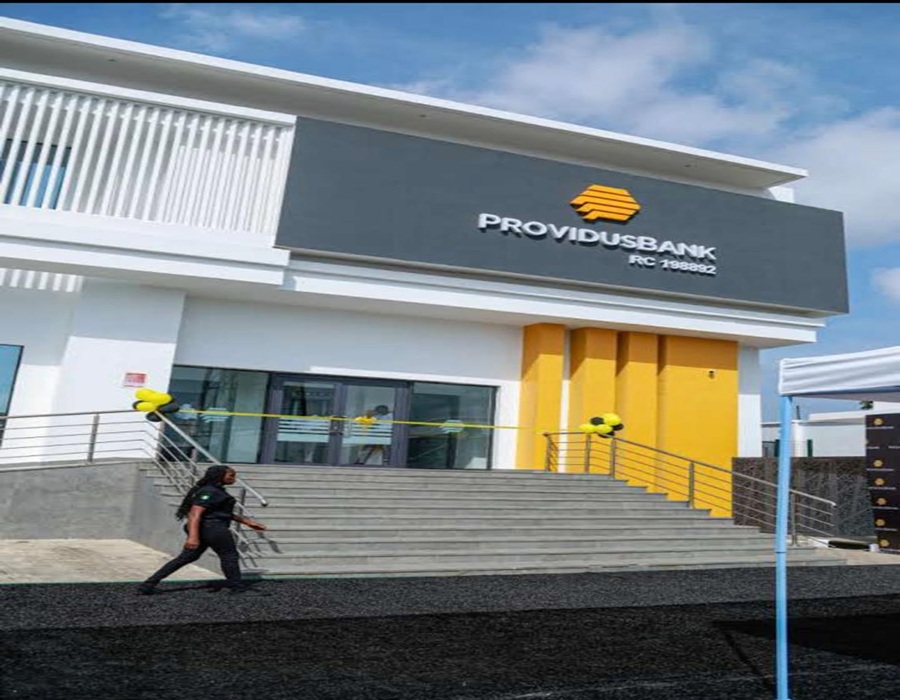
ProvidusBank Plc has commissioned a new branch in Ado-Ekiti, advancing its expansion strategy across Nigeria’s high-growth markets while leveraging its compliance with the Central Bank of Nigeria’s (CBN) recapitalisation directive since January 2025.

ProvidusBank
The move aims to enhance financial inclusion, support local enterprises, and deliver banking services closer to communities and businesses.
At the event, Executive Director/Chief Financial Officer, Deoye Ojuroye, described the rollout as part of a 12-month plan to bolster the bank’s nationwide presence.
“Our approach is deliberate—we are growing in the right places, supporting real economic activity, and building a bank that is both resilient and responsive to customer needs,” Ojuroye said.
He emphasised the bank’s robust capital and risk management, stating: “We are well capitalised within our regulatory category, giving us confidence to expand responsibly while aiding businesses and communities.”
ProvidusBank plans further branches in strategic locations over the next year, underscoring its focus on scalability, accessibility, and sustainable growth as a trusted partner for individuals and enterprises.
E-Financial
Fidelity Bank Bolsters SME Growth with April Masterclass Series on Pricing, Digital Tools, Global Trade


Fidelity Bank Plc has launched a series of high-impact masterclasses in April 2026 to empower Nigerian Small and Medium Enterprises (SMEs) with practical skills for pricing, digital expansion, and international growth.

Fidelity Bank
The initiative aligns with the bank’s drive to boost SME operational efficiency and market access amid Nigeria’s economic challenges.
The flagship session, “Pricing That Works: How to Charge Right and Earn More,” took place on April 10 at the Fidelity SME Hub in Gbagada, Lagos. It drew about 100 entrepreneurs from diverse sectors, offering insights into costing, value-based pricing, pricing psychology, and customer perception to ensure profitable, customer-friendly strategies.
Buoyed by positive feedback, the bank rolled out three more sessions. The second, “Baking Masterclass: From Kitchen to Cashflow,” ran on April 14 and 15, providing hands-on training for bakers and food businesses to enhance product quality and profitability.
Divisional Head, SME Banking, Ugochi Osinigwe, stated: “At Fidelity Bank, we believe that when SMEs succeed, the economy grows. That is why we have curated masterclasses on pricing, product improvement, online sales, and global expansion to equip entrepreneurs with immediate, actionable tools.”
She highlighted the series as part of broader SME support via the Fidelity SME Hub, including advisory services, funding, and nationwide programmes. The bank recently earned the Best Retail and SME Bank Award from Independent Newspapers.
Upcoming events include “Grow Online Sales on a Budget” today, April 24, focusing on low-cost digital strategies for visibility and sales; and “Take Your Business Global: One-on-One Trade Advisory” on April 29, covering export readiness, payments, markets, and compliance.
Fidelity Bank, ranked among Nigeria’s top lenders, serves over 10 million customers via 255 branches, digital platforms, and its UK subsidiary, FidBank UK Limited. It has clinched awards like the 2024 Excellence in Digital Transformation & MSME Banking from BusinessDay BAFI Awards, Most Innovative Mobile Banking App from Global Business Outlook, Best Bank for SMEs from Euromoney, and Export Financing Bank of the Year from BusinessDay BAFI.

NCC Blames Growing Data Demand Network Quality Issues

EFCC Detains Ayeni, Ex-Skye Bank Chairman over Alleged N36.5Bn, $30m Fraud

Bank Customers to Pay N1,500 for ATM Card Issuance, Replacement – CBN

Summit Factory Opens in Ogun, Targets Hygiene Market Expansion

Kaspersky Discovers Vulnerability in Qualcomm Snapdragon Chips that can Lead to Data Loss & Device Compromise

NBC Boss Urges Content Ceators to Participate in DSO

NITDA Takes Over National Digital Architecture System

FG Shifting Focus to “Meaningful Connectivity” to Drive Inclusion – Minister

FG to Gift Nigerians over 100 Free TV Channels from May 15

Jury Finds Meta, Google Liable for Woman’s Social Media Addiction




 E-Business2 days ago
FCCPC Licenses 5 Firms for Airtime, Data Lending as Telcos Step Aside

 General News3 days ago
Breaking News…Hackers Allegedly Expose EFCC Data, Operatives’ Identities

 E-Financial2 days ago
CBN Warns of Cyber Hack Attempt Days after CAC Attack

 E-Financial2 days ago
Ecobank in Talks with Bank of China for Direct Yuan Settlement

 Telecom2 days ago
Deadline Extended! MTN Nigeria Offers More Time for Media Innovation Programme

 Telecom2 days ago
Payments Forum Nigeria (PAFON 3.0) Holds This Friday in Lagos

 Telecom2 days ago
Vivo, Credit Direct Ink Agreement on Smartphone Credit Purchase

 E-Financial1 day ago
EXPLOSIVE: How Titan Trust Bank Allegedly Used Union Bank’s Own Assets to Fund Its Takeover