

E-Financial
How Quickteller Uses Technology to Create World of Possibilities

Technology has changed the world and our individual lives in a virtually countless list of ways. Despite this, it is still common for people to bemoan these achievements.
Things previously deemed impossible are today made possible by technology, imagine making purchases from location you haven’t visited from the comfort of your home through smartphone and get it delivered to your doorstep.
Today, countless number of Nigerians hardly visits their bank but make safe and secured transactions from the comfort of their sitting room.
These among other convenient lifestyles are what Quickteller provides for Nigerians as long as they register with Quickteller platform.
Since launching as digital financial services provider, Quickteller has continually pioneered innovation in making payment seamless.

In this vein, the company recently launched a new campaign showcasing how Quickteller can assist subscribers create big ideas as well as world of possibilities.
Quickteller financial service application allows you purchase airtime, pay bills, send and receive money via the web or mobile App.
More so, most people use Quickteller for basic payments but don’t know the breadth of other services and payments solution that are possible on Quickteller.
You can make payments, pay toll fees and state government payments. You can buy airtime, send money and book flight tickets. Pay cable TV bills, to electricity bills, to shopping from over 100 global stores, take a quick loan, buy event tickets and everything in between. In fact: EVERYTHING IS POSSIBLE with Quickteller.
The new Quickteller television commercial demonstrates the ubiquitous nature of the Quickteller platform.

The commercials are in two versions: ‘The Big Idea’ and ‘Possibility’. Both versions are in furtherance of the previous Quickteller campaign – “One less thing to worry about” – and reiterate the ease and universality of the Quickteller platform. The commercials deploy the use of humour and creativity to subtly drive in the point that on Quickteller, a user can pay for almost anything they can imagine.
Both commercials are a body of great creative thinking and drive home the overarching message that everything is possible on the Quickteller platform. The commercials both depict the importance of a platform that makes payment possible irrespective of person, location and needs. Quickteller enables everyone to make transactions on the go, with a few clicks.
However, for organisations to receive payments from subscribers or members they need to sign on to Quickteller. For instance, a church that signs on to Quickteller can receive payments such as tithe, offering among others from her members. Same goes for educational institutions, Real estate, among others.
The convenience offered by Quickteller as a payment platform is demonstrated in the ‘Everything is Possible’ TVC.
The ‘Big Idea’ commercial concept is to observe a humorous meeting at which a group of popular comedians or social media acts, enact a sort of ‘pitch discussion’ where they present a series of ‘big’ ideas to show people how it’s possible to do absolutely everything using Quickteller. The notion is that they are trying to outdo each other through the scale of their imaginations.
In fact, Quickteller can help you pay for almost anything you can imagine. The humour comes from the craziness of their ideas.
This commercial features well known and loved celebrities like Bovi (a leading Comedian), Ini Dima Okojie (well respected Nollywood actress) and Eric Omondi (a Comedian based in Kenya, who is one of the best Comedians in Africa).
On the other hand, the concept for the “Possibility” commercial is to show one, single, unbroken shot of a man doing a fairly impressive trick; that slowly pulls back to reveal – as the frame gets wider and wider – that the man is actually performing, what appears to be, a near-impossible stunt.
It illustrates the compelling point that Quickteller makes almost anything possible!
This TVC is a natural flow from the last ‘Contortionist’ TVC where a skilled Contortionist was able to demonstrate how easy and convenient it is to use Quickteller. It is a visual metaphor for everyday payments made easy by Quickteller.
There is no barrier to the use of Quickteller payment platform anytime anywhere.
Olawale Akanbi, Group Head, Quickteller Marketing, highlighted the importance of transacting on a platform that provides a vast number of services in the digital payment space.
He said: “It’s amazing to know that you can pay for almost anything on Quickteller. At Quickteller, we are committed to making all payments possible on our platform. This is why we are continuously expanding the services available on Quickteller. From just a platform where you could transfer money, customers can now perform more transactions that speak to their lifestyle, businesses, passion and even their careers”.
According to Akanbi, “This campaign illustrates the compelling point that Quickteller makes almost anything possible. Both versions of the campaign are a natural flow from the previous campaign and consistent with our messaging that payments are easier and most convenient on the Quickteller platform. It is simply a visual metaphor for everyday payments made easy by Quickteller”.
These new TVCs are really quirky, and we believe that it creates a truly fresh and funny spot that, while highly entertaining, is actually saying a lot about the practical benefits of Quickteller.



Securities and Exchange Commission (SEC) has commenced the implementation of a fully electronic registration system for capital market operators, marking a major milestone in its digital transformation drive aimed at improving regulatory efficiency, reducing processing time and strengthening oversight of Nigeria’s capital market.

The new electronic registration (e-Registration) platform, deployed through the Commission’s ePortal, allows designated regulatory services to be completed entirely online, eliminating manual processes for services covered in the current phase.
The initiative comes as the SEC intensifies reforms to modernise the Nigerian capital market, enhance the ease of doing business and leverage technology to improve service delivery to market participants.
In a statement issued on Wednesday, the Commission said Capital Market Operators (CMOs) can now complete designated post-registration processes electronically, from application submission and regulatory review to approvals and the communication of regulatory decisions.
According to the regulator, the platform is designed to simplify interactions between operators and the Commission, reduce administrative bottlenecks, shorten processing timelines and give applicants real-time visibility into the status of their applications.
The SEC said the transition to a fully digital registration process would also improve operational efficiency by introducing standardised workflows, electronic documentation, secure digital record management and stronger audit trails, while enhancing regulatory oversight.
“The new platform represents a major step towards creating a seamless digital regulatory ecosystem that enhances operational efficiency while strengthening regulatory effectiveness,” the Commission stated.
Beyond improving efficiency, the regulator said the platform would reinforce the integrity of regulatory processes by minimising delays associated with paper-based documentation and improving the quality of regulatory data used for supervision and decision-making.
It added that the digital system would provide a stronger foundation for regulatory analytics and future technology-driven innovations aimed at enhancing market oversight.
The Commission explained that the implementation is being rolled out in phases to ensure a smooth transition for market participants while safeguarding the stability and integrity of regulatory processes.
For now, the e-Registration platform is limited to post-registration services for existing Capital Market Operators.
entrants seeking registration in the Nigerian capital market are not yet covered under the current phase, adding that electronic processing for new registrations will be introduced at a later date.
The Commission urged all licensed operators to familiarise themselves with the new platform and comply with implementation timelines to ensure a seamless migration to the digital system.
The latest move forms part of the SEC’s broader reform agenda to modernise market infrastructure, improve transparency and strengthen investor confidence as Nigeria seeks to deepen its capital market and enhance its competitiveness in the global financial system.
Market observers believe the digital registration initiative is expected to reduce compliance costs, improve regulatory turnaround time and support a more efficient operating environment for licensed operators, while reinforcing the Commission’s push towards a technology-driven capital market ecosystem.
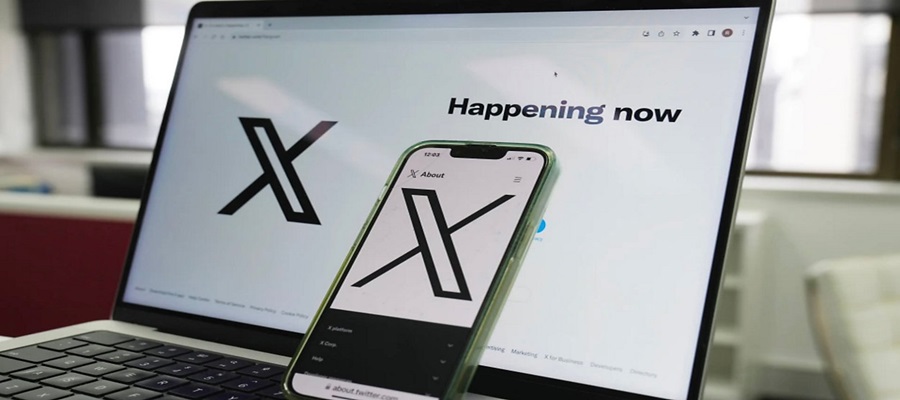
Elon Musk’s social media company X, formerly known as Twitter, launched its own bank account-like product where users can send money to one another.

The service, known as X Money, is not a new bank.
X Money is using technology and banking services provided by Cross River Bank, and branding that backbone as X Money.
It is common for new financial companies to use a traditional bank’s backbone to launch its services, as chartering a new bank is a timely and costly process.
Currently X Money is invite only, and users will receive a “X”-branded Visa debit card that is useable at any ATM.
Users of X will be able to send money to other X users in real-time, the company said. Invitations are only available to X’s paying members presently
In order to attract customers, X Money is offering a 6% yield on deposits and 3% cashback on eligible purchases.
In order to earn the 6% yield, a customer would need to deposit at least $1,000 into an account.
Customers would also have to be signed up for X’s premium services, which is at least $8 a month. It would require at least a deposit of $1,600 in order to cover X’s premium services cost.
Musk has long talked about turning X into an “everything app” that would include financial services.
Musk has his origins in financial services, creating one of the first online banks under the brand X.com. That company was later bought and merged into what is now known as PayPal.
It’s still early for X Money, but the company is entering into a competitive market, dominated by PayPal’s Venmo money transfer service and other peer-to-peer money transfer services like Zelle and Cash App.

Central Bank of Nigeria (CBN) imposed N430 million in penalties on financial institutions in 2025 over delays in resolving customer complaints and failure to comply with its directives, underscoring a tougher regulatory stance on consumer protection in the banking sector.

The sanctions were disclosed in the apex bank’s 2025 Annual Report, which showed that 21 penalties worth N430 million were imposed on financial institutions during the review period for infractions linked to complaints management.
According to Nairametrics, the report stated that the affected institutions were sanctioned for “delays in resolving customer complaints to failure to comply with the Bank’s directives.”
The report read, “the Bank imposed 21 penalties on financial institutions to the tune of N430.00 million, for infractions ranging from delays in resolving customer complaints to failure to comply with the Bank’s directives.”
The latest enforcement action comes as the CBN recorded a rise in the number of complaints lodged by users of financial services, suggesting greater reliance on the regulator’s consumer protection framework.
According to the report, the CBN received 23,129 complaints from consumers of financial services in 2025, representing a 10.53% increase from the 20,925 complaints recorded in 2024.
The apex bank attributed the increase to growing public awareness and stronger confidence in its complaint resolution process rather than a deterioration in banking services.
The report stated, “The Bank received a total of 23,129 complaints from consumers of financial services in 2025, a rise of 10.53%, above the 20,925 in 2024. The trend reflected increased awareness and improved confidence in the Bank’s consumer complaint resolution process.”
It added that 18,824 complaints were successfully resolved during the year, representing a 9.36% increase from the 17,213 complaints resolved in 2024.
The report also showed a sharp increase in the value of claims handled by the regulator.
Claims denominated in local currency rose to N40.61 billion in 2025 from N17.13 billion a year earlier, while foreign currency claims climbed to $344.2 million from $1.06 million.
consumers recovered N19.12 billion and $329.3 million in refunds during the year, compared with N9.66 billion and $0.67 million refunded in 2024.
Beyond the N430 million sanctions relating to customer complaints, the CBN disclosed that it imposed another 11 penalties worth N1.26 billion on financial institutions for regulatory breaches and failure to respond to regulatory queries.
The report indicates that complaints management formed part of a wider overhaul of the CBN’s supervisory and market conduct framework in 2025.
In 2022, the CBN issued a guide on how aggrieved customers can complain about financial institutions such as commercial banks.
The regulator established a dedicated Compliance Department to strengthen oversight of financial crime, market conduct, complaints management, advertising standards, cybersecurity, data protection and corporate governance across CBN-regulated institutions.
Olayemi Cardoso, governor, CBN, recently said that the CBN and deposit money banks are reviewing excessive transaction alerts and customer charges amid complaints from bank users over confusing debit notifications and deductions.
Cardoso said the apex bank had set up a quarterly engagement structure involving its consumer protection team, deposit money banks and the top 10 microfinance banks to address unresolved customer complaints.

Nwokolo, Nollywood Actor Claims Internet Fraud is “Keeping Economy Afloat’

SEC Begins Full e-Registration for Capital Market Operators

Elon Musk Launches Invite-only X Money with Visa Debit Card

CBN Fines Banks N430m for Ignoring Customers’ Complaints

Kaspersky Uncovers New Mirage Kitten Malware Used in Cyber-espionage Campaign Across Africa, Others

NRC, Ponzi Scheme Collapses Resulting Loss of Billions of Naira

EFCC Busts NIS Visa Overstay Racket, Uncovers N700m in an Account

Tokenization, Blockchain Technology will Transform Financial Institutions – IMF

From Scarcity to Scale: What Africa Can Learn from India’s Agricultural Transformation

BON Establishes Six Ad Hoc Committees to Modernize Broadcasting




 News3 days ago
See Verified 20 Countries Nigerian Passport Holders Can Travel Visa-Free

 E-Business3 days ago
NPC Opens 131 Births, Deaths Registration Centres in Anambra

 News2 days ago
History as Lagos Becomes First Nigerian State to Launch Greenhouse Gas Registry

 E-Business2 days ago
UNN to Partner Firm on AI, Smart Mobility Innovation Centre

 Telecom2 days ago
AI Investment Gap Threatens Africa’s Future Growth

 Telecom2 days ago
AMCON Puts ntel Up for Sale, Seeks Investors

 E-Financial2 days ago
Remita Raises Alarm Over Nigeria’s Digital Divide, Calls for More Investment

 Telecom24 hours ago
Fact-Check: Elon Musk’s “Tesla Pi Phone” is Internet Rumor