

Telecom
ICAF Says NCC, Operators Need Stakeholders’ Support for Improved QoS

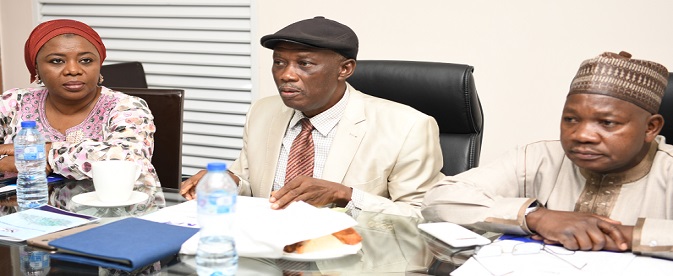
Industry Consumer Advisory Forum (ICAF) has advocated the need for stakeholders at the federal, state and local levels, both in public and private sectors, to work with the Nigerian Communications Commission (NCC) and Mobile Network Operators (MNOs) to collectively contribute towards improving the Quality of Service (QoS) delivery by MNOs in the country.

L-R: Hafsat Lawal, Head, Consumer Protection and Policy Development, Nigerian Communications Commission (NCC); Igho Majemite, Chairman, Industry Consuemr Advisory Forum (ICAF) and Aliyu Ibrahim, Head, Consumer Protection and Advocacy, NCC, during the ICAF first quarter meeting in Abuja.
The advocacy group stated this during a presentation made at its first quarter 2020 meeting held in Abuja.
At every meeting of ICAF, a corporate member is required to make a presentation about a topical issue in the sector.
At this meeting, the Association of Licensed Telecoms Operators of Nigeria (ALTON) made the presentation focused on challenges of quality of service delivery in telecoms sector.
In the presentation, ICAF noted that the challenge of poor QoS in the telecom industry is an issue that requires collaborative efforts of the National Assembly as well as state and local governments, to tackle.
Explaining further, ICAF stated that the collaboration is both urgent and necessary because telecoms has long migrated from being a mere enabler of communication, to an industry that has become widely acknowledged as being the most important enabler of socio-economic activities in contemporary society.
The advocacy body said as with every other sector of the economy, the telecommunications sector has its own peculiar challenges that impact on the ability of telecoms operators to deliver seamless services to customers.
ICAF listed the challenges to include infrastructure damage, bombed sites due to insurgent activities, illegal site lock-outs, unstable power supply and prolonged power outage, denial of statutory permits for infrastructure roll-out, high cost of Right of Way (RoW), and use of substandard devices by the consumers, among others.
Elaborating further, ICAF presentation indexed a situation where telecommunications operators continue to suffer various forms of infrastructure damage across the country, and noted that such a challenge usually leads to sudden outages or poor QoS.
ICAF recalled that at the onset of the insurgency in the North-East region, operators were also at the receiving end of the destruction that was visited on the infrastructure in the region. He cited Adamawa, Borno and Yobe states as areas where hundreds of BTS sites were either bombed or affected due to dependence on a bombed site. Such vandalism resulted in loss of coverage in so many places including Dikwa, Gamboru, Monguno, Bama, Konduga and Damaturu.
“Operators have been able to restore a lot of these sites, while restoration at other facilities are still pending due to security concerns. In some cases those that were restored have been bombed again, but efforts are currently ongoing in collaboration with agencies in the security services and state governments, to secure sites,” ICAF noted in the presentation. It also assured participants that “with these efforts it is hoped that there will be noticeable improvement in coverage, leading to reduced dropped calls in the affected areas.”
The presentation further explained that the failure of some governmental authorities and their subsidiary agencies to grant the statutory approvals required by operators to build more sites is another problem. ICAF affirmed that “as the existing infrastructure get to full capacity, operators need to build more facilities to accommodate excess call, SMS, data and Unstructured Supplementary Service Data (USSD) traffic. Unfortunately, in the past seven years, the FCT Administration, in particular, has not granted approvals for telecommunications sites to be built in the Territory.”
On vandalism and theft, the ICAF presentation observed that this has been a recurring experience of the operators as unknown hoodlums increasingly break into sites, kill or injure the guard on duty and cart away valuable equipment such as the power generating sets, base transceiver station (BTS) equipment and air conditioners among other facilities. It said these criminal activities immediately lead to network outages in the area covered by facilities that suffered vandalism.
ICAF, however, noted that no operator desires to have poor service delivery because of the increased competition that has been engendered by the telecoms regulator.
According to ICAF, “we are in a highly competitive market, where we have multiple players and we should understand that there is no operator that wants to have downtime on its network as that can lead to loss of subscribers to rival operators. The NCC has heightened this with the introduction of the Mobile Number Portability, which makes it easier for a subscriber that is not satisfied with his or current network in terms of service delivery to migrate to other preferred network.”
The presentation further said: “This means if there is any challenge that is affecting any operator’s ability to deliver better experience to its numerous customers, the logical thing is for that operator to take steps to address the challenge so that it will be able to retain its customers. But most of these challenges are far beyond what operators can control. The NCC has been doing a lot to get the buy-in of all relevant stakeholders to address some these challenges, but not much inroad has been recorded because not all stakeholders in the ecosystem are fully supporting the regulator’s efforts at addressing these issues in order to ensure that telecom consumers get top-notched services.”
Proffering solutions to the challenges, ICAF said while the regulator has been taking QoS measurements and sanctioning the erring operators, it must also be acknowledged that it has been making efforts toward addressing all the identified challenges faced by the operators in order to improve service delivery on the networks to telecoms consumers.
“However, if we all agree that telecoms is central to our socio-economic development, then the NCC’s efforts need to be supported by all stakeholders, especially the National Assembly through the passage of the Critical National Infrastructure (CNI) Bill and; we at ICAF also urge the state governors to be considerate about policy measures in order to encourage massive deployment of telecoms infrastructure in their states, as being championed by the NCC,” the advocacy group recommended in the presentation.



Telecom operators in Nigeria recorded a sharp decline of 33,153,633 subscribers in three years (May 2023 – April 2026), according to the Nigerian Communications Commission’s (NCC) latest industry statistics.

According to the telecom industry statistics, the figure showed that 4,270,285 of mobile subscribers were lost between May 2023 (220,931,688) and April 2024 (216,661,403), while the sector had repeat of the negative record with a huge drop of 46,338,623 subscribers between May 2024 (219,005,878) and April 2025 (172,667,255).
There was a significant positive increase between May 2025 (172,474,626) and April 2026 with 187,778,055 subscribers as of the latest figure issued by NCC.
The period recorded a huge increase of 15,303,429 subscribers.
In May 2023, when the current government came into power, the telecom sector had 220,931,688 subscribers. But as at April 2026 which marks exactly three years, the sector has a record of 187,778,055 subscribers.
This indicates a decline of 33,153,633 subscribers during the period under review.
Overall, according to the NCC’s figures, MTN, the largest operator with a subscriber figure of 88,675,062 as at April 2023, was a major factor in the statistics.
It gained 7,716,357 subscribers during the period under review which currently pulls 96,391,419 subscribers as at April 2026, while Airtel which had 60,331,845 subscribers in April 2023 recorded an increase of 4,338,173 subscribers, bringing its current subscriber base to 64,670,018.
On the flip side, Glo, which was trailing MTN with an impressive figure of 60,927,963 subscribers, suffered a massive loss of 37,749,366 subscribers. The development reduced its figure to 23,178,597 it currently has.
In the same vein, T2 (formerly 9mobile) which was accommodating 13,403,345 subscribers in May 2023, lost 9,865,324 subscribers.
The network, according to NCC’s April 2026 statistics, has only 3,538,021 subscribers on its base.
Despite the sharp decline recorded in the period, market stability has slowly returned.
Latest NCC figures indicate that by early 2026, telcos had started recovering lost ground, even rolling out large-scale compensation programmes to over 75 million customers due to poor network quality.
The reduction in the telcos’ active subscriptions between 2023 and 2026 can be attributed to the disconnection of SIMs that were not linked with the National Identification Number (NIN) as mandated by the government.
The development resulted in the decline of subscriptions for mobile services in the country.
During the period which witnessed the impact of foreign exchange (FX) unification and the removal of the premium motor spirit subsidy, the biting economic pressures reduced consumer purchasing power which led many Nigerians to give up multiple or redundant SIM cards to cut back on monthly data costs.
The service providers lost most subscribers as a result of the Federal Government, through the industry regulator, relevant agencies and institutions like banks which came up with poicies that demanded Subscriber Identification Module (SIM) updates and verifications. A change in the minimum age requirement for SIM registration (from 16 to 18 years) also contributed to a decline in gross new connections.
During the period, the industry regulator, NCC, issued new guidelines to telecommunication companies, directing them to deactivate phone lines unused for six consecutive months for Revenue Generating Event (RGE).
The new rule took a toll on the telecom operators, as many subscribers who are using more than one phone line could not be able to retain the others due to the harsh economic environment of the country.
According to the regulator, “A subscriber line may be deactivated if it has not been used, within six months, for a Revenue Generating Event (RGE), and if the situation persists for another six months, the subscribers may lose their numbers, except for a network-related fault inhibiting an RGE.”
It is common knowledge that some Nigerians are migrating to other countries of the world, and most of them may likely not continue to use their Nigerian networks’ SIM either voluntarily or perhaps any policy that needs revalidation comes up.
There was also a standing order for those who had issue(s) with their SIM cards, as the National Identity Number (NIN) in the registration of Subscriber Identity Module (SIM) cards by all mobile telecommunication network operators was mandatory.
The development undoubtedly interrupted the growth trend of telecom subscribers as indicated in the three years’ statistics by NCC.

Nigerian Communications Commission (NCC) has launched its maiden Women in Leadership Programme aimed at empowering female professionals and strengthening leadership development across Nigeria’s telecommunications and technology sector.

The initiative, unveiled during an event in Abuja, is designed to provide mentorship opportunities for emerging female professionals by connecting them with experienced women leaders within the Commission and the broader telecommunications industry.
Speaking at the launch, Dr Aminu Maida, executive vice-chairman of the NCC, highlighted the significant contributions women have made to the Commission, noting that they continue to excel in strategic leadership positions and play a vital role in driving the organisation’s success.
According to him, women currently head several critical departments within the Commission, including Legal Services, Information Technology, Procurement, Public Affairs, Consumer Affairs and Internal Audit, demonstrating both competence and effective leadership.
Dr Maida explained that the Women in Leadership Programme was conceived to inspire younger female professionals to aspire to senior management and executive positions by learning directly from accomplished women who have excelled in their careers.
“We have a lot of very strong women. Not only are they in positions of authority, but they also deliver. This event is needed to encourage the younger women to aspire to reach the top level of their careers,” he said.
The NCC boss also acknowledged the unique challenges women face in balancing professional responsibilities with family commitments. He commended their resilience, dedication and ability to deliver results despite these competing demands, stressing that their efforts deserve recognition and support.
Delivering the keynote address, Maryam Idris, managing director of NNPC Trading Company, urged women to deliberately invest in their personal and professional development by acquiring relevant skills, building competence and embracing lifelong learning.
She advised female professionals to confidently communicate their achievements while maintaining integrity throughout their careers, noting that technical expertise alone may not be sufficient for career advancement.
“Build your competence. Read, manage your career, find mentors and sponsors, and continue building your capacity. What you know is something nobody can take away from you,” Idris said.
Also speaking at the event, Rimini Makama, executive commissioner for Stakeholder Management, described the mentorship initiative as a strategic effort to institutionalise leadership development for women within the Commission.
She explained that the programme would establish a sustainable network of accomplished female leaders who would mentor younger professionals, ensuring that leadership development remains a continuous process beyond the tenure of individual office holders.
Makama noted that the Commission already enjoys substantial female representation in leadership positions and intends to build on that progress by preparing more women to assume strategic responsibilities in the future.
The Women in Leadership Programme underscores the NCC’s commitment to promoting gender inclusion, nurturing female talent and creating a stronger pipeline of women leaders capable of driving innovation and sustainable growth in Nigeria’s telecommunications sector.


National Information Technology Development Agency (NITDA) has reaffirmed its commitment to strengthening youth online safety and digital literacy through strategic collaboration with Meta, as part of broader efforts to build a digitally inclusive economy and enhance trust in Nigeria’s digital ecosystem.

Group photo of Minister of Youth Development, Comrade Ayodele Olawande (left), Head of Public Policy, Anglophone West Africa Connectivity and Innovation Policy Manager, Meta Africa, Mrs Sola Dada (middle) and DG NITDA’s rep, Ag. Director, DLCB department, Dr Ahmed Tambuwal at the event
This commitment was reiterated by the Director General of NITDA, Kashifu Inuwa, CCIE, during the Youth Safety Summit organised by Meta at the Transcorp Hilton Hotel, Abuja.
The Summit convened stakeholders from government, industry, civil society organisations, and the education sector to advance collaborative efforts aimed at ensuring young Nigerians enjoy safe, age-appropriate, and positive online experiences.
A major highlight of the event was the launch of the Youth Online Safety Campaign and My Digital World (MDW) 2.0, initiatives developed by Meta in partnership with NITDA and the Federal Ministry of Youth Development.
Represented by the Acting Director of Digital Literacy and Capacity Building Department, Dr Ahmed Tambuwal, the NITDA DG noted that the Agency’s collaboration with Meta aligns strongly with President Bola Ahmed Tinubu’s Renewed Hope Agenda, particularly the priority areas of Reforming the Economy for Sustained Inclusive Growth and Strengthening National Security through robust cybersecurity measures that enhance digital trust and confidence.
He explained that building a digitally skilled population capable of safely navigating the online environment is fundamental to unlocking innovation, entrepreneurship, job creation, and economic opportunities in the digital age.
Speaking on the significance of the Summit’s theme, “Advancing Youth Online Safety Through Collaborative Action,” Inuwa stressed that protecting young people online requires collective responsibility from all stakeholders.
“Today’s theme is both timely and compelling. It reminds us that while digital technologies have created unprecedented opportunities for learning, innovation, entrepreneurship, and social connection, ensuring that young people can benefit from these opportunities safely is a shared responsibility,” he said.
The DG emphasised that digital literacy cannot be separated from online safety, noting that the ability to use digital tools must be accompanied by the knowledge and skills needed to navigate the digital space responsibly.
“At NITDA, we believe that digital literacy and online safety are inseparable. Equipping citizens with digital skills without teaching them how to navigate the digital world safely, responsibly, and ethically would leave our work incomplete,” he stated.
According to him, this philosophy is embedded in NITDA’s National Digital Literacy Framework (NDLF) and the Agency’s flagship Digital Literacy for All (DL4ALL) initiative, through which it aims to achieve 70 per cent digital literacy by 2027 and 95 per cent by 2030.
He further disclosed that online safety, digital citizenship, privacy, digital wellbeing, critical thinking, and Artificial Intelligence (AI) literacy have become core competencies within the framework.
“Within this framework, online safety, digital citizenship, privacy, digital wellbeing, critical thinking and, increasingly, Artificial Intelligence literacy are treated not as optional topics, but as essential competencies for every Nigerian,“ he noted.
The DG highlighted the growing partnership between NITDA and Meta, describing it as a model for effective public-private collaboration in driving Nigeria’s digital transformation agenda.
Over the past year, both organisations jointly implemented the Youth Online Safety and Wellbeing Campaign, which reached more than 94 million people and generated over 216 million impressions across Facebook and Instagram. The campaign provided millions of Nigerians with practical guidance on online safety, privacy protection, digital wellbeing, and responsible internet use.
The partnership also extended to activities marking Safer Internet Day, where members of the National Youth Service Corps (NYSC) were engaged and empowered to become advocates of responsible digital behaviour within their communities. More recently, both organisations reaffirmed their commitment to advancing Nigeria’s digital economy through innovation and inclusion at the Nigeria Digital Economy Forum.
While expressing optimism about the launch of My Digital World 2.0 and describing it as a strategic platform, Inuwa said, “We believe MDW 2.0 presents an excellent opportunity to institutionalise online safety education within Nigeria’s broader digital literacy ecosystem.”
He revealed that NITDA intends to integrate the programme into its teacher capacity-building initiatives, strengthen the resources available to its nationwide network of Digital Literacy Champions, and expand awareness campaigns through partnerships with state governments, traditional institutions, faith-based organisations, and community stakeholders.
According to him, ensuring children’s safety online requires more than secure platforms; it requires informed families, empowered educators, and digitally aware communities.
“Our shared ambition should be to ensure that every Nigerian child is supported not only by safer digital platforms, but also by informed parents, empowered teachers, and digitally confident communities,” he remarked.
Describing the launch as a significant step forward, Inuwa said the initiative marks the beginning of a deeper partnership between government and industry aimed at preparing a new generation of Nigerians for the digital future.
“Today’s launch is more than the unveiling of another programme. It is the beginning of a deeper strategic collaboration between government and industry to build a generation of Nigerians who are digitally skilled, digitally responsible, and digitally resilient,“ he stated.
He reaffirmed NITDA’s commitment to working with Meta and other stakeholders to build a secure and inclusive digital ecosystem where innovation thrives, opportunities are accessible to all, and every Nigerian can participate confidently in the digital economy.
Also present at the event were the Minister of Youth Development, Comrade Ayodele Olawande, and the Minister of Women Affairs, Mrs Imaan Sulaiman-Ibrahim. Both ministers reaffirmed their ministries’ commitment to collaborating with relevant stakeholders to develop and implement policies that foster a safe, inclusive, and enabling digital environment, particularly for young Nigerians, to navigate the internet responsibly and securely.

Telcos Lose 30m Subscribers in 3-Year Slump due to NIN-SIM Link Policy

Pay Your taxes for Me to Do More – Tinubu

NCC Launches Maiden Women’s Leadership Mentorship Programme

FG Proposes Africa-Wide Payment Card without Conversion through US Dollar

Providus, Unity Bank Begin Integration Phase after Supreme Court Nod

CBN Extends PoS Geo-Fencing Enforcement Deadline to August 2026

London Strengthens Global Investment Ties with Africa @ First Ever London-Africa Business Summit

FG Targets Alleged N3tn Capital Flight, Opens Airtime Credit Market to Nigerian Fintechs

Mobile Internet Gender Gap Widest in Africa – GSMA

Japan, UNESCO Boost Digital Learning in 15 CoEs with Donation of ICT Equipment




 News3 days ago
PalmPay MD Seeks Stronger Infrastructure, Access to Finance for SMEs @ Digital Pay Expo 2026

 Broadcasting2 days ago
Lebara Nigeria Launches Lebara Play, Africa’s First Telecom-Owned Micro-Drama Platform

 News3 days ago
Kaspersky Identifies over 336 Unique Domains Impersonating the Official World Cup Website

 Telecom3 days ago
Africa Projected to Lead Global 5G Growth

 General News3 days ago
Paystack Launches Programme to Support Nigerian Businesses

 Telecom2 days ago
NITDA Unveils Bold Vision to Make Nigeria an AI Powerhouse

 E-Business2 days ago
Privacy Crisis May Undermine Local Hosting of Data by Banks, Fintechs

 E-Financial2 days ago
SEC Bars Dangote Refinery IPO Adverts