

Telecom
FeedbackHall to Integrate Producers with Consumers Feedback


FeedbackHall Limited a customer feedback service platform that enables consumers and producers give and receives feedback on goods and services has called for effective regulation of manufacturing industry to ensure that claims made by companies regarding the degrees of sustainability of their products and services are correct.
Prof. Pat Utomi, chairman, FeedbackHall Limited made this call on Monday during a press conference to Mark the 2020 World Consumer Rights Day (WCRD) held at the Center for Values and Leadership, Victoria Island Lagos
Speaking on the theme for this year’s celebration, “The Sustainable Consumer,” Prof. Utomi noted that companies need to change their production models to offer products that are truly sustainable so that consumers can have sustainable options.

He revealed that the era of unwholesome practices by these companies should be effectively regulated to ensure that their claims regarding the degrees of sustainability of their products and services are correct.
According to him,”For consumers to consume sustainably, companies and the organisations that regulate them have important roles to play.
“Since consumers cannot produce most of what they use, companies need to change their production models to offer products that are truly sustainable so that consumers can have sustainable options.
“In addition, companies need to stop producing greenwashed products. Some companies claim that their products are organic or natural when they are not.
“Some companies claim that the raw materials and production processes are environmentally friendly when they are not.
“These unethical business practices are used to deceive responsible consumers into believing that their products are environmentally friendly and win their patronage. According to a report by TerraChoice Environmental Marketing, 98% of green-labelled products are actually greenwashed.
He called for more careful regulation of manufacturers and service providers, to ensure that, not just final products, but also the production processes are sustainable.
“Regulators need to ensure that, not just final products, but also the production processes are sustainable.
“They need to ensure that claims made by companies regarding the degrees of the sustainability of the products and services they offer are correct.
“Regulation of manufacturing industry and products imported into our country is an important function that needs to be reinforced in Nigeria.
“Given our level of development and geographic location, our vulnerability to climate change risks are high, therefore, prevention is not only better but also more feasible than cure”.
Prof. Utomi further explained that consumers have an important responsibility – to consume sustainably and also demand for and patronise products and services that preserve the environment.
He said, “World Consumer Rights Day is unique as it exposes the fact that, beyond rights, consumers have an important responsibility – to consume sustainably.
“Sustainable consumption requires consumers to demand for and patronise products and services that preserve the environment.
“It also requires them to use these products in ways that minimize their impact on the environment.
“Such ways include limiting waste that is, doing more with less; limiting pollution, reusing what is reusable and disposing the rest responsibly.
“Sustainable consumption is important to ensure that resources are available not only for the present generation but also for future generations”.
Dr. Chiugo Kanu, founder, FeedbackHall, speaking at the press conference said that they will continue to provide consumer intelligence required to formulate and implement important strategies and policies by connecting consumers and companies through a constructive feedback system as well as research.
She noted that their aim this year is to provide support for people and companies who are genuinely interested in promoting sustainable production and consumption with a comprehensive, nation-wide consumer research on sustainable consumption.
In a bid to serve consumers better, FeedbackHall last year, launched its annual Nigeria Digital Consumer Survey (NDCS) as part of activities to mark the 2019 World Consumer Rights Day.
NDCS was launched to aid provision of actionable insights for consumers, companies and regulators.



The GSM Association (GSMA) has urged African governments to reduce taxes and levies on entry-level smartphones as part of efforts to accelerate digital inclusion and ensure millions of Africans are not excluded from the emerging artificial intelligence (AI) revolution.

The association warned that about 961 million Africans who are currently covered by mobile broadband networks are not using the services due to affordability challenges, particularly the high cost of smartphones.
The call was made at the Digital Africa Summit, organised by GSMA in partnership with the African Telecommunications Union (ATU), which brought together regulators, policymakers and industry stakeholders to discuss strategies for improving connectivity and driving digital transformation across the continent.
Speaking at the event, Caroline Mbugwa, senior director, Public Policy and Communications, GSMA Africa, said affordable smartphones and reliable connectivity were essential for unlocking the benefits of AI across sectors including healthcare, education, transport and commerce.
Mbugwa noted that while mobile broadband coverage has expanded significantly across Africa, a large number of people remain unable to access digital services because they cannot afford smartphones.
She stressed that fiscal reforms, particularly the removal of taxes on entry-level devices, were urgently needed to make smartphones more accessible to low-income users.
According to her, South Africa’s decision to remove a nine per cent luxury goods tax on entry-level smartphones helped accelerate adoption of smart devices and reduce dependence on feature phones.
“We are now entering what we call the era of intelligence, and the era of intelligence requires that we have an already existing robust infrastructure, robust connectivity that can support the growth of artificial intelligence on the continent.
“We have a whole 961 million Africans that are covered by mobile broadband services but are not using the service. This is what we refer to as a usage gap. If this remains unaddressed, it means that this number will be left behind when it comes to the adoption of AI.
“This signals that there is demand for adoption of smart devices. Customers are willing to actually use the service. Affordability is the challenge,” she said.
Also speaking, Michaela Angonius, head of Global Policy and Regulatory Team at GSMA, said African countries must adopt policy reforms that encourage investment, expand connectivity and reduce barriers to digital access.
Angonius, who oversees global regulatory and policy issues covering areas such as fiscal policy, competition and network deployment, cautioned against adopting a one-size-fits-all approach to reforms across the continent.
She said findings from the Digital Africa Index showed that while some countries, including South Africa, had made significant progress, others still needed deeper regulatory reforms to improve their digital ecosystems.
She identified three major areas requiring attention: modernising licensing frameworks, improving the use of Universal Service Fund (USF) resources and adopting smarter approaches to quality of service regulation.
According to her, many African countries still operate technology-specific licensing systems, which do not align with the rapid evolution of digital technologies.
Angonius advocated for technology-neutral licensing frameworks that would allow different communication providers, including satellite operators, mobile network operators and internet service providers, to operate under the same regulatory principles.
She explained that the growth of satellite services had exposed weaknesses in existing licensing structures, as regulators often struggle to determine how to classify new technologies.
On Universal Service Funds, Angonius said the existence of unused funds in many countries effectively creates an additional tax burden on telecom operators, which eventually increases costs for consumers.
She warned that such additional costs could worsen the digital divide at a time when Africa is already struggling with smartphone affordability and connectivity challenges.
The GSMA executive also called for a review of quality of service regulations, arguing that countries with the best digital service quality are not necessarily those with the most detailed regulatory requirements.
She said governments should instead focus on policies that encourage investment, expand coverage to underserved communities and improve access for people who remain disconnected.
Angonius further advised finance ministers across Africa to remove levies placed on entry-level smartphones to lower the cost of first-time device ownership.
“Those countries with the best quality of service are not necessarily the countries that have detailed quality of service regulation. Rather, they have focused on how to get the investment right.
“If you have a levy on any handset, firstly, if you can, as a finance minister, remove it. If you can’t, at least remove it from those entry-level handsets that should be affordable for everyday users,” she said.
She added that Nigeria, like other African countries, could benefit from reforms that promote investment, address societal needs and ensure consumers gain long-term value from digital transformation.

Airtel Africa has confirmed that the London Stock Exchange is its preferred listing venue for Airtel Money in 2026, as the group looks to unlock value from its fast-growing fintech business.

The highly anticipated listing aims to maximise market opportunities, with analysts reportedly anticipating a valuation of around $10 billion.
The announcement came as the telecoms operator reported strong first-quarter (Q1) results on Thursday, with surging data usage and mobile money transactions driving double-digit revenue growth across its markets.
The group reported revenue of $1.85 billion, up 31% in reported currency and 21.1% in constant currency, underscoring robust demand for digital and financial services.
Mobile money remained a standout performer, reinforcing its role as a key growth engine. Total transaction value reached an annualised $245 billion, up 51.5%, while the customer base grew 23.3% to 56.5 million users.
“Our focus on deepening financial inclusion through increased customer adoption, broader use cases and a stronger digital payments ecosystem enabled higher usage and facilitated continued average revenue per user growth, reinforcing Airtel Money’s growing role as a trusted digital financial services provider,” the company said.
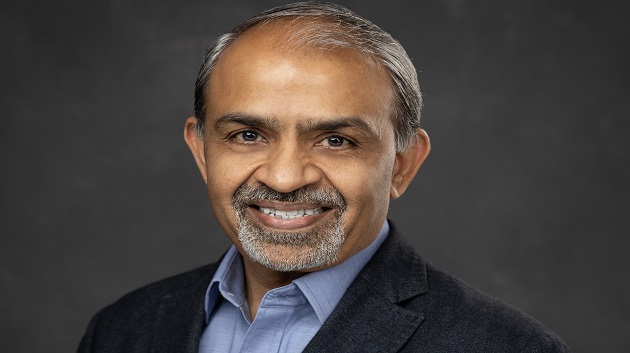
Sunil Taldar, CEO of Airtel Africa, said the company is leveraging digital platforms, data and artificial intelligence to enhance customer experience and support long-term growth.
“We have started this year with another pleasing performance. Our continued focus on the customer experience translated into accelerating customer base growth across all business segments,” he said.
Taldar said a London listing would provide access to a broader international investor base and support the telco’s ambition to unlock long-term value from one of Africa’s leading fintech platforms.
Data usage per customer rose from 7.8GB to 10.6GB per month, driving a 56.3% increase in network traffic, while smartphone penetration reached 51%, reflecting continued digital adoption.
Accelerated network investment drove capital expenditure (capex) of US$389 million, up from $121 million in the corresponding period last year.
“Supported by an elevated pace of deployment, we added more than 920 sites during the quarter, our highest first-quarter site rollout, while further expanding our fibre network to 82,100km,” the company said.
Airtel’s cost-efficiency programme supported EBITDA margin resilience, with the margin remaining at 50.1% in Q1.
However, the company warned that higher energy costs linked to geopolitical developments could increase inflationary pressures and weigh on margins in the near term.
Despite this outlook, the operator said its investment programme remains on track, with spending brought forward to support demand and capture growth opportunities linked to Africa’s digital transformation.
TikTok says it removed more than 4.8 million videos in Nigeria for violating its Community Guidelines during the first quarter of 2026 as part of efforts to create a safer digital environment for users.

The platform disclosed this in its Q1 2026 Community Guidelines Enforcement Report, which highlighted increased investments in artificial intelligence (AI)-powered moderation systems, live-stream safety, content authenticity and AI literacy.
According to the report, the 4.8 million videos removed between January and March represented only 0.6 per cent of all content uploaded by Nigerian users during the period, indicating that the overwhelming majority of content complied with the platform’s rules.
TikTok said 99.8 per cent of the violating videos were removed proactively before being reported by users, while 92.8 per cent were taken down within 24 hours of being posted.
Globally, the platform removed more than 184 million videos during the same period, accounting for only 0.5 per cent of all videos uploaded worldwide.
TikTok said the figures reflected continued investment in advanced moderation technologies capable of detecting harmful content before it spreads widely across the platform.
The company also reported stronger enforcement measures for TikTok LIVE, saying it suspended 120,000 LIVE sessions in Nigeria for violating its Community Guidelines.
The figure represents an increase of 40,000 suspended LIVE sessions compared with the previous reporting period.
Globally, TikTok recorded more than 58 million LIVE enforcement actions, including the suspension of 50,791,858 LIVE sessions and warnings or demonetisation issued to 21,966,667 LIVE creators for breaching platform policies.
According to TikTok, warning notices provide creators with opportunities to correct policy violations before stronger sanctions are applied.
The platform attributed part of the success of its enforcement operations to close collaboration with government agencies, including Nigeria’s Office of the National Security Adviser (ONSA), as well as civil society organisations working to promote online safety.
TikTok said it was strengthening efforts to combat the misuse of artificial intelligence for producing misleading or spam content.
According to the report, the platform is testing enhanced detection systems capable of identifying accounts dedicated to publishing AI-generated spam.
Globally, TikTok removed more than 86 million fake accounts during the first quarter of 2026.
In Nigeria, the company disclosed that it removed more than 118,000 pieces of content under its policy governing edited media and AI-generated content (AIGC).
TikTok said it had also reached a major milestone by labelling more than three billion AI-generated videos globally using a combination of Content Credentials, creator disclosure tools and invisible watermarking technology.
The company said the measures are designed to improve transparency by helping users identify content created or substantially modified using AI technologies.
It reiterated that harmful or misleading AI-generated content remains prohibited under its Community Guidelines.
TikTok also announced a number of initiatives unveiled during the AI for Good Global Summit in Geneva aimed at promoting responsible AI use.
The company said it had joined the Coalition for Content Provenance and Authenticity (C2PA) Steering Committee, where it will collaborate with industry partners to develop standards that improve transparency around AI-generated content.
To promote responsible AI use, TikTok said it partnered with the National Association for Media Literacy Education (NAMLE) and AI expert Henry Ajder to develop educational resources for users.
As part of the initiative, the platform said it would launch a new in-app AI Literacy Hub for Nigerian users in the coming weeks.
According to TikTok, the hub will provide educational resources to help users identify AI-generated content and better understand how AI tools are being used on the platform.
The company also disclosed that it has committed more than 4 million U.S. dollars to its AI Literacy Fund since the initiative was launched in November 2025.
In Nigeria, TikTok said it continues to work with organisations including the Centre for Journalism Innovation and Development (CJID) and Paradigm Initiative to produce locally relevant AI literacy content.
According to the company, the partnerships have generated more than 200 million views, reflecting growing public interest in trustworthy AI education.
TikTok said it remained committed to improving transparency through regular publication of its Community Guidelines Enforcement Reports.
The company added that it has redesigned the reports to make them easier for users to navigate while expanding the number of countries for which detailed enforcement data is available.

Nigeria Leads Africa in Online Gambling Regulation – GCI

CBN Has Not Published Annual Financial Statements Since 2022 despite Legal Requirement

ChatPay Unveils Public Waitlist for WhatsApp-Based Banking Platform

GSMA Says High Smartphone Costs Threatens Africa’s AI Future

Dangote Refinery Completes Landmark $2.5bn Private Equity Placement

NRC, Ponzi Scheme Collapses Resulting Loss of Billions of Naira

NASENI Moves to Digitize CCB’s 5m Assets Declaration and Operations

Lebara Nigeria Launches Lebara Play, Africa’s First Telecom-Owned Micro-Drama Platform

Tokenization, Blockchain Technology will Transform Financial Institutions – IMF

EFCC Busts NIS Visa Overstay Racket, Uncovers N700m in an Account




 General News2 days ago
FG Launches C.L.I.C.K.D., Consumer Credit Scheme for Tech Devices

 Telecom2 days ago
Airtel Nigeria Expands Retail Footprint to Strengthen Customer Access Nationwide

 Telecom2 days ago
MTN Nigeria Opens Applications for Next Afrobeats Star Season 2 with Bigger Prizes

 News2 days ago
NPC Opens Nationwide Digital Birth, Death Registration Platform

 Telecom2 days ago
Kaspersky Survey Highlights the Need for Smartphone Security

 E-Financial2 days ago
CBN Retains Interest Rate at 26.5% as Cardoso Cites Global Uncertainty Despite Inflation Drop

 E-Business2 days ago
Ovaloop Technologies Unveils Digital Tools to Formalize SMEs Operations Across Africa

 Telecom2 days ago
Why Africa’s Top ICT Ministers Are Gathering in Abuja This Week