

News
54gene Closes $15M Series A


54gene, the African genomics research, services, and development company has closed a Series A round of $15M, led by Adjuvant Capital, a life sciences fund backed by the International Finance Corporation, Novartis, and the Bill & Melinda Gates Foundation.
The round included participation from Raba Capital, V8 Capital, Ingressive Capital, and follow on investment from Y Combinator, Better Ventures, Fifty Years, KdT Ventures, Aera VC and Pioneer Fund. In July 2019, 54gene secured a Seed round of $4.5M which brings the company’s total VC investment to $19.5M.
The investment secured today will allow the company to scale operations in support of generating novel insights from human genetics research that result in high impact discoveries for improving human health through therapeutic development. The investment will also be used to accelerate discovery capabilities by bolstering operations in genetics, bioinformatics, preclinical, clinical and commercial programs.
54gene was launched in January 2019, to address the significant gap the genomics market currently poses for Africa, and build and use African genetic data sets to make landmark discoveries to support therapeutic development.
As of 2018, less than 3% of the data used in Genome-wide Association Studies [GWAS] were of African ancestry and currently, less than 1% of global drug discovery occurs on the African continent. Located in Africa’s most populous country, Nigeria, and in the US, 54gene aims to improve the development, availability and efficacy of medical products that will prove beneficial to Africans and the wider global population.
As part of its next stage of growth, the company will further explore partnerships and opportunities for co-development of drug targets and therapeutics, and expects to partner with pharmaceutical, medical device and diagnostic companies for clinical programs in Africa, which will be led by 54gene’s newly appointed Vice President of Clinical & Regulatory Affairs, Kemi Williams, who was formerly Head of Clinical Affairs for Siemens Healthineers US molecular diagnostics business, and previously worked at Roche, Abbott and Medtronic.
In addition to its Series A raise, 54gene is also announcing the formation of its Scientific Advisory Board [SAB]. The SAB is composed of global leaders in clinical genetics, bioinformatics and data science; Michael F. Murray MD, Director of Clinical Operations, Center for Genomic Health Professor Dept of Genetics, Yale School of Medicine, Manuel Rivas PhD, Assistant Professor at Stanford University, Greg Hinkle PhD, VP Research Informatics, Alnylam Pharmaceuticals and Jeff Hammerbacher, Founder and General Partner, Related Sciences.
Speaking on today’s news, Dr. Abasi Ene-Obong, 54gene Founder and CEO, says, “This new partnership marks a significant evolution in the growth of our company. In the coming months we will be focusing on building a genomic resource that we hope will add significantly to global health, while also translating to the health benefits of patients in Africa.
“We will also be expanding our collaborations in Africa with both public and private stakeholders and investing in setting up a state-of-the-art research lab with high-throughput genetic processing and BSL 3 capabilities in Nigeria, and ensuring that we build some of our innovative pipelines on the African continent.”
54gene currently works with 300+ researchers, clinicians and geneticists across the continent, to improve the global collective knowledge of genomic determinants of health and to facilitate translational research. The company has also built an African Biobank, a state-of-the-art biorepository which stores biological samples to provide access to aggregated, de-identified data and bio-specimen mainly for secondary use by researchers, to support both academic and development research.
Jenny Yip, Managing Partner of Adjuvant Capital adds, “There is enormous potential in expanding the reach of global drug and vaccine discovery by including more diverse populations in research efforts. We were impressed by 54gene’s commitment to building a world-class network of African clinicians and geneticists and are excited to work with them as they scale and seek to drive meaningful improvements in global public health.”
Dr. Ene-Obong concludes, “This funding comes at a historically meaningful time, allowing us to deliver global impact through continued investment in research and strategic partnerships with leaders in the biomedical industry. We want to support the crucial work of our partners in Africa while improving global health and are committed to promoting a safe, ethical and beneficial research practice.”



Federal government, in partnership with the World Bank, has launched a fresh $65 million funding phase of the Sustainable Procurement, Environmental and Social Standards Enhancement (SPESSE) project aimed at benefiting more than 24,000 Nigerians through professional training and institutional capacity development.

The initiative, coordinated by the National Universities Commission (NUC), is designed to strengthen procurement systems, environmental management and social standards across public and private institutions, while promoting transparency, accountability and sustainable development practices nationwide.
Abdullahi Ribadu, executive secretary of the Commission, disclosed this in Abuja during the signing of performance contracts for the additional SPESSE financing. He explained that the intervention builds on the gains of the initial $80 million SPESSE project, which became effective in 2021.
According to Ribadu, the programme has significantly improved institutional frameworks and developed professional expertise in key governance sectors. He noted that the initiative was introduced to address the shortage of qualified professionals in procurement, environmental management and social standards within both public and private institutions.
He said: “With the support of the World Bank and under the coordination of the NUC, six centres of excellence were established across the six geopolitical zones to provide sustainable capacity building in these critical sectors”.
Ribadu stated that the participating universities were selected through a transparent and competitive process based on institutional readiness, quality assurance and sustainability.
He added that the institutions have continued to produce skilled manpower capable of advancing transparency, environmental responsibility and inclusive national development.
He described the contract signing ceremony as a renewed commitment to accountability, sustainability and institutional excellence, noting that the centres have recorded major achievements, including the introduction of specialised academic programmes ranging from short courses to undergraduate and postgraduate degrees.
The NUC boss further disclosed that three of the six centres have already commenced PhD programmes, while the remaining centres are expected to begin by July 2026.
He added that under the new funding phase, the Commission targets at least 60 PhD graduates, enrolment of 60 foreign students, staff internships and expanded student exchange programmes with international institutions.
Also speaking, Adebowale Adedokun, director-general, Bureau of Public Procurement (BPP), said the project has so far trained more than 2,700 officers from both the public and private sectors to improve procurement competence nationwide.
He said the next phase would support the rollout of Nigeria’s electronic procurement system and expand online capacity-building programmes for policymakers and small and medium-scale enterprises involved in managing public funds.
On his part, Ishtiak Siddique, World Bank Task Team Leader for SPESSE, revealed that more than 40,000 participants had benefited from training under the original project, with over 4,000 certified in procurement, environmental and social standards.
Siddique said the additional funding would focus on strengthening the capacity of federal, state and local government agencies to improve development outcomes and service delivery, stressing that sustainability remained central to ensuring continuity beyond donor support.
For her part, Prof. Folasade Ogunsola, Vice-Chancellor, University of Lagos, reaffirmed the institution’s commitment to advancing professional capacity development under the SPESSE framework through postgraduate training, institutional ownership and international collaborations.

Kaspersky has expanded its Kaspersky Interactive Protection Simulation (KIPS) with new advanced cyberattack scenarios tailored specifically for IT organisations.

The update introduces realistic simulations of deepfake-enabled fraud, supply chain compromise, trusted relationship attacks and destructive wiper malware, helping businesses test their preparedness against today’s complex threat landscape.
IT companies remain one of the most attractive targets for cybercriminals. As attackers increasingly combine social engineering, supply chain manipulation and ransomware tactics, organisations require hands-on, strategic training that reflects real-world attack dynamics.
Kaspersky Interactive Protection Simulation is designed to bridge the communication gap between CISOs, IT teams and top management. By immersing participants in realistic cyber crisis scenarios, KIPS demonstrates the operational and business impact of attacks in an accessible, engaging format.
Real-world attacks in a realistic simulation environment
The updated IT-focused scenario in KIPS exposes participants to modern attack techniques observed by Kaspersky experts in active malicious campaigns targeting the IT sector.
Participants may face:
Binary Backdoor in the Build – a supply chain attack that compromises software during signing, packaging or distribution stages. Once deployed, the tampered product enables data theft, persistent remote access and the compromise of trusted customers downstream.
DeepFake Boss – a social engineering campaign leveraging AI-generated video and voice impersonations of corporate executives to manipulate finance teams into initiating unauthorised payments.
Trusted Relationship Attack (VPN) – exploitation of third-party access and remote connectivity tools to infiltrate corporate environments through contractors or service providers.
Wiper Attack (Babuk) – a destructive malware scenario based on leaked Babuk ransomware code. This scenario tests resilience against irreversible data corruption combined with ransomware deployment. In the simulation, if players fail to contain the attack in time, data becomes encrypted, forcing a complete rebuild from scratch.
IT companies can now choose between two dedicated attack scenarios, testing coordination, crisis management and decision-making under pressure. KIPS is available in both live (up to 100 participants) and online (up to 1,000 trainees) formats and provides detailed analytics on participants’ decisions, team coordination and benchmarking against previous sessions.
“To stay secure, organisations need a layered defence strategy that combines technology, processes and people. But investing in tools alone is not enough. Cyber resilience depends on awareness, coordination and the ability to respond effectively under pressure,” comments Svetlana Kalashnikova, Security Awareness expert at Kaspersky.
“Kaspersky Interactive Protection Simulation, a part of a comprehensive Security Awareness offering, helps organisations experience real-world attack scenarios in a controlled environment, strengthening decision-making, cross-team collaboration and executive understanding of cybersecurity risks. By transforming complex threats into practical learning experiences, we empower companies to build stronger, more resilient security cultures.”
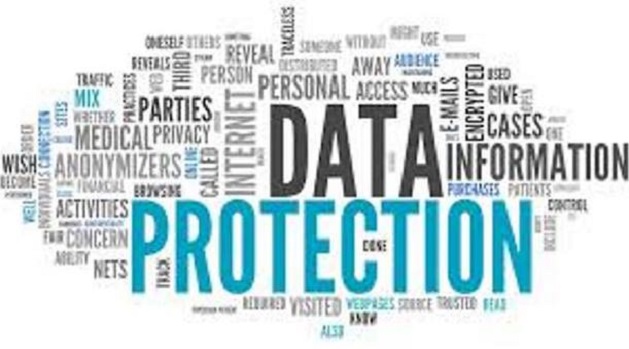
Sen. Afolabi Salisu, the Chairman, Senate Committee on ICT and Cyber Security, has said efforts were ongoing to review the National Data Protection Act (2023) to meet emerging threats associated with technological advancement.

Salisu disclosed this on Tuesday at the opening of a three-day workshop, on Data Protection Awareness Promotion organised for the Joint National Assembly Committee on ICT by Nigeria Data Protection Commission (NDPC) and Ampersand Development Partners.
He said that since the enactment of the Act in 2023, there have been new developments such as Artificial Intelligence (AI) and the United Nations Convention on Cyber Crimes.
The lawmaker said that there is a nexus between data governance and cyber crimes hence the need to look at the Act and strengthen the handshakes where necessary.
According to him, we need to ensure the security of our country, particularly in the cyber space and our data governance as well as technology advancement like AI.
“As legislators, we need to have knowledge on data privacy and protection for us to be able to effectively legislate in that area.
“You cannot legislate in an area that you are not sufficiently knowledgeable in; this workshop affords us the opportunity to build our capacity to understand modern principles of data protection and to be in position to review the National Data Protection Act
“It has been three years down the line, how has this law addressed the need of the nation, particularly given the emerging technologies and how it compares with other other countries.
“At the end of this exercise, we would be able to come up with a roadmap, a timeline, with a view to review the National Data Protection Act,” he said.
The lawmaker tasked all Nigerians on private data protection saying that it is the duty of all citizens to ensure safety of their data.
He said that many free public WiFi and Apps are not always free as users pay with their data and adverts without knowing it.
Also speaking, the Chairman, House Committee on ICT and Cyber Security, Rep. Stanley Olajide (APC- Oyo) said that data is gold and Nigeria’s next prosperity was not going to be oil but data.
He said that no investor would bring foreign funds or capital into Nigeria, without making sure that the right data protection law is in place, which Nigeria has.
“Whatever data that we have is our sovereign wealth, is something that belongs to us. How do we protect it? We have to make sure that the right legal frameworks are put in place, so that those data, once bridged, you can actually hold entities, corporation, the countries responsible when they’ breach your data law.
“In the U.S., they have their data law; if you put anything in their cloud, is owned by the United States. So we also have to have something here.
“Anything that resides here in Nigeria and is generated here must be home and protected by our country; so we are put in the right laws and framework in place just to do that,” he said.

Lagos Captures over 6.4m Residents in LASRRA Database

FG to Launch Nationwide Free Digital TV Platform June 17

FG, World Bank Launch $65m SPESSE Funding for 24,000 Nigerians

FG to Balance Innovation with National Security with Stronger Drone Regulations

Kaspersky Challenges IT Leaders with Next-generation Cyber Protection Simulations

Vitel Wireless Partners Fintechs to Expand Access to Services

Kaspersky Discovers Vulnerability in Qualcomm Snapdragon Chips that can Lead to Data Loss & Device Compromise

MTN, VDT, Zoracom, Digital Realty Back 2026 Girls in ICT Campaign

MTN Suspends Data, Airtime Borrowing Service over New FCCPC Lending Rules

Bank Customers to Pay N1,500 for ATM Card Issuance, Replacement – CBN




 Telecom2 days ago
MTN, Airtel, Glo Under Pressure as FG Demands Better Service Delivery

 E-Business2 days ago
Firm Warns of Phishing Attacks via Compromised Amazon Simple Email Service Accounts

 E-Financial2 days ago
Mastercard, BMONI Launch Multi-Currency Payment Cards in Nigeria

 General News1 day ago
PalmPay, LASUBEB Deepen Efforts to Keep More Children in School

 News2 days ago
Dr. Olusola Teniola, Honoured with Yoruba Study Group Golden Leadership Excellence Award

 General News2 days ago
Moniepoint Partners GDG Lagos, Women Techmakers to Empower the Next Generation of Women Architects in Tech

 Broadcasting2 days ago
Metro Digital, Nigerian Firm Accuses Multichoice Of Refusal to Obey Court Judgements

 General News2 days ago
Google Disrupts AI-Driven Cyberattack, Warns of Emerging Security Risks