

News
The Mentality of Winning

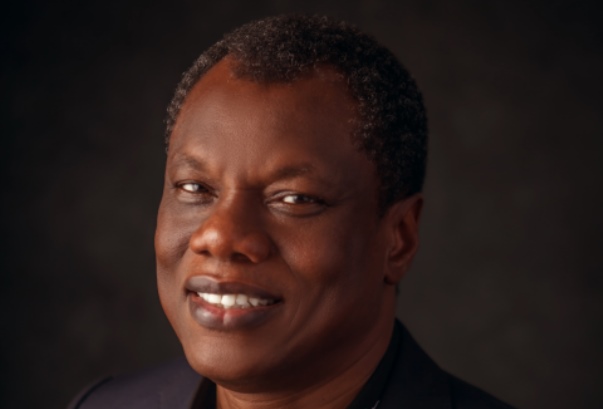
By Austin Okere
I first wrote this article on April 03, 2017, exactly three years ago. I feel compelled to share it again, as I believe that it is even more relevant today in this challenging circumstance; where nothing short of Visionary Leadership and a deep sense of Community and Resilient Followership is needed to steer our nation along this rocky path and to the other side of the wave.

Austin Okere
“The thing about winning and losing is that they are both self-reinforcing.” …Austin Okere
The Gunners as a metaphor
As an Arsenal football club fan, how do I convince anybody that the team is good or that coach Arsene Wenger is doing a good job, given the long spate of trophy draught and inexplicable losses in the current season both in the English Premier league and the Champions league?
The mentality of winning and losing – the Tyson effect

Winning reinforces your self-confidence and instils an inherent mythical fear in your opponents. The whole team is energized and ready for the next win. Losing on the other hand, engenders a loss of confidence and a significant level of demystification, inviting all manner of opponents to fancy their chances at you, as happened when the erstwhile unbeatable heavyweight boxing champion, Mike Tyson lost to a lowly challenger, Buster Douglas in 1990 in Tokyo, Japan.
This was followed by a string of losses leading to a less glorious retirement, highlighted by his biting off the ear of an opponent, Evander Holyfield, during a boxing match. Thus, was dimmed a golden opportunity of going down in history as one of the greatest heavyweights of all time.
Reversing the pattern – Leicester City FC finds her magic
Taking the steps required to reverse your losing spree and shifting into a winning mentality restores your lost glory, seemingly obliterating the past string of losses e.g. Leicester City Football Club; after parting ways with coach Claudio Ranieri (ironically the same coach that propelled them to the dizzying heights of winning the English Premier League title last year) have suddenly become unstoppable again; beating the better rated Spanish side, Sevilla FC for a place in the Quarter Finals of the UEFA Champions League. Even as first timers, they are the only English team still flying the British flag where great teams such as Manchester City and Arsenal have crashed out.
Winning is ‘In spite of’; Losing is ‘because of’ – the Usain Bolt determination
A loser’s mentality is strongly underpinned by a culture of excuses; finding ‘very good’ reasons why you didn’t make it, or why you lost; as if this will magically convert the loss into a win. An earful of balderdash at best.
A winner’s mentality on the other hand, is centred on ‘making it’ in spite of all odds. A very good example being Usain Bolt, who not only holds the world record for the fastest human dead or alive, but also winning three gold medals in the 100m, 200m and 4X100m races in three consecutive Olympics; Beijing (2008), London (2012) and Rio (2016) – Now, that is a winner with a strong winning mentality.
Believe me, it is never a walk in the park. He knew what he had to do when overconfidence brought an embarrassing loss to his training partner and competitor Johan Blake. Blake beat Bolt to second place in both the 100m and 200m at the 2012 Olympic trials in Jamaica, and this was just about a month to the London Olympics.
Just imagine the pressure that Bolt would have felt. In the beginning he resorted to excuses; he blamed the 100m loss on a poor start, and the 200m on a poor bend. Realizing that a golden dream was evaporating before his eyes, he quickly faced reality in his following statement capturing his renewed attitude “it’s all about work and just needing to get my things together and get it right. I’ve got to get in the work and figure out what I did wrong”.
And with that he got himself in shape in time to win both events at the London Olympics. He did work very hard and deserved the results and his place in history (watch the documentary on him titled ‘I am Bolt’).
The Nigerian Super Eagles – Our ‘Invincible’ of old
I remember with nostalgia when all the immigration officers in the countries that I visited in the 1990’s became very friendly upon sighting my Nigerian Passport, reeling the names of our Super Eagle players and asking me if I knew them; Jay-Jay, Kanu, Amuneke, Keshi, Okewchukwu, Taribo, Oliseh, Rufia, Amokachie, Yekini, Siasia, Ikpeba and the host of others .
These were the glory days of Nigerian soccer, where other teams’ reverence of our players conferred on us very deep respect as a country. Not so these days; we have managed to get ourselves stuck in a losers’ mentality to the extent that ‘the giant of Africa’ did not even qualify for the last edition of the African Nations Cup in Gabon this year.
We managed to win the bronze medal at the Rio Olympics, but who remembers, after the unbelievable story of our players being stranded in America and arriving only hours before their opening match; what manner of organization?
The headlines in the global media were enough to make every Nigerian bow their heads in shame. The Mirror succinctly captured it thus “Nigerian Olympic football team stranded in Atlanta hours before first game after unpaid flight bill”.
You did not need to read the body of the copy to see how shoddy our organization could be. How can we aspire to Gold with this attitude?
We need the right attitude to aspire to greatness – the China and Dubai examples
Countries like the UAE did not attain their heights by sudden flight, but rather toiled over the midnight candle while other less ambitious ones floundered, more so the ones with more human and natural resources and much more potential. They have keyed into a certain winners’ mentality that sees them breaking record after record.
For instance, The Burj Khalifa in Dubai is the tallest building in the whole world. A trip to Dubai will convince you beyond doubt about how seriously they take themselves, and how seriously everybody takes them. China is another story. For over three decades, China has had the world’s fastest growing major economy.
The country is in the midst of urbanization on an unparalleled scale. With more than 1.3billion citizens, China is the world’s most populous country. Until the late 20th century, most of her citizens lived in rural areas. Within a 50-year span, the percentage of city-dwellers rose from 13 to 50%.
On a recent visit with my wife, we could only marvel at the scenic beauty of the West Lake area of Hangzhou, the capital of Zhejiang province. Our Chinese tour guide, Mr. Forrest informed us that the plan of the Government was to lift a third of the population into the millionaires club within the next 10 years.
Without power, we have not even started – the Murtala Mohammed Airport blues
Africa is called the Dark Continent for a reason; it is ‘literally’ pitch dark when you fly overhead at night, due to the dearth of electric power. The sound track of Lagos, and indeed many Nigerian cities is the din of generators coughing up smoke into the already polluted environment, making the ban on public smoking of tobacco quite superfluous.
From reliable reports, our International Gateway, Murtala Muhammed Airport (MMA) has had to rely on candle lights more than once, due to power outage (and unbelievably, failure of the Generator secondary source).
To tell it the way it is, MMA being the first and last impression of a visitor to Nigeria is either a misrepresentation, or a sad commentary on us as Nigerians. The non-functioning escalators over many years, projects us as a set of very unserious people.
How complex is the technology and what will it take to fix it? The drive from the airport to the foot of the Third Mainland Bridge that takes you into the commercial business districts of Victoria and Lagos Islands could qualify as one of the most uninspiring airport rides in the world – again, can this not be fixed; Really? A famous Irish proverb that says ‘nodding the head does not row the boat’ seems to sum this up.
Are we passionate about our country – should we be?
Is it true that passion is something you value more than your life? Something you are willing to die for? If so, are we passionate about Nigeria? Should we be? Are other nationals passionate about their countries? Growing up in Ghana, my motherland, I really felt very passionate about her, as I believe were the sentiments shared by my other classmates.
The Chinese, Japanese, Europeans, Americans and all the places we love to flock to are very passionate about their countries and will gladly use their talents to help her to win; be it at the Olympics or the World Cup.
Many a times our Athletes and Players have made money a precondition; and who can blame them? The experience seems to suggest that the officials bail with the money immediately after the games. The objective all round seems to be the money rather than the glory for country.
Epilogue – where we should be headed
As a country, we have the complete ingredients for success; human, mineral and material resources in abundance. What we need are people that can dream and turn the dream into an executable plan. Execute and live the dream. Dubai has proved this theory, we just need to follow the path to success.
We have to strongly shun the temptation to try to ‘win by shortcuts’. Imagine that Nigerians lost a whooping N18b ($45m) to the MMM Ponzi scheme, despite many warnings by the Central bank.
This is not the first time and unlikely to be the last time we embark on such get-rich-quick misadventure. We flock to all manner of religious centres and shrines looking for money doubling miracles instead of putting in brainpower and manpower towards our endeavours.
As Mary Robinson said, nobody can go back to create a new beginning but anybody can start today to create a new ending. This is what we must do as a country. Everybody needs to put in the disciplined hard work and dig into our inner recesses to find our own winning ways! We need to start in earnest to develop and sustain the serious mentality of a winner.
We need to genuinely create an enabling environment underpinned by peace and security that nurtures prosperity for all, rather than all for a cabal.
This is our chance – the tide in the affairs of Nations
“There is a tide in the affairs of men. Which, taken at the flood, leads on to fortune; Omitted, all the voyage of their life Is bound in shallows and in miseries. On such a full sea are we now afloat, And we must take the current when it serves, Or lose our ventures”. This is the admonition of Brutus to Cassius in William Shakespeare’s epic, Julius Caesar.
Nigeria today is presented with such an opportunity. The current economic challenges after decades of squander and squalor have presented us with the golden opportunity of a reality check devoid of the distractions of easy oil money. This difficult period is too painful to waste. We must seize the opportunity for a reawakening, and realign towards doing the right thing and cultivating a winning mentality. If not now, then when? If CWGnot you, who?
Austin Okere is the Founder of CWG Plc, the largest ICT Company on the Nigerian Stock Exchange & Entrepreneur in Residence at CBS, New York. Austin also serves on the Advisory Board of the Global Business School Network, and on the World Economic Forum Global Agenda Council on Innovation and Intrapreneurship. Austin now runs the Ausso Leadership Academy focused on Business and Entrepreneurial Mentorship



Chief Judges drawn from countries across the African continent have resolved to collaborate and support measures aimed at ensuring the success of the Africa Continental Free Trade Area (AfCFTA) through an efficient, reliable and predictable dispute resolution system.

They agreed to explore ways to harmonize disputes resolution mechanisms in the continent with a view to making it easier and faster to resolve commercial disputes.
The resolutions formed part of the decisions taken at the third Africa Chief Justices’ Alternative Dispute Resolution (ADR) Summit held in Nairobi, Kenya between June 18 and 19.
According to a statement by the Special Assistant on Media to the Chief Justice of Nigeria (CJN), Justice Kudirat Kekere-Ekun, Mr. Tobi Soniyi, the African judicial leaders were of the view that commercial confidence depends largely on legal certainty.
They emphasised how structured Alternative Disputes Resolution could enhance commercial justice, protect the business environment and support the AfCFTA.
In her contribution, the Chief Justice of Nigeria (CJN), Justice Kudirat Kekere-Ekun urged called on African judiciaries to proactively prepare for emerging challenges to disputes resolution in the continent.
Justice Kekere-Ekun, who served as Co-Chair of the session on “Financial sector disputes, tax certainty and ADR: Building commercial confidence in Africa, noted that AfCFTA represents one of the most ambitious economic integration projects in modern history.
The CJN, who stressed the importance of a proactive Judiciary to the success of AfCFTA, warned that its success would depend, not only on trade protocols, tariff reductions and economic policies, but also on the strength and reliability of the institutions that support commerce.
Justice Kekere-Ekun urged her colleagues to examine how judiciaries in the continent, central banks, tax administrations and ADR institutions could work together to reduce uncertainty, prevent disputes, strengthen investor confidence and support the realization of AfCFTA’s objectives.
She envisaged the growth of intra-African trade to inevitably generate cross-border tax disputes; foreign exchange disputes; banking and payment system disputes; digital commerce disputes; enforcement of arbitral awards; recognition of foreign judgments; and disputes arising from regional supply chains.
The CJN, who said “African Judiciaries must proactively prepare for these emerging realities,” challenged African judicial leaders on the importance of disputes prevention mechanism.
She stated that modern commercial justice must move beyond the traditional focus on disputes resolution after conflicts arise.
“The most successful commercial systems are not those that generate the highest volumes of litigation but those that reduce the need for litigation,” she added.
Justice Kekere-Ekun, who stressed the importance of ADR, cautioned against seeing ADR as merely an alternative procedure.
She said ADR should rather be considered as a strategic tool for reducing transaction costs, preserving commercial relationships, enhancing investor confidence, reducing court congestion, improving ease of doing business and strengthening commercial certainty.
Sharing the Nigerian experiences, Justice Kekere-Ekun cited the recent decision by the Nigerian Supreme Court in the case of EMTS v. AFDIN Ventures Ltd. & Ors. (2026), which reaffirmed important principles of commercial certainty, including respect for arbitration agreements; recognition that consent may be inferred from conduct; judicial restraint from re-litigating arbitral disputes on the merits; and the importance of finality in arbitral awards.
According to her, the decision reinforced Nigeria’s position as an arbitration-supportive jurisdiction.
She identified timely resolution of tax disputes as an important factor in ensuring certainty and recommended Nigerian tax disputes resolution mechanism which she said “offers useful example of institutional reforms that support commercial certainty.”
Justice Kekere-Ekun recommended the Nigeria’s Tax Appeal Tribunal model, which she described as one of Nigeria’s most significant innovations.
According to Mr. Soniyi, Justice Kekere-Ekun’s message to his brother justices is clear: building an African commercial environment in which investors, businesses, regulators and citizens can transact across borders with confidence, secure in the knowledge that their rights will be protected and their obligations fairly enforced.
The summit advanced the goals of the African Chief Justices Alternative Dispute Resolution Forum (ACJADRF) to harmonize jurisprudence and establish common enforcement standards across the continent.
The CJN was, on the last day of the summit, nominated by the Chief Justice of Kenya as the Vice Chairperson of the Africa Chief Justice ADR Forum with effect from August 1, 2026. The nomination was ratified by the forum.

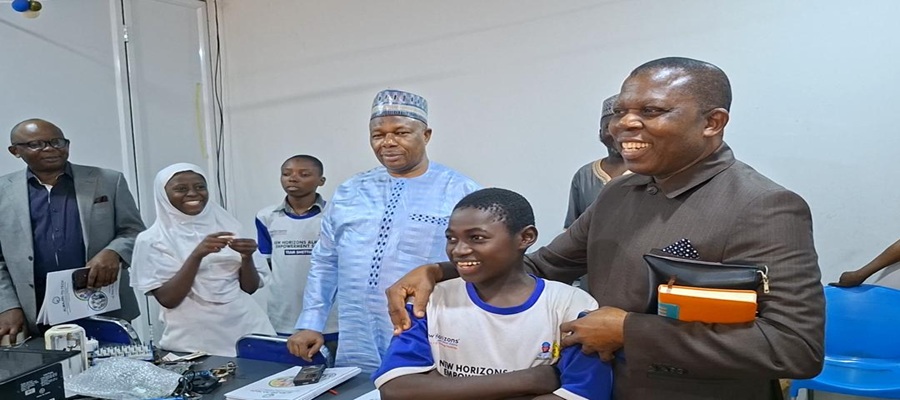
Twenty-one former Almajiri learners and street children are set to graduate as certified technology technicians under the Almajiri-to-Tech Initiative, a programme designed to equip vulnerable children with digital and entrepreneurial skills while addressing youth unemployment, poverty and insecurity.

The pioneer graduation ceremony is scheduled to hold on July 29 in Abuja, where the graduates will demonstrate practical skills, including assembling computers and drones, before government officials, development partners, members of the diplomatic community and the media.
The initiative was founded by technology education advocate, Mr Tim Akano, in partnership with New Horizons Nigeria, an Information and Communication Technology (ICT) training organisation.
According to the organisers, the programme seeks to provide practical solutions to the growing challenge of out-of-school children by combining technology education, entrepreneurship, mentorship and character development.
The organisers said the initiative had transformed children who previously had little or no exposure to technology into technicians capable of repairing laptops, desktop computers, mobile phones, power banks, electric fans, microwave ovens and other electronic devices.
They explained that the participants also received entrepreneurship training, mentorship, transportation support, daily meals, learning materials and professional work tools during the programme.
The organisers added that religious instructors from the participants’ respective faiths regularly visited the trainees to provide moral guidance, describing character development as a critical component of the initiative.
Unlike many vocational interventions that end with the presentation of certificates, the organisers said graduates of the programme would receive start-up support, while outstanding participants would be provided with professional work tools to establish their own businesses.
They also disclosed plans to launch a business directory and customer contact platform that would enable individuals, businesses and organisations to engage the services of the graduates.
Speaking on the initiative, Akano, who is also the Managing Director and Chief Executive Officer of New Horizons System Solutions Ltd., said the programme was conceived as a practical response to the challenges of youth unemployment, insecurity, poverty and irregular migration.
“You do not end migration by building higher walls. You do not defeat insecurity by relying only on military force, and you do not end poverty by preaching patriotism.
“You solve these challenges by building hope where hopelessness exists, equipping young people with practical skills, and creating opportunities where they live,” he said.
According to him, the pilot programme has demonstrated that children who have experienced neglect and exclusion can become innovators, entrepreneurs and contributors to national development when provided with quality education and opportunities.
He said one of the trainees, Mohammed, who arrived from the Niger Republic without speaking English, had acquired sufficient language proficiency within months to communicate confidently with customers while carrying out computer and electronics repairs.
Another participant, Fatima, discovered her interest in poetry during the programme and produced a poem celebrating New Horizons Nigeria, reflecting the broader personal development fostered by the initiative.
The organisers said the programme was inspired by concerns over the growing number of out-of-school children in Nigeria, estimated at about 30 million, and the broader global challenge of millions of children without access to education.
They argued that investing in digital skills, entrepreneurship and mentorship for vulnerable children offers a sustainable approach to addressing poverty, insecurity, youth unemployment and violent extremism.
As part of efforts to sustain the programme, the foundation said it had established a fully equipped workshop known as “The Almajiri Republic Workshop” in Wuse II, Abuja.
The workshop, according to the organisers, will serve as a commercial repair centre where graduates can provide computer and electronics repair services while continuing to strengthen their technical expertise.
The foundation called on the Presidency, federal and state governments, Ministries, Departments and Agencies (MDAs), members of the National Assembly, development partners, donor agencies, corporate organisations, civil society groups, religious institutions and other stakeholders to support the expansion of the initiative across Nigeria.
It maintained that scaling up the programme could transform millions of vulnerable children into skilled professionals capable of contributing to economic growth while reducing poverty, unemployment and insecurity.
The organisers said local and international media organisations, including CNN, BBC, Al Jazeera and ARISE News, had been invited to witness the graduation ceremony and the practical demonstrations by the pioneer graduates.

Accelerating artificial intelligence (AI) adoption could increase Africa’s GDP by up to 4% over the next decade, according to the International Monetary Fund (IMF).

In a report released on Tuesday, titled Africa Can Grow Faster With AI—If It Moves Now, economists from the IMF’s Africa Department say current levels of AI adoption and utilisation are expected to contribute just 0.2% to the region’s GDP over the next 10 years.
However, the report says stronger adoption, supported by the right infrastructure and policies, could raise the economic impact to about 4% by extending AI beyond today’s digitally connected firms.
Martin Schindler and other IMF economists say: “AI adoption in sub-Saharan Africa currently lags well behind every other region. If richer economies race ahead while African firms and governments lag, the productivity gap between the region and the rest of the world will only widen.”
Early signs of AI adoption are emerging across Africa, with countries including Zimbabwe, Kenya, Egypt and Nigeria developing AI strategies.
Telecommunications operators, including Vodacom, Econet, Africell and MTN, are also integrating AI into their operations and networks.
Other examples include chatbots supporting teaching and learning in Nigeria and the South African Revenue Service’s use of data analytics for targeted tax audits.
However, the IMF says AI adoption must extend beyond these early use cases to deliver meaningful economic benefits.
“For the region, AI’s main promise is not about replacing office workers, but boosting productivity across the economy—helping informal firms manage inventory, enabling farmers to increase yields, and supporting mid-sized firms to transition to formality and export readiness,” the report reads.
The IMF is urging governments to prioritise investment in reliable electricity, affordable broadband, data infrastructure and digital skills to support wider AI adoption.
Many African countries, including Zimbabwe, Kenya, Ghana, Nigeria and Cameroon, continue to face electricity shortages, while broadband services remain costly and coverage is uneven.
The Fund believes stronger investment in power, connectivity, regional data infrastructure and digital skills would help unlock AI’s economic potential.

Nigeria Leads Africa in Online Gambling Regulation – GCI

CBN Has Not Published Annual Financial Statements Since 2022 despite Legal Requirement

ChatPay Unveils Public Waitlist for WhatsApp-Based Banking Platform

GSMA Says High Smartphone Costs Threatens Africa’s AI Future

Dangote Refinery Completes Landmark $2.5bn Private Equity Placement

NRC, Ponzi Scheme Collapses Resulting Loss of Billions of Naira

NASENI Moves to Digitize CCB’s 5m Assets Declaration and Operations

Tokenization, Blockchain Technology will Transform Financial Institutions – IMF

EFCC Busts NIS Visa Overstay Racket, Uncovers N700m in an Account

From Scarcity to Scale: What Africa Can Learn from India’s Agricultural Transformation




 General News2 days ago
FG Launches C.L.I.C.K.D., Consumer Credit Scheme for Tech Devices

 Telecom2 days ago
Airtel Nigeria Expands Retail Footprint to Strengthen Customer Access Nationwide

 Telecom2 days ago
MTN Nigeria Opens Applications for Next Afrobeats Star Season 2 with Bigger Prizes

 Telecom2 days ago
Kaspersky Survey Highlights the Need for Smartphone Security

 E-Business2 days ago
Ovaloop Technologies Unveils Digital Tools to Formalize SMEs Operations Across Africa

 News2 days ago
NPC Opens Nationwide Digital Birth, Death Registration Platform

 E-Financial2 days ago
CBN Retains Interest Rate at 26.5% as Cardoso Cites Global Uncertainty Despite Inflation Drop

 Telecom2 days ago
Why Africa’s Top ICT Ministers Are Gathering in Abuja This Week