

E-Financial
Blockchain, Fintech and the Future of Banking

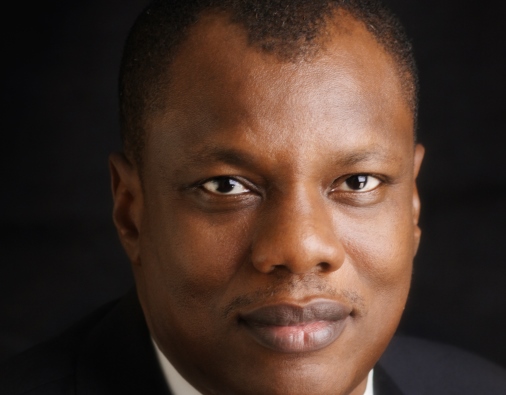
By Austin Okere
“Customers besiege banks on first day of partial lifting of COVID-19 lockdown: As early as 8 am, bank premises were already full of people seeking to gain entrance into the banking halls for one transaction or the other. And by 11 am, Twitter was filled with so many posts warning Nigerians about the risks of visiting any bank branch due to the mammoth crowd.” This was Dateline May 04, 2020 on Nairametrics.com. Other blogs had similar screaming headlines.

I wrote this article three years ago on May 04, 2017 when Blockchain and Fintechs finally seemed to be gaining traction in filling the gaps left by traditional banks – and surprised that we are still where we are even today. what will we learn from this, and how will we be better prepared not to be caught desperately unawares again?
Even though cryptocurrencies such as bitcoin tend to steal the limelight, it is their underlying blockchain technology that is proving to be of practical benefit. This technology, which goes beyond financial application, is expected to disrupt global supply chains by boosting transaction speed across borders and improving transparency.
Essentially, the blockchain is a shared virtual public ledger where encrypted transactions are confirmed by outside parties. Confirmed transactions are placed in a “block” and added to the chain, hence the name Blockchain. It is this technology that Fintechs are leveraging to disrupt the traditional banks

Here in Nigeria, blockchain can help to unlock the immense capital locked in Land Assets that are not enumerated because of an antiquated system of land administrated, which is very ripe for disruption.
The most disruptive application of Blockchain Technology, however, is in the Financial Sector; and this will form the focus of my discourse. The consistent complaint about banks has reached a crescendo in recent years. Is this justified?
Should Banks be changing?
Dateline, May 04, 2020 on Niarametrics.com After centuries of conservatism in receiving deposits and making loans, there are two main issues stirring the yearn for change:
- The first being that it is a very difficult Club to join as a customer, and hence the large population of unbanked adults.
- Secondly, even for the members of this elite club, the relationship is acutely skewed in favour of the banks
They have carried on as protected monopolies with no serious challenge or competition, resulting in very little innovation over the decades.
The biggest threat to the banks has been precisely their seeming success. Centuries of relatively significant higher returns, even during economic downturns that adversely affect the real sectors, has engendered an attitude of invincibility and pomposity, characterized by a loss of touch with their customers.
Considered too big to fail, they take it for granted that they will be bailed out with taxpayers’ money in the event of any missteps – this is a perfect set-up for disruption.
Fintech – the new kid on the block
Today, there has emerged a powerful force of the challenge from Financial Technology companies or FINTECHs, as they are more popularly referred to. The promise of Fintech is great. It is shaking up a stodgy banking system and helping to build a more efficient one, especially for consumers and small businesses.
Emerging Markets showing the way in Fintech
For years, emerging economies have looked up to developed countries for ideas about how to manage their financial systems. When it comes to Fintech though, the rest of the world will be studying the experience of the emerging markets, embodied by the widely successful MPESA mobile money system, championed by Safaricom in Kenya.
MPESA has made it possible for a large swathe of the population to gain financial inclusion by providing the opportunity to transact financial services via your mobile phone, on a continent where typically 70% of the population is unbanked.
MPESA today has more than 60% of Kenya’s 33 million mobile users and in 2015 transacted $28m on her platform. Similar applications have metamorphosed across Africa, and Mobile Money services are today generating 6.7% of Africa’s GDP.
Nigeria is no exception with Fintechs such as Interswitch, CWG, Paystack and Flutterwave holding sway. Take for instance, Diamond bank with 7m accounts after 23 years was able to add an additional 6m accounts in just one year after the launch of the Diamond Yello Account in collaboration with CWG and MTN.
China is the undisputed World leader in Fintech
By just about any measure of size, China is the world’s leader in Fintech. It is by far the biggest market for digital payments, accounting for half of the global market, according to the Economist Magazine. A ranking of the world’s most innovative Fintech firms gave Chinese companies four of the five top slots in 2016. The largest Chinese Fintech company, Ant Financial, has been valued at about $60b, at par with UBS which is Switzerland’s biggest bank.
Today, digital payments account for nearly two-thirds of non-cash payments in China, far surpassing debit and credit cards. Peer-to-Peer (P2P) lenders in China grew from 214 to over 3,000 in 2015, and P2P loans increased 28-fold from 30b yuan in 2014 to 850b yuan in 2016. This shows what is possible in Nigeria.
Austin’s Five Forces Model and the future of Banking
In the face of the fierce challenge facing banks, I developed a model for analyzing the future of banking called the Austin’s Five Forces Model. There are indeed five major forces at play here:
- The banks – traditional and established, best with cash and ancillary instruments
- Fintechs – the new kid on the block, disrupter, mostly telecom roots, best with digital currencies and mobile services
- Regulators – Central Banks, regulating traditional banks; and Communication Commissions, responsible for telecoms regulation (and thus Fintechs)
- Currencies – traditional, such as cash and cheques; or Digital, including Bitcoin or other cryptocurrencies
- Customers, and the weight of their new-found voice. Typically, they clamour for whatever will give them convenience, security and lower costs.
Customers are the most significant force, and represented by the outermost sector of the concentric circles. As they tend more towards a preference for digital currencies, the Fintechs will tend to assume a more prominent role in the new face of banking, and the Regulatory regime will inadvertently tend towards the Communication Commissions under whose purview the Fintechs fall.
This will introduce a regulatory imbroglio, as future ‘Huge Banks’ may fall outside the regulatory ambit of Central Banks as seems to be the case with the MPESA.
Safaricom, the telecoms promoter of MPESA ironically falls under the regulation of the Communications Authority of Kenya rather than the Kenyan Central Bank.
If the customers however, maintain a strong appetite for traditional instruments of financial transactions such as notes & coins, cheques etc. then the current status quo will remain. The face of banking will thus be more of the same, and the regulatory authority will continue to be Central Banks. Between these two positions may be many variants, depending on the appetite and preferences of customers, and the pace at which they are willing to embrace change.
Retailers are jumping into Financial Services
Fintechs are not the only ones challenging traditional banks for turf. Retailers are also jumping into the financial services fray. For instance, Amazon has launched Amazon Cash, a way to shop its site without a bank card. This product is meant to appeal to the those who get paid in cash, don’t have a bank account or debit card, and who don’t use credit cards.
Google is also rolling out a new integration on mobile called Google Tez, which allows audio QR Codes and thus opens the door for more basic phones other than smartphones. Users of the Gmail app on Android will be able to send or request money with anyone, including those who don’t have a Gmail address, with just a tap.
Banking is going Mobile
In most emerging markets and developing countries, the current formal financial system only reaches a minority of the working-age adult population. Smallholder farmers, self-employed households, and micro-entrepreneurs have to rely on the age-old informal financial mechanisms such as rotating savings clubs (Isusu or Ajoo). These mechanisms can be unreliable and very expensive.
In Nigeria for instance 84.6m people, accounting for 47% of the population are unbanked. In sharp contrast, mobile phone penetration is very high at 94.5 per cent; a perfect set-up for the Fintechs to exploit in their mobile dominated financial services offering.
The digitization of retail payment systems and financial services has become an important economic development priority. It offers the prospect of reaching far more people at far lower costs with the broader range of financial services they need to build resilience and capture opportunities. This speaks to inclusiveness
What will be the scale of change of the Blockchain technology?
The changes coming with Blockchain will be as large as the original invention of the internet, and this may not be overstated. Who would have imagined a decade ago that e-commerce, championed by Amazon and Alibaba will be displacing high street retailers, or that ride-hailing will be dominated by UBER, a technology platform?
There seems to be a seamless change happening in the Financial Sector. According to Anthony Jenkins, former CEO of Barclays, bank branch traffic has halved in the last five years, and bank profitability could collapse by 60% in the same period. A 2015 Goldman Sachs report estimated $4.7tn of financial services revenue was at risk of displacement from Fintech groups.
Regulators are now helping Fintechs
Fintechs are getting a lot of support from Regulators, believing that Fintech firms are small enough for any problems to be manageable, and on the other hand, might produce useful innovation (the sandbox approach). The intention is to lower market entry barriers for fintech companies. For instance, France’s Central Bank has announced opening up a new innovation lab, aiming to collaborate with blockchain startups.
In December 2015, Nasdaq executed its first trade on a blockchain, through its Linq ledger. The exchange said the blockchain promises to expedite trade clearing and settlement – all the steps needed to transfer the asset from seller to buyer including recording the transaction — from three days to as little as 10 minutes. That’s because the trades remove many manual processes and bypass third parties.
As such, “settlement risk exposure can be reduced by over 99%, dramatically lowering capital costs and systemic risk,”. Other stock exchanges tinkering with the blockchain include Australia, Germany, Japan, Korea, London,Toronto and Myanmar.
The Future of Fintechs
The future of Fintech seems bright. Accenture recently released a report which found that investment in Fintech around the world has increased dramatically from $930 million in 2008 to more than $12 billion by early 2015. Fintechs employ Artificial Intelligence, Big Data and Machine Learning to glean the credit habits of customers from their mobile usage, and so have mitigated against the risk of default.
The lucrative Transfer market will be significantly impacted
The lucrative global transfers markets are major targets by Fintechs. International money transfers, which have long been a thorny issue, are getting easier. For smaller transactions, services like PayPal automatically convert currencies, so it’s easy for a customer to purchase goods from anywhere in the world.
More importantly, a service called TransferWise is streamlining international money transfers, significantly disrupting that sector by offering a 90 per cent discount on traditional bank transfer fees. According to the founder, Taavet Hinrikus, the idea was borne out of his personal frustration in money transfers. ‘It typically took 3-4 days to receive transfers, albeit the exchange rate used by banks was exorbitant, leading to a loss of almost 10% of the value of money sent’.
In this exorbitant regime, Western Union and HSBC typically earned $600m and $800m per annum respectively in profits from only transfers. These huge contributions to their bottom-line will be dearly missed when displaced by TransferWise and their co-travellers. In Taavet’s view Fintechs will command about 40% of the global Financial Services market in the next 10 years.
Banks and Fintechs’ collaboration for mutual benefit
Fintech companies in emerging markets have shown that with blockchain technology, it is possible to leapfrog to new forms of banking.
Truth be told, Banks are best placed to continue to influence the future of Financial Services because of their huge branch network, solid reputations, and risk controls, as well as years of customer cultivation and loyalty. They, however, have to radically change the mindset of ‘we win when you lose’.
The big take awayThe ubiquity of broadband and the pervasiveness of mobile phones, along with breakthrough technology such as Artificial intelligence, Big Data and Blockchain are expanding the frontiers for business models in ways that were hitherto not possible, and levelling the playing field in the process.
Any bank that does not read the signs and join the innovation train will definitely be disrupted and left behind. Remember that there was a time when the Post Office was at the centre of our lives. When was the last time you visited a post office?
Austin Okere is the Founder of CWG Plc, the largest security in the technology sector of the Nigerian Stock Exchange & Entrepreneur in Residence at CBS, New York. Austin also serves on the Advisory Board of the Global Business School Network, and on the World Economic Forum Global Agenda Council on Innovation and Intrapreneurship. Austin now runs the Ausso Leadership Academy focused on Business and Entrepreneurial Mentorship.


Nigeria’s Bank Verification Number (BVN) database expanded to 69.55 million as of July 5 2026 from 69.32 million in June 2026, according to latest data released by the Nigeria Inter-Bank Settlement System (NIBSS).

BVN is an 11-digit biometric identification system introduced by the Central Bank of Nigeria and managed by the Nigeria Inter-Bank Settlement System (NIBSS) to secure customer accounts and reduce fraud.
This means that BVN enrolments increased by 228,947 between June and July 5 this year.
With the BVN database standing at 67.8 million as of December 31, 2025, it also means that the database grew by 1.75 million between the end of last year and July 5, 2026.
Specifically, with less than 1.8 million BVN enrolments so far recorded for this year, it is looking highly unlikely that BVN registrations at the end of 2026 will come close to the 4.3 million total registrations recorded in 2025.
Analysts note that while the expansion in the BVN database last year was largely driven by the introduction of the NonResident Bank Verification Number (NRBVN) initiative, which enables Nigerians in the diaspora to do their BVN enrolment remotely, thereby removing physical barriers and boosting cross-border financial engagement, the Central Bank of Nigeria (CBN) in March this year, announced a revised BVN regulatory framework, that saw it introducing stricter controls on suspected fraudulent transactions, BVN enrollment, and data access within the banking system.
According to the regulator, the amendments to the BVN framework, which came into effect on May 1, 2026, were aimed at strengthening fraud monitoring, improving identity management within the financial system and safeguarding the integrity of banking transactions, by strengthening identity verification and ensuring that BVN registration aligns with legally recognised age thresholds.
Thus, under the revised BVN framework, the apex bank introduced a stricter age requirement for BVN enrolment, limiting registration to 18-year-old individuals and above.
Also, under the new framework, customers will only be allowed to change the phone number associated with their BVN once. The CBN further stated: “Under the new guidelines, financial institutions are required to establish and maintain a temporary watch-list for BVNs linked to suspected fraudulent transactions reported within the banking system.
“A BVN may remain on this temporary Watch-list for a maximum period of twentyfour (24) hours, during which the BVN owner shall be contacted to provide clarification regarding the identified transaction(s).”
Launched on February 14, 2014, by the CBN in collaboration with the Bankers’ Committee, the NIBSS, and the German firm Dermalog, the BVN scheme was designed to capture the biometrics of all bank customers and provide each with a unique 11-digit identification number that can be verified across the Nigerian banking industry.

Central Bank of Nigeria (CBN) has reaffirmed that the standard N100 banknote remains legal tender across the country, warning that its rejection by individuals, businesses and institutions violates the law.

The clarification follows reports that some members of the public have refused to accept the standard N100 note over concerns about its legal tender status following the introduction of the commemorative N100 banknote issued to mark Nigeria’s centenary.
In a statement signed by Mrs. Hakama Sidi-Ali, acting director of Corporate Communications, the apex bank stressed that “both the commemorative N100 banknote and the standard N100 banknote are valid legal tender and must be accepted for all transactions nationwide.”
The CBN explained that the commemorative N100 note was introduced to celebrate Nigeria’s centenary and did not replace the existing standard N100 banknote.
The CBN cautioned individuals, businesses, financial institutions and other economic agents against rejecting the standard N100 note, noting that such action contravenes the provisions of the CBN Act and undermines public confidence in the national currency.
It warned that appropriate enforcement measures would be taken against any person or organisation found violating the law.
The apex bank reaffirmed its commitment to protecting the integrity of the naira, maintaining confidence in all duly issued banknotes and ensuring the smooth circulation of currency across the country.
The CBN also urged members of the public to continue accepting and transacting with all banknotes legally issued by the Bank and advised anyone seeking further clarification to use its official communication channels.
FCMB Asset Management Limited (FCMBAM), the asset management arm of FCMB Group Plc, has received an upgrade to its national scale long-term and short-term issuer ratings of A(NG) and A1(NG), from A-(NG) and A2(NG), by GCR Ratings, a leading pan-African credit rating agency.

The outlook on the ratings remains stable, said the rating agency.
The upgrade is anchored on FCMBAM’s competitive resilience and financial discipline, alongside the strengthened credit profile of FCMB Group.
GCR highlighted FCMBAM’s decade-long track record of strong performance, well-established brand franchise, diversified product suite and robust distribution network as key drivers of its standalone strength.
These are further supported by consistent earnings growth and a disciplined, unleveraged balance sheet, it said.
According to GCR, FCMBAM’s competitive position is supported by “its relatively long track record, strong brand franchise, established product and geographical distribution network and cross-selling opportunities,” with the rating agency noting that FCMBAM ranks among the top five asset managers in Nigeria, with an estimated five per cent share of a fragmented market as of 31 December.
The Company’s financial performance underpinned the upgrade, with revenue growing by 30 per cent and operating cash flow increasing by 13 per cent, enabling the business to be fully funded without recourse to debt.
Liquidity strengthened further, with liquidity sources versus uses improving to 5x as of December 2025, from 3.6x a year earlier, while the EBITDA margin edged up to over 58 per cent.
Commenting on the upgrade, the Chief Executive Officer of FCMB Asset Management, James Ilori, said: “This upgrade is an important external validation of a strategy we have pursued with discipline over many years: building an investment franchise that performs reliably, governs itself rigorously, and earns trust in every market cycle. It speaks to the strength of our membership of FCMB Group and to a culture that holds itself to local and global standards of risk management and capital stewardship.
“As Nigeria’s asset management industry enters a new era of higher capital thresholds and rising investor expectations, we intend to lead from the front – ahead of regulatory timelines, ahead in digital transformation and ahead in the outcomes we deliver for the clients who trust us to assist them in achieving their investment objectives.”

Court Adjourns Alleged Binance Tax Evasion Case over Settlement Talks

Fixed Wired Internet Market Lags as Mobile Gains Ground

Xenophobic Attacks: OYC Threatens to Picket MTN Nigeria Offices

New NIMC Act Strengthens Data Protection, Privacy – Director

BON Establishes Six Ad Hoc Committees to Modernize Broadcasting

NASENI Moves to Digitize CCB’s 5m Assets Declaration and Operations

Mobile Internet Gender Gap Widest in Africa – GSMA

Nigeria Launches FreeTV Nationwide

CANAL+ Partners Samsung to Pre-Load DStv Stream on New Samsung TVs In Nigeria, Other African Countries

Lebara Nigeria Launches Lebara Play, Africa’s First Telecom-Owned Micro-Drama Platform




 News3 days ago
NRC, Ponzi Scheme Collapses Resulting Loss of Billions of Naira

 News3 days ago
NSITF Partners South African Insurer on Digital Transformation

 E-Financial3 days ago
FCT-IRS Unveils New Digital Platform, Taxporta

 General News3 days ago
KPMG Urges Africa’s Most Innovative Tech Entrepreneurs to Enter the Global Tech Innovator 2026 Competition

 E-Business3 days ago
FG Suspends New Internet Regulations to Prevent Overlapping Rules
 E-Business3 days ago
NIN Enrollment Hits over 136m as New ID Law Takes Effect

 Telecom2 days ago
NCC Seeks Cost-Based Pricing Framework for Ducts

 E-Business3 days ago
Plateau PCC Collects Nigerians’ Data without Privacy Policy – FIJ