

E-Financial
Lagos Automates Process of Issuing Money Lending Licenses

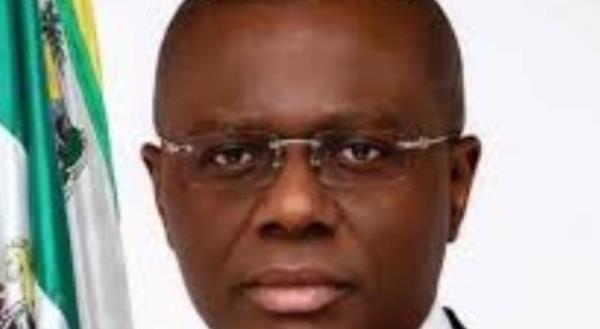
Lagos State Ministry of Home Affairs has said that the State Government has started the procedure of automating the processing of money-lending licenses, revealing that since the commencement of the process a few months ago, it has received 207 applications out of which approvals were granted for 184 applicants.

Gov. Babajide Sanwo-Olu
Prince Anofiu Elegushi, commissioner for Home Affairs, who disclosed this at a Ministerial Press Briefing commemorating the first year in office of Mr. Babajide Sanwo-Olu at JJT Park, Alausa, Ikeja, explained that the decision to automate the process of money-lending licenses in the State was to ensure a hitch-free renewal and fresh applications by prospective applicants.
Elegushi reported that only one application has so far been declined by the Ministry, while 22 applications are currently being reviewed, stressing that the initiative would henceforth guarantee easy access to loan opportunities by residents of the State and ultimately provide employment for the youths.
According to him, “the initiative is cost-effective for grassroots financing and the requirements are simple and straightforward. The forms are available and the processes are very friendly. In addition, the automation of the money-lending processes would help address several issues of trust that had over time bedevilled the practitioners”.
Elegushi described the various Money Lenders across the State as mini-micro economic stimulants that create jobs, generate wealth, alleviate poverty while widening the tax net, thereby increasing the socio-economic status of the State, through the provision of enabling environment for small scale businesses and entrepreneurship.
He recalled that prior to the automation of the money lending processes, the Ministry had earlier held a Stakeholders’ Forum on the need to examine the laws guiding the activities of money lenders in the State to make members of the public have more confidence in the practitioners.
The Commissioner also acknowledged the support of the Governor Babajide Sanwo-Olu in creating an enabling environment for easy loan accessibility to the citizens, with an emphasis on pragmatic strategies for achieving positive and cost-effective results in grassroots financing, which will invariably help in achieving the T.H.E.M.E.S Agenda pillar objective of ‘Making Lagos a 21st Century Economy’.
While noting that the moneylender practitioners constitute key players in small and medium enterprises and are promoters of economic growth and prosperity of the State, Elegushi expressed the hope that other practitioners in the business of money lending would key into the initiative of the government.
He also used the occasion to make a renewed call to all money lenders operating in the State to obtain a valid license from the Ministry for smooth and legal operation of their businesses while advising borrowers to only patronise licensed money lenders.



Federal government has started new efforts to improve tax collection in the Federal Capital Territory (FCT) and stop the problem of multiple taxation.

Mr. Taiwo Oyedele, minister of Finance and coordinating minister of the economy, disclosed this after a meeting with Nyesom Wike, minister, FCT, on Sunday.
According to Oyedele, the meeting focused on strengthening cooperation between the Ministry of Finance and the FCT Administration to support development projects in Abuja.
A major part of the discussion was how to improve tax administration in the territory.
He explained that the proposed tax harmonisation would create a more coordinated tax system, reduce the burden of multiple taxes on residents and businesses, and improve government revenue collection.
Oyedele said the plan is in line with the new tax reform law and is expected to help accelerate development across the FCT.
“The two ministers also reviewed plans to harmonise tax administration within the FCT,” he said.
He added that the initiative would eliminate multiple taxation while ensuring that government revenue is collected more efficiently.
The meeting also examined ways to strengthen collaboration on infrastructure projects across Abuja.
According to Oyedele, discussions centred on supporting the FCT’s ongoing infrastructure renewal programme.
He commended Wike’s approach to development, noting that the minister has focused on completing long-abandoned projects rather than starting new ones.
Oyedele said this strategy is helping to unlock economic and social benefits for residents by bringing stalled public projects back into use.
The proposed tax harmonisation is expected to make tax administration easier for individuals and businesses operating in the FCT while aligning Abuja’s revenue system with the provisions of the new tax reform law.

Standard Bank Group has identified Nigeria and four other markets as strategic growth hubs as it seeks to tap into $15.4 billion revenue opportunity driven by expanding small and medium-sized enterprises (SMEs) and rising intra-African trade.

The bank disclosed the plan through Bill Blackie, the Chief Executive Officer of its Business and Commercial Banking (Standard Bank Group) division, who outlined the lender’s growth strategy in an interview with Bloomberg.
Under the strategy, Standard Bank will deepen its presence in Nigeria, Ghana, Kenya, Uganda and Tanzania while consolidating its dominance in South Africa. The five markets account for about 85 per cent of the estimated revenue opportunity available to the group’s BCB operations.
The expansion forms part of the lender’s broader ambition to accelerate earnings growth through 2028, leveraging increasing demand for banking services among businesses across the continent.
According to Blackie, the BCB division has recorded robust growth over the past five years, supported by rising business activity and greater demand for financial services across Africa.
He said the division doubled both headline earnings and return on capital between 2020 and 2025, with return on capital increasing from 19 per cent to 38 per cent during the period.
Earnings from operations across the continent also expanded at an average annual rate of 30 per cent.
Building on this performance, the bank is targeting compound annual growth of between eight and nine per cent through 2028, although Blackie expressed confidence that growth could reach double-digit levels as the strategy gains traction.
A key pillar of Standard Bank’s growth strategy is expanding support for SMEs and mid-sized businesses, which account for most enterprises across Africa.
The bank is particularly positioning itself to benefit from opportunities created by the African Continental Free Trade Area (AfCFTA), which is expected to accelerate economic integration and cross-border commerce across the continent.
According to the International Trade Centre, nearly half of Africa’s small businesses export to other African countries, compared with only 14 per cent of larger firms, underscoring the critical role of SMEs in driving regional commerce.
The lender is also leveraging its extensive African footprint and strategic partnership with the Industrial and Commercial Bank of China (ICBC) to attract businesses seeking access to international markets, particularly China.

The National Insurance Commission (NAICOM) has handed over the management of African Alliance Insurance Plc to a newly constituted board nominated by shareholders.

The move ends a regulatory intervention that rescued the troubled insurer from the brink of collapse.
The development marks a major milestone in the insurance industry’s efforts to strengthen policyholders’ protection and restore confidence in the sector, following months of intensive regulatory oversight aimed at stabilising the company.
NAICOM had stepped into the affairs of African Alliance Insurance in October 2024 after the insurer was hit by severe liquidity constraints, mounting annuity payment arrears, unresolved claims obligations, regulatory infractions and reputational challenges that threatened its survival and eroded public trust.
Speaking at the handover ceremony, Commissioner for Insurance, Olusegun Omosehin, said the intervention had achieved its primary objectives of restoring operational stability, settling outstanding liabilities and protecting the interests of shareholders and annuitants.
Omosehin said a successful turnaround demonstrates the regulator’s commitment to safeguarding the insurance industry while ensuring that policyholders do not bear the consequences of corporate distress.
He also highlighted the significance of the newly enacted Nigerian Insurance Industry Reform Act (NIIRA) 2025, describing it as a game-changer for the sector.
The Commissioner observed that had the fund been in existence before the African Alliance’s crisis, it would have helped to cushion the impact on policyholders by facilitating the timely settlement of legitimate claims and annuity obligations.
He charged the new board to uphold high standards of corporate governance, transparency and regulatory compliance, while prioritising prompt claims settlement, sound solvency management and prudent business practices.
Industry stakeholders view the successful rehabilitation of African Alliance as a test case for regulatory intervention in Nigeria’s insurance sector, particularly at a time when operators are under pressure to strengthen their capital base, improve governance standards and rebuild public confidence.
During its tenure, the NAICOM appointed an interim board to restore liquidity through the recovery of trapped dividend funds and other inflows, settled a significant portion of annuity arrears and legacy claims, facilitated the transfer of the company’s annuity portfolio, completed forensic and actuarial reviews and addressed several regulatory and operational challenges.

Galaxy Backbone @ 20, Unveils New Identity

ALTON Backs CBN on Local Data Hosting Rule for Banks, Fintechs

MTN Nigeria Commits to Ethical Conduct with IFRS S1, S2 Compliance

NDPC to Review Data Law to Address AI, Privacy Concerns

FG Moves to End Double Taxation

CBN Extends PoS Geo-Fencing Enforcement Deadline to August 2026

London Strengthens Global Investment Ties with Africa @ First Ever London-Africa Business Summit

FG Targets Alleged N3tn Capital Flight, Opens Airtime Credit Market to Nigerian Fintechs

Japan, UNESCO Boost Digital Learning in 15 CoEs with Donation of ICT Equipment

African Electric Vehicle Platform Raises $215m to Scale Electric Mobility in Nigeria, Others




 Telecom3 days ago
TikTok, ICC Gather Nigeria’s Entrepreneurs to Drive Small Business Growth and Digital Transformation

 E-Business3 days ago
Payaza Launches AI-powered Storefront Platform to Drive Cross-border Commerce

 Telecom3 days ago
Nigeria Moves to End Solar Imports as NASENI, REA Seal Major Renewable Energy Deal

 Telecom3 days ago
How a New NITDA-TikTok Partnership Could Transform Thousands of Nigerian Businesses

 E-Business3 days ago
FG Bans Use of Gmail, Other Personal Emails for Civil Service Operations

 E-Financial3 days ago
NAICOM’s 18 Months Management Spill @ African Alliance Ends

 E-Financial3 days ago
Standard Bank Targets $15.4b SME Growth in Nigeria, Others with Trade Expansion Drive

 General News3 days ago
Indwelt Studios Seeks Increased Awareness @ World Sickle Cell Day