

News
COVID 19: Coca-Cola Empowers 5000 Wowen for Economic Recovery

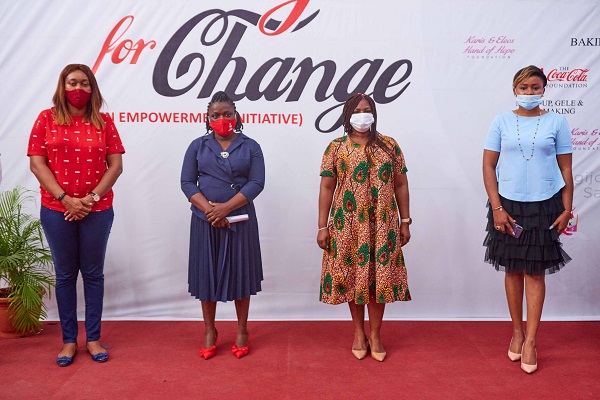
In a bid to upskill and empower women through recovery from the effects of the coronavirus pandemic in Nigeria, The Coca-Cola Company through its philanthropic arm, The Coca-Cola Foundation, has partnered with Nigeria-based NGO, Karis and Eleos Hand of Hope Foundation, to help equip 5000 women with relevant vocational skills and business training.
The grant, awarded by The Coca-Cola Foundation, represents efforts to continually make a difference in the lives of women who remain pillars of the society; by providing business-focused trainings through its local implementing partner, Karis and Eleos Hand of Hope Foundation, with the purpose of enhancing business acumen and scaling up micro enterprises to guarantee sustenance for themselves and their families.
The capacity building program tagged “Catalyst for Change” will be implemented by Karis and Eleos Hand of Hope Foundation across five communities in Lagos state and will directly impact the lives of 5000 women across Iwaya, Oworonshoki, Sangotedo, Magboro and Ogijo communities with 1000 of these women receiving funding and support to set up their small-scale enterprises.
Business training modules to be delivered by experienced facilitators will focus on personal & product branding, business foundations and basic accounting while artisanry trainings will cover courses in wig making, make-up, fashion and designing, household essentials, shoe making, amongst others, over the course of a five-month period with the program kicking off this August.
Other partners providing support to the program include The Small and Medium Enterprises Development Agency of Nigeria (SMEDAN).
Speaking on this program, Bukola Bamiduro, founder of Karis and Eleos Hand of Hope Foundation, expressed her gratitude for the grant.
She said, “Poverty is the greatest threat to our existence as it fuels crime, despair and vices.
“The impact of COVID-19 has further escalated poverty in Nigeria and so we are delighted with this partnership and the execution of the program as these women will become catalysts in their communities, pulling their families out of poverty”.
Also commenting on the program, Nwamaka Onyemelukwe, manager, public affairs, Communications and Sustainability, Coca-Cola Nigeria Limited, remarked, “This is yet another way through which our Company is passionately contributing to the recovery of our economy following this devastating pandemic.
“Our desire is to continue to economically uplift as many women as possible in Nigeria as we recognise their critical roles in society.
“We are confident that this new partnership will go a long way in supporting women and providing them a means of livelihood through the recovery phase”.
Representing the First lady of Lagos State, Her Excellency Ibijoke Sanwo-Olu, Wife of the Attorney-General of Lagos State, Mrs. Olabisi Onigbanjo, said, “It is particularly reassuring that this empowerment initiative is coming at a time the country is contending with the severe effects of the COVID-19 pandemic.
“Through this initiative, 5,000 women across five communities will be empowered with business and life skills needed to escape from extreme poverty. When you empower women, you empower the whole family and by extension the nation.”
Karis and Eleos Hand of Hope Foundation is a non-profit established in 2017, with a vision to empower women and girls across the rural demographic.
The award of this grant will help in achieving the shared objective of The Coca-Cola Foundation to grow a sustainable pipeline of female talent and empower women, ultimately creating a sustainable society.
Through its ambitious goal of empowering 5 million women across the world by 2020 under its 5by20 initiative, The Coca-Cola Company has so far empowered 4.6 million women with over 420,000 Nigerian women directly impacted.
The Company through its philanthropic arm, The Coca-Cola Foundation, has contributed more than $1 billion over the past 36 years to help protect the environment, promote recycling, empower women and enhance communities around the world.


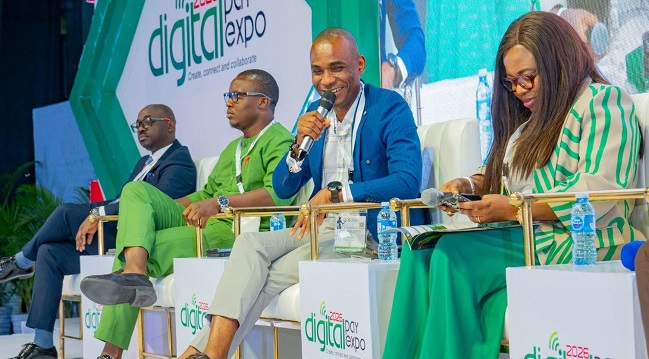
PalmPay has called for stronger infrastructure and better access to finance for small businesses as essential to the next phase of financial inclusion and economic growth in Nigeria.

This position was shared by Chika Nwosu, Managing Director of PalmPay Nigeria, during a panel session at Digital Pay Expo 2026, where regulators, fintech leaders, payment operators and other key ecosystem stakeholders gather to discuss the future of digital payments in Africa.
Speaking during a session focussed on advancing financial inclusion and SME growth, Nwosu said that while the micro, small, and medium enterprises remain central to economic activity, many still face real barriers around access to credit, reliable payment infrastructure, and the relevant digital tools needed to grow sustainably.
According to him, meaningful financial inclusion must go beyond onboarding more users into the formal financial rail. It must also address the structural issues that limit how small businesses participate, transact, and scale.
“SMEs contribute 40 per cent of the country’s GDP. For us in PalmPay, Financial inclusion is not just about enabling transactions. It is also about helping businesses access the tools and support they need to expand, build resilience, and create jobs.
He also highlighted the importance of digital literacy, noting that as digital tools and AI become more embedded in financial services, business owners must be equipped to use them effectively and responsibly.
For PalmPay, the future of inclusion will depend not only on innovation, but on how well the ecosystem reduces friction for small businesses and provides the infrastructure and financial support they need to grow.
Discussions at the event also pointed to the need for stronger collaboration across the ecosystem and more practical approaches to helping SMEs move from awareness to adoption of digital financial services.
PalmPay’s MD noted that unlocking the full potential of Nigeria’s SMEs will require a combination of accessible finance, financial education, trusted platforms, and coordinated ecosystem support.

The World Cup 2026 kicked off on June 11 and alongside it the number of scammers attempting to exploit fan excitement has also increased. According to Kaspersky, at least 336 unique domains mimicking official World Cup resources have been detected. In addition, cybercriminals are actively exploiting growing interest in match streaming and sports betting.

Fake broadcasting schemes
Since the start of the tournament, millions of viewers worldwide have been tuning in across TVs and other devices to watch matches live. At the same time, fraudsters have been creating websites offering “online streaming” of the championship.
The scam works as follows: attackers set up fake websites that claim to provide free access to World Cup broadcasts. After clicking “Watch now,” users are prompted to register to gain access. They are then asked to pay a cryptocurrency fee for “lifetime tournament access.” The danger of this scheme lies in the potential loss of both registration data and cryptocurrency funds.
Betting traps: When the wager is already lost
Another trap targeting football fans involves fraudulent betting and match prediction platforms. For instance, a Spanish-language website was found requesting extensive personal information, including first and last name, email address, phone number and more, under the guise of account creation.
Such schemes expose users to credential theft, particularly if they reuse the same password across multiple services, as well as to potential financial loss.
“Since the start of the tournament, scammers have increasingly focused on the ways fans engage with the event online, as watching matches today requires only an Internet connection and a device.
As a result, criminal activity continues to grow, as reflected in the fraudulent websites we observe offering streaming and betting services in multiple languages. We recommend that users stick to official broadcasts to help protect their data and finances,” says Olga Altukhova, Senior Web Content Analyst at Kaspersky.
You’ve got mail: (Un)real predictions
Another attack scenario involves emails in which attackers attempt to trick users into sending money or clicking phishing links. To increase engagement, these messages often use compelling subject lines and persuasive wording.
In one observed case, fans received emails advertising football analytics services and match winner predictions. A notable feature is the sense of urgency, asking recipients to act quickly, which is one of the common indicators of a possible scam email.
In this case, users are asked to pay a $200 fee to access football analytics. While the offer targets fans interested in betting, paying for such “services” can potentially result in irreversible financial loss.
News
CredibleVoteNG Opens Free Access to all Polling Units in Nigeria after INEC Demanded N1.Bn for Register

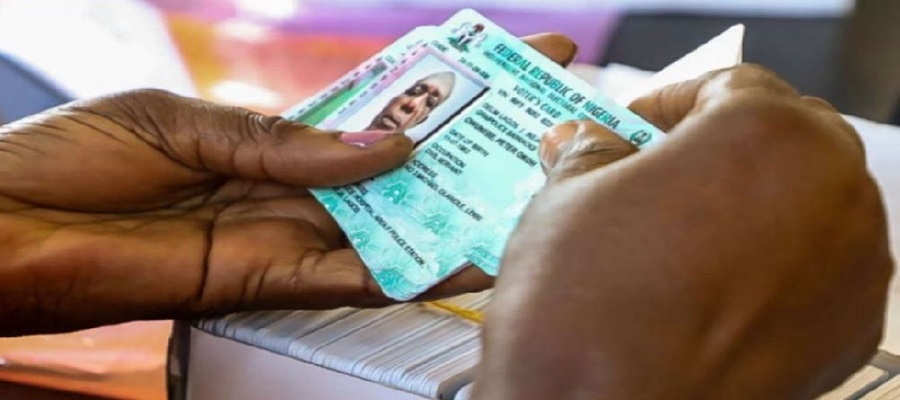
CredibleVoteNG, a citizen-built, open-access platform is hosting precise, verified information for all 37 states (including the FCT), 774 Local Government Areas (LGAs), and 176,846 individual polling units for free.

This is coming months after the Independent National Electoral Commission (INEC) placed a N1.5 billion price tag on requests for Nigeria’s complete polling unit register under the Freedom of Information (FOI) Act.
But CredibleVoteNG, being promoted by two Nigerian technology enthusiasts have built a platform that provides the same information free of charge.
The platform, offers structured digital access to all 176,846 polling units across Nigeria’s 36 states and the Federal Capital Territory, covering the country’s 774 local government areas and 8,809 electoral wards.
The initiative emerged against the backdrop of a public controversy that followed INEC’s October 2025 response to an FOI request by a Nigerian law firm seeking the commission’s polling unit database.
In its reply, the electoral body estimated that providing the information would cost N1,505,901,750, citing the need to print more than six million pages at N250 per page.
The response triggered widespread criticism from lawyers, civil society organisations and transparency advocates, who argued that electoral information critical to democratic participation should be readily accessible to citizens.
While the debate continued, Kelly Omobude, software developer and Uzoanya Grant, product owner, quietly worked on what would become CredibleVoteNG, a free and open-source platform designed to make electoral data available to everyone.
Accessible online through a public Application Programming Interface (API), the platform requires no registration, subscription or API key.
Developers, journalists, election observers, political parties and ordinary citizens can access the data without charge.
According to the founders, the project was inspired by the belief that credible elections depend on unrestricted access to reliable information.
“Independent observation requires independent data. If every organisation is working from the same verified, open baseline — that is the foundation for credible accountability. That is what we are trying to provide,” they said.
The platform enables users to navigate Nigeria’s electoral structure from the national level down to states, local government areas, wards and individual polling units through nine dedicated API endpoints. Information is delivered in a structured format within seconds, making it useful for both technical and non-technical users.
To broaden accessibility, the developers incorporated a Swagger-based interface that allows users with no coding experience to search and explore electoral data through a standard web browser.
Omobude, who designed the platform’s technical architecture, database infrastructure and cloud-hosting environment, said the project has been developed and maintained using personal resources since March 2023.
Grant, who led product design and user experience development, described the initiative as a civic intervention intended to bridge longstanding information gaps within Nigeria’s electoral ecosystem.
For election observers and civil society organisations, access to comprehensive polling unit data has often posed significant operational challenges.
Many monitoring groups spend weeks assembling information from multiple sources before deploying field personnel.
CredibleVoteNG seeks to eliminate that burden by providing a standardised and verified dataset that can be used simultaneously by multiple organisations.
Election monitoring experts say such access is particularly important for Parallel Vote Tabulation (PVT), a globally recognised methodology used to independently verify election outcomes through polling unit-level data collection and analysis.
The platform’s creators argue that a common and publicly accessible electoral dataset can improve consistency among observer groups and strengthen confidence in election monitoring efforts.
The database may also prove valuable to journalists and media organisations, enabling them to verify polling unit distributions, scrutinise electoral claims and undertake data-driven reporting on voter access and representation.
The platform further highlights variations in polling unit distribution across the country. Lagos State has 13,325 polling units, Kano 11,222 and Kaduna 8,012, while Bayelsa has 2,244 and Ekiti 2,445.
Analysts say access to such information could encourage deeper discussions around voter accessibility, electoral logistics and resource allocation.
Political parties are also expected to benefit, as accurate ward and polling unit data are essential for deploying agents, monitoring election-day activities and identifying organisational gaps during campaigns.
Although the project has attracted limited publicity since its launch in March 2026, the founders say adoption has continued to grow through referrals and online searches.
Hosted on cloud infrastructure and verified across all states and the FCT, CredibleVoteNG is increasingly being viewed by election stakeholders as a practical contribution to transparency, civic participation and electoral accountability ahead of the 2027 general elections.
As preparations intensify for another election cycle, the emergence of a citizen-built platform providing free access to one of Nigeria’s most important democratic datasets underscores the role innovation can play in advancing transparency and strengthening public trust in the electoral process.

Privacy Crisis May Undermine Local Hosting of Data by Banks, Fintechs

AI-Powered Scams are Biggest Payment Fraud Threat -Visa Report

How to Build a Safer Cyberworld for People, Business, and Society

Nestlé Commits to Boosting West Africa Solar Rollout Through Partnership

Airtel Africa Foundation Launches Airtel Green Schools to Promote Sustainability Education in Nigeria

CBN Extends PoS Geo-Fencing Enforcement Deadline to August 2026

London Strengthens Global Investment Ties with Africa @ First Ever London-Africa Business Summit

FG Targets Alleged N3tn Capital Flight, Opens Airtime Credit Market to Nigerian Fintechs

Mobile Internet Gender Gap Widest in Africa – GSMA

Japan, UNESCO Boost Digital Learning in 15 CoEs with Donation of ICT Equipment




 E-Business3 days ago
Kaspersky Discovered a Malware Campaign Targeting Steam Users Through Infected Wallpaper

 Broadcasting3 days ago
CANAL+ Partners Samsung to Pre-Load DStv Stream on New Samsung TVs In Nigeria, Other African Countries

 Telecom3 days ago
Big Tech Shake-Up: Zuckerberg Announces Sudden WhatsApp Leadership Change

 News3 days ago
NESREA Defends Plastic Waste Rules, Says Policy Targets Pollution

 General News3 days ago
Fiona Ahimie Launches LEADHER Mentorship Session to Inspire the Next Generation of Female Leaders

 E-Financial3 days ago
FG Engages Banks on RevOp, New Digital Platform for Revenue Generation

 News3 days ago
CredibleVoteNG Opens Free Access to all Polling Units in Nigeria after INEC Demanded N1.Bn for Register

 News3 days ago
Arridex Floats West Africa’s First Multi-tech 3D Industrial Omnifactory in Lagos