

Broadcasting
Why We Hiked Pay TV Tariffs- Operators


Pay tv operators in the country have citied inflation, naira devaluation, valued added tax (VAT) increase and a host of other factors as reasons for the recent hikes in their subscription fees.

Recall that MultiChoice Nigeria, the country’s leading Pay TV operator recently notified customers of an increase in the subscription price of its DStv and GOtv packages which becomes effective from September 1, 2020.
The adjustments, according to the company, would only affect the packages in the upper tiered premium, compact plus and compact packages with about 13 per cent change, while the prices of other packages Confam, Yanga and Padi in the lower cadre remain unchanged.
According to Multichoice, the high cost of operating its business in Nigeria has increased significantly in recent times due to several unfavourable economic factors which include: naira devaluation, the effects of COVID-19, inflation at 12.82 per cent and increase in VAT to 7.5 per cent.
“We periodically review our pricing, taking into consideration factors such as inflation and operational costs. We acknowledge that the people of Nigeria are living under increased economic pressure and we have made efforts to freeze the subscription prices in the last year, barring any extreme factors such as devaluation of currency and changes to VAT mandated by the government,” the company said in a message to customers,” he explained.
Similarly, Startimes, the nation’s second biggest Pay TV operator, also raised prices of its subscription plans by an average of 22 per cent effective August 1, 2020.
In explaining the price increase, Viki Liu, Startimes brand and marketing manager, said it was due to increased value-added tax (VAT) from five per cent to 7.5 per cent, as well as the foreign exchange rate which has impacted its cost of operation.
“Our business is not exempted from the effect of the naira depreciation affecting all businesses in the country. All of our foreign content is bought in dollars and to continually serve our subscribers the best content, the subscription price has to be reviewed upwards,” Liu added.


MTN Group has begun rolling out MTN One TV, a new entertainment proposition designed to make digital video content more accessible, relevant, and flexible for customers across African markets.

Introduced in line with MTN’s Ambition 2030 strategy, MTN One TV brings together local storytelling, live channels, international programming, and market-specific viewing options tailored to how customers across the continent access and pay for digital entertainment.
The proposition is designed to give customers greater choice in how they watch content, with viewing models that may vary by market and can include free-to-view content, advertising-funded experiences, pay-as-you-watch access, and subscription offerings.
Depending on local availability, customers may also be able to pay through airtime, Mobile Money, and other locally supported payment methods, helping to reduce common barriers to streaming access.
Beyond enhancing customer experiences, MTN One TV creates new opportunities for African creators, broadcasters, advertisers, and ecosystem partners by helping connect content to wider audiences through MTN’s scale across connectivity, payments, and digital services.
By bringing together a broad mix of content experiences under a single proposition, MTN aims to support greater content discovery, broader audience reach, and sustainable growth across Africa’s digital entertainment ecosystem.
Anchored in MTN’s strategic platforms of Connectivity, Fintech, and Digital Infrastructure, MTN One TV forms part of the Group’s broader ambition to build digital experiences that create value for customers while enabling participation and growth across Africa’s digital economy.
“Entertainment is increasingly becoming an important gateway to digital participation,” said Selorm Adadevoh, MTN group chief commercial, strategy and transformation officer.
“Through MTN One TV, we are leveraging the scale of our connectivity, fintech, and digital capabilities to make relevant content more accessible while creating new opportunities for Africa’s creative and digital economies. This is aligned with our ambition to deliver digital solutions for Africa’s progress.”
MTN One TV is being introduced progressively across MTN markets through a phased rollout approach that reflects local market needs, existing services, and partnership opportunities.
Over time, MTN will bring together a combination of video capabilities, content partnerships, and customer experiences under the MTN One TV brand to create a more consistent and scalable entertainment proposition across its footprint.
Through MTN One TV, MTN continues to extend its role beyond connectivity by combining entertainment, payments, and digital services to deliver experiences tailored to the needs of African consumers.
The rollout supports MTN’s Ambition 2030 vision of leading digital solutions for Africa’s progress while expanding access to digital entertainment across the continent.

International Air Transport Association (IATA) has identified Nigeria as one of the most expensive countries in the world for airline operations, citing high taxes, charges and operational costs that continue to weigh heavily on local carriers.

IATA’s Regional Vice President for Africa and the Middle East, Kamil Al-Awadhi, disclosed this during the association’s Annual General Meeting held in Rio de Janeiro.
Al-Awadhi said that although Nigeria’s Minister of Aviation and Aerospace Development, Festus Keyamo, had been pursuing reforms aimed at improving the aviation sector, airlines operating in the country still faced enormous cost pressures.
According to him, the high-cost operating environment has continued to affect the profitability and competitiveness of Nigerian airlines, making it difficult for the industry to realise its full potential.
He noted that excessive taxes, regulatory charges and other operating expenses remained major obstacles to airline growth across the region, with Nigeria ranking among the most challenging markets from a cost perspective.
Al-Awadhi urged member states of the Economic Community of West African States to adopt a proposed 25 per cent reduction in aviation taxes and charges to ease the burden on airlines and passengers.
According to him, lowering taxes and charges would reduce airfares, stimulate passenger traffic and strengthen the competitiveness of carriers operating within West Africa.
He stressed that a more supportive policy environment was critical to unlocking the economic benefits of aviation, including increased trade, tourism and regional integration.
Industry stakeholders have consistently advocated lower taxes and regulatory fees, arguing that the current cost structure makes air travel less affordable and limits the growth of the sector.
IATA’s latest remarks add to calls for governments in West Africa to implement policies that will promote a more sustainable and competitive aviation industry across the region.
Broadcasting
NASENI Trains 50 Women in Kano on Renewable Energy Technologies Under She-Powers Initiative

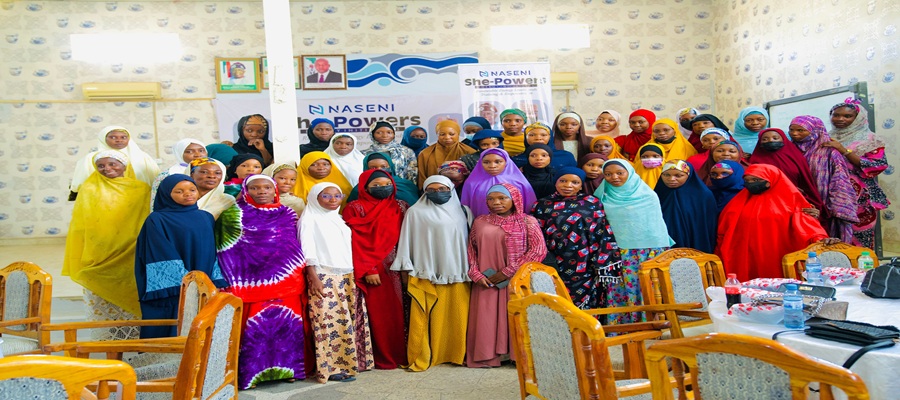
The National Agency for Science and Engineering Infrastructure (NASENI), under the leadership of its Executive Vice Chairman/CEO, Khalil Suleiman Halilu, has trained 50 women in Kano State on inverter and battery technologies through its She-Powers Energy Initiative.

The three-day programme, held at the Technology Incubation Centre, Farm Centre, Kano which ended yesterday, was designed to equip participants with practical renewable energy skills, promote women-led enterprises, and enhance sustainable livelihoods.
The initiative forms part of NASENI’s broader commitment to empowering women, creating economic opportunities, and expanding participation in Nigeria’s growing clean energy sector. It also aligns with the Renewed Hope Agenda of President Bola Ahmed Tinubu by supporting job creation, entrepreneurship, and inclusive economic development.
Through targeted interventions such as the She-Powers Energy Initiative, NASENI continues to demonstrate its commitment to leveraging technology and innovation to improve lives and drive sustainable development across the country.
Photos: Participants at the She-Powers Energy Initiative training organised by the National Agency for Science and Engineering Infrastructure (NASENI) held at the the Technology Incubation Centre, Farm Centre, Kano yesterday.

Airtel Africa Foundation Publishes Inaugural Annual Report

Mobile Internet Gender Gap Widest in Africa – GSMA

Kaspersky Warns of “Grey” Scam Websites Exploiting User Trust

Access Holdings Affirms Long-Term Value Strategy @ 4th AGM

Zoho Unveils Homegrown Server, Takes Bold Step Toward Tech Independence

CBN Extends PoS Geo-Fencing Enforcement Deadline to August 2026

FG to Launch Nationwide Free Digital TV Platform June 17

Jumia Nigeria Records Strong Q1 2026 Growth as Technology-Led Strategy Drives Market Expansion

NCC Drafts New Rules for Virtual Mobile Operators

FG to Balance Innovation with National Security with Stronger Drone Regulations




 E-Business3 days ago
Kaspersky Report Shows Early 2026 Witnessed an Increase in Cyberattacks on the Manufacturing Sector

 E-Business2 days ago
Firm Discovered a New Corporate Phishing Technique using a Popular AI Web Development Platform

 E-Financial3 days ago
Senate Moves to Regulate Crypto Sector, Seeks Investor Protection

 Telecom3 days ago
Nigeria, Others Stuck on WiFi 4 As World Adopts WiFi 6, WiFi 7

 Telecom3 days ago
Yuno Partners with Onafriq to Unlock Pan-African Payments for Global Merchants

 General News2 days ago
IMF Warns Nigeria of Risks in $5Bn Swap Deal with First Abu Dhabi Bank

 Telecom2 days ago
No More Deleting and Reposting: Instagram Unveils Long-Awaited Profile Update

 Telecom2 days ago
Airtel Nigeria Launches Web Data Calculator to Give Customers Greater Visibility into Data Usage