

E-Financial
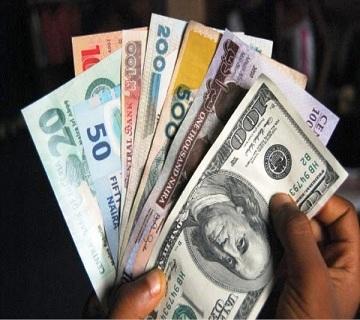
Naira Roars Back to Life in Parallel Market

By Lukman Otunuga, Senior Research Analyst at FXTM,
The Naira has marched into September with a renewed sense of confidence, rallying to its strongest level since April on the black markets as supplies of Dollar surged ahead an auction set by the CBN.
On the parallel markets, the Naira is trading around 435 per Dollar compared to the 465 witnessed on the last day of August.
It looks like local currency is deriving strength from the Central Bank of Nigeria’s announcement in resuming the sales of foreign exchange to operators of the Bureau de Change (BDC) from September 7.
Over the past few months, the CBN has found it challenging to clear the backlog of foreign exchange demand by foreign investors as the havoc wrought by COVID-19 created shockwaves across the economy.
Dollar shortages were further intensified by depressed Oil prices which account for more than 90% of foreign exchange earnings and over 70% of government revenues.
The economic outlook for Nigeria remains clouded by uncertainty due to COVID-19 and shaky Oil prices. GDP is expected to contract anywhere from 3% to 6% in 2020 with most of the damage from the pandemic seen in the first half of the year.
Although a weak recovery is predicted in 2021, this will depend on oil prices and the government’s efforts in implementing critical structural reforms to reducing Nigeria heavy dependence on Oil.
Gold wobbles as Dollar fights back
Gold has woken up on the wrong side of the bed this morning, struggling to nurse wounds inflicted from Wednesday’s hefty depreciation as king Dollar rebounded from two-year lows.
The precious metal has lost almost 2% since the start of the September and could extend losses in the short term if the Dollar fights for its thrown and “risk-on” remains the name of the game. However, when looking at the key themes influencing Gold, the medium to longer term outlook points north despite the possible weakness in the near term.
Buying sentiment towards Gold could be dented by a sense of confidence over the world economy recovering quicker than expected, while renewed US-China trade hopes and optimism around a coronavirus vaccine may boost attraction towards riskier assets at the expense of safe-havens.
However, rising coronavirus cases in the United States, political uncertainty ahead of November’s presidential elections and Brexit drama among other negative themes may drain investor confidence, ultimately accelerating the flight to safety.
On top of this, low-to-negative government bond yields, unprecedented monetary stimulus and handsome fiscal packages should continue sweetening appetite for the precious metal for the rest of 2020.
Although economic data from major economies have beat estimates, the overall shaky macroeconomic and geopolitical landscape may ensure the Gold remains a hotspot of safety.
Looking at the technical picture, prices remain in a wide range on the daily timeframe with support at $1910 and resistance around $1985. It looks like the precious metal is under pressure with $1910 acting as the first level of interest. A breakdown below this point could encourage a decline towards $1890. Should $1910 prove to be reliable support, prices could rebound back towards $1950, before potentially testing $1985.



Senate has passed the Virtual Asset Service Providers Regulation Bill, 2026 for its second reading, marking a major legislative step toward establishing a comprehensive legal framework for the country’s cryptocurrency and digital asset sector.

Barau Jibrin, deputy Senate president, said the bill seeks to bring order, confidence and accountability to Nigeria’s growing virtual asset ecosystem without stifling innovation.
The move comes at a time when Nigeria remains one of the world’s largest markets for cryptocurrency adoption, with millions of young Nigerians using digital assets for investment, payments and business transactions.
If passed into law, the bill would require operators of cryptocurrency exchanges, blockchain-based investment platforms and other virtual asset service providers to obtain licences and comply with regulatory standards aimed at protecting consumers and the financial system.
Speaking on the intendment of the bill, Tahir Monguno, Senate Whip, who spoke on behalf of Barau, said the lack of regulation has created loopholes that allow fraud and financial crimes to flourish.
“Yet, while innovation has surged, regulation has lagged behind. This has created loopholes that allow misuse, fraud, and financial crimes to flourish; loopholes that expose honest citizens to loss and exploitation; and loopholes that threaten the stability of our financial system,” he said.
The deputy Senate president argued that establishing a legal framework would provide greater protection for Nigerians who participate in the digital economy and create a safer environment for investment.
Barau stressed that the bill was not intended to discourage innovation but to ensure that operators function under clear and transparent rules.
“The intent of this Bill is simple: to bring order, confidence, and accountability into the virtual asset ecosystem. It does not seek to stifle innovation or punish creativity. On the contrary, it aims to create a fair and predictable environment where innovation can thrive under clear rules and responsible oversight,” he said.
He added that the proposed law would strengthen Nigeria’s ability to combat money laundering, terrorism financing and other illicit financial activities linked to the digital asset sector.
“This bill will ensure that those who operate as virtual asset service providers are properly licensed, transparent, and compliant with laws designed to protect the public and the financial system,” he stated.
Barau also argued that a regulated virtual asset market could boost investor confidence, attract responsible investment into Nigeria’s fintech and blockchain industries and support the Federal Government’s economic diversification agenda.
According to him, countries such as Kenya, South Africa and Ghana are already developing legal frameworks for the regulation of virtual assets.
“With the passage of this Bill, we will provide the legal clarity and confidence that innovators, entrepreneurs, and investors have long awaited,” he said.
Contributing to the debate on the bill, lawmakers argued that the legislation could offer crypto users stronger safeguards against fraudulent schemes that have proliferated in recent years, while also giving legitimate operators the legal certainty needed to attract investment and expand their businesses.
The bill was subsequently referred to the relevant Senate committee for further legislative scrutiny and a report back to the chamber.

Central Bank of Nigeria (CBN) has unveiled plans to deploy Artificial Intelligence (AI) to strengthen fraud prevention and enhance the efficiency of the country’s digital payments ecosystem as part of its Nigeria Payments System Vision (PSV) 2028.

Payment fraud is the illegal, unauthorized use or manipulation of payment instruments—like credit cards, wire transfers, or digital wallets—to obtain financial gain.
The initiative, contained in the apex bank’s newly released PSV 2028 document, positions AI as a key technology in Nigeria’s efforts to build a more secure, inclusive and globally competitive payments landscape.
According to the CBN, the adoption of AI forms part of its guiding principle of “Innovation with Purpose,” which seeks to leverage emerging technologies to improve convenience, efficiency and competitiveness across the financial system.
The bank noted that while digital payments have grown significantly in recent years, fraud and cyber threats continue to pose serious challenges to consumer confidence and financial inclusion.
The document highlighted persistent exposure to fraud, cyber-attacks, identity theft, phishing schemes and unauthorised transactions as major risks facing the payments ecosystem. These threats, it said, have undermined trust in digital financial services and constrained efforts to expand access to formal financial systems.
To address these concerns, the CBN said PSV 2028 would place greater emphasis on cybersecurity, fraud management, and the deployment of advanced technologies to detect and prevent financial crimes.
Under the vision’s innovation and emerging technologies pillar, the apex bank disclosed plans to explore AI, blockchain and programmable payment solutions as part of broader efforts to modernise Nigeria’s payments infrastructure.
The CBN also revealed plans to establish stronger fraud monitoring mechanisms, including an industry-wide Security Operations Centre and a national fraud intelligence-sharing platform designed to improve threat detection and response across the financial sector.
According to the document, authorities will facilitate the development of shared infrastructure for fraud detection, risk intelligence and regulatory compliance while introducing industry-wide cyber performance monitoring frameworks.
The bank noted that AI is already transforming payment systems globally and is increasingly being deployed through chatbots, self-service platforms, robotic process automation and other digital tools that enhance customer experience and operational efficiency.
Beyond fraud prevention, the CBN said AI-driven technologies are expected to improve transaction monitoring, strengthen compliance processes and support more efficient service delivery across payment platforms.
The apex bank further stated that Nigeria aims to become a leader in technology-driven regulation by 2028, with ambitions to advance RegTech, SupTech and AI-powered compliance systems while exporting locally developed digital payment frameworks and solutions to international markets.
The broader objective of PSV 2028, according to the CBN, is to build a secure, innovative and resilient payments ecosystem that supports economic growth, deepens financial inclusion, strengthens consumer protection and improves cross-border payment capabilities.
With electronic payment transactions already surpassing N1.2 quadrillion in 2025, the CBN’s decision to integrate AI into its payments strategy underscores a growing commitment to technology-driven fraud management and the long-term development of Nigeria’s digital economy.

A report by the Alliance for Economic Research and Ethics (AERE), has criticised commercial banks for abandoning their core intermediation role to support economic growth as N91.1 trillion remained sterilised at the Central Bank of Nigeria’s (CBN) standing deposit window.

The report lamented the scale of idle liquidity parked at the CBN, noting that this represented not financial strength, but a structural failure of credit allocation, adding that the country’s real sector was being systematically starved of capital.
Separately, Alliance also raised concerns over the sustainability of the country’s fiscal position, warning that despite improvements in government revenue, persistent leakages, rising debt obligations and weak capital spending continued to undermine budgetary effectiveness.
The policy advocacy group said recent fiscal indicators suggested that government revenues are improving and budget deficits are narrowing, but stressed that the gains remained insufficient to offset mounting spending pressures and the growing burden of debt servicing.
Nonethless, it said, “The N91.1 trillion is not a sign of banking strength. It is a symptom of banking failure — a failure of intermediation, a failure of purpose, and a failure of national duty.”
AERE is a policy think tank chaired by Dele Oye, a former national president, Nigerian Association of Chambers of Commerce, Industry, Mines, and Agriculture (NACCIMA).
Oye is the immediate past chairman of the Organised Private Sector of Nigeria (OPSN) and Chairman of the Nigeria-Türkiye Business Council (NTBC).
The report said, “The banks have a choice: self-regulate, reintermediate, and remember their source or face intervention that will be neither gentle nor forgiving.”
It highlighted what it described as a “cosmetic drop” in CBN standing deposit facility placements from N92.32 trillion in April 2026 to N91.1 trillion in May, arguing that the marginal decline obscures a far more troubling structural reality.
It noted that deposits surged to N128.9 trillion in March 2026, before moderating slightly in subsequent months, but still reflected an extraordinary liquidity concentration at the apex bank.
The report estimated that banks cumulatively placed N425.86 trillion with the CBN in the first five months of 2026 alone — a figure described as “an almost 700 per cent year-on-year increase” compared to the same period in 2025.
“This is not banking. This is financial mercantilism — the capture of state-derived liquidity for private gain, with minimal productive intermediation,” the report said.
At the same time, borrowing from the CBN’s Standing Lending Facility (SLF) reportedly collapsed by 94.9 per cent, to N2.2 trillion from N43.42 trillion, reinforcing what it called a system where banks no longer need to lend to survive.
The report maintained that much of what is recorded as banking strength is, in reality, illusory, and identified three categories of “contingent assets” that distort balance sheet realities.
First are performance bonds and guarantees tied to government contracts, which are largely risk-free fiscal obligations repackaged as banking assets.
The other are delayed government payments and forbearance arrangements, which the report described as “deferred public liabilities masquerading as productive credit.”
The third category involved thecollapse of import credit demand, as firms shift away from letters of credit due to stabilising exchange rates.
According to the report, these dynamics had left banks “flush with liquidity but allergic to lending,” with treasury managers rationally opting to park funds at the CBN’s risk-free window.
The report situated the behaviour of banks within the country’s high interest rate environment, noting that the Monetary Policy Rate (MPR) stands at 26.5 percent, while the CBN Standing Deposit Facility offers 22.5 percent risk-free returns.
This, it said, creates a structural incentive problem.
The report said, “A bank treasurer faces a simple arithmetic: lend to a manufacturer at 30–35 percent over several years with multiple risks, or park funds at 22.5 percent overnight with zero risk.”
It further cites the asymmetric policy corridor designed by the CBN, which was intended to stabilise liquidity but had instead encouraged what it called “systemic sterilisation.
While acknowledging regulatory intent, the report argued that the policy has inadvertently prioritised financial stability over productive credit creation, stressing that the absence of credit to the real sector was “not a bug in the system. It is becoming a feature”.
Among other things, it referenced constrained lending to manufacturing, agriculture, and SMEs, alongside persistently high interest rates and limited access to long-term credit.
AERE warned that liquidity sterilisation at the CBN was undermining monetary policy effectiveness and inflation control.
The report also referenced recent CBN data indicating that credit to the private sector contracted by N14.02 trillion between February and April 2026, falling to N80.59 trillion.
At the same time, banks recorded record profits, with top-tier institutions reportedly posting a combined N5.54 trillion profit-after-tax in 2024 alone, a 53 per cent increase year-on-year.
It added that the “paradox is stark: banks are thriving while the economy they are meant to finance is starved of credit.”
However, it urged banks to take voluntary reform or risk facing regulatory intervention.
AERE proposed a mandatory sectoral lending quotas for manufacturing, agriculture, and SMEs, and a possible reduction or cap on returns from the CBN standing deposit facility.
It also recommended recalibration of the Cash Reserve Ratio (CRR) to penalise non-productive deposits, alongside differential treatment for funds directed into real-sector lending.
It further suggested mandatory disclosure of “contingent assets” to expose the true composition of bank balance sheets, arguing that current reporting standards obscure the extent of non-productive holdings.
A windfall tax on excess earnings from CBN placements was also proposed, with proceeds redirected into a Real Sector Credit Fund among other recommendations.
The report stated, “Nigerian banks have forgotten that their source is the real economy the farmer, the manufacturer, the trader, the entrepreneur. They have become dams, not rivers. They capture N91.1 trillion of national liquidity, earn 22.5 per cent risk-free, and report record profits while the economy they are meant to serve gasps for credit.
“The N91.1 trillion is not a sign of banking strength. It is a symptom of banking failure a failure of intermediation, a failure of purpose, and a failure of national duty.
“The banks have a choice: self-regulate, reintermediate, and remember their source or face intervention that will be neither gentle nor forgiving. The clock is ticking.”
However, speaking in its latest podcast titled, “Nigeria’s Budget: Glass Half Full or Quietly Leaking?”, the group noted that while headline figures portray a stronger fiscal outlook, underlying structural weaknesses continued to threaten the country’s economic transformation agenda.
It stated that a significant portion of government earnings is increasingly being channelled towards servicing debt rather than financing critical development projects capable of stimulating growth and improving productivity.
It warned that debt service commitments had become a dominant feature of the budget, limiting the fiscal space available for investments in infrastructure, education and other productive sectors of the economy.
The group argued that the challenge facing the country extended beyond revenue generation, adding that concerns persist over how public resources are deployed and managed.
It identified leakages, inefficiencies and structural imbalances within the fiscal system as major obstacles preventing government spending from delivering its intended economic impact.
The alliance further observed that capital expenditure remained inadequate to drive meaningful transformation in the real economy, stressing that current spending levels are insufficient to support the scale of infrastructure development and industrial expansion required to accelerate growth.
According to the group,”On paper, Nigeria’s budget looks stronger, revenues are improving, deficits narrowing.
“For look closer and something is leaking. Yes, revenues are growing, but not fast enough to match spending pressures or debt obligations. Government earnings still struggle to carry the weight of the system.
“A growing share of revenue isn’t building roads or funding industries. It’s servicing debt. Debt service dominates, bending our budget to the breaking point.
“The issue isn’t just how much Nigeria earns. It’s how effectively those funds are used. Likages, inefficiencies and structural imbalances continue to drain impact.
“Capital expenditure remains too weak to transform the real economy. No meaningful scale in infrastructure, no serious push for productivity. The path forward is clear.”
It said, “Strengthen revenue systems, cut in efficiencies, prioritize productive investment. This is where evidence-based policy matters. Our budget is leaking funds to outdated programs.
“We must fix the leak and fund the future. Investing in education and infrastructure now is essential. A budget is not just numbers. It’s a reflection of national priority. Fix the leak, fund the future. This is our call to action.”

MTN Launches One TV with Free-to-View, Pay-as-You-Go

Telcos Compensate 75m Subscribers over Poor Network Quality – NCC

IMF Warns Nigeria of Risks in $5Bn Swap Deal with First Abu Dhabi Bank

Senate Moves to Regulate Crypto Sector, Seeks Investor Protection

Kaspersky Report Shows Early 2026 Witnessed an Increase in Cyberattacks on the Manufacturing Sector

CBN Extends PoS Geo-Fencing Enforcement Deadline to August 2026

FG to Launch Nationwide Free Digital TV Platform June 17

MTN, Airtel, Glo Under Pressure as FG Demands Better Service Delivery

Jumia Nigeria Records Strong Q1 2026 Growth as Technology-Led Strategy Drives Market Expansion

Metro Digital, Nigerian Firm Accuses Multichoice Of Refusal to Obey Court Judgements




 E-Financial3 days ago
BOI Wins Dual Honours @ EMEA Finance Awards for Sustainability and Social Impact Leadership

 E-Financial3 days ago
CBN Imposes N100m Penalty on Dealing Bank Inadequate Processing of Forex Documents

 E-Business3 days ago
NITDA Okays NiRA’s Annual, Business Report

 Telecom3 days ago
Price of Data in Nigerian Mobile among Top Four Cheapest Globally – MTN CEO

 Telecom3 days ago
NAIFF Returns for 2026, Expands Focus on AI-Powered Storytelling in Africa

 Telecom3 days ago
FCCPC Refutes Airtime Market Takeover Claims

 E-Financial3 days ago
Reps Committee Recovers N521m Unremitted VAT from CBN

 General News3 days ago
SSDC Warns Businesses against Cyber, Election-Related Risks