

E-Business
Encomiums for TD Africa as Nigeria Prepares for Tech Experience Centre Launch

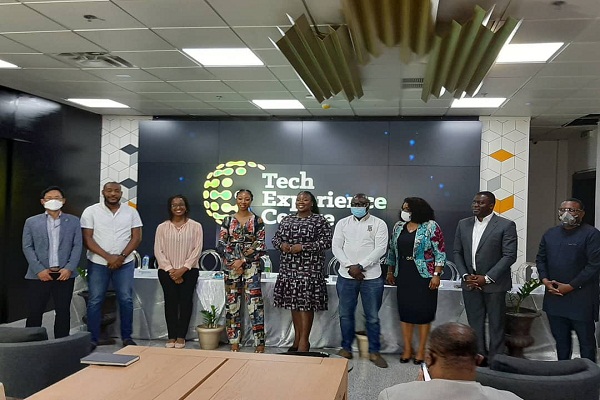
A number of globally renowned Original Equipment Manufacturers (OEMs) in the technology space have commended TD Africa, Sub-Saharan Africa’s leading technology, lifestyle and solutions distributor for successfully birthing the continent’s first Tech Experience Centre.

The commendations come ahead of the October 1st launch of the centre located in the high-rise Yudala Heights on 13 Idowu Martins, Victoria Island, Lagos.
Equally important, the Minister of Communications and Digital Economy, Dr. Isa Ali Pantami is expected in Lagos to commission the Centre, with the Lagos State Governor, BabajideSanwo-Olu, alongside a number of other high profile dignitaries, expected in attendance. The event will be streamed live to millions across the world from 5pm.
In a chat with newsmen, Chidalu Ekeh, head of the Tech Experience Centre, stated that aside reducing the decision making cycle for Chief Executive Officers (CEOs), Chief Information Officers (CIOs), Chief Technology Officers (CTOs), as well as other technology consumers, the Centre will also serve as a training centre for young Nigerians on latest technology.
“We are creating a path in this country where state-of-the-art technology will be accessible to CEOs, CIOs, CTOs and others technology consumers, so that they can make prompt decisions without leaving the country,” Chidalu said.
“What we have on board is a tech genius area where our customers will be able to take advantage of the partnerships that we have with the various OEMs on board.
“The Centre will afford young Nigerians the opportunity to receive world-class training on the latest technology.”
Also speaking on the reason for mobilising other tech giants to bring the massive project to life, Mrs. Gozy Ijogun, managing director (Sales) TD Africa, explained that the centre is aimed at adding value to the technology space in Nigeria in particular and Africa in general.
Ijogun said: “I am sure everyone is wondering what TD Africa is doing with the Tech Experience Centre. At TD Africa, we consider ourselves value added distributors.
“We are not just here to buy and sell. We add value to the economy. For that reason, we came up with the Tech Experience Centre so that Africans can experience technology the way it should be in this part of the world.
“No other distributor can do this. TD Africa is here to add value to the Information and Communication Technology (ICT) ecosystem.”
The Centre, housed within an impressive eight-floor edifice, will play host to tech giants, such as Cisco, Microsoft, Dell Technologies, HP, Schneider Electric, Zinox, Philips, Samsung, Apple and Bosch, among others.
“The structure also houses a cutting-edge gaming arena, lifestyle and smart home area, café, training centre, conference rooms and expansive office spaces, among others.
Olakunle Oloruntimehin, general manager, Cisco, West Africa, expressed delight with the concept behind the Tech Experience Centre, adding that it would be a great opportunity to offer latest technologies to consumers under the same roof with other tech giants.
“It is a good opportunity to collaborate with TD Africa and other OEMs under one roof. Technology is being democratised and it is important that people come together to take this outcome forward.
“Cisco is excited not only to partner with TD Africa but also to work with other OEMs under one space to make this work,” Oloruntimehin said.
Chioma Iwuchukwu-Nweke, country manager (Nigeria), Philips, also expressed excitement with the expected launch of the project. She revealed that Philips would delight tech customers at the Centre with latest health-driven home appliances.
Nweke said: “This is a dramatisation of the phrase ‘think global, act local.’ This is what TD Africa is doing with the Tech Experience Centre, by bringing lots of multinationals in the technology space in one place so that customers will experience latest technology.
“Before now, people always take technology to be something they have to travel outside the country to experience.
“We are sure that the Centre is going to change this narrative, especially at this time when the thought of travelling is a little bit scary for a lot of people. For us at Philips, customers should expect total innovative home appliances.”
On her part, Vivian Mike-Eze, marketing communication manager, Schneider Electric, commended the vision behind the initiative.
She urged tech consumers to be ready for an immersive experience with smart home concepts at the Tech Experience Centre.
“There has not been such a centre that gathers all the tech giants together in one place here in Nigeria. So, TD Africa has really set a precedent.
“I believe that people visiting the Tech Experience Centre expect to experience technology. In Nigeria, there is really a market for advanced technology that has been ignored for too long.
“This vision by TD Africa to bring the latest technology and get customers to experience it live is a fantastic opportunity to tap into. Because of the Centre, customers do not need to travel to the US or UK to actually see latest technology.
“Schneider Electric promises customers home automation, using the smart phone concept, when they walk into the Tech Experience Centre.
“This involves having the ability to control the temperature and ambience in their homes, with just a voice command. It is easy to talk about it, but there is no better idea than experiencing it by testing the controls and seeing it live.”
In addition, Microsoft Senior Partner, Specialist-Modern Work, Josh Adekeye, appreciated TD Africa, noting that the Centre will promote customer immersive experience. He promised that Microsoft would always support the Centre, which will reduce the burden for Microsoft to fly its customers to other countries to see its latest technological rollouts.
Adekeye said: “For us at Microsoft, when we heard about the Tech Experience Centre, we knew that it was something we needed to participate in. Before now, we usually fly our customers to Microsoft Technology Centre either in Dubai or in the US.
“However, when this opportunity came, we indicated interest and supported TD Africa to achieve it. We will always support the Centre. The beauty of technology is in seeing it.
“What Microsoft brings to the table is customer immersive experience. It means the customer will see the technology, feel the impact and make their decision easily and quickly.”
Lending his voice, Managing Director, Samsung (Nigeria), CadenChiyeon Yu hailed TD Africa for galvanising other tech giants to bring the Tech Experience Centre to life, adding that the Centre will afford Samsung a great opportunity to expose customers to its latest offerings in Internet of Things (IOT), Artificial Intelligence (AI) and other innovations shaping the global tech ecosystem.
Meanwhile, Ayokunmi Solesi, Country Manager (Nigeria), Bosch, described the Centre as a huge landmark on the African continent, adding that Bosch was ready to bring modern kitchen appliances to the delight of customers at the Centre.
Solesi said: “This is live experience. When you see big OEMs like Bosch, Schneider Electric, Samsung, Cisco, Microsoft, among others coming under a platform, you will realise that something great is about to be born.
“This is a huge landmark, not just in Nigeria, but also in Africa. For us at Bosch, this is a very commendable initiative,” Solesi said.
The Tech Experience Centre is an ambitious project, the first of its kind in Africa, to house global technology giants under one roof, with the aim of making latest and cutting-edge technology easily accessible to Nigerians and other nationals.
Experts and economic watchers have hailed the expected launch of the centre as a major development that will shore up Nigeria’s relevance in the global technology space, while also boosting the nation’s economy.


E-Business
Kaspersky Detected More than 92,000 Malware Attacks Disguised as AI Services in Four Months


In conjunction with its participation at the AI Everything Kenya x GITEX Kenya conference, global cybersecurity company, Kaspersky, has revealed that from January to the beginning of May 2026, Kaspersky solutions detected more than 92,000 attacks of malware and potentially unwanted applications worldwide disguised as popular Artificial Intelligence (AI) agents and AI services.

Cybercriminals exploited trusted brands to lure victims into downloading malicious files, with fake ChatGPT applications accounting for 49% of all detected attacks, while Claude and Gemini each represented 18%.
Since the beginning of the year, Kaspersky researchers have identified more than 15,000 samples of malware masquerading as agentic AI software, including fake versions of rapidly growing tools such as OpenClaw. Among these samples were banking trojans, spyware, exploits, and malware downloaders capable of deploying additional malicious payloads.
In May 2026, Kaspersky Global Research and Analysis Team also uncovered a new campaign linked to the Silver Fox advanced persistent threat (APT) group. In this operation, attackers distributed fake Claude AI applications for Windows, macOS, and Linux, targeting users seeking access to AI tools. Once launched, the malicious installers silently deployed malware onto victims’ devices, enabling long-term access to compromised systems and sensitive information.
“The introduction of AI agents into enterprise environments changes the nature of trust itself. Every automated action becomes part of a wider chain of systems and data exchanges, which means security is no longer just about protecting endpoints – it is about controlling how intelligence, permissions, and decisions propagate across interconnected AI-driven processes,” explains Dmitry Galov, Head of Russia and CIS units at Kaspersky Global Research and Analysis Team.
“Users should also keep in mind that attackers are actively leveraging popular AI services as a lure to steal victims’ confidential data and funds. Taking into account the evolution of modern threat landscape, reliable security solutions are becoming an essential part of digital life.”
Kaspersky recommends organisations to protect corporate infrastructure against a wide range of threats by using solutions such as from the Kaspersky Next product line that provide real-time protection, threat visibility, investigation and advanced response capabilities.
If a company lacks cybersecurity personnel, it can adopt managed security services such as Kaspersky Managed Detection and Response (MDR) and / or Incident Response that covers the entire incident management cycle – from threat identification to continuous protection and remediation.
Organisations should also equip their cybersecurity team with in-depth visibility into cyber threats targeting the organisation. For example, the latest Kaspersky Threat Intelligence delivers rich, contextual insights throughout the entire incident management cycle, enabling timely identification of cyber risks. AI-powered open-source intelligence search enhances cybersecurity teams’ ability to uncover and respond to emerging threats with greater precision.
Individual users are advised to stick to AI services from reputable companies with strong privacy and security track records. Avoid using anonymous or unknown bots that could be designed to harvest data. Malicious or fake AI bots may attempt to extract personal information to commit fraud, phishing, or blackmail. To protect your data, use a security solution to prevent visits to phishing sites and stop malware installation.


Identy.io, a United States-based cybersecurity and mobile biometric authentication company, has announced plans to process one billion biometric identity verification transactions in Nigeria within the next few years as digital banking adoption continues to expand across the country.

The company said increasing demand for secure digital identity systems within the banking, telecommunications, and public sectors is creating fresh opportunities for biometric authentication solutions, especially as financial institutions strengthen compliance and anti-fraud measures.
Speaking at an executive roundtable on mobile biometric innovation in Lagos, Jesus Aragon, chief executive officer, Identy.io, said Nigeria’s fast-growing digital financial services sector requires more reliable and scalable identity verification technology to support customer onboarding and transaction security.
He explained that the company’s mobile biometric solution enables users to verify their identities directly from their smartphones without depending on physical scanners, external devices, or centralized processing infrastructure.
The technology supports fingerprint and facial verification while functioning effectively in areas with limited internet connectivity.
According to Aragon, the platform is designed to integrate with Nigeria’s Bank Verification Number (BVN) system and the Nigeria Inter-Bank Settlement System (NIBSS), allowing financial institutions to carry out secure remote identity authentication.
He stated that the company’s technology includes liveness detection and deepfake identification features capable of detecting fake fingerprints, manipulated images, masks, and other fraudulent identity attempts during digital onboarding processes.
The Identy.io boss added that the company’s offline verification capability distinguishes it from several existing solutions in the market, noting that biometric authentication can be completed entirely on users’ mobile devices without constant internet access.
He further disclosed that biometric information captured during authentication remains on the user’s device instead of being transferred to external servers or centralized databases, reducing exposure to data breaches and cyberattacks.
Industry stakeholders at the roundtable also discussed the increasing pressure on Nigerian banks to improve customer verification processes following stricter regulatory directives by the Central Bank of Nigeria on Know Your Customer (KYC) compliance and fraud prevention.
Participants noted that agency banking operations in rural and low-connectivity locations continue to face security and onboarding challenges, creating demand for stronger and more flexible authentication systems.
Aragon maintained that biometric authentication could significantly reduce fraud associated with passwords and one-time passwords (OTPs), stressing that biometrics provide stronger identity assurance for financial transactions.
The company also confirmed that it has expanded its footprint across Africa, Latin America, and the United States, with operational presence already established in Nigeria and Kenya.
Aragon expressed confidence that Nigeria’s banking and telecom industries would generate massive biometric verification volumes in the coming years as financial inclusion and digital payment systems continue to deepen nationwide.
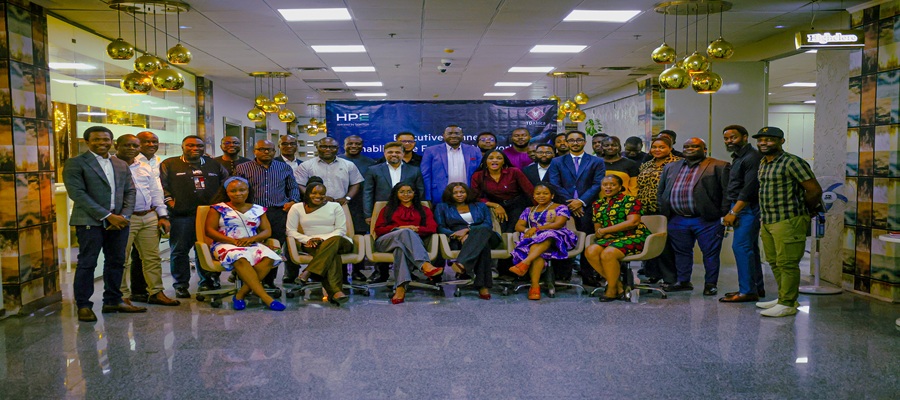
TD Africa, in collaboration with Hewlett Packard Enterprise (HPE) Operated by Selectium, hosted a high-level partner engagement event on May 14, 2026, focused on emerging trends shaping the future of enterprise networking and infrastructure transformation.

TD Africa
The engagement brought together key partners to explore how organisations can build smarter, faster, and more secure network infrastructures capable of supporting today’s rapidly evolving digital economy. Central to the discussions was the growing relevance of WiFi 7 and the shift from traditional networking models to intelligent, AI-driven infrastructure ecosystems.
As businesses continue to accelerate digital transformation, conversations at the event centred on a critical question: Is your infrastructure ready for the speed of transformation? From edge-to-cloud connectivity and IoT integration to AI-enabled networking and advanced security frameworks, the session highlighted the increasing demand for agile, scalable, and resilient enterprise solutions.
Speaking at the event, Dr. Ifee Kojo, Country Manager, HPE Operated by Selectium, highlighted HPE’s commitment to helping organisations modernise their infrastructure and navigate the future of connectivity. “HPE is driving transformation across the entire technology ecosystem, from the data centre to the edge, from IoT to AI-powered connectivity.
“Our focus is on helping businesses strengthen security, improve scalability, and build intelligent infrastructures that support innovation and growth.
“Through our strong partner TD Africa, we can extend these solutions more effectively into the market, ensuring organisations have access to the right technologies needed to compete and thrive in a rapidly evolving digital world,” she said.
Also speaking, Chioma Chimere, Coordinating Managing Director at TD Africa, emphasised the importance of future-ready networking in enabling business resilience and long-term digital growth. “Networking today is no longer just about connectivity; it has become the backbone of enterprise transformation.
“As organisations embrace AI, cloud environments, remote operations, and data-driven systems, the need for secure, intelligent, and scalable infrastructure becomes even more critical.
“TD Africa is committed to ensuring our partners are equipped with the right technologies, insights, and support needed to navigate this shift successfully.
“Our collaboration with HPE reflects our shared commitment to helping businesses modernise confidently and prepare for the future of digital innovation,” she stated.
Through strategic collaborations with global Original Equipment Manufacturers (OEMs) like HPE, TD Africa continues to strengthen its position as a key distributor of enterprise and networking solutions across Africa, enabling partners and organisations to access cutting-edge technologies backed by technical expertise, market reach, and ecosystem support.

CBN to Simplify Bank Alerts over Rising Customer Complaints

Otedola Plans $100m Investment in Dangote Refinery ahead of Proposed IPO

Telcos in Nigeria, other Emerging Markets Squeezed by Diesel Crisis

Immigration, Lasaco Assurance Partner on Institutional Growth

Nigeria gets AI-ready Lagos data centre

MTN, VDT, Zoracom, Digital Realty Back 2026 Girls in ICT Campaign

Vitel Wireless Partners Fintechs to Expand Access to Services

Kaspersky Discovers Vulnerability in Qualcomm Snapdragon Chips that can Lead to Data Loss & Device Compromise

Bank Customers to Pay N1,500 for ATM Card Issuance, Replacement – CBN

FCCPC Licenses 5 Firms for Airtime, Data Lending as Telcos Step Aside




 E-Financial3 days ago
FG Says All Taxable Nigerian Must Obtain Taxpayer ID

 News3 days ago
FG Unveils Free Tax Dispute Resolution Platforms for Nigerians

 News3 days ago
EFCC Which Handles Sensitive Data, Financial Records has No Privacy Policy on Website- FiJ

 E-Business3 days ago
TD Africa, HPE Drive Conversations on the Future of Intelligent Networking

 Telecom3 days ago
Relief for SMEs as NACAN Launches Fight Against Expensive Broadband in Nigeria

 E-Business3 days ago
Identy.io, US Firm Eyes 1Bn Biometric Verification Transactions in Nigeria

 News3 days ago
Moniepoint DreamDevs Bootcamp Second Cohort Set for Demo Day

 General News3 days ago
Lagos Unveils Plan for 24-hour Electricity Supply in the State