

E-Business
Encomiums for TD Africa as Nigeria Prepares for Tech Experience Centre Launch

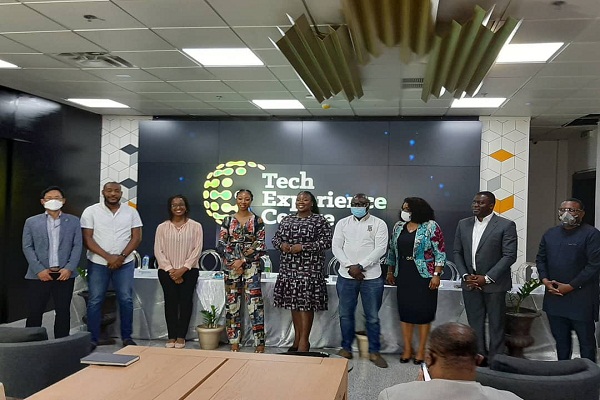
A number of globally renowned Original Equipment Manufacturers (OEMs) in the technology space have commended TD Africa, Sub-Saharan Africa’s leading technology, lifestyle and solutions distributor for successfully birthing the continent’s first Tech Experience Centre.

The commendations come ahead of the October 1st launch of the centre located in the high-rise Yudala Heights on 13 Idowu Martins, Victoria Island, Lagos.
Equally important, the Minister of Communications and Digital Economy, Dr. Isa Ali Pantami is expected in Lagos to commission the Centre, with the Lagos State Governor, BabajideSanwo-Olu, alongside a number of other high profile dignitaries, expected in attendance. The event will be streamed live to millions across the world from 5pm.
In a chat with newsmen, Chidalu Ekeh, head of the Tech Experience Centre, stated that aside reducing the decision making cycle for Chief Executive Officers (CEOs), Chief Information Officers (CIOs), Chief Technology Officers (CTOs), as well as other technology consumers, the Centre will also serve as a training centre for young Nigerians on latest technology.
“We are creating a path in this country where state-of-the-art technology will be accessible to CEOs, CIOs, CTOs and others technology consumers, so that they can make prompt decisions without leaving the country,” Chidalu said.
“What we have on board is a tech genius area where our customers will be able to take advantage of the partnerships that we have with the various OEMs on board.
“The Centre will afford young Nigerians the opportunity to receive world-class training on the latest technology.”
Also speaking on the reason for mobilising other tech giants to bring the massive project to life, Mrs. Gozy Ijogun, managing director (Sales) TD Africa, explained that the centre is aimed at adding value to the technology space in Nigeria in particular and Africa in general.
Ijogun said: “I am sure everyone is wondering what TD Africa is doing with the Tech Experience Centre. At TD Africa, we consider ourselves value added distributors.
“We are not just here to buy and sell. We add value to the economy. For that reason, we came up with the Tech Experience Centre so that Africans can experience technology the way it should be in this part of the world.
“No other distributor can do this. TD Africa is here to add value to the Information and Communication Technology (ICT) ecosystem.”
The Centre, housed within an impressive eight-floor edifice, will play host to tech giants, such as Cisco, Microsoft, Dell Technologies, HP, Schneider Electric, Zinox, Philips, Samsung, Apple and Bosch, among others.
“The structure also houses a cutting-edge gaming arena, lifestyle and smart home area, café, training centre, conference rooms and expansive office spaces, among others.
Olakunle Oloruntimehin, general manager, Cisco, West Africa, expressed delight with the concept behind the Tech Experience Centre, adding that it would be a great opportunity to offer latest technologies to consumers under the same roof with other tech giants.
“It is a good opportunity to collaborate with TD Africa and other OEMs under one roof. Technology is being democratised and it is important that people come together to take this outcome forward.
“Cisco is excited not only to partner with TD Africa but also to work with other OEMs under one space to make this work,” Oloruntimehin said.
Chioma Iwuchukwu-Nweke, country manager (Nigeria), Philips, also expressed excitement with the expected launch of the project. She revealed that Philips would delight tech customers at the Centre with latest health-driven home appliances.
Nweke said: “This is a dramatisation of the phrase ‘think global, act local.’ This is what TD Africa is doing with the Tech Experience Centre, by bringing lots of multinationals in the technology space in one place so that customers will experience latest technology.
“Before now, people always take technology to be something they have to travel outside the country to experience.
“We are sure that the Centre is going to change this narrative, especially at this time when the thought of travelling is a little bit scary for a lot of people. For us at Philips, customers should expect total innovative home appliances.”
On her part, Vivian Mike-Eze, marketing communication manager, Schneider Electric, commended the vision behind the initiative.
She urged tech consumers to be ready for an immersive experience with smart home concepts at the Tech Experience Centre.
“There has not been such a centre that gathers all the tech giants together in one place here in Nigeria. So, TD Africa has really set a precedent.
“I believe that people visiting the Tech Experience Centre expect to experience technology. In Nigeria, there is really a market for advanced technology that has been ignored for too long.
“This vision by TD Africa to bring the latest technology and get customers to experience it live is a fantastic opportunity to tap into. Because of the Centre, customers do not need to travel to the US or UK to actually see latest technology.
“Schneider Electric promises customers home automation, using the smart phone concept, when they walk into the Tech Experience Centre.
“This involves having the ability to control the temperature and ambience in their homes, with just a voice command. It is easy to talk about it, but there is no better idea than experiencing it by testing the controls and seeing it live.”
In addition, Microsoft Senior Partner, Specialist-Modern Work, Josh Adekeye, appreciated TD Africa, noting that the Centre will promote customer immersive experience. He promised that Microsoft would always support the Centre, which will reduce the burden for Microsoft to fly its customers to other countries to see its latest technological rollouts.
Adekeye said: “For us at Microsoft, when we heard about the Tech Experience Centre, we knew that it was something we needed to participate in. Before now, we usually fly our customers to Microsoft Technology Centre either in Dubai or in the US.
“However, when this opportunity came, we indicated interest and supported TD Africa to achieve it. We will always support the Centre. The beauty of technology is in seeing it.
“What Microsoft brings to the table is customer immersive experience. It means the customer will see the technology, feel the impact and make their decision easily and quickly.”
Lending his voice, Managing Director, Samsung (Nigeria), CadenChiyeon Yu hailed TD Africa for galvanising other tech giants to bring the Tech Experience Centre to life, adding that the Centre will afford Samsung a great opportunity to expose customers to its latest offerings in Internet of Things (IOT), Artificial Intelligence (AI) and other innovations shaping the global tech ecosystem.
Meanwhile, Ayokunmi Solesi, Country Manager (Nigeria), Bosch, described the Centre as a huge landmark on the African continent, adding that Bosch was ready to bring modern kitchen appliances to the delight of customers at the Centre.
Solesi said: “This is live experience. When you see big OEMs like Bosch, Schneider Electric, Samsung, Cisco, Microsoft, among others coming under a platform, you will realise that something great is about to be born.
“This is a huge landmark, not just in Nigeria, but also in Africa. For us at Bosch, this is a very commendable initiative,” Solesi said.
The Tech Experience Centre is an ambitious project, the first of its kind in Africa, to house global technology giants under one roof, with the aim of making latest and cutting-edge technology easily accessible to Nigerians and other nationals.
Experts and economic watchers have hailed the expected launch of the centre as a major development that will shore up Nigeria’s relevance in the global technology space, while also boosting the nation’s economy.


More than half (56%) of Internet users faced fraud over the past year, and 45% became victims of attacks on their devices, accounts or data (social media accounts hacking, data leakage, malware infection etc.), according to a new global survey* by Kaspersky.

Scams are now more sophisticated than ever, and Kaspersky’s AI- and ML-powered technologies help users stay protected against fraudulent schemes. For greater confidence and clarity, these capabilities are now grouped into a dedicated block inside Windows and macOS apps.
The scam landscape continues to evolve rapidly, becoming more sophisticated and targeted, and attacks are increasingly powered by AI. Users can face potential threats in almost any type of online interaction: emails, messengers, social media, online shops or apps.
In Q1 2026 only, Kaspersky anti-phishing technologies blocked over 140M phishing and scam attempts, underscoring how pervasive this web threat has become.
Kaspersky experts highlight that scams are becoming more widespread, as almost every emerging trend or global event quickly becomes a foothold for fraudsters.
In March 2026, Kaspersky’s anti-phishing technologies detected rising scam activity around the 2026 World Cup, uncovering fraudulent resources that mimicked official tournament websites or exploited the event to lure users into unsafe interactions.
The same underlying approach, combining machine learning, pattern recognition and real-time threat analysis, also helps Kaspersky technologies detect a broader range of scam scenarios, from classic phishing pages to fake shops, crypto scams and other schemes that may lead to financial loss.
Scam campaigns now may be even fuelled by personal data stolen from breaches, infostealer malware, compromised accounts and other online exposures.
Fraudsters combine this information to craft targeted messages, impersonate trusted contacts or make their scams more convincing. Kaspersky Premium protects customers from various digital threats, reducing these risks across all devices, including smartphones, with protection technologies tailored to each platform and reinforced by AI- and ML-based detection.
These include Data Leak and Identity Theft checkers that warn users about potential exposure of personal information, Kaspersky Password Manager that helps keep credentials secure and unique, and behaviour-based protection technologies such as System Watcher, which uses advanced app behaviour monitoring and pattern recognition to detect signs of misuse or malicious activity in real time.
In Kaspersky apps for Windows and macOS, these capabilities are now brought together in a dedicated AI-powered Scam Protection block, making them easier for users to find and understand, while in mobile apps they continue to work in the background.
“AI-powered scams are a new reality. AI-generated, constantly increasing in volume and lurking everywhere, from fake ticket sites to impersonating friends on messengers, they can trick even the most experienced user. Relying on your own ability to spot a scam is not enough. That’s why we’ve integrated advanced AI detection directly into our products – so our technology can spot what the human eye can’t, and protect users in real time,” commented Marina Titova, Vice President for Consumer Business at Kaspersky.
New AI-labels mark the group of features that provides comprehensive protection from various web threats, allowing Windows and macOS users to find out how the solution secures every aspect of their digital interactions.
New Kaspersky Global Research and Analysis Team (GReAT) research into the rapidly growing ransomware group known as The Gentlemen has showed that the attackers have evolved their tactics through new custom-built tools – a backdoor designed to facilitate information gathering before ransomware deployment and control over compromised systems, and a ransomware executable file.

The group has been active worldwide across industries including manufacturing, IT services, healthcare, financial services, construction, and logistics.
In its recent report Kaspersky shared an overview of ransomware trends: according to Kaspersky Security Network, in 2025 Latin America had the highest share of organisations with ransomware attacks detected (8.13%), followed by the Asia-Pacific region (7.89%), Africa (7.62%), Middle East (7.27%), the Commonwealth of Independent States (CIS, 5.91%) and Europe (3.82%).
The Gentlemen is a rapidly expanding Ransomware-as-a-Service (RaaS) operation believed to have emerged around mid-2025. The Gentlemen and its affiliates primarily gain initial access to victim systems through the exploitation of Internet-facing services and compromised credentials.
The attackers may be seeking collaboration with Initial Access Brokers (IABs) to acquire access to organisations with valuable intellectual property with minimal effort. Kaspersky found that access to some victim systems, using techniques the group does not typically employ, occurred long before the ransomware infection. This may mean that the initial access was not carried out by The Gentlemen, but rather by another threat actor, possibly an IAB.
Unlike many RaaS groups, The Gentlemen demonstrates a high level of sophistication, employing custom tooling and flexible intrusion tactics. Kaspersky researchers identified a previously unknown, custom-developed backdoor written in Go deployed by the attackers one day before ransomware execution.
The implant gathers host and network information and hides its console window to avoid detection. Its capabilities include bidirectional communications with the attackers, server-controlled command execution, and reconnaissance, enabling attackers to extend and adapt their activity within a compromised environment.
Kaspersky also found a new ransomware variant written in C affecting a limited number of corporate victims. While The Gentlemen has primarily used a ransomware implant written in Go that was designed for cross-platform use, the new C-based variant appears to be Windows-focused. The group may be testing the malware in real victim environments as it expands its technical arsenal.
Notably, in their attacks the Gentlemen attempted to remove the Kaspersky security solution by utilising kavrmvr.exe (a tool designed to remove Kaspersky products). However, the Kaspersky solution remained active, and the move by the attackers was blocked and flagged as malicious.
“Despite being a relatively recent entrant to the ransomware threat landscape, The Gentlemen group is rapidly gaining a reputation among threat actors, attracting affiliates and executing high-profile attacks.
“The testing of the new C-based ransomware variants suggests that the group is actively refining its capabilities, which may translate into more stable and scalable attack chains in the near future.
“Organisations should anticipate further malicious ransomware activity and are strongly advised to prioritise vulnerability management and system hardening processes to mitigate the risk of compromise,” said Fatih Sensoy, security expert at Kaspersky GReAT.
E-Business
Kaspersky Reveals Malware Attacks on SMBs Disguised as AI Services Surged by Five Times in 2026

From January to April 2026, Kaspersky security solutions detected more than 33,300 attacks on small and medium-sized businesses (SMBs), in which malicious or unwanted software for PCs were disguised as popular artificial intelligence (AI) services. This number has surged by almost five times when compared to the same period in 2025.

A new Kaspersky report reveals threat analysis and mitigation strategies to help SMBs protect themselves against the evolving threat landscape.
Kaspersky experts explored the extent to which threat actors target small and medium-sized businesses with malware disguised as legitimate AI services, considering the growing popularity of such tools for the business workflow. At the beginning of 2026 the most common lures in cyberattacks involved malware posing as ChatGPT (42%), Claude (24%), and DeepSeek (20%).
Among unique malicious files detected in the SMB sector and masqueraded as AI services, Kaspersky experts observed mainly different Trojware (Trojans and Trojan-like malware), including those capable of downloading and running other malware on compromised devices.
Trojware disguises itself as harmless files to trick users into installing them. Their functionality may vary depending on the type of the malware. It may include stealing, deleting, blocking, modifying or copying users’ data, as well as other malicious capabilities. Given this, Trojware represents a highly dangerous cyberthreat to entrepreneurs and businesses.
However, in 2026 Kaspersky telemetry detected even more attacks on SMBs, in which malicious or unwanted software for PCs were disguised as messenger apps and video conferencing software: Telegram, WhatsApp, Zoom and Microsoft Teams. From January to April Kaspersky solutions blocked almost 415,000 such attacks.
The number of attacks changed marginally compared to the previous year’s figures. Thus, Kaspersky experts note that the lure of fake communication apps remains a widespread cyberthreat.
“The threat landscape is evolving with new lures constantly appearing. For example, for the first four months of this year our solutions for small and medium-sized businesses detected hundreds of attacks, in which malicious or unwanted software were disguised as OpenClaw – an AI tool that rapidly gains popularity in 2026.
Corporate employees are increasingly using various AI services and other tools in their workflows, including those that are publicly available. Thus, to be on the safe side, SMB employees – as well as all users – should exercise caution when looking for software on the Internet. Always check the correct spelling of the website and links in suspicious emails, and use robust security solutions,” says Vasily Kolesnikov, security expert at Kaspersky.
“As adversaries constantly refine their methods to exploit human error, the need for up-to-date security awareness training for businesses of all kinds and sizes is undeniable. However, the reality is that micro-organisations often struggle to allocate time and budget to regularly update their staff on the latest threats and malicious trends.
“We believe this issue can be largely addressed through solutions tailored for small businesses which deliver robust core protection while also providing accessible security education,” adds Rodion Pyanov, product manager, Kaspersky Small Office Security.

Court Asks CBN, NIBSS to Seek Settlement in N98.5Bn Patent Suit

World Bank Approves Fresh $1.25Bn Loan for Nigeria

WhatsApp Usernames Spark Privacy Fears

Report Reveals More than Half of Users Encountered Fraud or Scams Online

Airtel Nigeria CEO Urges Adoption of Intelligent Technology Platforms to Accelerate National Growth

Mobile Internet Gender Gap Widest in Africa – GSMA

London Strengthens Global Investment Ties with Africa @ First Ever London-Africa Business Summit

FG Targets Alleged N3tn Capital Flight, Opens Airtime Credit Market to Nigerian Fintechs

Japan, UNESCO Boost Digital Learning in 15 CoEs with Donation of ICT Equipment

African Electric Vehicle Platform Raises $215m to Scale Electric Mobility in Nigeria, Others




 E-Financial3 days ago
Wema Bank Suspends Telegram Operations over Scams

 E-Financial3 days ago
NDIC Says 281m Depositors Protected against Bank Failure

 E-Financial3 days ago
NAICOM Moves to Deepen Penetration Through Licensing of a New Insurtech

 Telecom3 days ago
NCC Ranked Among Nigeria’s Top 3 Best-Performing Federal Agencies

 General News3 days ago
EVC NCC, Aminu Maida, to Lead Speakers @ Business Journal Fintech & Financial Inclusion Roundtable 2026

 E-Business3 days ago
Kaspersky Reveals Malware Attacks on SMBs Disguised as AI Services Surged by Five Times in 2026

 News3 days ago
FG Captures 32m Students DNEMIS ahead July 1 Rollout

 Telecom3 days ago
WhatsApp Unveils Major Privacy Upgrade That Lets You Hide Your Phone Number