

Broadcasting
Humans + Machines: Building the workforce of the future

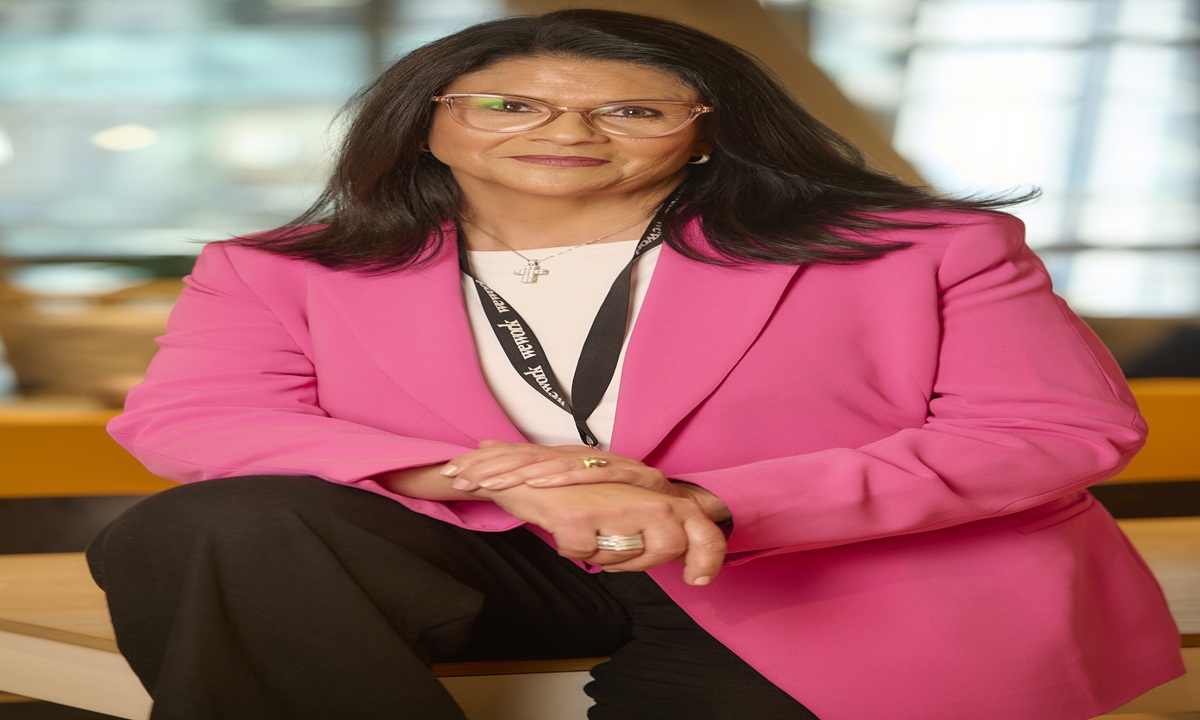
By Ursula Fear, Senior Talent Programme Manager | Salesforce
Is AI coming for your job, or is it already working beside you? As its use becomes more routine, artificial intelligence is looking less like a threat and more like a teammate: answering queries, making decisions, chasing leads, processing invoices, and drafting content around the clock.

Ursula Fear, Senior Talent Program Manager, Salesforce
This new class of digital labour is changing how teams function, how targets are met, and how people spend their time at work. From now on, almost every job, team, and company will involve AI agents – systems that can analyse vast datasets, apply human-like reasoning, and act independently. Their presence is set to influence workflows, increase productivity, support innovation, and redefine roles across the organisation.
Rather than replacing people, AI is tilting the workload. Salesforce research shows that 23% of HR teams plan to redeploy employees into roles that make better use of their uniquely human strengths. At the same time, agentic AI adoption is projected to surge by 327% over the next two years (from roughly 15% adoption today to about 64% by 2027).
This shift is tied to anticipated productivity gains of 30% per employee and labour cost reductions of 19%, equating to about $11,000 in savings per employee annually, based on Organisation for Economic Co-operation and Development (OECD) wage averages. Rather than replacing people, organisations are preparing to reskill and redeploy workers, enabling humans to focus on higher-value roles that emphasise creativity, strategy, and interpersonal skills.
A recent Gartner poll further found that 95% of customer service teams intend to retain human agents to help define and guide the role of AI, reinforcing the value of a “digital first, not digital only” approach. Gartner further says that by 2027, half of the organisations that planned to significantly reduce their customer service workforce will abandon those plans, highlighting the limits of going fully “agentless”.
For African countries, the rise of digital labour presents an opportunity to build modern, inclusive workforces without being bound by outdated development models. But realising this potential depends on sustained investment in skills training, digital infrastructure, and equitable access to AI tools.
Train for tomorrow
Africa has the world’s youngest population. It’s bursting with entrepreneurial energy. But many young people still don’t have access to the tools and skills that will define the next era of work. If the continent wants to lead in the digital labour revolution, it should act now by investing in digital infrastructure, prioritising skills development, and forging partnerships that make future-focused training widely accessible.
Yes, the skills gap is real and broadband internet is still a luxury in many communities. But on the upside, AI training doesn’t require a university degree. Much of it is free, online, and accessible to anyone with a smartphone and a curious mind.
That opens the door to governments, educators, businesses, and civil society to step up to update school curricula, expand digital infrastructure, and support public-private training partnerships. All of this matters: not just for economic growth, but for social inclusion, too.
If these foundations are put in place, African countries could not only meet the needs of their growing population but also leapfrog outdated development models.
From entry-level to in-demand
When AI begins to handle the simpler tasks, it’s easy to worry about what’s left for those starting out. Entry-level jobs aren’t disappearing though. Instead of doing routine work, newcomers will now need to build skills in oversight, collaboration, and using AI tools effectively from day one. The ladder still exists; it just starts in a different place.
This will require a different kind of training – not just technical know-how, but in soft skills like empathy, adaptability, ethical judgement, and communication, which are all human traits that help teams thrive.
AI’s presence in the workplace may be concerning, with reports of job cuts due to its adoption (here, here, here, and here), but all is not as it seems.
Research suggests a more balanced perspective: One of the most comprehensive studies, from the National Bureau of Economic Research, tracked 25,000 workers across 7,000 Danish firms using AI chatbots. It found no significant changes to jobs, wages, or working hours. Productivity rose by around 3%, without leading to layoffs.
The St. Louis Fed found something similar. Based on large-scale surveys in the US, researchers reported one in four workers now use generative AI weekly, saving on average just over two hours a week. Spread across the entire labour market, that translated into a 1.1% productivity gain. Crucially, there was no sign this efficiency came at the cost of jobs.
Adding to this, a 2024 study by Mäkelä and Stephany analysed over 12 million US job listings and revealed that demand is surging for “AI-complementary” skills such as resilience, teamwork, digital literacy, and analytical thinking. These are the very human capabilities that help people work effectively with AI. The study found AI-focused roles are nearly twice as likely to list these skills, and they command wage premiums of 5–10%. Even more telling: the positive impact of these complementary skills outweighs the substitution effects of AI by up to 70%.
These findings all suggest that AI isn’t replacing workers; it’s helping them work smarter and more efficiently. To thrive in this blended future, we need to prepare today, by building the right skills, expanding access, and embracing AI not as a threat, but as a partner in progress.
Because the future of work won’t be entirely human, nor entirely automated – it will be a blend of both.


Broadcasting
Obi, NDC Presidential Candidate Faces N50Bn Defamation Claim over Alleged Podcast Remark

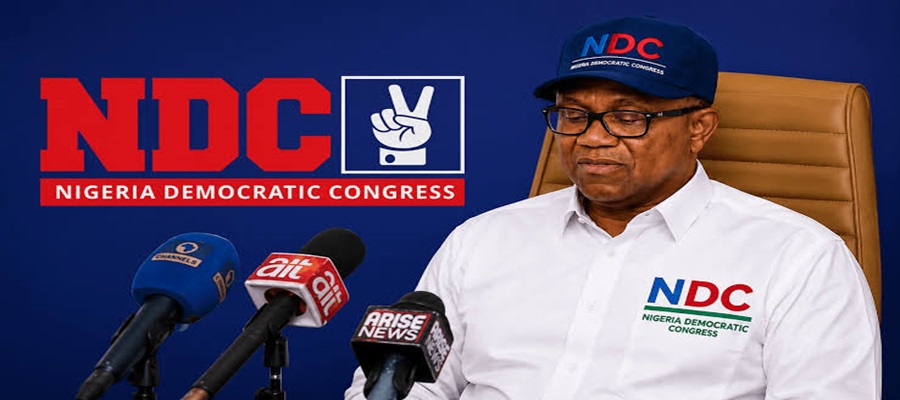
Abayomi Arabambi, national vice chairman (South-West) of the Labour Party, has demanded a public apology, a retraction, and N50 billion in damages from Peter Obi, presidential candidate of the Nigeria Democratic Congress (NDC), over an alleged defamatory statement made during a podcast interview.

The demand was contained in a letter issued by the law firm Neplus Ultra Attorneys and signed by Anderson U. Asemota, Peter O. Asimegbe, and Stanley C. Eziefulle on behalf of Arabambi.
According to the letter, the legal dispute arose from comments allegedly made by Obi during the interview, where he reportedly stated that Arabambi “does not have an address.”
Arabambi’s legal team described the statement as false, malicious, and defamatory, arguing that it portrayed their client as a faceless individual without legitimacy, credibility, or standing in public life.
The lawyers further claimed that the interview was widely circulated on television stations and digital platforms, exposing Arabambi to public ridicule and damaging his reputation.
“Our client has had a known residential and business address, maintains professional and political affiliations within Nigeria, and has never been a person whose whereabouts or identity were unknown,” the letter stated.
The legal team maintained that the alleged publication caused embarrassment and harmed Arabambi’s public image and political standing.
As part of their demands, the lawyers called for an unreserved public apology to be aired on national television, published on Obi’s verified social media platforms, and carried as full-page apologies in national newspapers.
They also demanded the payment of N50 billion as compensation for the alleged injury to Arabambi’s reputation, dignity, political standing, and public image.
Broadcasting
Why We’re Partnering With NIHOTOUR To Bring Nigerians In South Africa Home – Steve Babaeko

When Nigerians began arriving back home on emergency flights following an ultimatum from anti-migrant groups in South Africa, Steve Babaeko, alongside The Nigerian Institute of Hospitality and Tourism (NIHOTOUR), saw an opportunity to step up for his fellow citizens.

Steve Babaeko
The CEO of X3M Ideas explains that he saw a deep obligation, one that had nothing to do with advertising and everything to do with hospitality. For Babaeko, it was a reminder that an agency owes a duty of care to the community it exists within.
That conviction shaped the creative agency’s partnership with the Nigerian Institute of Hospitality and Tourism (NIHOTOUR) for the newly launched ‘Welcome Home’ pilot programme at Murtala Muhammed International Airport (MMIA) in Lagos. Rather than simply crafting a messaging campaign around the crisis, X3M Ideas helped design a tangible, physical system.
“This wasn’t built as a campaign about a crisis,” Babaeko said. “It was a hospitality agency deciding what it owes its own citizens the moment they land.”
For Babaeko, what X3M has built is infrastructure, something returnees can physically walk through, use, and benefit from the instant they clear the arrival gate.
With the MMIA pilot now officially running, NIHOTOUR directs returnees to immediate support services and issues them a Returnee Card. This card grants individuals a free first night at partner hotels, immediate transport assistance from the airport, and fast-tracked business registration support.
Furthermore, the initiative features a dedicated Restart Desk to assist returnee entrepreneurs and tradespeople with job placement referrals and business registration. This operates alongside a public Homecoming counter that tracks the cumulative number of returnees welcomed, businesses restarted, and jobs facilitated.

Spotify has announced a partnership with Afro Nation Portugal as the festival’s official sponsor and exclusive streaming partner for the 2026 edition, in a move aimed at bringing African music and festival experiences to a wider global audience.

The collaboration will provide fans with a dedicated Afro Nation destination on Spotify, featuring official festival playlists, participating artists and selected performance videos after the event.
The 2026 edition of Afro Nation Portugal is scheduled to hold from July 3 to July 5 in Portimão, Portugal.
Spotify said the partnership would enable fans to engage with the festival before, during and after the live event, regardless of their location.
The streaming platform noted that the initiative aligns with its continued investment in promoting African music and supporting its growing international audience.
Speaking on the partnership, Spotify’s Content Marketing Manager for Sub-Saharan Africa, Mr Rifumo Mdaka, described Afro Nation as a global showcase for African music and culture.
“Afro Nation is more than a festival; it is a global expression of African music, fan culture and creative influence.
“Our partnership is about helping that moment travel further through our first collaboration with Afro Nation of this nature.
“By bringing the festival to Spotify, we are giving fans a place to connect with the artists, performances and stories that define the festival long after the final set,” he said.
According to Spotify, the collaboration will also include exclusive festival content, artist discovery features, curated playlists and fan-focused storytelling.
The company said it would document the journey of a selected fan travelling to the festival as part of efforts to showcase the growing global appeal of African music.
Also speaking, Director of Global Partnerships at The Malachite Group and Afro Nation, Ms Clémence Blum, said the partnership represented a major step in expanding the festival’s global reach.
“Afro Nation has always been more than a festival. It is a platform built to celebrate African music, support artist breakthroughs and connect a global community through culture.
“Our partnership with Spotify reflects the shared role we both play in helping artists reach new audiences and giving fans deeper ways to engage with the music they love,” she said.
Spotify said selected live performances from the festival would be made available on the platform after the event, allowing fans around the world to relive the performances on demand.
The company added that the partnership reinforces its commitment to promoting African music, supporting artists and strengthening connections between creators and audiences across the globe.

SERAP Asks Akpabio, Abbas for Explain N1.3Bn Budgeted for ‘Fictitious’ Presidential Council

No Plans for Fresh Tariff Hike – MTN

FG Denies N8 Trillion ‘Shadow Budget’, Says IMF Quoted out of Context

Tokenization, Blockchain Technology will Transform Financial Institutions – IMF

Weebly Websites to Shut Down for Nigeria, 66 Other Countries from September

Mobile Internet Gender Gap Widest in Africa – GSMA

Nigeria Launches FreeTV Nationwide

NASENI Moves to Digitize CCB’s 5m Assets Declaration and Operations

UK, Nigeria Launch £15m Growth Programme to Accelerate Economic Transformation

Court Deals Fresh Blow to NBC, Throws Out Appeal over Broadcast Fines




 Broadcasting2 days ago
Why We’re Partnering With NIHOTOUR To Bring Nigerians In South Africa Home – Steve Babaeko

 News2 days ago
FG Clears N39Bn Pension Arrears for NITEL, PHCN, Other Retirees

 News2 days ago
How Fraudsters Emptied a Judge’s Account of N7.2 Million in Midnight Attack

 Telecom2 days ago
MTN Nigeria Celebrates Volunteers at Y’ello Care Impact Showcase

 E-Financial2 days ago
SEC Grants Approval to Luno, Other Crypto Firms under Regulatory Sandbox

 Telecom2 days ago
Google Play launches $1m fund to support African game developers

 Telecom2 days ago
MTN Takes ‘The Gathering on 100’ Youth Empowerment Initiative to Kano

 Telecom2 days ago
Xenophobia: MTN Nigeria Belongs to Nigerians, Not Only South Africans — Toriola