

News
#EndSARS: Nigeria’s Tech Startup Scene Faces Horrors of Police Brutality

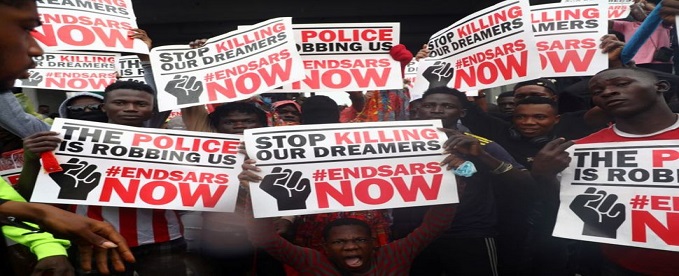
Nigeria’s bubbly tech startup scene which is awash with “young-and-getting-it coders and tech entrepreneurs” has been disproportionately affected by the SARS menace.

According to weetracker.com, between startups like Flutterwave, Paystack, Andela, and Helium Health, there have been harrowing tales of police brutality and extortion, perpetuated by SARS, in the last few years.
There seems to be no distinction, the horror episodes have affected both the most reputable of founders/investors and even upcoming techies.
Iyin “E” Aboyeji, who co-founded both Andela and Flutterwave, remembers being picked up by SARS for no reason in Ogbomosho, Oyo State, on his way to a meeting with a top government official about setting up Andela in Ibadan.
According to weetracker.com, his only crime was having a decent job and building things on the internet in his own country.
Aboyeji has stories for days about how he had to extricate many an Andela Fellow from the SARS web every other time during his days at the talent outsourcing startup.
Their crime? Having a laptop in their backpack or a nice phone in their pocket, owning a car, riding in an Uber, spotting locks or tattoos, or just looking like they clean up good. Or just being a young person in Nigeria.
The co-founder/CEO of Nigerian health-tech startup, Adegoke Olubisi, had his life flash before his eyes when he was shot at by two SARS officers while taking a stroll one night on the Lekki-Ikoyi bridge in Lagos.
Yele Bademosi, another well-known member of the tech industry who co-founded Nigerian venture capital firm, Microtraction, and is the CEO of fintech startup, Bundle, has his own SARS horror story. Bademosi was kidnapped and extorted by SARS officers while heading home in October 2019.
Apparently, the notoriety of this now-infamous rogue police unit touches everyone, not just locals.
Aubrey Hruby, the co-founder of InsiderPR and an investor in African startups, told a horrid account of how she brought VC investors to Nigeria from Egypt last year and they were “completely shaken down and robbed by the police as they were leaving the country after an amazing week of meeting with stellar Nigerian entrepreneurs.”
Jesse Ghansah, the Ghanaian entrepreneur who is the co-founder of Swipe, has had his run-ins with SARS in Nigeria and remembers the extortion and harassment that his team members have faced time and again at the hands of the rogue officers.
Although calls to end to SARS have been on and off since 2017, the Nigerian tech community united to confront the menace after a sour September 2019 episode involving a young software developer at Buffer Media.
The victim was Akinmolayan Oluwatoni, he was accosted on his way home, harassed, taken away, locked up, assaulted, threatened, and eventually extorted by SARS. His crime? Just being a young person with a phone and a laptop.
That incident sparked the coming to life of the #StopRobbingUs campaign against police brutality meted out on young Nigerians in tech. This campaign was crowdfunded by the local tech industry.
But never before has the resolve among Nigerians to not only #EndSARS but also bring about substantial reform across every unit of the local police force been this strong.
That is why even after the nationwide protests forced the current Inspector-General of Police, Mohammed Adamu, to announce the “dissolution” of SARS in a televised briefing on Sunday, October 11, Nigerians are still out in their numbers protesting peacefully and demanding real change. That’s probably because SARS has been “banned and disbanded” many times before, but they have continued to wreak havoc.
It certainly hasn’t helped that protesters have been shot at, tear-gassed, water-cannoned, flogged, beaten, captured, and allegedly killed by police officers in the middle of peaceful demonstrations against police brutality.
Among the individuals and groups contributing to the fight against police brutality is the Nigerian tech startup scene whose talent assets are among the biggest victims of the SARS menace.
Nigerian fintech startup, Flutterwave, which has seen several members of its staff suffer unjustly at the hands of SARS officers according to CEO, Olugbenga Agboola, announced a fund on Friday, October 9, and raised NGN 2 Mn (USD 5.2 K) in-house.
The fund, which is now open to the public, exists to cater to victims of police brutality and put an end to impunity. Donations to the fund amounting to millions of naira have trickled in from various tech startups and other well-meaning individuals.
Bademosi’s newly-launched fintech startup, Bundle, has also set up three cryptocurrency wallets to raise funds globally in support of #EndSARS protestors and victims of SARS and has contributed NGN 1 Mn (USD 2.6 K) to the fund.
Bundle is raising funds to support #EndSARS protests around Nigeria; to provide resources for our people on the frontline, as well as to fight against police brutality via all the available channels.


Google and UpSkill Universe, Sub-Saharan Africa’s leading AI and business skills training partner, have announced a major redesign of the Google Hustle Academy programme.

For the first time, the free training initiative is open to everyone, not just business owners. The new curriculum is focused on equipping individuals and entrepreneurs with practical AI skills.
Small businesses are the engine of Africa’s economy, creating over 80% of jobs on the continent. To help them grow, the Hustle Academy was launched in 2022, providing bootcamp-style training on business strategy, digital skills, AI, and leadership. The program has since trained over 18,000 SMEs, with many reporting increased revenue and job creation.
Now, as AI reshapes the job market, the program is evolving. The 2026 edition is built for anyone in Sub-Saharan Africa, including employees, students, and jobseekers, who wants to use AI to advance their career.
To meet the needs of a diverse audience, the new format includes short, 60-minute webinars and more immersive, high-impact bootcamps. These sessions are laser-focused on putting AI to work immediately in areas like digital commerce, marketing, and growth strategy.
Speaking about the academy, Gori Yahaya, Founder & CEO UpSkill Universe said “The 2026 Hustle Academy is designed to close the AI Skills gap with hands-on training that is short, focused, and immediately useful. AI is reshaping how businesses win and how careers are built, right across this continent.
“We’re excited to renew our partnership, now in its fifth year with Google, combining their global AI leadership with our deep regional AI expertise. The next wave of AI leaders will come from this continent. We are making sure they are ready.”
The Hustle Academy initiative has strengthened digital competitiveness across emerging African economies by enabling SMEs to move beyond AI awareness to practical implementation, positioning them for sustained growth in an increasingly AI-driven business environment.
“We believe that the future of Africa’s digital economy lies in the hands of individuals and entrepreneurs alike. Our new strategy focuses on scaling reach by training individuals in the latest AI-centered tools and techniques,” said a Google representative.

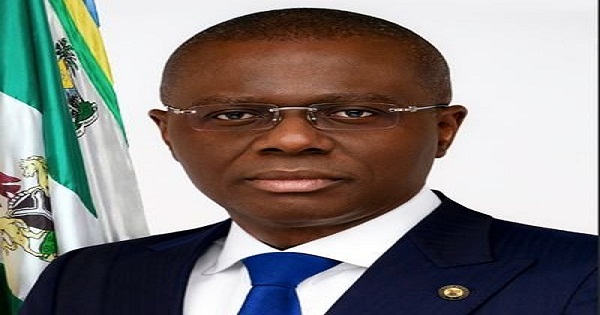
Lagos State has dragged 45 individuals and firms, including Bi-Courtney Aviation, DAAR Communications and Leaders & Company, to revenue court for tax debts running into billions of naira.

Lagos Govt
Bi-Courtney, operators of Murtala Muhammed Airport Terminal Two, faces N38.7 million claim; DAAR, behind Africa Independent Television, owes N22.4 million; ThisDay publishers Leaders & Company allegedly skip N67.1 million.
GMT Energy Resources tops corporates at N145.8 million, followed by Sheriff Deputies at N132.1 million; others like Heyden Petroleum, AA Rescue, BRT operator Primero also listed.
Individuals owe N13.5 million to N35 million each.
Attorney-General Lawal Pedro said suits followed ignored notices, aiming to enforce laws and fund infrastructure.
More defendants: IENG Nigeria, James Fisher, V Care Diagnostics, Venture Garden, Saro Africa, Barry Callebaut, Native Media, First Consulting, Eyowo Payments.
Compliant taxpayers post-notice escaped prosecution; defaulters risk penalties, interest, jail.
Pedro urged prompt filings and payments.


National Agency for Food and Drug Administration and Control (NAFDAC) has alerted Nigerians on counterfeit and unregistered Cerelac Mixed Fruits and Wheat products being sold in Lagos.

NAFDAC said Nestle Nigeria, the genuine Marketing Authorisation Holder of the product, received a complaint of suspected counterfeit purportedly manufactured by Nestlé Spain, bearing Batch Code 308002910.
It said that Nestle Nigeria reported that the complainant described that the counterfeit product emitted an odour suggestive of possible contact with fuel.
NAFDAC said that preliminary review of the product by Nestle Nigeria indicated that it had expired, in spite of the container displaying an expiry date of 10-2026, which suggested that the date coding had been tampered with (revalidated).
Nestle Cerelac Mixed Fruits and Wheat is a nutritious infant cereal, designed to be a delicious first food for infants.
NAFDAC said that its post-marketing surveillance’s directorate officers in Lagos conducted a surveillance visit to Maxland Shopping Centre, 193 Ago Palace, Okota, where the product was purchased by the complainant.
It added that the suspected counterfeit and unregistered Cerelac were found on sale at the premises and subsequently mopped up, while Nestle assisted in identifying the distinguishing features between registered and unregistered product.
According to the regulatory agency, Nestle revealed that the unregistered product used a hyphen (-) to separate the day from the year, while the registered product used a slash (/) to separate the day from the year.
“It is important to note that Nestle Nigeria is not aware of the channels through which the products are supplied into the country.
“Healthcare professionals and consumers are advised to report any suspicion of the sale of substandard and falsified regulated products to the nearest NAFDAC office, call 0800-162-3322, or send an email to [email protected],” NAFDAC said.
The agency warned that counterfeit formula often lacked essential nutrients, vitamins and minerals, leading to stunted growth or developmental issues.
It said that such formula might also contain contaminants that might lead to severe health consequences to infants or even death.
NAFDAC reiterated its commitment to safeguarding public health adding that it would continue surveillance activities to ensure the quality, safety, and efficacy of all NAFDAC-regulated products circulating in Nigeria.
It said that all zonal directors of the agency and state coordinators had been directed to carry out surveillance and mop up the revalidated product, if found within the zones and states.
The agency urged distributors, retailers, healthcare professionals, and caregivers to exercise caution and vigilance within the supply chain, to avoid the distribution, sale, and use of fake products.

See Key Changes in BVN Rule from May 1 by CBN

INEC Warns Broadcasters against Misinformation ahead of 2027 Polls

Paga Group Rejigs Leadership as Oviosu, Founder Becomes Group CEO

Reputation: The Real Currency Powering Fintechs

Jumia Expands Nationwide Footprint, Deepens Reach Across Underserved Nigerian Cities

Spotify’s Loud & Clear Report Reveals Over ₦60Bn Revenue for Nigerian Artists in 2025

China Threatens to Shut Nigeria’s Satellite Over $11.44m Unpaid Debt

Why JustMarkets Is a Strong Choice for Gold Trading

Kuda MFB Increases Kuda for Her Business Grants to ₦10 Million

Canal+ to Cut Jobs as Part Sweeping Restructuring




 E-Business3 days ago
Nigeria Cyberattacks: Stronger Collaboration as a Panacea

 Telecom3 days ago
Airtel Becomes World’s Second Largest Telco as Global Customer Base Surpasses 650 Million

 General News3 days ago
NIBSS Says 28 Percent of Nigerians have Registered for BVN

 Telecom2 days ago
From Import Dependency to Local Capacity: Nigeria’s Tech Manufacturing Journey

 E-Business3 days ago
CBN Slams Custodian Investment with N419m Fines over Rule Breaches

 General News3 days ago
NITDA DG Urges Stronger Collaboration to Drive Nigeria’s Digital Economy

 General News3 days ago
Ogun Set for Direct London Flights as Gateway Airport Gains Momentum

 E-Financial2 days ago
How Unethical Deals Triggered CBN Takeover of Union Bank -Forensic Report