

E-Business
Catalyst Fund, Others Launch $4.3M Inclusive Digital Commerce Accelerator

Catalyst Fund, managed by BFA Global, in partnership with the Mastercard Foundation and the Meltwater Entrepreneurial School of Technology (MEST), announced the Catalyst Fund Inclusive Digital Commerce Accelerator, a program aimed at scaling digital commerce companies in Ghana to support the digitization of micro and small enterprises (MSEs) in the country.

The two-year program will improve the livelihoods and financial resilience of MSEs in Ghana, that have been impacted by COVID-19, by enabling access to digital commerce platforms and access to market.
The accelerator will select and scale six digital commerce and innovative companies that can enable informal MSEs to reap the benefits of digital commerce, leveraging Catalyst Fund’s existing proven model to combine:
. flexible grant capital of up to US$120,000 per company;
.deep, bespoke, expert-led venture acceleration support;
.portfolio meet-ups and curated cohort-based workshop sessions with local expertise and operational support by MEST;
.a commitment to sharing best practices, toolkits, learnings, and insights with the digital commerce sector;
.connections with Catalyst Fund’s growing global Circle of Investors (65+) and Circle of Corporate Innovators; and
. ecosystem acceleration to create a more enabling investment and business environment in which digital commerce companies can prosper.
The first expansion of Catalyst Fund beyond its flagship Inclusive Fintech program will officially launch via a virtual event and company pitch showcase on November 4th.
All participating companies in the pitch will be selected by an expert Investment Advisory Committee. Selection is informed by market research conducted to identify the barriers and opportunities for expanding inclusive digital commerce in Ghana. Initial research findings will be released at the official launch event on November 4th.
Speakers at the launch will include: Alex Bram of Hubtel; Lexi Novitske of Acuity Venture Partners; Albert Biga of Zoobashop; Kweku Fleming of MEST Scale; Jane del Ser of BFA Global; and more.
The event will conclude with a pitch showcase from four leading digital commerce companies across Ghana, which will be held at the MEST Accra Incubator.
“We’re thrilled to announce the first Catalyst Fund expansion program, which builds on lessons learned on supporting inclusive fintech companies in emerging markets over the last five years.
“Through the Inclusive Digital Commerce Accelerator, we aim to impact informal MSEs in Ghana who, particularly in light of the COVID-19 crisis, lack access to a financial safety net and find their livelihoods impacted when physical commerce suffers.
Along with support and deep local expertise from the Mastercard Foundation and MEST, we aim to enable companies who are already tackling distinct problems in the digital commerce space to better reach informal MSEs so they can leverage digital rails to improve their financial resilience for the future,” said Catalyst Fund Managing Director Maelis Carraro.
Country partner MEST brings deep market knowledge, leveraging 12+ years of training and incubating tech entrepreneurs on the ground in Ghana.
“The opportunity to partner with an experienced organization like Catalyst Fund with support from the Mastercard Foundation, is in equal parts exciting and aligned with MEST’s scale strategy in Ghana, and beyond. Historically, MEST has focused on early-stage startup support and creation through our training program, seed fund, and incubator programs.
“The Inclusive Digital Commerce Accelerator provides an opportunity to work with Catalyst Fund to support scale-stage ventures which are strategically seeking to better reach and serve informal MSEs, leveraging our local knowledge, networks, and expertise,” said MEST Strategic Director Greg Coussa.
US$4.3 million commitment to support the financial resilience of MSEs
Surveys conducted by BFA Global and by Ghana Statistical Service found that MSEs in particular are suffering as a result of the pandemic. A BFA Global survey of low- and middle-income individuals found that 44% of self-employed people had lost their jobs or could not find work.
A recent tracker from the Ghana Statistical Service found that microenterprises are faring worse than large and small enterprises; among businesses that are open, 92.2% of microenterprises report decreased sales (compared to 89% of small and medium enterprises, and 45% of large enterprises), noting that sales have fallen 60.9% relative to last April.
“Micro and small enterprises are the bedrock of Ghana’s economy. They are also the most impacted by COVID-19, putting livelihoods and economic gains made over the years at risk. Accelerating access to markets through digitization and e-commerce platforms provides MSEs the opportunity not only to scale, but to strengthen their resilience at the other side of the pandemic,” said Nathalie Akon Gabala, Regional Head for Western, Central and Northern Africa, at the Mastercard Foundation.
In a parallel effort to accelerate the expansion of the digital commerce ecosystem and increase coordination, Catalyst Fund will be building an open database of digital commerce companies operating in Ghana. Companies who wish to express interest in being considered for the accelerator may also choose to be included in the database. All interested companies should complete the form found here.


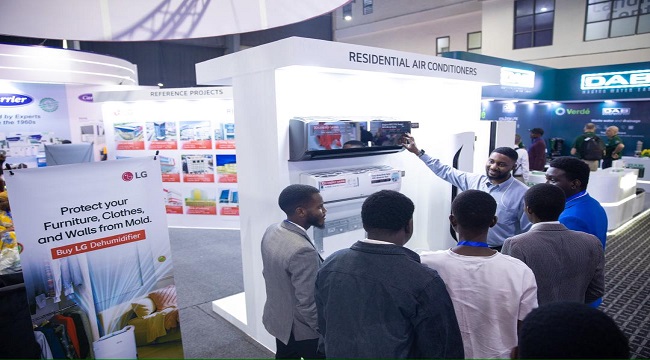
LG Electronics reaffirmed its position as a leading innovator in climate control and energy-efficient air conditioning solutions with its participation at Mega Clima Nigeria 2026, the 9th International Air Conditioning and Refrigeration Exhibition recognized as the largest HVAC+R sector show in West Africa.

Held at the Landmark Centre, Lagos, the three-day exhibition brought together global manufacturers, distributors, contractors, engineers, and industry stakeholders to explore the future of heating, ventilation, air conditioning, and refrigeration technologies across the region.
As one of the featured exhibitors at the event, LG leveraged the platform to showcase a range of advanced HVAC solutions designed to address the growing demand for smarter, more energy-efficient, and scalable cooling systems across residential, commercial, and industrial environments.
With West Africa’s HVAC sector continuing to evolve alongside rapid urbanisation, infrastructure growth, and increasing attention to sustainability, Mega Clima has become a strategic meeting point for conversations around innovation, efficiency, and climate-responsive technologies. The 2026 edition featured over 100 global brands, thousands of professional visitors, technical workshops, and networking opportunities, further positioning the exhibition as a key industry platform within the region.
Showcasing Smart Climate Solutions for Residential and Industrial Needs
At the LG exhibition booth, visitors and stakeholders engaged directly with a range of the company’s advanced HVAC technologies, including the LG Multi V.5 and Multi VS systems, both designed to deliver high-performance cooling while optimising energy consumption.
Speaking during the exhibition, Business Development Manager, LG Electronics Nigeria, Ifeoluwa Babarinsa, highlighted the adaptability and efficiency of the showcased systems, particularly their ability to support multiple indoor units while maintaining low energy consumption.
According to him, the LG Multi V.5 system is designed primarily for industrial and large-scale commercial applications, while the Multi VS system is tailored toward residential use cases, providing flexible solutions for varying environmental and operational demands.
A major highlight of the systems is their scalability, with both solutions capable of connecting to as many as 64 indoor units, offering increased operational flexibility across different building types and installation requirements.
The exhibition also featured several indoor HVAC solutions compatible with the VRF systems, including the Round Cassette, Ceiling Concealed Type Units, and Four-Way Cassette Units.
Particular attention was drawn to the Round Cassette unit, which was presented as an innovative cooling solution suitable for spaces without conventional ceiling structures. The unit also demonstrated enhanced airflow performance through its round-flow air distribution system and faster cooling capabilities.
Through live demonstrations and product engagement sessions, LG provided visitors with practical insight into how modern HVAC technologies can improve comfort, operational efficiency, and energy management across residential and commercial spaces.
Reinforcing LG’s Commitment to Energy Efficiency and Innovation
LG’s participation at Mega Clima Nigeria 2026 reflects the company’s broader commitment to delivering technologies that align with evolving consumer and industry needs, particularly in markets where energy efficiency and sustainable infrastructure are becoming increasingly important.
As conversations around environmental sustainability and smart infrastructure continue to shape the future of the HVAC industry, the exhibition provided an opportunity for LG to reinforce the role of intelligent climate solutions in supporting long-term energy optimisation and building performance.
The company’s showcased systems emphasised not only cooling performance, but also operational efficiency, adaptability, and user-focused design, qualities that continue to define LG’s approach to innovation across both consumer and commercial categories.
“This year, we showcased our inverter product range alongside advanced HVAC solutions that reflect LG’s continued commitment to innovation, energy efficiency, and smarter climate control technologies. One of the key highlights was our AI-powered VRF solution, the Multi V i, which represents the next phase of intelligent cooling systems we are introducing into the Nigerian market. As the headquarters of LG Electronics West Africa, Nigeria remains a strategic hub for us, and we remain committed to expanding access to innovative solutions that meet the evolving needs of customers and businesses across the region.”
LG’s presence at the exhibition also reflected its continued investment in engaging industry professionals, technical experts, and business stakeholders through platforms that encourage collaboration, knowledge exchange, and technological advancement within the HVAC sector.
Positioning Technology as a Driver of Smarter Living and Infrastructure
Beyond product displays, Mega Clima Nigeria 2026 created a broader conversation around the future of climate control technologies within rapidly developing urban environments. From commercial buildings and hospitality spaces to residential infrastructure, the demand for efficient and intelligent cooling systems continues to grow across the region.
By participating in one of West Africa’s most influential HVAC exhibitions, LG demonstrated its readiness to support this growth through solutions that combine advanced engineering, smart functionality, and energy-conscious performance.
The exhibition further reinforced LG’s philosophy of creating technologies that improve everyday experiences while supporting the broader goals of efficiency, sustainability, and modern living.
As the HVAC industry continues to evolve across Africa, LG remains committed to delivering solutions that not only respond to present demands, but also anticipate the future needs of businesses, homes, and infrastructure across the continent.
Kaspersky experts explain which online offers travellers should be cautious of when planning their trip, to avoid spoiling their experience ahead of the upcoming games.

Thousands of fans are expected to attend the World Cup 2026, and many are already handling their travel logistics, purchasing their flights and other transport tickets, booking accommodation, and arranging everything they need to reach the host cities. As interest grows, so does the number of fraudulent schemes that exploit the fact that fans are actively preparing for their upcoming journey.
In late April 2026, Kaspersky experts detected a campaign exploiting the branding of a well-known transport app, targeting users in Mexico. The interface of a fake Spanish-language website, impersonating one of the services, prompts users to enter their phone number and password in order to “claim prizes.” In reality, the attackers are mimicking a trusted brand and attempting to steal users’ credentials from those lured by the promise of a reward.
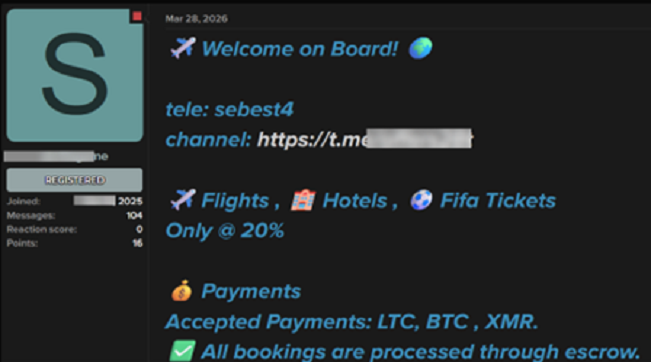
Some cybercriminals go “a level lower” and post their offers on the dark web. Kaspersky Digital Footprint Intelligence experts discovered a thread advertising such services, published on a shadow forum in March 2026.
The listings included offers for discounted airline tickets, hotel bookings, and match tickets, allegedly at 20% off the original price. These offers are designed to lure users and can be highly dangerous, ultimately resulting in victims losing both their money and any services they expected to receive.
Entrepreneurs and property owners also in the crosshairs
Cybercriminals are also targeting businesses and entrepreneurs at the intersection of the travel industry, which is also involved in the event. Given the high demand for short-term rentals during the tournament, property owners have become an attractive target for scams.
For example, a fake website was discovered requesting account credentials for a well-known platform. In this way, scammers attempt to gain access to property owner accounts, potentially resulting in unauthorised withdrawals and financial losses.
Another common scheme involves fraudsters attempting to extract money from organisations by posing as representatives of well-known airlines and offering fictitious business partnerships. In these emails, they claim to be launching new projects or business expansion initiatives and state that they are actively seeking suppliers or contractors.
If a company representative responds to such an offer, the scammers typically escalate the deception in a subsequent stage. To enhance credibility, they send forged documents for completion and signature, including supplier registration forms and non-disclosure agreements.
The ultimate objective of the fraudsters in this scheme is to induce the organisation to pay a so-called “deposit,” ostensibly required to secure a priority position in a partner selection list.
According to the claims made in the fraudulent communications, this payment would later be fully refunded once the partnership is formally established. In reality, this promise is entirely deceptive. The perpetrators simply appropriate the funds, and no reimbursement is ever made to the victim organisation.
“The travel sector, particularly when it intersects with major events, is a persistent target for a wide range of scams and fraudulent schemes. For end users, it is often difficult to distinguish at first sight between a legitimate website and a spoofed one, or between genuine marketing communications from a reputable service and scam emails.
“We therefore advise treating overly attractive offers with a high degree of caution in order to protect your personal data and financial resources,” says Anna Lazaricheva, senior spam analyst at Kaspersky.

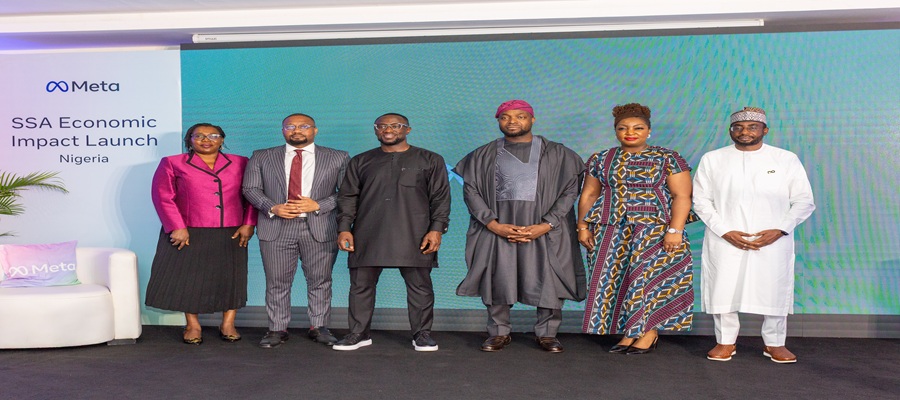
Meta’s family of platforms, including Facebook, Instagram and WhatsApp, contributed an estimated 820 million dollars in annual economic value to Nigeria in 2025, according to a new report released on Wednesday.

Meta
The report titled “Nigeria’s Digital Economy” was conducted by independent research firm, Public First, and commissioned by Meta.
It stated that 14 million Nigerian small and medium-scale enterprises (SMEs) used Meta platforms in 2025 to start, run and grow their businesses.
According to the report, the platforms contributed about two billion dollars to Nigeria’s Gross Domestic Product (GDP) while generating an estimated 640 million dollars in productivity gains through instant messaging services.
The report noted that 81 per cent of Nigerian businesses surveyed said Meta platforms had helped them expand their customer base beyond their local areas.
It added that the digital tools had reduced customer acquisition costs and enabled businesses in different parts of the country to access wider markets.
The report also highlighted the growing role of artificial intelligence (AI) in Nigeria’s economy, projecting that AI could contribute 22 billion dollars to the country’s GDP by 2035 under favourable conditions.
It stated that 87 per cent of online Nigerians surveyed believed AI products developed within Africa would play an important role in the continent’s economic growth.
Speaking on the findings, Meta’s Director of Public Policy for Sub-Saharan Africa, Balkissa Ide Siddo, described Nigeria as one of the world’s most entrepreneurial and digitally engaged markets.
According to her, Meta platforms are helping to remove traditional barriers to business growth and enabling entrepreneurs to access broader economic opportunities.
“From a tailor in Lagos reaching customers across the country through Instagram, to a small business owner in Kano taking orders on WhatsApp, to a creator in Abuja building a global audience on Facebook, Meta’s platforms are unlocking real economic opportunity,” she said.
Siddo noted that WhatsApp had become a major gateway for AI adoption in Nigeria and across Sub-Saharan Africa.
She added that 93 per cent of Meta AI prompts in the region were made through WhatsApp, indicating that many users were engaging with AI technologies through platforms they already use daily.
The report further stated that 93 per cent of online Nigerian adults surveyed said they felt more connected to wider communities through Meta’s applications.
Also speaking, Alison Neyle, Director at Public First, said the findings reflected the increasing role of digital platforms in supporting entrepreneurship and participation in Nigeria’s growing digital economy.
“Nigeria’s digital transformation is creating new opportunities for businesses, creators and consumers alike.
“With the right combination of infrastructure, platform access and open-source AI, the upside for Nigeria is significant,” Neyle said.
The report projected that Meta’s contribution to Nigeria’s economy could rise to two billion dollars annually as digital adoption deepens and internet access improves across the country.

WHO Says Ebola Risk Now at Highest Level

Airtel Africa Launches $110m Share Buyback Programme for Capital Efficiency

NCC Drafts New Rules for Virtual Mobile Operators

LG Electronics Showcases Advanced HVAC Solutions at Mega Clima Nigeria 2026

FG Unveils AI Public Services Platform

MTN, VDT, Zoracom, Digital Realty Back 2026 Girls in ICT Campaign

Vitel Wireless Partners Fintechs to Expand Access to Services

Kaspersky Discovers Vulnerability in Qualcomm Snapdragon Chips that can Lead to Data Loss & Device Compromise

Bank Customers to Pay N1,500 for ATM Card Issuance, Replacement – CBN

FG Okays 112 as Toll-Free National Emergency Response Number




 E-Financial3 days ago
Griffin Capital Group Launches Integrated Financial Services Group Positioned to Strengthen Capital Formation in Nigeria, Africa

 Telecom3 days ago
Google unveils Gemini-powered advertising, commerce tools at Marketing Live 2026

 E-Financial3 days ago
CBN to Simplify Bank Alerts over Rising Customer Complaints

 E-Business3 days ago
Kaspersky Detected More than 92,000 Malware Attacks Disguised as AI Services in Four Months

 Telecom3 days ago
Telcos in Nigeria, other Emerging Markets Squeezed by Diesel Crisis

 Telecom3 days ago
Nigeria gets AI-ready Lagos data centre

 Telecom2 days ago
MTN to Turn its African Tower Network Into a Distributed AI Compute Grid

 News2 days ago
Elon Musk to Become First World’s Trillionaire with SpaceX Historic IPO