

E-Business
EFCC Confirms Attack on Commission’s Website


Economic and Financial Crimes Commission (EFCC), on Monday admitted that its official website was attacked by yet-to-be identified cyber criminals during the weekend.

A group of activists with a motto: ‘We are anonymous’ had last Friday announced on Twitter in a series of tweets that it had gained access into some critical federal government agencies’ websites in solidarity with #EndSARS protests going on in the country.
The agencies, as announced by the activists included websites of EFCC, Central Bank of Nigeria (CBN), the Independent National Electoral Commission (INEC) among others.
Checks revealed that the commission’s website on Friday showed it was offline due to an internal server error.
The activists also announced that they had gained access to the Twitter account of National Broadcasting Corporation via the victim-agency’s account, where they also posted #EndSARS protest materials on the agency’s Twitter timeline.
Confirming the attack, Wilson Uwujaren, spokesperson of the commission, in a tweet said the attack was successfully repelled.
He wrote, “Though there were attempts, over the weekend, to compromise the website by some cyber criminals the attacks were successfully repelled. The EFCC website is up and running.”


E-Business
4 Nigerian Startups Selected to Join Milestone 10th Google for Startups Accelerator Africa Cohort

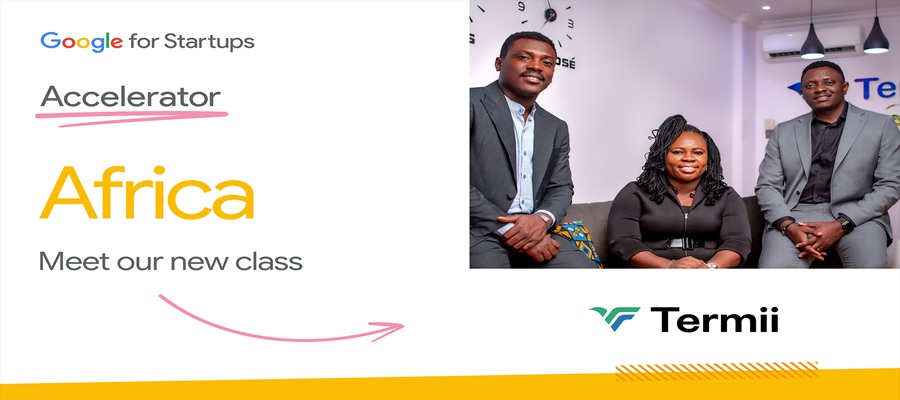
Four Nigerian technology startups – Bani, MasteryHive AI, Regxta, Termii – have been selected to join the 10th cohort of the Google for Startups Accelerator Africa.

Chosen from an exceptionally competitive pool of nearly 2,600 applications, these innovators are part of a final pan-African group of 15 companies. With an acceptance rate of less than 1%, their selection highlights the immense technical talent and resilience emerging from Nigeria’s digital ecosystem.
The selected Nigerian startups are utilizing Artificial Intelligence to address critical local and regional challenges:
Bani : A cross-border payments infrastructure platform eliminating settlement delays for African businesses trading globally.
MasteryHive AI : An AI-native platform automating transaction reconciliation, fraud detection, and AML monitoring.
Regxta : Combines alternative data-driven credit scoring with a hybrid digital-agent distribution model to deliver financial products to unbanked micro businesses.
Termii : An AI-native communications infrastructure platform ensuring reliable financial messaging for banks and fintechs.
African tech founders are actively solving fundamental infrastructural challenges, bridging gaps in financial inclusion, healthcare, and supply chains with complex AI. The continent’s venture ecosystem showed remarkable resilience by raising $3.9 billion in 2025. However, scaling deep-tech solutions requires specialized technical infrastructure, advanced cloud capabilities, and strategic mentorship to complement this capital. Accelerator programs provide these exact tools, ensuring local innovations can sustainably grow into businesses that power the continent’s digital economy.
Gbolade Emmanuel, CEO of Nigeria-based Termii, noted: “At Termii, we’re building AI-powered infrastructure that ensures financial transactions don’t fail, from login PINs to payment OTPs and fraud alerts. The Google Startup Accelerator is helping us accelerate our AI roadmap and scale globally, and even in the first week, access to technical support and insights has been incredibly valuable for our next phase of growth.”
“We are absolutely thrilled to welcome these exceptional founders into Class 10,” said Folarin Aiyegbusi, Head of Startup Ecosystem, Africa. “African startups are driving essential economic growth and social development. Our role is to serve as a supportive partner, providing these developers and founders with the technical infrastructure, mentorship, and global network they need to scale their solutions and amplify their real-world impact.”
Running from April 13th to June 19th, 2026, the hybrid program will provide the 15 startups with dedicated guidance from experienced mentors and industry experts, alongside hands-on technical workshops focused on AI and machine learning.
Since launching in 2018, the Google for Startups Accelerator Africa program has supported 106 startups from 17 African countries, empowering them to collectively raise over $263 million and create more than 2,800 jobs.
For more information on the full list of 15 startups participating in Class 10, please visit the Google Africa Blog at https://blog.google/intl/en-africa/company-news/meet-the-15-startups-joining-the-google-for-startups-accelerator-africa-class-10/.
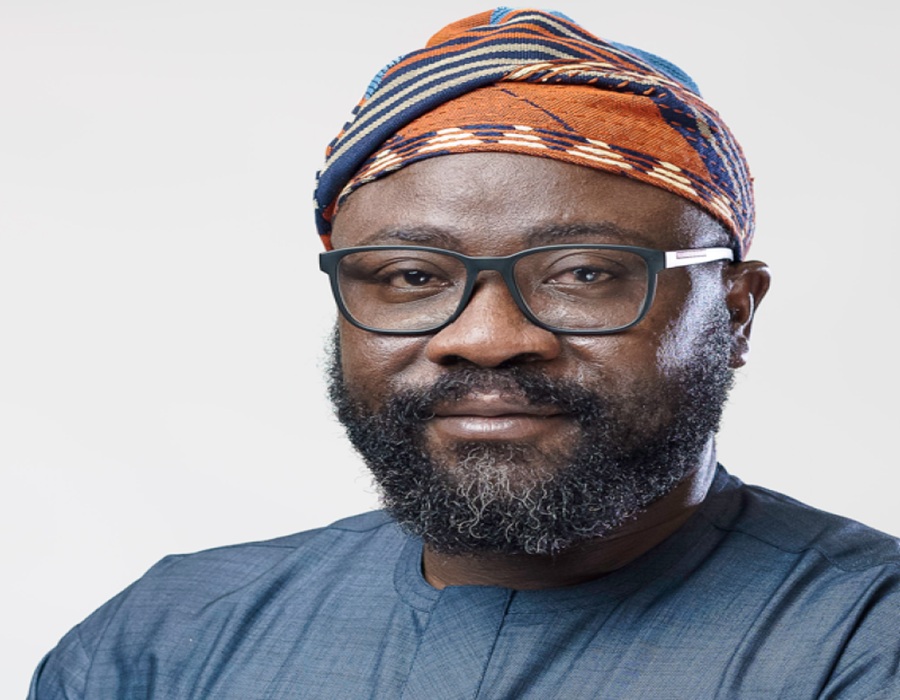
By: Deen Yusuf, Managing Director, Microsoft Nigeria
Nigeria has never struggled with ingenuity. It is a place where innovation grows from necessity, and where developers, entrepreneurs, and problem solvers consistently push past limitations to build what does not yet exist.

Deen Yusuf, Managing Director, Microsoft Nigeria
But in the era of artificial intelligence, ingenuity alone is no longer enough. The nations that will lead are those that not only innovate, but also ensure AI reaches workers at every level of the economy, because innovation without diffusion is simply potential left on the shelf.
Yet research shows this diffusion is far from guaranteed. While global generative AI usage continues to rise, the adoption gap between the Global North and Global South is widening at almost twice the rate.
Even the United States, despite leading in frontier AI, has fallen behind smaller, highly digitized economies in workforce adoption.
It’s clear that access constraints, not a lack of creativity or ambition, pose the greatest threat to equitable AI progress. For Africa, and for Nigeria in particular, this risk cannot be ignored.
The barriers slowing Nigeria’s AI acceleration
Microsoft’s Global AI Adoption in 2025: A Widening Digital Divide report shows that though Nigeria’s appetite for innovation remains strong, the underlying systems required to translate that energy into mainstream adoption are underdeveloped. While startups, government institutions, researchers, and investors are actively exploring AI applications across multiple sectors, national adoption has risen only marginally, up just 0.6 percentage points, from 8.7 percent in the first half of 2025 to 9.3 percent in the second half of the year.
Access remains the most immediate constraint. Connectivity gaps, inconsistent speeds, and high data costs limit the everyday use of AI tools. With median mobile speeds of 46.78 Mbps and fixed broadband at 27.54 Mbps, Nigeria ranks below the global benchmarks needed for reliable, cloud-based AI services.
Skills shortages create a second barrier. While momentum is building, Nigeria still requires the specialized talent required to build, integrate, and manage advanced AI systems. Talent emigration further widens the gap.
Language and localization gaps compound the challenge. Most large language models leverage English-language training data, excluding many Nigerian languages and limiting the cultural relevance of AI tools in a country with rich linguistic diversity.
Finally, fragmented regulation slows progress. Overlapping mandates across agencies create uncertainty around governance, privacy, and security, fueling public hesitation and reinforcing fears around job displacement.
Learning from global AI leaders
The fastest-accelerating countries, including the UAE, Singapore, Norway, Ireland, France and Spain, share a clear blueprint: early investment in digital infrastructure, robust skilling ecosystems, and decisive government leadership.
The impact of this approach is evident in the UAE, where the AI Diffusion Report shows national adoption rising from 59.4 percent in the first half of 2025 to 64 percent in the latter half, a 4.6-percentage-point increase.
The Emirates’ AI advantage didn’t materialize overnight. It was built deliberately and with years of foresight. In October 2017, five full years before ChatGPT captured global attention, the UAE appointed the world’s first Minister of State for Artificial Intelligence. That same year, the country launched a national AI strategy covering nine priority sectors and establishing governance frameworks.
This sequencing proved consequential. When the current generative AI wave arrived, UAE residents encountered a familiar technology, one their government had been deploying in public services and discussing in national conversations for half a decade. The foundation was already in place.
Regulatory pragmatism has been a key driver of the UAE’s rise as a global AI leader. Early on, the country established sandbox environments that allowed controlled experimentation and learning. It then introduced targeted visa programs to attract and retain AI talent, ensuring the ecosystem could scale.
This was reinforced by principle-based guidelines that offered clear direction without stifling innovation or creating compliance paralysis.
Over time, this approach built trust in the most durable way possible: through proven outcomes and AI systems that deliver value in everyday transactions.
For Nigeria, a similar path begins with deliberate government action through initiatives such as 3MTT and Project Bridge.
These programs lay the groundwork for strengthening talent and infrastructure, expanding access and connectivity, and accelerating digitization across ministries, departments and agencies.
Professional bodies also have a critical role to play. Through training, workshops, and sector-specific guidance, they can demystify AI, correct misconceptions, and help workers understand its benefits.
Early adopters already show what is possible. Through its advanced analytics-driven marketing platform, Terragon Group is helping its clients achieve returns of up to 900 percent, while financial services group Access Holdings has significantly accelerated product development cycles using AI-driven tools.
Local language relevance is equally essential. South Korea’s surge in AI adoption, for example, rising from 25th to 18th in the global rankings, only accelerated once AI models became highly effective in Korean. Nigeria can follow this path by investing in indigenous language AI.
Initiatives such as Awarri and Paza, a recent collaboration with Microsoft Research, are starting to show how culturally rooted AI tools can expand access and inclusion.
Nigeria stands at a pivotal moment. The ingenuity is here; the ambition is here, and now the pathway is clear.
With focused investment in infrastructure, talent, localization, and forward-leaning governance, the country can move from early promise to broad-based AI participation, ensuring AI becomes a driver of inclusive growth and opportunity for every Nigerian.


Nigeria is at risks losing digital control of its cyberspace following the alarming surge in cyberattacks in the country.

The surge show a dangerous shift from opportunistic cybercrime, facing approximately 4,710 threats weekly and ranking as a top target for cybercriminals in Africa.
Nigeria Internet Registration Association (NiRA) recently warned that the trend weakens the country’s control over its digital identity and limits economic gains from its expanding online ecosystem.
Speaking at the .ng Media Advocacy and Capacity Building Initiative for the Nigerian Information Technology Reporters Association (NITRA), organised by NiRA in Lagos, Adesola Akinsanya, president, NiRA, questioned who truly owns Nigeria’s digital presence, stressing that the answer lies in deliberate choices regarding domain name adoption and the narratives shaping the country’s digital ecosystem.
He likened the widespread adoption of foreign domains to building assets on land owned by others, where control, legal authority, and economic benefits ultimately reside outside the country.
According to him, many Nigerian businesses operating on domains such as .com are effectively anchoring their digital operations on infrastructure beyond national control.
Industry stakeholders at the event noted that while Nigeria’s digital economy continues to expand driven by increasing internet penetration and a vibrant tech ecosystem a significant portion of the value generated is lost through payments tied to foreign domain registration and hosting services.
Seyi Onasanya, chief operating officer, NiRA, described domain names as “digital real estate,” emphasizing their role as a foundational layer of the modern economy.
She stated that countries that prioritise local domain systems are better positioned to retain value, strengthen trust, and enhance digital competitiveness.
Onasanya added that although country-code domains account for nearly 40 percent of global domain registrations, Nigeria still records relatively low adoption of its .ng domain despite its large population and millions of small and medium enterprises.
Experts at the forum warned that dependence on foreign domains contributes to capital flight, weakens national branding, and exposes businesses to external regulatory risks.
They stressed that every domain name represents a potential economic asset linked to transactions, jobs, and overall GDP growth.
Beyond economic implications, speakers highlighted trust and security as critical issues.
Ridwan Badmus, legal and cybersecurity expert, noted that Nigeria’s regulatory framework is evolving to support a more secure digital environment, including policies encouraging government institutions to adopt local domains and hosting services.
He explained that the .ng domain benefits from enhanced security features such as DNS Security Extensions (DNSSEC) and improved monitoring systems, which strengthen resilience against cyber threats.

Breaking News…Hackers Allegedly Expose EFCC Data, Operatives’ Identities

Leo Stan Ekeh Foundation to Open Portal for 1,000 University Tech Scholarships on Monday

Karex, World’s Top Condom Maker to Hike Prices due to Iran war

US Library Blames Hackers for Viral Posts Urging Violence in Nigeria

IshowSpeed’s African Tour was ‘Spy Job,’ for Elon Musk- Seun Kuti

NBC Boss Urges Content Ceators to Participate in DSO

NITDA Takes Over National Digital Architecture System

DLM SPV PLC Lists ₦9.00bn AAA-Rated Medium-Term Notes on FMDQ Exchange, Sets Benchmark in Corporate Bond Market

FG Shifting Focus to “Meaningful Connectivity” to Drive Inclusion – Minister

Jury Finds Meta, Google Liable for Woman’s Social Media Addiction




 E-Business3 days ago
Lagos Unveils Cybersecurity Guidelines to Tackle Rising Digital Threats

 News3 days ago
FG Borrows N100Bn from Unclaimed Dividends, Dormant Bank Accounts

 Telecom3 days ago
NBC Warns Broadcasters Against Bullying Guests, Passing Opinions as Facts

 E-Financial3 days ago
CitiTrust Heads to Appeal Court over Alleged Ponzi Scheme

 Telecom3 days ago
WATRA Secretary sees Resilience as a Critical Link in West Africa’s Digital Economy

 Telecom3 days ago
Why Nigeria Must Embrace .ng Now – NiRA Reveals Five Critical Steps

 Telecom3 days ago
Tech Shake-Up: Snap Cuts Hundreds as AI Drives Efficiency Push

 E-Business3 days ago
Laundry Without Interruptions: Why LG Auto Restart Washing Machines Are Perfect for Nigerian Homes