

Telecom
NCC Provides N40m for Professorial Chairs in Two Universities

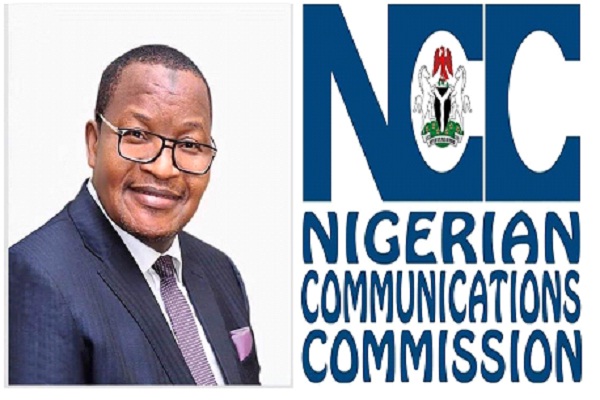
Nigerian Communications Commission (NCC) has signed a Memorandum of Understanding (MoU) and provided professorial chairs to the tune of N40 million in two more Nigerian universities.

Prof. Umar Danbatta, EVC, NCC
Dr Ikechukwu Adinde, director of Public Affairs, NCC, said this in a statement at the weekend in Abuja.
”This is in line with NCC’s ongoing initiative to ensure a sustainable telecommunications industry that is responsive to global technological changes as well as national consumer preferences,” he said.
Adinde said that the universities, which were given N20 million each for the next two years, included Premier University of Ibadan, Oyo State and Abubakar Tafawa Balewa University, in Bauchi State.
The director said that the money was to allow them to embark on massive research to promote innovation to drive socio-economic development in the country.
Prof. Umar Danbatta, executive vice-chairman of NCC, said the move was in continuation of NCC’s initiative aimed at strengthening the telecommunications industry to continuously contribute to national development.
Danbatta explained that the initiative was in line with the National Digital Economy Policy and Strategy (NDEPS), 2020 – 2030, which was unveiled by the Federal Government in 2019.
He further explained that it was with the mission of building a nation where digital innovation and entrepreneurship were used to create value and prosperity for all.
Danbatta said NCC’s collaborations with the academia would specifically impact Pillar three, four and six of NDEPS bordering on Solid Infrastructure, Service Infrastructure and Digital Services Development and Promotion, respectively.
He also stated that the scheme aligned with two additional pillars of the commission’s Strategic Management Plan (SMP), 2020 – 2024 on Promotion of Development of Digital Economy and Strategic Partnering.
Danbatta, however, called on benefitting universities to ensure that regulatory and technological solutions with potential of improving the industry were developed through dedication of required human and material resources to the programme.
“The commission’s engagement with the academia, therefore, is to ensure that there is application of knowledge generated in the tertiary institutions in the telecommunications industry.
“The endowment of professorial chairs in universities is one of the initiatives to support the Academia in focus research areas in ICT and contribute to the advancements in emerging technologies,” he said.
Earlier, Dr Henry Nkemadu, director, Research and Development, NCC, said that the new professorial chair endowment further demonstrated NCC’s conviction that the academia was a key driver to innovation in all spheres of human endeavour.
Nkemadu said that it had specific reference to ideas, inventions and prototype development for improving the level of productivity and efficiency in the industry.
“The instituting and endowing of professorial chairs in the two premier universities brings to four, the number of tertiary institutions of learning that have benefitted from the NCC’s innovation-driving initiative.
“The Bayero University, Kano and Federal University of Technology, Owerri in May, 2019, were endowed with professorial chairs,’’ he said.



Airtel Africa Plc has announced a strategic initiative in partnership with Barclays Capital Securities Limited to execute on-market share purchases totaling up to $110 million.

This initiative will be divided into non-discretionary and discretionary segments, marking a proactive step in optimizing the company’s capital structure and enhancing shareholder value.
In a statement released on the Nigerian Exchange and signed by Simon O’Hara, group company secretary, Airtel Africa described this share buyback program as a key component of its broader strategy to return cash to shareholders.
It noted that the program aims to repurchase up to one percent of the company’s issued share capital as of the date of this announcement.
“This decision by the Board reflects the organization’s strong financial position and its commitment to maintaining flexibility while continuing to invest for growth across its markets.
“The initial phase of the program will see Airtel Africa collaborating with Barclays Capital Securities to facilitate the purchase of its ordinary shares,” the statement noted.
According to Airtel Africa, the agreement features two key components operating concurrently: a non-discretionary segment allowing Barclays to purchase up to $60 million of ordinary shares independently of the company, and a discretionary segment where Airtel Africa can guide Barclays in purchasing an additional $50 million, adhering to the regulations set forth by the Market Abuse Regulation (EU) No 596/2014.
“The program is set to commence today and is expected to conclude by November 27, 2026, unless terminated earlier under the agreement’s terms. Airtel Africa has signaled that as the initiative progresses, further tranches may be announced to achieve its objective of repurchasing up to one percent of its issued share capital.
“The primary aim of this buyback program is to streamline the company’s capital. Accordingly, all shares purchased will be cancelled, contributing to a more efficient capital structure. Any transactions will be performed in alignment with pre-defined parameters outlined in the agreement with Barclays and comply with the authority granted by shareholders for share repurchases.”
At the annual general meeting on July 9, 2025, shareholders authorized the company to buy back a maximum of 366.073 million ordinary shares.
Following the previous buyback program, the remaining authority now stands at a maximum of 357.042 million ordinary shares, demonstrating ongoing support from shareholders for these initiatives.

Nigerian Communications Commission (NCC), Nigeria’s telecom regulator has released draft rules for mobile virtual network operators (MVNOs) as authorities seek to organize a market that is still at an early stage.

The NCC published the proposed “Business Rules for Mobile Virtual Network Operations in Nigeria” and opened a consultation process for industry stakeholders.
Comments can be submitted until June 29, while a public consultation is scheduled for July 9.
According to the NCC, the proposed rules define the obligations and responsibilities of both MVNOs and host network operators (HNOs).
The framework also sets conditions for licensing, compliance, interconnection, numbering resources, SIM and eSIM management, and network hosting agreements.
Regulators also seek to guarantee fair access to telecom infrastructure and reduce delays tied to the integration of MVNOs into existing mobile networks.
The text further includes provisions related to service quality, customer protection, network reliability, and data security.
Violations could lead to administrative sanctions or corrective measures under existing telecom laws.
Nigeria officially opened the MVNO market in 2023. That year, the NCC awarded licenses to 25 operators for a combined 5.9 billion naira, or about $4.3 million. Since then, around 40 licenses have been issued, with operators such as Vitel and Visafone already launching services.
Authorities see MVNOs as a way to improve competition in the telecom sector while helping extend services to underserved and unserved populations.
As of March 2026, Nigeria counted 185.7 million mobile subscribers and 153.8 million internet subscribers, according to NCC data.
Despite the size of the market, digital access remains uneven across the country.
Government estimates show that nearly 20 million Nigerians still remain outside the digital ecosystem.
The GSMA estimated that about 120 million Nigerians did not use mobile internet in 2023.
High service costs and inconsistent service quality also remain major concerns in the telecom sector.


An Australian federal court has upheld a fine against social media platform X over failures to comply with child internet safety regulations, bringing to an end a three-year legal dispute between the company and Australian authorities.

The case stemmed from a demand issued in February 2023 by Australia’s online safety regulator, the eSafety Commission, requesting detailed information on how the platform, then known as Twitter, was combating the spread of child sexual abuse material online.
Following the platform’s transition to X under billionaire entrepreneur Elon Musk, regulators accused the company of submitting incomplete responses to repeated requests for information.
A federal court had earlier ruled in October 2024 that X was legally obligated to comply fully with the notice issued by the regulator.
On Thursday, the court ordered the company to pay a fine of 650,000 Australian dollars (approximately 464,900 U.S. dollars).
Federal Justice Michael Wheelahan said the penalty was necessary to ensure compliance by large technology firms.
“A penalty near the maximum is appropriate in the case of the respondent, which is a substantial corporation, so that it operates as a real deterrent and is not simply a cost of doing business,” he said.
Australia has emerged as one of the leading countries advocating stricter regulation of major technology platforms.
The country recently introduced world-first legislation aimed at banning children under the age of 16 from accessing certain social media platforms.
Countries including France, United Kingdom and Canada are reportedly considering similar measures following consultations with Australian authorities.
Reacting to the judgment, eSafety Commissioner Julie Inman Grant said transparency remained essential in holding technology companies accountable.
“Meaningful transparency is critical to holding technology companies to account,” she said.
“This is not only a key part of our work as Australia’s online safety regulator, it also provides the Australian public with important information about how these companies are tackling the worst-of-the-worst content on their platforms,” she added.

WHO Says Ebola Risk Now at Highest Level

Airtel Africa Launches $110m Share Buyback Programme for Capital Efficiency

NCC Drafts New Rules for Virtual Mobile Operators

LG Electronics Showcases Advanced HVAC Solutions at Mega Clima Nigeria 2026

FG Unveils AI Public Services Platform

MTN, VDT, Zoracom, Digital Realty Back 2026 Girls in ICT Campaign

Vitel Wireless Partners Fintechs to Expand Access to Services

Kaspersky Discovers Vulnerability in Qualcomm Snapdragon Chips that can Lead to Data Loss & Device Compromise

Bank Customers to Pay N1,500 for ATM Card Issuance, Replacement – CBN

FG Okays 112 as Toll-Free National Emergency Response Number




 Telecom2 days ago
Google unveils Gemini-powered advertising, commerce tools at Marketing Live 2026

 E-Financial2 days ago
Griffin Capital Group Launches Integrated Financial Services Group Positioned to Strengthen Capital Formation in Nigeria, Africa

 Telecom2 days ago
Nigeria gets AI-ready Lagos data centre

 E-Business2 days ago
Kaspersky Detected More than 92,000 Malware Attacks Disguised as AI Services in Four Months

 E-Financial2 days ago
CBN to Simplify Bank Alerts over Rising Customer Complaints

 Telecom2 days ago
Telcos in Nigeria, other Emerging Markets Squeezed by Diesel Crisis

 Telecom2 days ago
ipNX Seeks Coordinated Action on Fibre Deployment @ National Dig-Once Forum

 General News2 days ago
Otedola Plans $100m Investment in Dangote Refinery ahead of Proposed IPO