

Telecom
Spectranet to Raise Bar in 4G LTE


Ajay Awasthi, chief executive officer (CEO), Spectranet Limited, a 4G LTE internet service provider, has expressed the readiness of the firm to raise the bar in quality internet services to its customers.

L-R: Engr. Muhammed Rudman handing the award to an official of Spectranet
Awasthi, who spoke on the sidelines after receiving the Best 4G LTE Internet Service Provider of the year at the Beacon of ICT (BoICT) 2020 awards in Lagos, said the firm would continue to raise the bar of internet service delivery as a pioneer and reputable leader in 4G LTE.
“We appreciate the recognition today, we have made the promise to our subscribers that they will remain first on our list of priorities,” he said.
He added that the firm, in partnership with the subscribers, would continue to strive to deliver the best in internet services through cutting edge technologies such as 4GLTE, FTTx and WTTx.
“We will always listen and respond quickly to the changing requirements of our customers,” he said.
The award, which was organised by Communications Week Media at Eko Hotel and Suites, Victoria Island, Lagos under strict observation of the COVID 19 rules and regulations, had key players in the ICT industry in attendance.
While the occasion was chaired by Chris Uwaje, managing director of Mobile Software Solution, Obadare Peter Adewale, Co-founder and Chief Operating Officer, Digital Encode Limited, delivered the keynote address on Cybersecurity and its role in Nigeria’s economy.
Other who attended were ALTON Chairman, Gbenga Adebayo; ATCON President, Ike Nnamani; ITAN President, Adetayo Adeniyi; President NiRA; Muhammed Rudman, and SPON President,Chinenye Mba- Uzoukwu.
Presenting the best 4G LTE award to Spectranet, Engr. Muhammed Rudman said: “A close observation of Spectranet 4G LTE brand in the industry shows clearly the growth of the brand in the deployment of its technology. “Spectranet 4G LTE is truly deserving of such an award based on its spread and growth over the years,” he said.



Olusola Teniola, ipNX Director has been named to the newly inaugurated IPv6 Council Board by the Nigerian Communications Commission (NCC), as part of a broader industry effort to accelerate Nigeria’s transition to Internet Protocol version 6 (IPv6).

The inauguration, which took place in Ikeja, Lagos, underscores the Commission’s renewed commitment to accelerating Nigeria’s transition to Internet Protocol version 6 (IPv6), a critical enabler of the country’s digital future.
Mr. Teniola joins a distinguished group of industry leaders, including Funke Opeke, Muhammed Rudman (Chairman), Chris Uwaje (Vice Chairman), Mary Uduma, Gbenga Adebayo, Lanre Ajayi, and Latif Ladid, alongside representatives from key regulatory and government institutions.
Speaking on his appointment, Teniola expressed appreciation to the NCC for the opportunity to serve and reiterated the importance of collaborative action in driving Nigeria’s digital transformation.
“The transition to IPv6 is no longer a future consideration; it is an immediate priority for Nigeria’s digital economy. As data consumption grows and emerging technologies such as 5G, IoT, and AI become more pervasive, we must ensure that our underlying infrastructure is scalable, secure, and globally competitive,” he said.
He further emphasized that achieving meaningful IPv6 adoption will require strong alignment across stakeholders, including telecom operators, internet service providers, enterprises, academia, and government.
“This is a collective responsibility. We must invest in capacity building, drive awareness, and create the right policy and regulatory environment to accelerate adoption. Nigeria cannot afford to lag behind in an increasingly connected world.”
The IPv6 Council Board has been tasked with developing and overseeing the implementation of a national IPv6 strategy, monitoring progress, and providing periodic updates on adoption levels across the country. The Council will also play a key role in addressing infrastructure challenges, strengthening technical expertise, and recommending policy incentives to support nationwide deployment.
Teniola’s appointment reflects ipNX’s continued commitment to shaping Nigeria’s digital ecosystem and advancing the development of resilient, future-ready network infrastructure across the country.

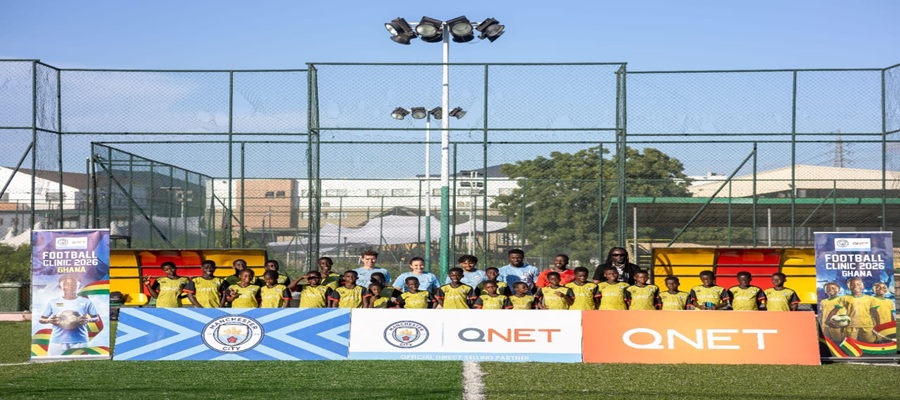
In a transformative initiative focused on youth empowerment, talent development and community impact, QNET, an international wellness and lifestyle company and a decade-long Official Direct Selling Partner of Manchester City , has successfully hosted an elite football clinic in Accra for 25 promising young Ghanaian footballers aged 7 to 11.

QNET
Delivered by official Manchester City coaches from 21 to 24 May 2026, the football clinic brought together talented young boys and girls from different communities across Ghana at AIS School Park, East Legon, for a unique opportunity to receive world-class football coaching, mentorship and life-skills training inspired by one of the world’s leading football clubs.
For many of the participants, the experience represented more than football. It was an opportunity to dream bigger, build confidence and believe that through hard work, discipline and determination, young Ghanaians can achieve their full potential both on and off the pitch.
Football holds a special place in Ghanaian culture and identity, inspiring generations of young people across the country. Through this initiative, QNET and Manchester City Football Club aimed to contribute meaningfully to the future of youth development in Ghana by creating an inclusive platform where children can learn, grow and thrive regardless of their background.
Trevor Kuna, Chief of Network Development at QNET said, “Football does something that few things can — it cuts across language, background and circumstance and gives young people a common language of ambition. When you watch these children on the pitch, you see not just their talent but their hunger to grow, to prove themselves, to be seen. At QNET, we believe that hunger deserves to be met with opportunity, and that is exactly what this clinic is about.”
The clinic focused not only on football skills and tactical development, but also on teamwork, leadership, discipline, perseverance and self-belief, values that are essential both in sport and in life.
Cherif Abdoulaye, QNET’s Deputy Regional General Manager for Sub-Saharan Africa, said,“,“When QNET took this initiative to Nigeria in 2023, we saw first-hand what happens when young people are given access to world-class coaching in their own communities — it shifts something in how they see themselves and what they believe is possible. Bringing it to Ghana felt like the natural next step. Ghana has a football culture that runs deep, and a new generation ready to carry it forward. We are proud that QNET and Manchester City can be part of that story.”
Philipa Harrison, Partnerships Marketing Manager for City Football Group’s MENA region, said “Over the past few days, we have witnessed tremendous passion, energy and commitment from these young players. This football clinic is about helping young people develop their abilities, enjoy the game and believe in what they can achieve in the future. We are proud to partner with QNET to bring this experience to young players in Ghana.”
For more than 10 years, QNET has been the Official Direct Selling Partner of Manchester City Football Club. QNET has also maintained a longstanding partnership with the Confederation of African Football (CAF), supporting major African interclub competitions including the TotalEnergies CAF Champions League and CAF Confederation Cup.
These partnerships reflect QNET’s broader commitment to youth empowerment, community engagement, and the development of sports across Africa.
Beyond its sports and community initiatives, QNET continues to champion ethical business practices, transparency and public education across its markets while working closely with stakeholders and authorities to address the misuse of its brand by unauthorised individuals.


Mobile Network Operators (MNOs) may introduce data calculator to enable users to measure their data usage and address complaints of rapid data depletion.

Data depletion is the rapid exhaustion of your internet data bundle before its expected expiration.
The data calculator is a tool that will show subscribers how their data is used daily.
Telecom operators, largely the MNOs, are already providing subscribers a daily report of data used the previous day, as part of directives from the Nigerian Communications Commission (NCC) to drive transparency.
According to a report by Nairametrics, an industry source confirmed the new measure, noting that subscriber complaints over data depletion have now become a major concern in the industry, as it undermines trust.
“An average subscriber believes their service provider steals their data once their data is exhausted before time or depletes faster than they expected, which is not true.
“Over the years, we have tried to enlighten subscribers on factors that could lead to the fast depletion of their data, which include smartphone functionality, among others.
“And now, we are looking at tools that could show the subscribers not just what they have used, but also how they have used it to further promote transparency,” the source said.
According to the source, operators are also intensifying their sensitisation campaigns to help subscribers understand why their data can run out quickly.
Recall that NCC carried out an audit about 24 months ago across the mobile networks and found out that there was “no major” issue of data depletion, contrary to claims and complaints by subscribers.
Findings showed that the major issue still concerns the types of mobile phones and the activities users perform on them.

CBN Extends PoS Geo-Fencing Enforcement Deadline to August 2026

Nigerian Capital Market to Transition to T+1 Settlement Cycle on Monday

Report Shows Start-ups Fuel Innovations in Africa

NCC Expands IPv6 Board with the Appointment of Olusola Teniola, Funke Opeke Others

FidBank UK Broadens Investment Pathways for Nigerians into the UK Market

MTN, VDT, Zoracom, Digital Realty Back 2026 Girls in ICT Campaign

Vitel Wireless Partners Fintechs to Expand Access to Services

FG Okays 112 as Toll-Free National Emergency Response Number

Opay Plans IPO in US, Targets $4Bn in Valuation

CPN Begins Crackdown on Quack IT Professionals, Vows Tougher Action against Cybercrime




 Telecom2 days ago
Bharti Airtel Named Fourth Largest Mobile Network Operator in the World

 News3 days ago
ALX Broadens AI Training in Africa

 Telecom3 days ago
MTN Nigeria Reaches 93.7% Population Coverage, Invests N2.7bn In Communities as Child Online-Safety Drive Launches

 General News2 days ago
How Enugu State is using GovTech to Fix its Housing and Land Administration

 News3 days ago
Swift Network Faces Winding-up Battle over Alleged N115m Debt

 General News2 days ago
NCDC Warns against Using Bitter Kola, Salt Water as Ebola Remedies

 E-Business1 day ago
Anthropic Raises $65 Bn to Expand AI Research, Innovation

 Telecom2 days ago
MTN Reportedly Spends N60Bn on Diesel Annually