

Telecom
Smile Telecoms Holdings Makes Significant Changes in Leadership


Smile Telecoms Holdings Ltd., (Smilecoms.com) a Pan-African telecommunications group with operations in Nigeria, Uganda, Tanzania, and the Democratic Republic of the Congo, has announced after its board meeting held on January 15, 2021, significant changes in the leadership of the Group’s board and management.

The Group announced the retirement of Ms. Irene Charnley and Mr. Mohammed Wajih Sharbatly from the Group’s Board and all boards of the operating companies, effective January 1st 2021.
Ms. Irene Charnley, founder of Smile, has retired as Deputy Chairman from the Smile Telecoms Limited Board.
Mr. Mohammad Wajih Sharbatly is a co- founder of Smile and has acted as Co-Chairman of the Group through December 2020.
Commenting on the announcement, Mr. Ibrahim H. Sharbatly, chairman of the Group said “Today we say farewell to our founder and deputy chairman, Ms. Irene Charnley. We wish her all success in her new endeavors.
I am looking forward to working with the new Board Members and counting on their diverse experience to prepare for the company’s future
“We also want to say farewell to our Co-Founder and Co-Chairman Mr. Mohammad Wajih H. Sharbatly.”
“May God bless them both.”
Smile Telecom Holdings, in its Board meeting on January 15th, 2021, also announced the following Nominations:
Mr. Osman Sultan has been appointed as Vice Chairman of the Group. Mr. Sultan, the founding CEO of EITC (du) in the UAE, was at its helm from 2006 until the end of 2019. Before that, he was the founding CEO of Mobinil in Egypt (now Orange Egypt) from 1998 until the end of 2005.
Mr. Sultan sits on several ICT Companies and Academic Boards. He has been actively involved with Smile as the Chairman of the Restructuring and Transformation Committee of the Group since July 2020.
Mr. Albert Momdjian has been appointed as Board Member of the Group and Chairman of the Group’s Audit Committee. Mr. Momdjian is a former corporate and investment banker with 27 years of corporate Investment banking and restructuring experience primarily in Media and Telecoms across Europe, the Middle East and Africa, having been involved in over USD 100 bn worth of M&A, capital markets and restructuring transactions.
Mrs. Caroline Chang, recently appointed as a Board Member of the Group in November 2020, has been appointed as a member of the Group’s Audit Committee. Mrs. Chang is an experienced board member and former EMEA General Counsel of Farallon, the leading US hedge fund that has been active in Africa and Emerging Markets.
These nominations come in addition to the appointment of Mr. Raihan Shaikh-Khaleel as Board Member of the Group in September 2020. Mr Khaleel is a Partner at Swinton Capital and an experienced restructuring advisor across EMEA, sitting on various Boards of companies involved in restructurings. He has 20 years of EMEA and other cross border experience, spending the last 10 years restructuring companies for a leading US hedge fund.
“While we understand the desire of our Founders to retire after a challenging journey, we have been preparing over the past months for the future. We want to ensure that we bring the best competencies on board to enable the Group to face the various challenges and transformations that the Telecoms sector faces and take advantage of the opportunities ahead. Africa is the fastest-growing continent globally, and data is the new future in the world we live in,” concluded Mr. Ibrahim Sharbatly.
Commenting on the changes Ahmad Farroukh, Group CEO, added, “I am looking forward to working with the new Board Members and counting on their diverse experience to prepare for the company’s future in the challenging times the industry is going through.”
Finally, Smile announced that the Group Board approved the Head Office and Centre of Main Interest (COMI) of Smile Telecoms Holdings Ltd to shift from Mauritius to England and Wales.



National Agency for Science and Engineering Infrastructure (NASENI) has signed a Memorandum of Understanding (MoU) with the Rural Electrification Agency (REA) to promote locally manufactured renewable energy technologies under the Federal Government’s ‘Nigeria First Policy’.

L-R: EVC/CEO, National Agency for Science and Engineering Infrastructure, Mr. Khalil Suleiman Halilu; Director-General of the Bureau of Public Procurement (BPP), Dr. Adebowale Abraham Adedokun; and Dr. Abba Abubakar Aliyu, Managing Director and Chief Executive Officer of the Rural Electrification Agency (REA), at the signing of the MoU on implementation of Nigeria First Policy for offtake of NSSENI’s renewable energy products for rural electrification projects held on Friday, June 19, 2026 at BPP’s office in Abuja.
The agreement signing was facilitated by the Director-General of the Bureau of Public Procurement (BPP), Dr. Adebowale Abraham Adedokun at the BPP headquarters in Abuja on Friday, June 19, 2026.
Speaking at the event, the Executive Vice Chairman/CEO of NASENI, Mr. Khalil Suleiman Halilu, said the Agency is focused on linking research, production, and commercialization to ensure that innovations are translated into market-ready products.
He said “NASENI would scale up renewable energy production, including solar panels and streetlights, through initiatives such as DefFrontier, to strengthen local manufacturing and reduce import dependence, adding that the Agency will meet the renewable energy requirements of REA.”
Instead of continuous importation of technologies, machines and equipment for producing renewable energy solutions, NASENI by this MoU will be committed to local manufacturing and domestication of the technologies, equipment and other ways and means of proliferation of renewable resource in the country and to increase the nation’s off-grid energy solutions.
The Managing Director/CEO of REA, Dr. Abba Abubakar Aliyu, described the relationship with NASENI as a strategic partnership aimed at building Nigeria’s renewable energy ecosystem through local production and deployment.
He stated that “while NASENI provides the manufacturing and technological capacity for renewable equipment, REA will focus on deploying solutions to expand electricity across rural areas.”
Meanwhile, the Director-General of BPP, Dr. Adebowale Abraham Adedokun, said the Nigeria First Policy, exemplified by this agreement, is aimed at strengthening local content, ensuring value for money, and promoting accountability in public procurement.
He emphasized that implementation of the agreement will be performance-based, with strict monitoring to ensure compliance and measurable outcome. He added that the MoU is expected to deepen collaboration between NASENI and REA in expanding renewable energy and reducing dependence on imported technologies.
The MoU will be implemented through NASENI’s subsidiary company, NASENI Devfrontier Green Energy FZE and REA limited liability company, RAMco.The two Federal Government agencies seek to establish a strategic collaboration under which REA shall offtake PV modules, inverters, energy storage batteries of NASENI-Devfrontier Green Energy FZE directly or through its approved distribution companies/assembly and manufacturing factory.
As part of the agreement, REA shall provide institutional visibility to enable NASENI participate in electrification projects; facilitate opportunities for engagements between NASENI and eligible developers/contractors under REA programs; ensure that such facilitation is consistent with applicable procurement, local content, and transparency requirements; and also collaborate with NASENI in promoting standardized, high-quality PV technologies across its programme portfolio.
Telecom
TikTok, ICC Gather Nigeria’s Entrepreneurs to Drive Small Business Growth and Digital Transformation

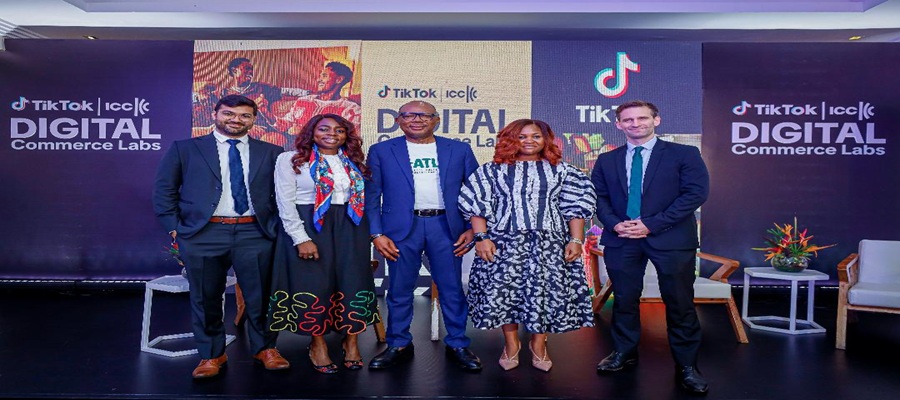
TikTok, in collaboration with the International Chamber of Commerce (ICC), on Thursday convened hundreds of entrepreneurs, small business owners, digital creators and industry stakeholders in Lagos for a flagship Digital Commerce Labs (DCL) event aimed at accelerating digital skills development and economic inclusion across Sub-Saharan Africa.

TikTok
The event, supported by the National Information Technology Development Agency (NITDA) and the Lagos State Employment Trust Fund (LSETF), brought together participants from across Nigeria’s business and technology ecosystem to explore how digital platforms can be leveraged to scale enterprises, improve market access and drive job creation.
Speaking at the event, organisers said the initiative marks the beginning of a broader programme designed to train thousands of small and medium-sized enterprises (SMEs) across the region in digital commerce skills through both online and physical learning platforms.
According to TikTok, the partnership reflects its commitment to supporting small businesses and strengthening Africa’s growing digital economy.
“Digital commerce is reshaping how businesses grow across Sub-Saharan Africa, and Nigerian entrepreneurs are at the heart of that shift,” said Tokunbo Ibrahim, Acting Head of Government Relations and Public Policy, Sub-Saharan Africa, TikTok.
He said the initiative would ensure that small businesses benefit from emerging opportunities in social commerce and digital trade.
The Director-General of NITDA, Kashifu Inuwa Abdullahi, said digital platforms have evolved beyond entertainment and are now key drivers of economic growth and innovation.
He noted that Nigeria’s youth population and growing digital adoption position the country to benefit significantly from the expansion of online commerce and creator-led businesses.
“At NITDA, our vision is to make Nigeria a digitally enabled nation, fostering inclusive economic development through technological innovation,” he said.
The ICC Deputy Secretary General, Julian Kassum, described the programme as a strategic effort to equip small businesses with tools needed to compete in the global digital economy.
He said the Digital Commerce Labs initiative would help expand opportunities for trade, entrepreneurship and employment.
The Lagos State Employment Trust Fund (LSETF) also announced support for the programme through capacity-building training in financial literacy, business structuring, record keeping, taxation and legal advisory services. It said participating businesses would gain access to funding opportunities after completing the programme.
Data presented at the event showed that Nigeria’s social commerce sector is projected to reach $2.04 billion in 2025 and nearly $4 billion by 2030, while Africa’s wider market is expected to grow to $9.43 billion within the same period.
Speakers at the event noted that social media platforms have become central to business growth in Nigeria, with many SMEs relying exclusively on digital channels to reach customers and drive sales.
The programme also featured keynote presentations, business training sessions, and a creator economy spotlight where Nigerian entrepreneurs shared experiences on building brands and scaling businesses through digital platforms such as TikTok.
Organisers said the initiative is expected to strengthen digital literacy, expand market access for SMEs, and deepen Nigeria’s participation in the global digital economy.
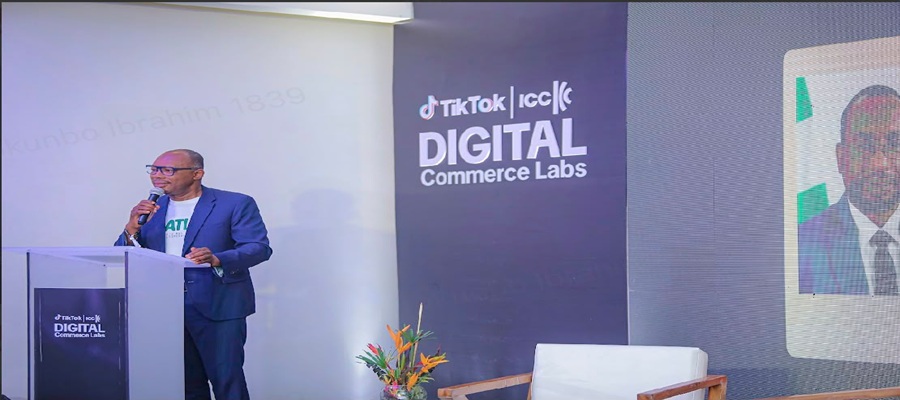
National Information Technology Development Agency (NITDA) and TikTok have launched a strategic partnership aimed at equipping Nigerian Small and Medium Enterprises (SMEs) with digital commerce skills, tools, and opportunities to compete effectively in the digital economy.

NITDA
The partnership was unveiled at the launch of the TikTok Digital Commerce Labs Programme for SMEs, held in Lagos, where stakeholders from government, the private sector, entrepreneurship support organisations, and the digital ecosystem gathered to explore innovative pathways for empowering Nigerian businesses through technology.
Speaking at the event, the Director-General and Chief Executive Officer of NITDA, Kashifu Inuwa Abdullahi, CCIE, represent at the event by Dr Aristotle Onumo, Director Stakeholder Management and Partnerships, described digital commerce as one of the most powerful drivers of economic inclusion and business growth in the modern economy, noting that access to digital skills has become increasingly critical for the survival and competitiveness of businesses.
According to the NITDA boss, the future of commerce is increasingly digital, and entrepreneurs who embrace technology will be better positioned to access larger markets, increase productivity, and create sustainable wealth.
He observed that while Nigeria is blessed with millions of hardworking and innovative entrepreneurs, many small businesses still lack the digital capabilities required to fully participate in the opportunities offered by the digital economy.
“Today, a young entrepreneur with a smartphone can reach customers beyond geographical boundaries, build a brand, market products globally, and create economic opportunities that were previously unimaginable. Our responsibility is to ensure that every entrepreneur, regardless of location, has access to the digital skills and tools needed to succeed in this new economy,” he said.
A major highlight of the event was the announcement of a collaborative programme between NITDA and TikTok designed to extend digital commerce training to SMEs across the country.
As part of the initiative, TikTok has committed an initial investment of approximately US$20,000 to support a pilot Train-the-Trainer Programme, which will leverage NITDA’s Digital Literacy for All (DL4ALL) networks to deliver digital commerce training to entrepreneurs, particularly those in remote and underserved communities.
Inuwa commended TikTok for its commitment to supporting entrepreneurship and digital inclusion in Nigeria, describing the initiative as a practical example of how technology platforms can contribute meaningfully to economic empowerment and national development.
He noted that the collaboration aligns with NITDA’s Strategic Roadmap and Action Plan (SRAP 2.0), particularly the Agency’s commitment to achieving widespread digital literacy, promoting innovation, supporting entrepreneurship, and fostering inclusive economic growth.
The DG stressed that technology should not merely be viewed as a tool for communication and entertainment but as a platform for creating opportunities, generating income, and transforming lives.
“Technology is most powerful when it empowers the least connected, creates opportunities for the underserved, and transforms potential into prosperity,” he stated.
Industry stakeholders at the event described the initiative as timely, especially at a period when businesses are increasingly leveraging digital platforms to connect with customers, expand operations, and access new markets.
The TikTok Digital Commerce Labs Programme is expected to strengthen digital capabilities among SMEs, improve access to digital opportunities, and contribute to the growth of Nigeria’s digital economy by enabling entrepreneurs to harness the power of technology for business development.
The launch reinforces NITDA’s vision to building a digitally empowered Nation fostering inclusive economic development through technological innovation where individuals, startups, and businesses can leverage technology to create value, generate employment, and contribute to national prosperity.
As Nigeria continues its journey towards becoming a leading digital economy in Africa, collaborations such as the NITDA-TikTok partnership are expected to play a significant role in empowering citizens, fostering innovation, and expanding economic opportunities for millions of Nigerians.

FG Bans Use of Gmail, Other Personal Emails for Civil Service Operations

Indwelt Studios Seeks Increased Awareness @ World Sickle Cell Day

Standard Bank Targets $15.4b SME Growth in Nigeria, Others with Trade Expansion Drive

Payaza Launches AI-powered Storefront Platform to Drive Cross-border Commerce

NAICOM’s 18 Months Management Spill @ African Alliance Ends

CBN Extends PoS Geo-Fencing Enforcement Deadline to August 2026

FG Targets Alleged N3tn Capital Flight, Opens Airtime Credit Market to Nigerian Fintechs

London Strengthens Global Investment Ties with Africa @ First Ever London-Africa Business Summit

NCC Drafts New Rules for Virtual Mobile Operators

Japan, UNESCO Boost Digital Learning in 15 CoEs with Donation of ICT Equipment




 E-Financial3 days ago
FG Issues Transition Guidelines for Tax Acts 2025

 E-Financial2 days ago
How Fraudsters Stole N134Bn from Banks, Customers in 6 Years – CBN

 Telecom3 days ago
Telecom Regulator, NCC, Digital Encode, AfriGoPay Support eBusinesslife Girls In ICT Campaign

 Telecom3 days ago
Mobile Technologies Boost Africa’s Economy by $240B in 2025, Commences a New Phase of Digital Transformation

 General News2 days ago
Police Uncovers N7.7Bn Telecom Data Fraud Syndicate, Recovers Assets Worth Millions

 Telecom2 days ago
TikTok, ICC Gather Nigeria’s Entrepreneurs to Drive Small Business Growth and Digital Transformation
 E-Business2 days ago
Payaza Launches AI-powered Storefront Platform to Drive Cross-border Commerce

 E-Financial3 days ago
Fidelity Bank Empowers 1,950 Residents in Anambra, Distributes Machines, Cash Grants, School Support Items