

General News
Local Content will Increase Internet Traffic—-Omoniyi

Mr. Abiodun Omoniyi, managing director, Vdt Communications, is an entrepreneur that has contributed a lot in the development of the country through the provision of Information and Communications Technology services for the past 20 years. He founded Bitcom in 1989 a company that was engaged in the sale and service of computer hardware, but later expanded into system integration, software as well as a communications solution provider arm, Vdt communications. He spoke to chike onwuegbuchi on industry issues.
Digital Subcriber Line and Fibre Optic
Digital subscriber Line service is not under threat with the deployment of fibre optic cable around the country. When you talk about threat, it is as if one tends to kill the other, but in this case it is different, as it complements fibre optic. In modern business what is described in the olden days as threat is an advantage depending on the side one is looking at it.
The deployment of fibre optic by some telecommunications operators could be a blessing in disguise for DSL. Fibre is laid in the back-hull. As Digital Subscriber Line provider, we deal more with the end customer. The end customer doesn’t discriminate whether as an operator you have your own fibre or not, what they are interested is quality of service which DSL offers. When we have competition it can only improve service delivery at the back-end, fibre is not a threat to DSL but boost quality of service to the customer.
Your DSL Network
I would like to look at the line of our business in two folds, in fact Vdt Communications actually sells two main products, one, is short distant communications, and the other long distant communications. Describing these technologically it is known as Digital Subscriber Line and Wireless communications. With the terms of our license from Nigerian Communications Commission, for our long distant communications services, we are suppose to bulk purchase back-hull facilities, the ones that crosses state lines, for instance, if you lay fibre from Lagos to Ibadan you have crossed state lines such as Lagos, Ogun and Oyo. Our license did not permit us to lay fibre across state lines, aside that, it also involves huge capital to lay fibre across state lines. What we do is to lease bulk capacity on the back-hull trunk and fractionalizing and reselling it.
By our strategic intent, we are simply playing on the long distant through leasing the back-hull infrastructure and using our metro infrastructure which is the one we concentrate on building, to deliver service to the end-user.
We have metro infrastructure which is also known as intra-city infrastructure, this we deploy largely by wireless so that we can grant access into the core facility.
High Downtime in Network Availability
As a solution provider, we are affected by situations around us, we are all striving to achieve perfection, but you can’t do it without the environment. These entire infrastructure I mentioned earlier are powered by electricity, we know the situation with our power supply system. Apart from power, you also need to have back-up batteries, when there is diesel shortage or scarcity, and when there is no power in an area for five days your back-up batteries will run down and it will affect service. If we fix power we would have solve 70 percent of the problems associated with imperfect service. Telecommunications infrastructure depends heavily on power. It is not only power that causes outage in communications services, activities of militants in the Niger Delta is also a problem; unregulated work services on the road is as well as problem, most of these services that we provide runs on fibre backbones, and these fibre are laid on the ground and most often construction works on roads cut fibre cable which affect service delivery. Each time it happens it takes time to fix which translate to downtime at the downstream of the service provisioning.
Wireless services are hoisted on transmission support mast; most of these masts situated at hostile environment are being vandalized. More so, cost of doing business in Nigeria is high and is increasing because the enabling environment or supporting environment is not there and effect of that is what we experience in our network be it telephone or bank network.
When you pick up your mobile phone sometime and you can’t make call it could be that there is a cut on the operator’s back-hull transmission. But we feel it more in the banking hall because you are waiting for the person to pay you money and the money is not forthcoming you will be disappointed.
Curbing Vandalization
This has to do with good governance at all level of government, local, state and federal. What do they do to vandals when they are caught? When you talk about adherence to rule of law, enforcement is fundamental. This is what I refer to as good governance. There are so many things that people do because they know when they are caught nothing they won’t be sanctioned. For instance, government gives permit to an operator to deploy telecommunications infrastructure and unscrupulous people go and damage the infrastructure, it is a slap on the government that gave the permit. We have also witnessed a situation where government officials go to locations that have valid permit and condo it off.
Increasing Broadband Penetration
We can’t run away from the fact that availability of broadband in a country improves the easy of doing business is such country. There are basic infrastructures that guarantee deployment of broadband internet, such as gateway through which the service comes into the country. Today, the largest gateway through which the country gets reliable broadband internet is the Sat-3 and alternative one is Very Small Aperture Terminal (Vsat). Apart from Glo-1 and Main one that are coming to improve the situation, we may still have challenge in increasing penetration of broadband. There are no enough capacity to distribute broadband backbone to various homes and offices. When Glo-1 and Main One cable become operational there will be enough capacity to push broadband internet service to mass market.
It is premature to compare availability of broadband in developed countries such as United States of America, Britain among others to Nigeria, going by lack of backbone infrastructure required to drive it to end-user as well as gateway capacity.
Vdt and Unified Communications
Nigerian Communications Commission (NCC) has constantly emphasized that, it is not licensing technology. What we’ve found out is that the same channel that is used to transmit data transmits voice and video. The issue is not whether we intend to do voice, when you sale Internet, you are also selling voice and video, you are aware of Skype, Google talk, what is done on these platforms is voice. Internet Protocol (IP) has made the issue of the service that goes to the infrastructure irrelevant. For instance, if the technology is there to transmit smoke why are we limiting ourselves to say we are only going to transmit data, while somebody needs smoke. We have the channel to carry voice, data and video today. But, what is important to majority of our customer is data that is why they are using it for data, we have different converters that converts this same channel to be able to take different services be it data, voice or video.
Today, our infrastructure is being used to carry voice, data and video. We must not have unified license to be able to do this, it is a natural thing that comes with the infrastructure, when we provide link to people they will be able to do these things, if they have the right converter to transmit them.
Vdt’s Role in Telecommunications Industry
We come in as an enabler of corporate business communications. We provide communications link to corporate organizations that have more than one branch, so that they can communicate effortlessly and transmit any utility they want over communications channel.
Presently, we have offices in 18 major cities in the country where we serve our different customers. Our customers are mainly the banks and other financial institutions. We are niche player now, but when we go into retail we would have drop our niche ability and move into mainstream. Vdt Communications going forward in 2009 is gradually changing from what it was in 2006, so that our presence will be better felt, because all it takes is for us to turn-on our services in the states we are present to offer retail service to homes, and small offices as against large organization that we are playing now.
ISP and NIXP
The idea of Nigeria Internet Exchange Point (NIXP) is a very noble idea, it will energize activity in the industry, create employment as it makes local content local. But, we are aware that most Internet hubs are located outside the shores of the country, what it means is that as an Internet Service Provider that transmits data for customer I will visit my hub first to be able to transmit data which is outside the country. We are not providing enough local content yet. However, there is some growth in the activities of ISPs when you look at their traffic level, but there is still paltry information generated locally. How many times do people visit Nigerian content site, most times we visit content sites outside, for instance, how many emails identity of people we send mails to are domain on .ng? Many of it is Yahoo, and Yahoo does not have any of its exchange point here. You can’t compare the percentage of people that have foreign domain name to the people that have Nigeria domain name. The issue of regulation of that was not properly handled at the beginning unlike in the case of South Africa which was done by legislation where all South African base companies were mandated to domain their site in .za. In Nigeria situation we saw the intra-fighting that characterized setting up of an association that will coordinate the nation’s domain name before Nigerian Internet Registration Association (Nira) emerged. We need to assist Nira to popularize .ng as well as having enough interesting content to push around the country that will naturally make the IXP to be visible. It must not be by legislation to make people make their content local, there a lot of other things that need to be done for this to pick-up.


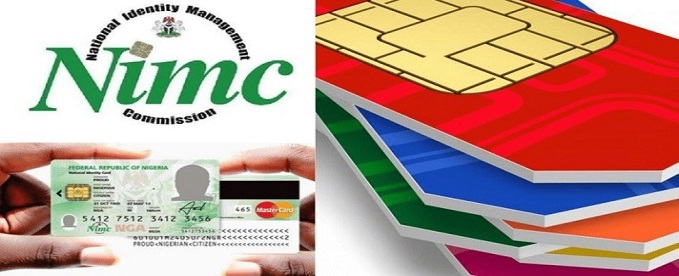
National Identity Management Commission (NIMC), has explained why kidnappers and terrorists are not always traceable despite the country’s expanding digital identity infrastructure.

NIMC explanation pointed to a simple but significant gap in the system.
Abisoye Coker-Odusote, director-general of the agency said that: “A lot of the time, you find out the kidnappers use the phones of the people they have abducted, which means how do you trace them because they are not using their own phones?” she said.
Coker-Odusote spoke during an appearance on Channels Television, where she was asked to explain why criminals remain difficult to trace despite the mandatory NIN-SIM linkage policy.
She said criminals frequently frustrate investigations by using mobile phones belonging to their victims, instead of their own registered lines.

“We already know the NIN is the foundational identity for the security architecture, but a lot of the time, you find out the kidnappers use the phones of the people they have abducted. Which means, how do you trace them because they are not using their own phones?” she said.
She also suggested that some criminal elements involved in kidnapping operations may not even be captured in Nigeria’s identity database.
“There is a theory that it may be possible that these kidnappers are not Nigerians and are brought into the country 48 or 72 hours before a kidnapping takes place specifically for that purpose. I’m not insinuating anything, but if that were the case, they naturally would not be captured in our database,” she added.
The comments have revived questions about whether expectations placed on the NIN-SIM linkage have exceeded what the system was designed to deliver.
The NIN-SIM linkage exercise was introduced by the Nigerian Communications Commission (NCC) in collaboration with NIMC to strengthen identity management, eliminate anonymous SIM ownership and support national security.
Over the years, the exercise resulted in millions of subscribers linking their SIM cards with their National Identification Numbers, while telecom operators also deactivated millions of lines that failed to comply with regulatory directives.
Earlier, the NCC maintained that the policy was aimed at improving the integrity of Nigeria’s SIM registration database, strengthening identity verification and supporting security agencies in criminal investigations.
The regulator also described the exercise as an important component of the country’s digital economy and national security framework.
Telecommunications operators have consistently maintained that while they play a critical role in implementing the NIN-SIM linkage policy, they are not responsible for tracking criminals.

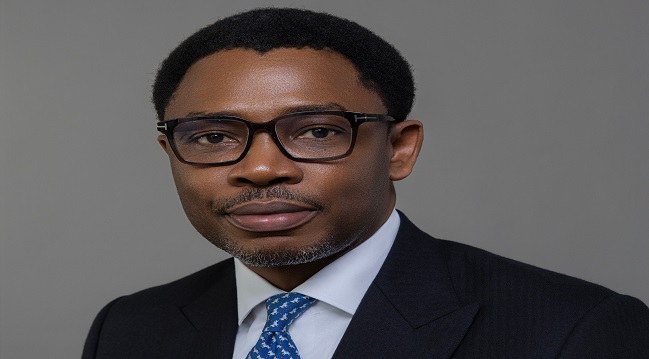
Quest Merchant Bank recently hosted the second edition of the Great Place to Work® Nigeria Study Mission, reaffirming its commitment to fostering a high-performance workplace culture and advancing people-centric leadership practices.

The Study Mission serves as a collaborative learning platform that brings together Great Place to Work® Certified organizations to exchange insights, share best practices, and strengthen workplace cultures.
The event welcomed Human Resources leaders and representatives from FITC, Princeps Credit Systems, Tonic Technologies and Esentry Limited for an engaging and insightful session focused on building thriving workplace cultures, promoting continuous learning, and advancing employee-centric practices that drive organizational success.
Speaking at the event, Tolulope Dayo-Peters, Head of People Management, emphasized the importance of continuous learning and collaboration in building sustainable workplace cultures.
“We are delighted to host the second edition of the Great Place to Work® Nigeria Study Mission. At Quest Merchant Bank, we believe building a great workplace is an ongoing journey rooted in trust, purposeful leadership, and a genuine commitment to our people.
“We are pleased to share the practices that have shaped our culture and look forward to more opportunities to learn and collaborate with like-minded organizations.”
Also speaking at the event, Afolabi Olorode, Acting Managing Director/CEO, Quest Merchant Bank Limited, highlighted the critical role workplace culture plays in driving long-term business success.
“We recognize that a strong workplace culture is fundamental to sustainable business success. Creating an environment where our people are empowered to grow, innovate, and perform at their best enables us to consistently deliver value to our clients and stakeholders. We are proud to support initiatives like the Great Place to Work® Nigeria Study Mission that encourage organizations to learn from one another and collectively raise the standard of workplace excellence in Nigeria.”
The Study Mission reinforced the importance of collaboration among organizations committed to creating exceptional employee experiences.
By providing a platform for open dialogue, peer learning, and the exchange of practical ideas, the initiative enabled participants to explore innovative approaches to employee engagement, organizational culture, leadership development, and talent management while strengthening a growing community of employers dedicated to workplace excellence.
Hosting the Great Place to Work® Nigeria Study Mission further strengthens Quest Merchant Bank’s position as a thought leader in workplace culture and talent management.
It also enhances the Bank’s employer brand and demonstrates its unwavering commitment to creating an environment where employees can grow, innovate, and achieve their full potential.
Quest Merchant Bank remains committed to championing initiatives that promote learning, innovation, and people-centric leadership. Through strategic partnerships and knowledge-sharing platforms such as the Great Place to Work® Nigeria Study Mission, the Bank continues to contribute to the advancement of exceptional workplace cultures and the future of work across Nigeria’s corporate landscape.

Nigeria Hydrological Service Agency (NIHSA) has warned of possible floods in parts of Adamawa, Bauchi, Edo, Imo, Enugu, Akwa Ibom, Cross River, Kaduna, Plateau, Niger, Benue, and Borno states within the next seven days.

According to information posted on NIHSA X handle, the Agency announced medium flood advisory in force for the next 7 days across Adamawa, Bauchi, and 11 other States.
“Localised inundation is forecast along the main channel; named communities below sit on the projected footprint. Stations: Saminara on the Karam river, Waya Dam Site on the Waya river, Amber on the Amber river.
“Adamawa; Lemsa, Lamurde, Numan Exposure: 147 comm. 49 schis 40 hith 6 mkts17 relig. Bauchi-Bauchi, Ningi, Shira. Exposure: 4 comm. Kaduna; Chikun, Giwa, Igabi, Jaba, Jema’a, Kachia, Kaura, Kauru, +6 more. Exposure: 1 comm.
“Borno-Gubio, Mobbar. Exposure: 680 comm. 8 schls 6 hith 5 mkts 21 relig. Edo-Akoko-Ed, EtsakoEa, EtsakoWe, Ikpoba-Okha, Orhionmw, OviaNort, OviaSo.. Exposure: 3 comm.
“Imo-Aboh-Mba, Oguta, Ohaji/Eg, Okigwe, Owerri North, Owerri West. Exposure: 3 comm. 7 more states affected and severity LGAs”.
NIHSA advised people in the affected areas to “do NOT cross flooded roads, bridges, or fast-moving water on foot or by vehicle.
“Clear drainage channels and river-mouth blockages; avoid building or living in the floodplain and move people, livestock and valuables from the floodplain to pre-identified higher ground,” NIHSA stated.

NBC Scraps Annual Digital Access Fee on DSO

Surge in Fibre Cuts Hobbles Service Provisioning

Why Bandits, Kidnappers are Hard to Trace despite NIN-SIM Linkage – FG

First Securities Brokers Empowers Nigerians to Trade in the Stock Market with the Launch of FirstInvest App

Quest Merchant Bank Hosts Great Place to Work® Nigeria Study Mission

NRC, Ponzi Scheme Collapses Resulting Loss of Billions of Naira
Nigeria Launches FreeTV Nationwide

NASENI Moves to Digitize CCB’s 5m Assets Declaration and Operations

Lebara Nigeria Launches Lebara Play, Africa’s First Telecom-Owned Micro-Drama Platform

CANAL+ Partners Samsung to Pre-Load DStv Stream on New Samsung TVs In Nigeria, Other African Countries




 Telecom2 days ago
MTN Nigeria Slashes Cost of Broadband Internet Router, Unwraps New Data Bundles for Low-Budget Users

 E-Financial2 days ago
Nigerians Accumulate $59Bn in Cryptocurrency Assets —FDC

 General News2 days ago
Nearpays, Nigerian Fintech Becomes First African Startup to Win UN’s AI for Good Innovation Factory

 E-Financial2 days ago
Flutterwave Partners Xoom on Transfers into Nigeria

 News2 days ago
DataPro Upgrades Dangote Cement’s Credit Rating to AA+

 Telecom2 days ago
Nokia’s 14 Years of Mobile-Phone Supremacy Ended in an Afternoon

 General News2 days ago
Fintech Brands Should Communicate Right in a VUCA Economy

 General News2 days ago
LASG Signs PPP Concession Agreements to Advance Digital Services, Others