

E-Business
NITDA Boss Woos Venture Garden Group To Join Bridge to MassChallenge Nigeria

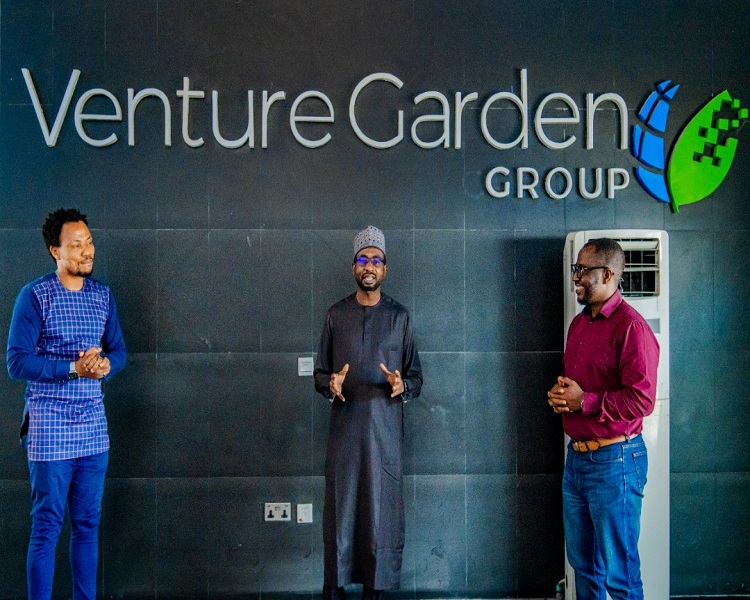
Mallam Kashifu Inuwa Abdullahi, director general, National Information Development Agency (NITDA), has urged a leading provider of innovative, data-driven solutions, Venture Garden Group, to join the Bridge to MassChallenge Nigeria.

Abdullahi made this call during a visit to Vibranium Valley, the company’s headquarters in Lagos, on Friday.
He added that “NITDA recently came up with Bridge the MassChallenge Nigeria initiative in order to promote Nigeria as an emerging entrepreneurial hub and leader of innovation in Africa, foster the growth and success of Nigeria’s startup enterprises by connecting its entrepreneurs with markets, networks, and capital in the global innovation ecosystem, and facilitate key strategies to complement growing innovation initiatives within Nigeria.”
Abdullahi further noted that a critical activity of the initiative is the hosting of quarterly technology innovation challenge. While working with Stakeholders, key challenges within the Nigerian economy and challenge the startups to come up with solutions for them. He therefore urged the Venture Garden Group (VGG) to come onboard the Bridge to MassChallenge Nigeria initiative.
The Director General (DG) indicated that NITDA is keen on working with the tech community to develop use cases as the technology evolves so that everything can be regulated.

He said the Agency has developed key regulatory instruments in this fashion. The Nigerian Data Protection Regulation (NDPR), for example, was developed and perfected through close collaboration with stakeholders. This, he said, is the strategy the Agency is adopting for each of the technology innovation use cases.
Citing one of the seven pillars of NITDA’s Strategic Road Map and Action Plan (SRAP) 2021-2024, the DG said: “The general understanding with regulation is that it does not allow or stifles innovation. This is the more reason why we in NITDA came up with Developmental Regulation.” “With this approach,” he said, “we work with stakeholders like you, develop the product, innovate then develop relevant regulatory instrument to regulate it”.
“The regulation is aimed at protecting you and your consumers because technology is about the future and there is no data about the future, the data we have is on the past and present and that is why it is hard to regulate the innovation industry,” he added.
Abdullahi outlined the seven pillars of SRAP as: Developmental Regulation, Digital Literacy and Skills, Digital Transformation, Digital Innovation & Entrepreneurship, Cybersecurity, Emerging Technologies and Promotion of Indigenous Content.
“We have identified six key stakeholders we need to bring onboard to achieve our initiatives; Universities as they produce the human capital, talent is needed to drive the digital economy and we work with universities and corporate organizations that will absorb these talents.
“We also have the entrepreneurs as they need access to the talent and corporate organizations because they are selling the products to them” he said.
The DG further indicated that, “Venture capitals and funding is a challenge, having the idea without the funds and government cannot provide funds for everyone and there are people with money doing nothing, bringing them onboard to invest in these startups will help boost the nation’s economy”.
He averred that Government’s role, as an enabler, is to create the enabling environment and the Agency would want to co-create with stakeholders because NITDA does not operate alone, that is why the ecosystem is engaged.
He added that NITDA also intervenes in the area of infrastructure in unserved and underserved communities.
While responding to the DG’s demand, the Group Head, VGG, Idowu Oladiamonds, said they invest in and develop technology solutions that address inefficiencies in automation, data collection, payment and revenue assurance across multiple sectors.
Oladiamonds stated that VGG has invested in over 30 companies in various sectors including financial sector infrastructure, education, financial technology, SME-focused technology and many other initiatives.
The VGG Group Head added that foreign countries scout talents from Nigeria, offering them residential Visas and higher pay and absorb them into their countries, taking more and more talents away from Nigeria.
He stated that joining the Bridge to MassChallenge initiative would be an opportunity that would benefit the Agency, companies and Nigeria’s digital economy.
“VGG is always on the hunt for talent so we hire corp members who are passionate about technology, give them time within their ability to work on real life projects and understand what it takes to deliver proper robust software solutions within six months. It is interesting that foreign companies like Microsoft do hire some of them.” the Group Head stated.
Oladiamonds said “VGG has a creative space for work and encouraged work from home idea even before the lockdown and have achieved the highest result in the organisation across all our businesses.”
The Group Head further stated that the company is filled with 22–23-year-olds, mostly those that are comfortable with the structure of work which is redefining the everyday idea of work especially in Lagos with the hectic traffic.
“The company’s message behind using containers which would be usually scrapped as office spaces is they can use the ruins of Nigeria to build the beauty of Nigeria,” he concluded.



The University of Nigeria (UNN) is set to partner with The Roxettes Group to establish a research and innovation centre focused on artificial intelligence (AI), smart and green mobility, and digital technologies, in a move aimed at strengthening research, entrepreneurship and technology-driven industrial development.

Chairman of The Roxettes Group, Arc. Dr. Kaycee Orji-Kelechi, announced the proposed partnership while delivering his acceptance speech after receiving an Honorary Doctor of Business Administration (Honoris Causa) during the university’s convocation ceremony.
The proposed facility, to be known as the Dr. Kaycee Orji Centre for Artificial Intelligence, Smart/Green Mobility and Digital Innovation, is expected to provide a platform for research, innovation and collaboration between academia and industry, with a focus on developing commercially viable solutions to local and continental challenges.
Orji-Kelechi said the initiative was conceived as a long-term investment in human capital and technological advancement rather than simply another physical infrastructure project.
He said the vision was to position the University of Nigeria among Africa’s leading institutions in artificial intelligence, smart mobility and digital innovation through research, entrepreneurship and technology development.
According to him, the centre will house five specialised laboratories covering artificial intelligence and machine learning, smart and green mobility, robotics and the Internet of Things (IoT), digital finance and financial technology, as well as cloud computing and advanced data centre technologies.
He also announced plans for the proposed Kaycee Orji Founders Innovation Challenge, an annual programme intended to identify, mentor and support innovative ideas from students, researchers and academic staff with the potential to become scalable businesses.
“Every student of this University should know that a great idea conceived in a classroom should have a pathway to becoming a patent, a startup, a global enterprise, and a solution that transforms society,” he said.
Orji-Kelechi disclosed that preliminary conceptual work on the project had commenced, with architectural and engineering designs being prepared by K.KH Contractors Ltd., a subsidiary of The Roxettes Group.
He added that discussions with the university would begin on identifying a suitable site for the project, while a comprehensive proposal containing architectural drawings, engineering designs and an implementation framework would be submitted after completion of the design phase.
Reflecting on his career, Orji-Kelechi said Africa must move beyond consuming innovation to creating it through investment in manufacturing, technology and entrepreneurship.
“We have pursued one simple vision: that Nigeria and Africa must move from consumption to production; from importing innovation to creating it; and from waiting for opportunities to building them,” he said.
He urged graduating students to see their education as a foundation for solving societal challenges through innovation, leadership and enterprise, adding that he remained committed to promoting industrial development, youth empowerment and sustainable economic growth.
The proposed collaboration forms part of broader efforts to strengthen university-industry partnerships, which are increasingly seen as critical to improving research commercialisation, innovation capacity and technology-led economic development in Nigeria.

National Population Commission (NPC) has announced commencement of full digital registration of births and deaths through the VitalReg platform, which became operational nationwide on July 1, 2026.

Chidi Ezeoke, federal commissioner representing Anambra, disclosed this in Awka during a press conference to announce commencement of full digital birth and death registration under the Electronic Civil Registration and Vital Statistics (E-CRVS) system and the marking of World Population Day commemorated every July 11.
He revealed that a total of 131 registration centres had been opened in the 21 local government headquarters and several communities in the state, adding that more centres would be opened later.
Ezeoke described the initiative as a major milestone in Nigeria’s Civil Registration and Vital Statistics (CRVS) system, to ensure every birth and death in the country was captured through a digitally enabled registration platform.
“It builds on the launch of the E-CRVS system and the inauguration of the National Coordination Committee on Civil Registration and Vital Statistics by President Bola Tinubu on Nov. 8, 2023.
“A total of 4,011 functional registration centres has been established across the 774 LGAs of the federation and the commission iswas working to expand the number to about 8,000.
“In Anambra, 131 registration centres have been opened in the 21 local government headquarters and several communities. More centres had been proposed for the state,” he said.
According to the Commissioner, the VitalReg platform would provide faster registration services, 24-hour online access, digital certificate issuance where applicable, reduced paperwork and waiting time, improved data validation and a more secure national CRVS database.
While noting that the platform would serve as a foundational database to support other national data systems and strengthen interoperability across Nigeria’s digital identity ecosystem, Ezeoke urged Nigerians and other stakeholders to support the initiative by ensuring prompt registration of all births and deaths.
Speaking on the 2026 World Population Day themed, “Realising the Hopes and Aspirations of Young People – Today and for the Future”, the Commissioner called for greater investment in education, healthcare, skills development, decent employment opportunities and youth participation in governance for sustainable national development.
Earlier, Mr Obiakonwa Okagwu, state director, NPC, said the occasion served as a reminder of great opportunities provided to harness young people’s capabilities, which he said would shape the future of the country when adequately harnessed.
He called on residents to take registration of births and deaths as national responsibility, just as he urged the media to take the message on civil registration to all parts of the State.
E-Business
Report Says Cybercriminals Deploy Malware to Hijack Crypto Wallets, Monitor Browsers Telegram


Cybersecurity researchers at Kaspersky have uncovered a sophisticated malware framework, dubbed OkoBot, that is targeting cryptocurrency users by stealing wallet recovery phrases, browser credentials and other sensitive information through a multi-stage attack campaign spanning more than 25 countries.

The researchers said the malware, active since April 2025, employs more than 20 malicious payloads and has evolved into an advanced cybercrime platform focused on compromising digital asset holders. According to Kaspersky’s Global Research and Analysis Team (GReAT), the campaign remains active and has already affected hundreds of users worldwide.
Kaspersky disclosed that one of the framework’s most dangerous components, known as SeedHunter, injects malicious code into legitimate cryptocurrency wallet applications, including Ledger Wallet, Ledger Live and Trezor Suite, before displaying fake recovery phrase prompts designed to trick victims into surrendering their seed phrases.
The security firm explained that once attackers obtain a victim’s recovery phrase, they gain complete control over the cryptocurrency wallet, enabling them to transfer digital assets with virtually no chance of recovery.
Commenting on the discovery, Dmitry Galov, security researcher at Kaspersky’s GReAT, said.
“This campaign has been running for more than a year and remains active. OkoBot is not just a single piece of malware but an extensible framework built primarily to compromise cryptocurrency users.”
Galov added that the malware is continuously maintained and enhanced, underscoring the attackers’ long-term focus on financial theft.
According to Kaspersky, victims are typically infected through ClickFix phishing attacks or malicious GitHub repositories masquerading as legitimate software downloads. In one instance, a fake Microsoft SQL Server Management Studio repository secretly installed a trojanized version of the Audacity audio editor embedded with malicious code.
Following the initial compromise, the attackers deploy a PowerShell downloader called TookPS,which establishes an encrypted SSH connection to attacker-controlled infrastructure.
The malware then harvests browser cookies, wallet files, stored credentials and system information before downloading additional malicious modules.
Among the additional payloads is OkoSpyware which monitors more than 100 applications, which includes cryptocurrency wallets and password managers—records user activity and captures keystrokes and video of application windows. Another module silently installs malicious browser extensions capable of stealing financial information and authentication tokens.
However, Kaspersky’s telemetry indicates that the largest concentrations of victims have been recorded in Brazil, Vietnam, Canada, Mexico and Türkiye, although the malware campaign has spread to users across more than 25 countries.
The cybersecurity firm advised cryptocurrency users never to enter wallet recovery phrases into prompts displayed by desktop applications or websites unless they have independently verified their authenticity.
Furthermore,It also urged users to download wallet software exclusively from official sources, enable multi-layered endpoint protection, and remain cautious of software offered through unofficial repositories or phishing websites.
Kaspersky noted that while hardware wallets themselves remain secure, attackers are increasingly exploiting the software that accompanies them, making user awareness a critical line of defence against evolving cryptocurrency-focused cyber threats.

History as Lagos Becomes First Nigerian State to Launch Greenhouse Gas Registry

AMCON Puts ntel Up for Sale, Seeks Investors

Nigeria Atomic Energy Commission Seeks Collaboration on Power Plants

AI Investment Gap Threatens Africa’s Future Growth

UNN to Partner Firm on AI, Smart Mobility Innovation Centre

NRC, Ponzi Scheme Collapses Resulting Loss of Billions of Naira

EFCC Busts NIS Visa Overstay Racket, Uncovers N700m in an Account

Tokenization, Blockchain Technology will Transform Financial Institutions – IMF

From Scarcity to Scale: What Africa Can Learn from India’s Agricultural Transformation

Spotify partners Afro Nation Portugal to expand African music experience




 E-Business2 days ago
Report Says Cybercriminals Deploy Malware to Hijack Crypto Wallets, Monitor Browsers Telegram

 Telecom2 days ago
Subscribers, Telcos Warn FCCPC over Airtime Lending Enforcement

 News2 days ago
See Verified 20 Countries Nigerian Passport Holders Can Travel Visa-Free

 Telecom2 days ago
NCC, REA Partner to Cut Telecom Costs with Renewable Energy

 General News2 days ago
AfDB, Nigeria Urge African Control of Mineral Resources

 E-Business2 days ago
NPC Opens 131 Births, Deaths Registration Centres in Anambra

 General News2 days ago
Lagos Chamber Opposes 21 Percent Pension Contribution, Warns of Job Losses

 Telecom2 days ago
Nigeria Pushes for United African Front Ahead of Global Telecoms Elections