

/home/kenneth/web/nigeriacommunicationsweek.com.ng/public_html/wp-content/themes/zox-news/parts/post-single.php on line 153
">
Warning: Undefined array key 0 in /home/kenneth/web/nigeriacommunicationsweek.com.ng/public_html/wp-content/themes/zox-news/parts/post-single.php on line 153
Warning: Attempt to read property "cat_name" on null in /home/kenneth/web/nigeriacommunicationsweek.com.ng/public_html/wp-content/themes/zox-news/parts/post-single.php on line 153
Emeje Eyes N200Bn Mark for the Courier Sector

The heightened activities presently witnessed in the courier sector is a tip of the iceberg of what the sector will become if it is finally given a Postal Service Commission , an independent regulatory body that will power proceedings in the sector , Dr Emeje has revealed to Nigeria Communications Week.
With the Postal Commission on board, Emeje disclosed that the sector will surpass and double the N100billion investments which the sector presently is said to worth.
Emeje argues that even as things are now, where it appears the courier business is jostling and flourishing with activities in the regulatory point of view, the potentials in the sector is yet to be fully utilized.
He emphasized that only 20 percent of the abundant potentials in the industry are being scrambled by different players, and that the sector has not met its N100 billion investment rating unless 50 percent of the opportunities offered by the sector are exploited adequately.
The courier operators in the country he said are scratching the surface instead of tapping the opportunities offered by the industry and that the sector still has a long way to go in terms of tapping various opportunities.
He cited the Express Centre as an example of areas yet untapped in the industry, which can generate more money than bulk delivery aspect of courier.
It would be recall that stakeholders in the sector have since agitated for an independent regulatory body that will spearhead the activities of the sector criticizing the dual role played by Nigerian Postal Service (Nipost) which is the parent body of Courier Regulatory Department (CRD), the present regulator in the industry, as a misnomer as Nipost is also a player in the industry.
It is widely believed that the birth of the Postal Commission will stimulate more activities with potentials becoming more exposed to the excitement of stakeholders and generality of Nigerians. It is also the practice worldwide that the operator should be separated from the regulator to allow for quality control.
On the direction of the CRD this year, Emeje said there will be increased activities on clampdown of illegal courier operators.


Warning: Undefined array key 0 in /home/kenneth/web/nigeriacommunicationsweek.com.ng/public_html/wp-content/themes/zox-news/parts/post-single.php on line 493
Warning: Attempt to read property "cat_ID" on null in /home/kenneth/web/nigeriacommunicationsweek.com.ng/public_html/wp-content/themes/zox-news/parts/post-single.php on line 493

Lebara Nigeria has announced the launch of Lebara Play, described as Africa’s first telecoms-owned micro-drama platform aimed at expanding opportunities for African storytellers and distributing local content to global audiences.

The company said the platform is designed to support creators by providing a new distribution channel for African narratives while making content accessible to both subscribers and non-subscribers worldwide.
Lebara Nigeria added that the platform will debut with an original production titled Imported Bahu, produced by Forever 7 and starring Osas Ighodaro.
The project is directed by Hamisha Daryani Ahuja, known for her work on Namaste Wahala, and is positioned as the first in a series of original content offerings.
According to the company, Lebara Play is built to serve both creators and audiences, with a focus on showcasing African stories to a global market and strengthening the continent’s growing digital entertainment ecosystem.
Speaking on the company’s vision at the launch, Teniola Stuffman, chief executive officer, Lebara Nigeria, said the organisation was focused on building a telecommunications ecosystem that combined innovation, connectivity, and customer-centric digital experiences.
Stuffman said, “This platform represents an important step in our vision of building a telecommunications brand that delivers more than connectivity. We are creating an ecosystem where technology, innovation, and entertainment come together to provide meaningful experiences for customers while unlocking new opportunities for creative talent and content development across Africa.”
Beyond entertainment, she said, industry stakeholders believed the initiative demonstrated how global telecommunications expertise could be adapted to local market realities.
“Drawing from decades of experience across multiple international markets, Lebara is expected to introduce additional innovative services aimed at enhancing convenience, engagement, and value for Nigerian consumers,” she said.
Stuffman added that the company’s strategy reflected growing recognition that today’s telecom customers demanded more than network access, pointing out that consumers increasingly seek brands that offer seamless digital experiences, personalised services, and access to content that enriches everyday life.
Stuffman stated that LebaraPlay also aligned with the company’s commitment to supporting Africa’s creative economy by creating new distribution channels for content creators, producers, and digital storytellers.
“Through a combination of original productions and strategic partnerships, the platform seeks to create opportunities for talent while delivering quality entertainment to audiences,” she said.
Hamisha Daryani, founder of Forever7 Entertainment, expressed excitement over the partnership with Lebara Nigeria and the premiere of her latest micro-drama series on the LebaraPlay platform.
She stated that Lebara’s customer-centric vision aligns closely with the values of Forever7 Entertainment, making the collaboration a natural fit for both organisations.
Daryani revealed that the new microdrama featured a star-studded cast drawn from both Bollywood and Nollywood, in a compelling romantic story designed specifically for mobile audiences.
According to her, the production is developed with mobile-first consumers in mind, delivering premium entertainment in short, engaging formats at an affordable cost.
“Microdrama, which typically consists of short episodes of about three minutes, is redefining how audiences consume entertainment. It offers a convenient, immersive, and affordable viewing experience for people who increasingly access content through their mobile devices,” she said.
She added that the platform was created to support seamless creative expression while providing new opportunities for content creators across the continent.
Daryani further explained that the microdrama format has already achieved significant success in Asia and the Americas and is now gaining traction across Africa.
She said the initiative would create opportunities for emerging creatives through knowledge sharing, skills development, content curation, and industry collaboration, with the Nigerian rollout of the featured series expected to commence in July.
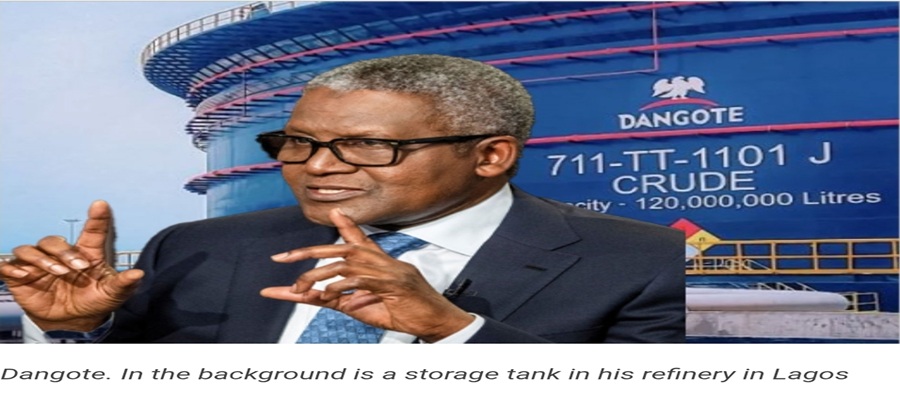
Securities and Exchange Commission (SEC) has banned the marketing and promotion of a purported initial public offering (IPO) by Dangote Petroleum Refinery & Petrochemicals FZE,.

It further warned that no application for such offer has been filed with or approved by the regulator.
In a public notice issued on Tuesday, the Commission said it had become aware of advertisements, flyers, digital banners and targeted electronic mails circulating on social media platforms and investment channels concerning a supposed securities offering by the refinery.
The SEC expressed concern over the involvement of some Registered Capital Market Operators (CMOs) in what it described as an “unwholesome and manipulative exercise” of actively soliciting advance subscriptions for an offering that has not been presented to the Commission.
According to the regulator, “No application for the registration of an IPO or public offer of shares of the Refinery has been filed with or approved by the Commission.”
The Commission added that the ongoing pre-marketing activities were “capable of misleading investors, distorting market expectations, creating information asymmetry and generally undermining the integrity of the capital market.”
It further stated that the marketing campaign and invitations to “create accounts”, “pre-fund,” or “secure guaranteed allocations” amounted to market manipulation and constituted “serious violation of the Investments and Securities Act.”
Consequently, the Commission directed all Registered Capital Market Operators, particularly stockbrokers and digital platform promoters, to immediately stop all promotional activities.
The SEC ordered them to “cease with immediate effect from publishing, reposting, or distributing any promotional material, flyer, or commentary relating to the acquisition or allocation of shares in the Refinery.”
It also directed operators to “remove or take down all such unauthorized marketing materials from websites, social media handles (including X, LinkedIn, Instagram, Facebook etc.), and messaging groups within twenty-four (24) hours of this notice.”
The regulator further instructed operators to desist from accepting deposits, commitments, account openings or expressions of interest from investors for the purported public offering and to “reverse and refund all funds already collected in connection with this purported offering to clients within twenty-four (24) hours of this notice.”
The Commission warned that defaulters would face sanctions as non-compliance would attract penalties under the Investments and Securities Act, 2025 and the SEC Rules and Regulations.
Advising investors to exercise caution, the SEC said members of the public should “rely only on formal, official pronouncements issued directly by the Commission through its official channels.”
It warned that “all such high-pressure marketing tactics, or transfer of funds to any operator for ‘pre-IPO’ placement should be ignored as they did not receive the Commission’s approval.”
The Commission assured that if it eventually receives and clears an application for a public offering by the refinery, an approved prospectus would be made available to investors in line with the provisions of the Investments and Securities Act, 2025.

PalmPay has called for stronger infrastructure and better access to finance for small businesses as essential to the next phase of financial inclusion and economic growth in Nigeria.

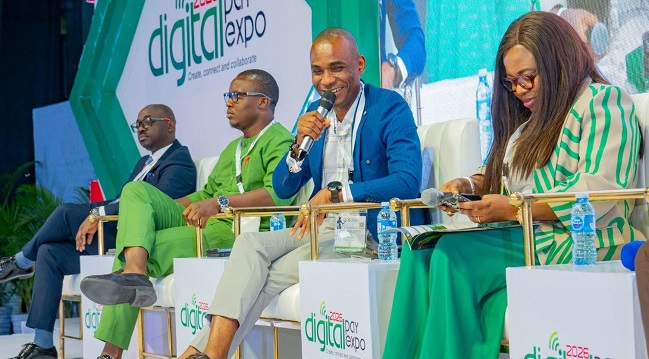
This position was shared by Chika Nwosu, Managing Director of PalmPay Nigeria, during a panel session at Digital Pay Expo 2026, where regulators, fintech leaders, payment operators and other key ecosystem stakeholders gather to discuss the future of digital payments in Africa.
Speaking during a session focussed on advancing financial inclusion and SME growth, Nwosu said that while the micro, small, and medium enterprises remain central to economic activity, many still face real barriers around access to credit, reliable payment infrastructure, and the relevant digital tools needed to grow sustainably.
According to him, meaningful financial inclusion must go beyond onboarding more users into the formal financial rail. It must also address the structural issues that limit how small businesses participate, transact, and scale.
“SMEs contribute 40 per cent of the country’s GDP. For us in PalmPay, Financial inclusion is not just about enabling transactions. It is also about helping businesses access the tools and support they need to expand, build resilience, and create jobs.
He also highlighted the importance of digital literacy, noting that as digital tools and AI become more embedded in financial services, business owners must be equipped to use them effectively and responsibly.
For PalmPay, the future of inclusion will depend not only on innovation, but on how well the ecosystem reduces friction for small businesses and provides the infrastructure and financial support they need to grow.
Discussions at the event also pointed to the need for stronger collaboration across the ecosystem and more practical approaches to helping SMEs move from awareness to adoption of digital financial services.
PalmPay’s MD noted that unlocking the full potential of Nigeria’s SMEs will require a combination of accessible finance, financial education, trusted platforms, and coordinated ecosystem support.

Lebara Nigeria Launches Lebara Play, Africa’s First Telecom-Owned Micro-Drama Platform

SEC Bars Dangote Refinery IPO Adverts

PalmPay MD Seeks Stronger Infrastructure, Access to Finance for SMEs @ Digital Pay Expo 2026

Winners Emerge in KidsCook Showdown 2.0 Programme

Glo Elevates Customer Experience with optimized “Borrow Me Credit” Service

CBN Extends PoS Geo-Fencing Enforcement Deadline to August 2026

London Strengthens Global Investment Ties with Africa @ First Ever London-Africa Business Summit

FG Targets Alleged N3tn Capital Flight, Opens Airtime Credit Market to Nigerian Fintechs

Japan, UNESCO Boost Digital Learning in 15 CoEs with Donation of ICT Equipment

Mobile Internet Gender Gap Widest in Africa – GSMA




 Telecom2 days ago
MTN Nigeria Commits to Ethical Conduct with IFRS S1, S2 Compliance

 E-Financial2 days ago
FG Moves to End Double Taxation

 News2 days ago
BoI’s EIB-Backed Financing Accelerates Fidson’s Pharmaceutical Manufacturing Growth

 E-Business2 days ago
NDPC to Review Data Law to Address AI, Privacy Concerns

 General News2 days ago
ALTON Backs CBN on Local Data Hosting Rule for Banks, Fintechs

 Telecom2 days ago
NCC, CAC Move to Block Unapproved Ownership Changes in Telecom Sector

 E-Business1 day ago
Kaspersky Discovered a Malware Campaign Targeting Steam Users Through Infected Wallpaper

 E-Business2 days ago
Galaxy Backbone @ 20, Unveils New Identity