

News
Abdulhameed: Global Recognition for Passionate Agribusiness Technocrat

By Cletus Adole
“A leader is one who knows the way, goes the way, and shows the way”. —John Maxwell
The recent announcement that Mr Aliyu Abdulhameed, MD/CEO of the Nigerian Incentive-Based Risk Sharing System for Agricultural Lending (NIRSAL PLC), is a winner of the prestigious Global Award of the CEO Today Magazine for 2021 will not surprise anyone familiar with the contributions which the man and the organization he leads are have made to the transformation of Nigerian agriculture and agribusiness over the past five years.

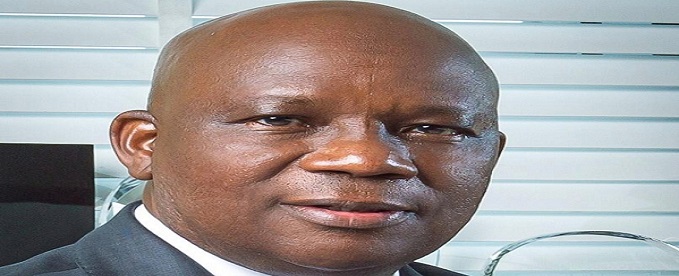
Mr Aliyu Abdulhameed, MD/CEO, NIRSAL PLC
As a result of the dynamic and innovative leadership of NIRSAL PLC under Abdulhameed’s watch, the young institution which was barely a blip on the radar five years ago has become a robust and respected presence with solid and measurable accomplishments making real impact at various levels of the agro-economy.
According to CEO Today, Abdulhameed, a highly experienced agricultural economist with over 30 years hands-on experience in agricultural value chains and markets in sub-Sahara Africa is deserving of recognition on account of the innovations and accomplishments that NIRSAL PLC has notched up under his leadership.
The evidence of the impact he is making is unimpeachable, starting from NIRSAL PLC’s core mandate of making agriculture more attractive to banks and encouraging more investment in the sector.
Among NIRSAL’s achievements under Abdulhameed’s watch is the facilitation of over $550 million to various actors across Agricultural Value Chains for mechanization activities, input distribution, and the production, processing, trading and marketing of agricultural commodities.
Related to this, commercial banks have pledged to provide an additional $500 million to fund agriculture in the short to medium-term based on their faith in NIRSAL PLC’s Credit Risk Guarantee (CRG) and structured Agro Geo-Cooperatives®.
It is an indication that financiers are growing more and more confident in lending to agriculture. This claim is supported by the remarkable growth in the rate of bank lending to agriculture, from 1.4% pre-NIRSAL to 4.8 per cent as of Q3 2020.
The CEO Today Magazine Award has been won by a select group of outstanding achievers on different continents over the years. It recognizes “strong and innovative leadership among the most inspiring CEOs and business leaders” across the world.
The highly regarded platform honours the most-respected companies and their C-Level executives who lead the way for others on a global stage.
According to the magazine, the 2021 awards are special because the CEOs selected, delivered despite the Coronavirus pandemic.
The 2021 award winners come from the academia, tech, e-commerce, public administration and more from several countries including the UAE, Germany, USA, Sweden, Bulgaria and China. The include:
Dr Abdullatif Al Shamsi, President and CEO of the Higher Colleges of Technology, the largest higher institution in the United Arab Emirates with 23,000 students across 16 campuses;
Michael Lampel, CEO and Founder of Qooper Media, an accomplished investor and business development expert based in south west Germany;
Philip Weiser, CEO of AnyDesk, an innovative remote solutions company in Germany which has witnessed impressive growth while disrupting the remote software solutions industry since the pandemic
As those who know him can attest, Abdulhameed is the kind of leader who is comfortable at all points of the leadership spectrum.
He is both a visionary passionate both about the big issues at the critical junction of agriculture and agribusiness as well as a hands-on technocrat who likes to immerse himself in the nitty-gritty details of small scale farming.
This passion shines through whether he is on the podium at a conference, marshaling his troops in the office to reach targets or on a field trip to inspect an agricultural project supported by NIRSAL PLC.
Always bustling with energy and big ideas, he is always focused on one priority whether he is discussing the latest technologies and techniques in global agriculture or the best methods to organize the millions of poor farmers for higher productivity: better results.
The award for innovative leadership is therefore well deserved because, at NIRSAL PLC, Abdulhameed is showcasing skills and experience spanning across a wide range of areas including, agricultural value chain development, agricultural value chain finance, research and innovation, extension services, agribusiness development, product marketing, strategy, project management as well as agricultural policy analysis and advocacy.
The passionate agribusiness manager and thought leader is fond of saying that NIRSAL PLC has “innovation in its DNA”. This is clear from the raft of innovations he is leading in the organization such as the creation of NIRSAL Agro Geo-Cooperative® (AGC) scheme, an ambitious, paradigmatic plan targeted at revolutionizing agricultural production and productivity in the country.
The scheme is structuring farmers and aggregating their farmlands into contiguous stretches of 250 hectares each and link them with training, inputs, mechanization, financing and produce buyers.
AGC will build on the increasing benefits of NIRSAL initiatives that are making a real difference in creating opportunities for farmers. So far, through NIRSAL’s facilitation, more than 370,000 direct jobs have been created and an estimated 1.8 million indirect jobs in the pre-upstream, upstream, midstream and downstream segments of the agricultural value chain, specifically in the areas of mechanization, input supply, primary production and processing.
Other innovations being progressed under Abdulhameed’s watch include the creation and mapping of Agricultural Commodity Ecological Areas (ACEAs); the development of the Mapping to Markets (M2M) strategy; the development of innovative index-based agricultural insurance products; the introduction of comprehensive field monitoring by remote sensing satellite systems and granular validation by UAS platforms; and the development of the Secured Agricultural Commodity Transport & Storage Corridor (SATS-C) model to address logistical inefficiencies in the agricultural value chain in Nigeria.
This is not the first significant recognition of NIRSAL under Abdulhameed’s leadership. The institution also won the Outstanding Development Finance Institution Award of the Annual BusinessDay Banks’ And Other Financial institutions (BAFI) Awards back to back in 2018 and 2019. BAFI recognizes and celebrates outstanding performance in Nigeria’s financial services industry including those that have brought revolutionary benefits to the sector.
The CEO Today award confirms the potent blend of quality and passion that defines this remarkable man and leader.
Perhaps more important, it is a credit to the unique institution he leads and the great difference that he, along with his hardworking team are making in the executive suites of the financial sector and fields of Nigeria’s agriculture and agribusiness.
*Cletus Adole is a policy analyst based in Abuja.



President Bola Tinubu on Thursday urged Nigerians to pay their taxes, because the revenue is critical for his administration’s Renewed Hope Agenda to fund public infrastructure like roads, hospitals, and amenities across the country.

President Bola Tinubu
He spoke during the commissioning of interchange at Arterial Road N16 – Ring Road III Intersection linking Jahi District to Gwarimpa District of the FCT.
The project was among those earmarked to celebrate his third year anniversary and he was represented at the commissioning by Godswill Akpabio, Senate President.
He said: “I’m very proud to stand here to commission this Arterial road interchange N16 linking Jahi district to Gwarimpa District of the FCT.
“This is not just a bridge and slip roads, this is freedom of movement and time returned to the people, this is renewed hope that you can even drive on. This intersection used to choke the entirety of Abuja, gridlock stretched from Maitama to Gishiri, from Jahi to Gwarimpa; hours lost, fuel wasted, business were lost but today that story ends.
“This interchange opens up critical districts of the FCT and connects them smoothly to the rest of the FCT. Workers will get home earlier, security will improve because criminals strive when security stands still.
“Ladies and gentlemen, infrastructure is the foundation of prosperity which is the cardinal principle of this administration. Roads are the arteries of a nation, when we connect districts we connect destines and that is the logic of the renewed hope agenda, build the roads unlock the economy and let Nigerians strive.
“The Jahi-Gwarimpa interchange is prove that Nigeria is not beyond redemption. With focus, discipline, and political will, Nigeria will deliver and we are delivering, the FCT is delivering.”
The president also charged Nigerians and residents of the FCT to pay their taxes.
According to Tinubu, it would allow his administration to provide more infrastructural projects.
“Also pay your taxes and levies so that government can do even more for you,” he added.
News
MTN ASAP Enugu Stakeholders’ Conference Rallies More Action Against Youth Drug Abuse, Unveils N33Bn ASAP Impact

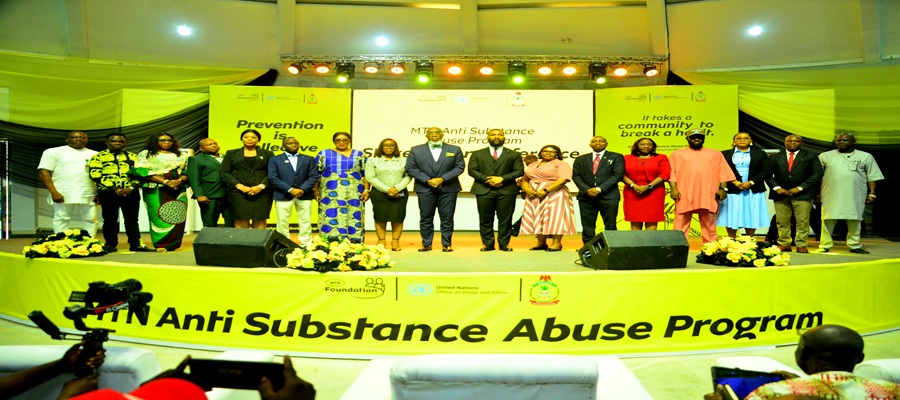
In a renewed push to confront the rising tide of drug abuse among Nigerian youth, stakeholders converged on Tuesday, June 9, 2026, at the ICC Dome, Enugu, for a State Stakeholders’ Engagement convened under the Anti-Substance Abuse Programme (ASAP).

The conference brought together government representatives, educators, development partners, and civil society actors to chart a unified path against substance abuse, with disclosures at the gathering revealing that an estimated ₦33 billion has so far been committed to developmental projects, programmes, and initiatives across the country, interventions that have impacted more than 33 million Nigerians directly and reached over 100 million through advocacy and awareness campaigns.
The Executive Governor of Enugu State, Barr. Peter Mbah, represented by the Secretary to the State Government, Prof. Chidiebere Onyia, commended the Foundation for its sustained investment in youth development and the fight against substance abuse.
He noted that the state’s transformation agenda is anchored in youth empowerment, education, healthcare, and human capital development – areas where the Foundation’s ₦33 billion commitment was already making a measurable difference.
“The MTN Foundation’s investment in youth development and the fight against substance abuse aligns directly with our administration’s transformational agenda. Initiatives like ASAP are exactly the kind of partnerships that move the needle on national development,” Prof. Onyia said.
He further urged other private sector players to emulate the Foundation’s example, stressing that the scale of Nigeria’s drug abuse demands sustained collaboration between government, the private sector, development partners, and civil society.
Addressing stakeholders, Odunayo Sanya, Executive Director of the MTN Foundation, said the Foundation, established in 2004 and fully funded by MTN Nigeria, was created to drive impact across health, capacity building, and economic empowerment, with deliberate focus on young people, who constitute the majority of Nigeria’s population.
She explained that the ASAP initiative, launched in 2019 in partnership with the National Drug Law Enforcement Agency (NDLEA) and the United Nations Office on Drugs and Crime (UNODC), was designed to reduce first-time drug use among young Nigerians through awareness campaigns and school-based interventions.
“We have reached over 50,000 students across the country and trained about 1,556 teachers as part of our efforts to create anti-drug ambassadors in schools and communities.”
“For us at the MTN Foundation, saving even one young person from substance abuse is a worthwhile achievement. The consequences go beyond the individual and affect families, communities, and the nation at large,” Odunayo said.
Looking ahead, she disclosed that the Foundation plans to reach more than 20,000 additional students in 2026 through expanded stakeholder engagements, school-based interventions, teacher training programmes, and community awareness campaigns.
She described substance abuse as a major threat to families, communities, and national development, stressing the urgent need for collective action to shield young people from addiction.
According to her, the Foundation’s mission is rooted not just in numbers, but in human outcomes – the lives, families, and futures it helps preserve.
The Executive Director, on her part, called on parents, educators, faith leaders, and community influencers to remain active partners in safeguarding the next generation from the dangers of substance abuse.
The intervention comes at a critical time. Fresh data presented at the conference indicate that over 360,000 youths in Enugu State – approximately 13.4% of the state’s young population – are actively involved in drug use.
Currently, the MTN Foundation (MTNF) and the United Nations Office on Drugs and Crime (UNODC) are conducting a comprehensive National Substance Use Survey to gather grassroots data on drug abuse, especially among secondary school students.


PalmPay has called for stronger infrastructure and better access to finance for small businesses as essential to the next phase of financial inclusion and economic growth in Nigeria.

This position was shared by Chika Nwosu, Managing Director of PalmPay Nigeria, during a panel session at Digital Pay Expo 2026, where regulators, fintech leaders, payment operators and other key ecosystem stakeholders gather to discuss the future of digital payments in Africa.
Speaking during a session focussed on advancing financial inclusion and SME growth, Nwosu said that while the micro, small, and medium enterprises remain central to economic activity, many still face real barriers around access to credit, reliable payment infrastructure, and the relevant digital tools needed to grow sustainably.
According to him, meaningful financial inclusion must go beyond onboarding more users into the formal financial rail. It must also address the structural issues that limit how small businesses participate, transact, and scale.
“SMEs contribute 40 per cent of the country’s GDP. For us in PalmPay, Financial inclusion is not just about enabling transactions. It is also about helping businesses access the tools and support they need to expand, build resilience, and create jobs.
He also highlighted the importance of digital literacy, noting that as digital tools and AI become more embedded in financial services, business owners must be equipped to use them effectively and responsibly.
For PalmPay, the future of inclusion will depend not only on innovation, but on how well the ecosystem reduces friction for small businesses and provides the infrastructure and financial support they need to grow.
Discussions at the event also pointed to the need for stronger collaboration across the ecosystem and more practical approaches to helping SMEs move from awareness to adoption of digital financial services.
PalmPay’s MD noted that unlocking the full potential of Nigeria’s SMEs will require a combination of accessible finance, financial education, trusted platforms, and coordinated ecosystem support.

Telcos Lose 30m Subscribers in 3-Year Slump due to NIN-SIM Link Policy

Pay Your taxes for Me to Do More – Tinubu

NCC Launches Maiden Women’s Leadership Mentorship Programme

FG Proposes Africa-Wide Payment Card without Conversion through US Dollar

Providus, Unity Bank Begin Integration Phase after Supreme Court Nod

CBN Extends PoS Geo-Fencing Enforcement Deadline to August 2026

London Strengthens Global Investment Ties with Africa @ First Ever London-Africa Business Summit

FG Targets Alleged N3tn Capital Flight, Opens Airtime Credit Market to Nigerian Fintechs

Mobile Internet Gender Gap Widest in Africa – GSMA

Japan, UNESCO Boost Digital Learning in 15 CoEs with Donation of ICT Equipment




 News2 days ago
PalmPay MD Seeks Stronger Infrastructure, Access to Finance for SMEs @ Digital Pay Expo 2026

 Telecom2 days ago
Africa Projected to Lead Global 5G Growth

 News2 days ago
Kaspersky Identifies over 336 Unique Domains Impersonating the Official World Cup Website

 Broadcasting2 days ago
Lebara Nigeria Launches Lebara Play, Africa’s First Telecom-Owned Micro-Drama Platform

 General News2 days ago
Paystack Launches Programme to Support Nigerian Businesses

 Telecom1 day ago
NITDA Unveils Bold Vision to Make Nigeria an AI Powerhouse

 E-Financial2 days ago
SEC Bars Dangote Refinery IPO Adverts

 General News1 day ago
Nestlé Commits to Boosting West Africa Solar Rollout Through Partnership