

E-Financial
CBN Asks Banks to Block Accounts of 18 Firms


Central Bank of Nigeria (CBN) has directed banks to place a post-no-debit on the bank accounts of 18 companies.

A post-no-debit means that all debit transactions, including ATMs and cheques, on the accounts, have been blocked but can receive inflows.
The circular, signed by Haruna B. Mustapha, director of banking supervision, also instructed banks to send details of the accounts.
Last year, CBN also instructed banks to freeze accounts of 38 companies, including premier Lotto, owned by Adebutu Kessington, a Nigerian businessman popularly known as “Baba Ijebu”.
“You are hereby directed to place all accounts of the under-listed customers on Post-No-Debit (PND) restriction,” the circular reads.
The affected companies include Bakori Mega Services, Ashambrakh General Enterprise, Namuduka Ventures Limited, Crosslinks Capital and Investment Limited, IGP Global Synergy Limited, Davedan Mille Investment Limited and Urban Laundry.
Others are Advanced Multi-Links Services Limited, Spray Resources, Al-Ishaq Global Resources Limited, Himark Intertrades, Charblecom Concept Limited, Wudatage Global Resources.
Also included are Treynor Soft Ventures, Fyrstrym Global Concepts Limited, Samarize Global Nigeria Limited, and Zahraddeen Haruna Shahru.
The apex bank did not state any reason for the action.
The affected accounts belong to bureaux de change (BDCs), construction firms, investment companies, laundering services, and property companies.



Nigeria Inter-Bank Settlement System Plc (NIBSS) has sued 19 commercial and microfinance banks, over N13.66 billion allegedly lost to unauthorized transfers following a major glitch on its payment platform.

In a suit filed before a Federal High Court in Lagos, NIBSS is asking for urgent orders to freeze all accounts that received the disputed funds.
NIBSS wants the court to compel the 19 banks to immediately place Post No Debit (PND) restrictions on the affected customer accounts to prevent further dissipation of the money.
The banks listed as respondents are Access Bank Plc, Ecobank Nigeria Limited, FairMoney Microfinance Bank, First City Monument Bank Ltd, Fidelity Bank Plc, Globus Bank, Guaranty Trust Bank, Kuda Microfinance Bank, Lotus Bank Limited, Moniepoint Microfinance Bank, Parallex Bank, Polaris Bank Limited, Providus Bank Limited, Sterling Bank Ltd, TAJ Bank, Titan Trust Bank, United Bank for Africa Plc, Wema Bank Plc and Zenith Bank Plc.
NIBSS is also seeking orders directing the banks to place liens on all accounts linked to the Bank Verification Numbers (BVNs) of the beneficiaries, place the BVNs on a watchlist pending full recovery of the funds, and reverse all sums allegedly traced to the beneficiaries.
In an affidavit filed in support of the application, NIBSS stated that it experienced a system glitch on September 6, 2024, affecting its Nigeria Instant Payment (NIP) engine and allegedly enabling unauthorized transfers into accounts maintained with the respondent banks.
According to the company, the glitches resulted in an “unexpected behaviour” that allowed customers of the respondent banks to receive transfers without corresponding debit instructions from originating accounts, a situation described in banking operations as “Dry Posting.”
The unauthorized transactions allegedly occurred between September 6 and September 9, 2024, largely during weekend transactions, court document said.
NIBSS alleged that the transfers were routed into 176 accounts domiciled with the respondent banks.
“The financial exposure of the Applicant from this incident is in the sum of N13, 662, 138, 920. 00, billion” the affidavit stated.
NIBSS Plc further informed the court that upon discovering the transactions, it immediately contacted the banks and requested them to place PND restrictions on the affected accounts where the funds had allegedly been traced.
But, NIBSS claimed that the banks insisted on obtaining a court order before restricting the accounts of the affected customers.
It argued that unless the accounts are immediately restricted, there is a risk that the funds may be dissipated, thereby frustrating efforts to recover the allegedly unauthorized transfers.

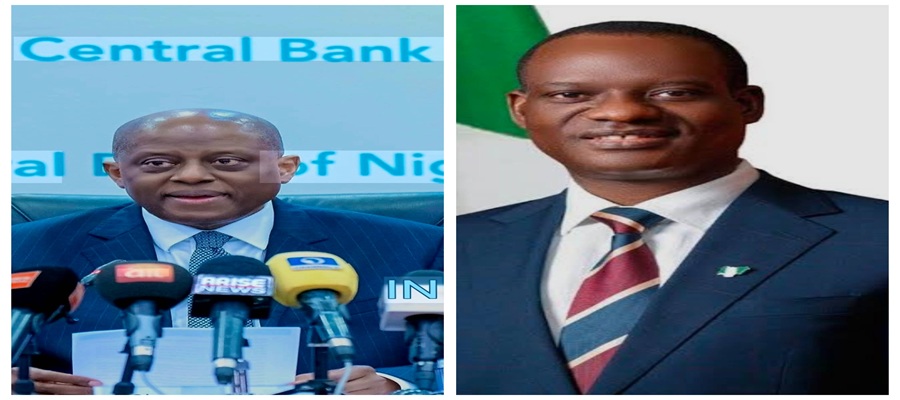
Nigeria’s banking industry appears to be booming, largely driven by the policies of the Central Bank of Nigeria (CBN), under Governor Olayemi Cardoso, while the real economy continues to suffocate.

At a time when millions of Nigerians are sinking deeper into poverty, when inflation continues to erode household incomes, when businesses are collapsing under unbearable operating costs, and when migration has become a survival strategy for many young professionals, Nigerian banks are announcing staggering profits, stronger capital positions and unprecedented liquidity growth.
According to the bank’s financial statements, the financial system appears healthy. In reality, the economy where citizens work, trade and survive is gasping for breath.
This growing disconnect between financial sector prosperity and economic suffering now represents one of the gravest threats to Nigeria’s long-term economic stability and its ambition of building a $1 trillion economy.
The numbers are indeed impressive. Nigerian banks’ shareholders’ funds reportedly surged to about N27 trillion following the recapitalisation exercise. The top five banks now command balance sheets estimated at over N164 trillion. Tier-1 banks collectively generated trillions in profits within the first quarter of 2026 alone, while the sector-wide recapitalisation exercise raised over N4.56 trillion.
Ordinarily, such figures should inspire confidence about the future of the economy. Stronger banks are expected to translate into stronger businesses, more jobs, industrial expansion and wider economic opportunities. But Nigeria’s experience is proving otherwise.
Instead of serving as engines of productive growth, banks are increasingly becoming custodians of liquidity trapped within the financial system itself. That is the real danger.
Even as banking liquidity expands sharply, lending to the productive economy remains weak and constrained. Reports indicate that banks parked a record N24.13 trillion with the CBN, while simultaneously increasing investments in government securities and treasury bills because these avenues are safer, more profitable and less risky than lending to businesses operating within Nigeria’s harsh economic climate. This reality exposes a dangerous contradiction.
A developing economy desperately in need of industrialisation, manufacturing growth, infrastructure expansion and job creation cannot afford a banking system that prefers financial safety over productive economic risk.
A sustainable economy cannot thrive where the real sector is starved of funds. Yet this is exactly where Nigeria now stands.
Despite the massive liquidity in the banking system, growth in lending to the private sector continues to lag behind the pace of liquidity expansion. The implication is clear. Financial sector strength is no longer translating into real economic development. This is not how healthy economies function.
Ordinarily, banks in developing economies are expected to operate as catalysts for economic transformation. Across successful economies, commercial banks finance manufacturing, agriculture, innovation, infrastructure and entrepreneurship because those sectors generate jobs, productivity and national wealth.
Small and Medium Enterprises (SMEs), especially, are globally recognised as the backbone of grassroots economic development. Nigeria is no exception.
SMEs account for over 70 percent of registered businesses, contribute nearly half of Nigeria’s GDP and generate between 84 and 90 percent of employment opportunities. Yet despite their overwhelming importance, SMEs reportedly receive barely between 0.5 percent and one percent of total commercial bank lending. That is not merely a policy failure. It is an economic tragedy.
Every denied SME loan is a denied employment opportunity. Every failed business represents another frustrated entrepreneur. Every frustrated entrepreneur becomes another Nigerian contemplating migration.
This is how economic dysfunction transforms into human displacement. The so-called “Japa” phenomenon did not emerge in isolation. It is deeply connected to economic hopelessness. When productive citizens lose faith in their country’s economic future, migration stops being a lifestyle choice and becomes a survival mechanism.
Unbeknownst to the policymakers is that Nigeria cannot realistically build a $1 trillion economy while productive sectors remain financially suffocated.
A closer glance at the trend of events helps to reveal that the danger becomes even more severe when viewed against the backdrop of the recent outcome of the 305th Monetary Policy Committee (MPC) meeting, where the CBN retained the Monetary Policy Rate (MPR) at 26.5 percent in its bid to sustain disinflation and macroeconomic stability.
It is understandable and certain that inflation control is important, but the fact is that at 15.69 percent, inflation remains painfully high and continues to weaken purchasing power. Food prices remain elevated. Transportation costs remain unbearable. Consumer demand is weakening. The middle class is shrinking rapidly.
But maintaining elevated interest rates also comes with painful consequences. Simple arithmetic tells us that higher interest rates mean higher lending costs. Higher lending costs mean higher production costs. Higher production costs worsen inflationary pressures and weaken business survival rates.
Invariably, this also tells us that for Nigerian manufacturers and corporates already battling a weak naira, volatile exchange rates, expensive diesel, energy insecurity and declining consumer demand, access to affordable credit is becoming almost impossible.
Many businesses are no longer borrowing to expand production or employ workers. They are borrowing merely to survive. This is economic suffocation.
Meanwhile, banks continue to profit massively from high-yield government securities and treasury investments. Reports indicate that major Nigerian banks generated over N6.68 trillion from investment securities and treasury bills instead of financing productive enterprises capable of stimulating growth and employment.
Government’s appetite for borrowing itself shows no sign of slowing down. Public borrowing reportedly climbed above N39 trillion. Historically, excessive government borrowing crowds out private sector investment because banks naturally prefer lending to government rather than exposing themselves to risks associated with businesses operating in unstable economic conditions.
The result is predictable. The real sector weakens while speculative and non-productive financial activities flourish. This explains why Nigeria increasingly resembles a financial system disconnected from the realities of ordinary citizens.
While banks celebrate rising profits, poverty and hunger worsen visibly across the country. Unemployment continues to rise. Small businesses are dying quietly. Household purchasing power is collapsing under inflationary pressure.
Yet the financial system appears more liquid than ever. That contradiction should alarm policymakers. The recapitalisation exercise itself now raises difficult questions.
What exactly is the purpose of stronger banks if stronger banks do not strengthen national productivity?
If recapitalisation merely empowers banks to deepen investments in government debt instruments while manufacturers, farmers, exporters and SMEs remain starved of affordable credit, then the exercise risks becoming financially impressive but economically hollow.
Indeed, the current monetary environment appears to reward financial conservatism over productive risk-taking.
The stringent Cash Reserve Requirement (CRR), elevated interest rates and broader macroeconomic uncertainty continue to discourage aggressive lending to the private sector. Banks understandably seek safety. But nations do not industrialise through excessive financial caution.
No economy develops when capital circulates primarily within treasury bills and government securities instead of flowing into factories, farms, logistics, housing, innovation and production.
This is the larger danger confronting Nigeria today. Economic crises rarely begin with recession statistics alone. Sometimes, they begin when financial institutions become detached from the suffering realities of the wider economy. They begin when growth exists only within banking balance sheets but disappears from households, factories and streets.
Without productive credit expansion, economic growth becomes artificial and exclusionary. Without affordable financing, businesses cannot scale. Without business expansion, jobs cannot emerge. Also, it must be noted that without jobs, insecurity, poverty and migration inevitably worsen. The implications for social stability are enormous.
One painful fact is that citizens already burdened by inflation, debt pressures and widespread distrust now face a system where economic opportunities continue shrinking despite apparent financial sector prosperity. One of the lurking dangers is that this deepens resentment, weakens confidence in institutions and threatens long-term economic cohesion.
The CBN’s inflation fight may be necessary, but monetary stability alone cannot substitute for productive economic expansion. Financial stability without inclusive growth eventually becomes unsustainable.
The real economy matters more than banking optics. Nigeria urgently needs policies that incentivise real sector lending, reduce structural risks facing manufacturers and SMEs, strengthen credit infrastructure, lower production bottlenecks and redirect liquidity toward productive economic activity.
As a matter of fact, it is high time for Nigeria to start rethinking the growing dependence on debt-driven fiscal management that continues to crowd out private investment. Development cannot occur when government borrowing consumes the financial oxygen needed by businesses.
Ultimately, banking profitability should not become an isolated island of prosperity surrounded by a collapsing productive economy.
A nation cannot celebrate trillion-naira banking profits while millions of citizens sink deeper into economic despair. No society sustains such a contradiction indefinitely.
If Nigeria truly hopes to build a resilient and inclusive economy, then the banking sector must once again become a vehicle for national development rather than merely a beneficiary of government debt and monetary tightening.
Otherwise, the country risks creating a contradictory economy where banks grow richer while citizens grow poorer and where financial prosperity exists only on paper while economic hardship defines everyday life.
Blaise, a journalist and PR professional, writes from Lagos and can be reached via: [email protected]
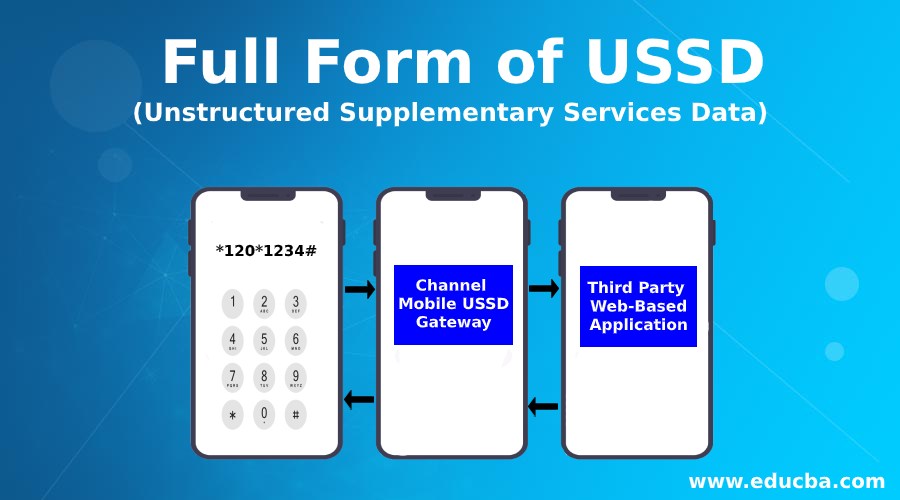
Nationwide Unstructured Supplementary Service Data (USSD) glitches are occurring because the Nigerian Communications Commission (NCC) and Central Bank of Nigeria (CBN) transitioned to an “End-User Billing” (EUB) framework.

USSD is a real-time messaging protocol that allows you to communicate directly with your mobile network provider’s computers. It operates without needing an internet connection and is typically triggered by dialing a code starting with \(\ast \) and ending with \(\#\) (e.g., $\ast$123\(\#\)).
Instead of deducting fees from bank accounts, the ₦6.98 per-session charge is now deducted directly from mobile airtime.
The disruptions, which have affected customers of several leading banks including First Bank of Nigeria, Access Bank, United Bank for Africa, First City Monument Bank and Stanbic IBTC Bank, have sparked confusion among retail customers, traders and Point of Sale operators who rely heavily on USSD banking for daily transactions.
Previously, banks deducted USSD charges directly from customers’ bank balances before settling telecom operators separately.
That framework has now been replaced with an End-User Billing system.
Under the new model, customers are charged N6.98 for every 120-second USSD session, with the fee deducted directly from mobile airtime.
This means customers with little or no airtime on their SIM cards may be unable to complete transfers, regardless of how much money they have in their bank accounts.

Kaspersky Reveals NFC Relay Attacks on Smartphones Surged by 188% in 2026

Coscharis Technologies, Huawei Unveil IdeaHub S3 Interactive Board in Nigeria

Pope Calls for ‘Disarming’ of AI, Warns of “New Forms of Slavery”

NITDA Raises Alarm over Fake ‘CPM’ Platform Extorting Victims Using Agency’s Name

NBC Sets 2028 Deadline for Full Digital Switch-Over

MTN, VDT, Zoracom, Digital Realty Back 2026 Girls in ICT Campaign

Vitel Wireless Partners Fintechs to Expand Access to Services

FG Okays 112 as Toll-Free National Emergency Response Number

Opay Plans IPO in US, Targets $4Bn in Valuation

Elon Musk Launches XChat with Video Calling to Take on WhatsApp, Messenger




 Telecom1 day ago
NITDA Inaugurates Regulatory Sandbox Team to Drive Digital Innovation

 E-Financial1 day ago
Transfers Fail as Banks Suffer USSD Glitches

 Telecom1 day ago
Meet the 25 Media Professionals Chosen for MTN’s Elite Innovation Programme

 General News1 day ago
FG Classifies Ebola Importation into Nigeria as High Risk

 General News1 day ago
Court Orders FG to Reveal Identity of Local Contractors in $460m Abuja CCTV Project

 General News1 day ago
NCAA Suspends Services to Air Peace, Others over Debts

 News1 day ago
Legend Internet Repays N10Bn Commercial Paper

 News11 hours ago
Moniepoint Group Commits to Boost Hands-on, Entrepreneurship in Three Nigerian Universities with ₦3B Innovation Hubs