

Telecom
Global Initiative to Give 3.4bn People Access to Smartphones


An initiative has been launched by Vodafone Group and the UN’s International Telecommunication Union (ITU), to address the global digital divide.

It aims to give an additional 3.4 billion people the ability to access and use the internet through a smartphone by 2030.
In a statement, Vodafone says with mobile broadband (4G) networks now covering 82% of the population of low- and middle-income countries (LMICs), the mobile usage gap is six times larger than the mobile coverage gap.
In line with the Broadband Commission Global Targets 2025 on affordability and connectivity, the new working group will identify policy, commercial and circular-economy interventions to increase smartphone access.
Co-chaired by Vodafone Group CEO Nick Read and ITU secretary-general Houlin Zhao, the group’s launch partners also include the Alliance for Affordable Internet, the GSM Association, government of Ghana, Safaricom, Smart Africa, Vodacom Group and the World Wide Web Foundation.
Vodafone notes mobile accounts for 86% of connections to the internet in LMICs, emphasising the importance of mobile in addressing this issue. However, billions of people continue to use “dumb” feature phones, without an internet connection, and the 2G market continues to grow, it says.
Vital connectivity
The company explains this means the digital divide is widening, as the pandemic has accelerated the emergence of digital societies, and smartphones are increasingly an essential gateway to access public services – including education and medical support – financial services, jobs and to run businesses.
Read comments: “Vodafone is honoured to be part of this monumental global initiative with the UN, to improve the lives of billions of people through smartphone access. As our societies become more digital, everyone should have the ability to find jobs, be able to get public services, financial services and critical information that are increasingly only available through the internet.
“This is such a complex challenge that no network operator, device manufacturer, financial services provider or national government can solve it on their own – but working together we can break through the barriers.”
Shameel Joosub, CEO of Vodacom Group, says: “We are aware of the many different socio-economic complexities and dynamics which continue to prevent universal digital access in modern society, which should be a right and not a privilege.
“The pledge by the United Nations, Vodafone Group and the ITU to increase smartphone access for 3.4 billion people around the world is timely and important. As Vodacom works to connect the next 100 million African people through its Africa.Connected campaign, we look forward to supporting Vodafone’s ambition to ensure no one is excluded from the global digital economy, and may enjoy access to education, jobs, public and financial services.”
Zhao notes: “Achieving the Broadband Commission Global Targets requires a multi-stakeholder approach. I am pleased to co-chair this newly established working group, which will also help address the challenges posed by the COVID-19 pandemic and ensure we put smart devices in the hands of those who are left behind.”
Maria-Francesca Spatolisano, officer-in-charge of the office of the United Nations secretary-general’s envoy on technology, says: “The UN secretary general’s Roadmap for Digital Cooperation aims to achieve universal connectivity by 2030.
“Smartphone access is a key element of this in low- and middle-income countries, where mobile is the principal route to the internet. As such, this working group can have an important role in ensuring the shift to digital technology is beneficial and makes our societies more equal and not less.”
The Broadband Commission Working Group will produce a report and set of concrete recommendations, including original analysis and data on the smartphone access gap; quantification of the social and economic impact of providing everyone with smartphone access by 2030, including assessment of moving users from 2G feature phones to 4G smartphones; and analysis of initiatives or pilots designed to increase smartphone access.
Getting everyone online
Vodafone Group says it has committed to launch two pilot projects on device affordability as part of this process.
“This partnership is key to expand access to the internet,” says Doreen Bogdan-Martin, director of the ITU Telecommunication Development Bureau.
“I am confident that the outcome report will provide guidance to all our stakeholders as we prepare for the ITU World Telecommunication Development Conference in 2022 to build a world where no one is left offline.”
To coincide with the creation of the new working group, Vodafone, Vodacom and Safaricom today published the second “Africa.Connected” report on accelerating 4G for Sub-Saharan Africa.


An Australian federal court has upheld a fine against social media platform X over failures to comply with child internet safety regulations, bringing to an end a three-year legal dispute between the company and Australian authorities.

The case stemmed from a demand issued in February 2023 by Australia’s online safety regulator, the eSafety Commission, requesting detailed information on how the platform, then known as Twitter, was combating the spread of child sexual abuse material online.
Following the platform’s transition to X under billionaire entrepreneur Elon Musk, regulators accused the company of submitting incomplete responses to repeated requests for information.
A federal court had earlier ruled in October 2024 that X was legally obligated to comply fully with the notice issued by the regulator.
On Thursday, the court ordered the company to pay a fine of 650,000 Australian dollars (approximately 464,900 U.S. dollars).
Federal Justice Michael Wheelahan said the penalty was necessary to ensure compliance by large technology firms.
“A penalty near the maximum is appropriate in the case of the respondent, which is a substantial corporation, so that it operates as a real deterrent and is not simply a cost of doing business,” he said.
Australia has emerged as one of the leading countries advocating stricter regulation of major technology platforms.
The country recently introduced world-first legislation aimed at banning children under the age of 16 from accessing certain social media platforms.
Countries including France, United Kingdom and Canada are reportedly considering similar measures following consultations with Australian authorities.
Reacting to the judgment, eSafety Commissioner Julie Inman Grant said transparency remained essential in holding technology companies accountable.
“Meaningful transparency is critical to holding technology companies to account,” she said.
“This is not only a key part of our work as Australia’s online safety regulator, it also provides the Australian public with important information about how these companies are tackling the worst-of-the-worst content on their platforms,” she added.
Telecom
MTN Nigeria Tops Gender Equality Rankings After Major Workplace Transformation, IFC Report Reveals

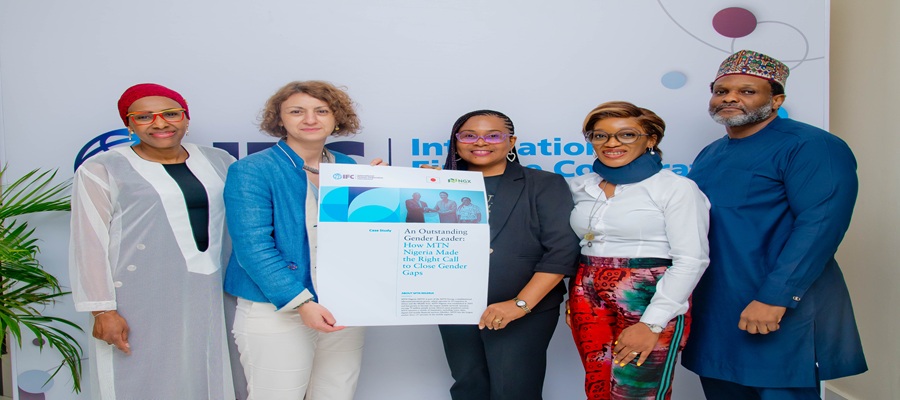
MTN Nigeria Communications Plc has been featured in a newly published case study by the International Finance Corporation (IFC), highlighting how leading companies are advancing gender equality through practical, business-led actions under its Nigeria2Equal programme.

MTN Nigeria
The case study spotlights MTN Nigeria’s transformation into a top performer in workplace gender equality following its participation in the programme between 2021 and 2023.
During this period, the company moved from 13th position to become the top-performing organisation from 30 most capitalised companies listed on the Nigerian Exchange Group. The report was based on an independent assessment conducted by Equileap and verified by PwC.
In the IFC case study, Karl Toriola, Chief Executive Officer of MTN Nigeria, stated, “A diverse, inclusive, and equitable workforce is critical to the success and sustainability of our business.
“We are committed to promoting gender inclusiveness, equality, and empowerment internally as well as across our ecosystem to ensure that interventions are holistic and position women to thrive effortlessly.
“If we must narrow the gender gap and address the disproportionate representation of women in the private sector, I believe that business leaders and CEOs must disproportionately allocate resources to support women across all levels.”
Implemented in partnership with the Nigerian Exchange Group, the Nigeria2Equal programme is designed to reduce gender gaps across leadership, employment, and entrepreneurship in Nigeria’s private sector.
MTN Nigeria joined the initiative in 2021, making commitments across these areas while strengthening its broader advocacy for gender equality.
According to the IFC publication, MTN Nigeria built on its existing diversity and inclusion framework by adopting a more structured and data-driven approach to gender equality. With IFC’s advisory support, the company undertook diagnostics to identify gaps, introduced targeted policies, and aligned its practices with global standards.
A major milestone outlined in the report is MTN Nigeria’s attainment of the EDGE MOVE certification in 2023, a globally recognised benchmark for workplace equity.
This achievement made it the first wireless telecommunications company in Africa and the second organisation in Sub-Saharan Africa to reach this level, reflecting progress across leadership representation, pay equity, organisational culture, and flexible work policies.
The case study also details a range of initiatives implemented by the company, including targeted recruitment and promotion of women, strengthened mentorship programmes, expanded parental leave policies, and deliberate efforts to increase the participation of women-led businesses within its value chain.
These actions contributed to measurable improvements in female representation, including achieving gender balance at the executive level.
Beyond internal policies, MTN Nigeria expanded its role in advancing gender equality through advocacy and transparency. The company became a signatory to the UN Women’s Empowerment Principles and now reports gender-focused initiatives and targets in its annual disclosures.
The IFC case study positions MTN Nigeria as an example of how sustained leadership commitment, independent assessment, and measurable actions can drive meaningful progress on gender equality within the private sector.
MTN Nigeria says it will continue to build on this momentum, with a target of achieving a 50:50 gender balance across its workforce by 2030, while deepening efforts to create inclusive opportunities for women across its operations and ecosystem.
Telecom
Microsoft, Partners Launch ‘LINGUA Initiative’ to Save African Languages From Digital Extinction
Microsoft.com has launched the LINGUA Africa Open Call, a new initiative aimed at strengthening the development of inclusive artificial intelligence solutions for African languages and underserved communities across the continent.

LINGUA Africa Initiative
The programme, unveiled in partnership with the Gates Foundation, Masakhane African Languages Hub, and Google.org, seeks to close the widening AI language gap that continues to exclude thousands of African languages from modern digital systems.
According to Microsoft, many African languages remain significantly underrepresented in AI datasets, models, and tools, limiting access to digital services in areas such as healthcare, education, agriculture, financial inclusion, and government services.
The company said the initiative is designed to support the creation of open language resources, AI models, translation tools, datasets, and sector-focused applications that can help communities interact with technology in their native languages.
Howard Lakougna, senior program officer at the Gates Foundation, said the initiative aims to remove barriers that have historically slowed AI innovation across Africa.
“LINGUA Africa seeks to encourage bold and innovative thinking by breaking down barriers that have long held back AI progress across the continent,” Lakougna stated.
The open call is inviting proposals from universities, nonprofits, startups, research institutes, cultural organisations, social enterprises, and collaborative consortia working in the public interest. Organisations outside Africa may also apply, provided they demonstrate meaningful partnerships with African institutions or communities.
Selected projects will receive funding support, Azure and Google Cloud compute credits, as well as technical collaboration opportunities from Microsoft’s AI for Good Lab and other ecosystem partners.
Microsoft outlined three key categories for support under the initiative:
· Data creation projects focused on building, documenting, validating, or translating African language datasets and resources;
· Model and tool development initiatives for AI models, benchmarks, and infrastructure;
· Sectoral applications deploying AI language technologies in real-world settings such as healthcare, education, agriculture, financial inclusion, and public services.
Funding support could range from up to $50,000 for data-focused projects to as much as $450,000 in cash for high-impact sectoral applications, alongside additional compute credits totally $1,050,000.
The initiative builds on Microsoft’s broader work around low-resource languages and follows the earlier LINGUA Europe programme, which supported AI resources for underrepresented European languages.
Africa is home to more than 2,000 languages, yet only a small fraction are represented in major AI systems and large language models.
Researchers have repeatedly warned that the lack of African language representation in AI could deepen digital inequality and limit participation in the emerging AI economy.
Recent research efforts across the continent have highlighted the growing need for African-led AI infrastructure and datasets.
In Nigeria, researchers continue to push for broader representation of minority languages beyond Hausa, Igbo, Yoruba, and Nigerian Pidgin, which currently dominate most local AI language research.
Microsoft said all supported projects under LINGUA Africa will be expected to contribute openly licensed resources that can be reused in research, open-source models, and practical applications.
Applications for the programme will close on June 15, 2026.
Interested applicants can access more information through Microsoft’s official website

LG Electronics Showcases Advanced HVAC Solutions at Mega Clima Nigeria 2026

FG Unveils AI Public Services Platform

Australian Court Upholds Fine Against X Over Child Safety Compliance Failures

MTN Nigeria Tops Gender Equality Rankings After Major Workplace Transformation, IFC Report Reveals

Microsoft, Partners Launch ‘LINGUA Initiative’ to Save African Languages From Digital Extinction

MTN, VDT, Zoracom, Digital Realty Back 2026 Girls in ICT Campaign

Vitel Wireless Partners Fintechs to Expand Access to Services

Kaspersky Discovers Vulnerability in Qualcomm Snapdragon Chips that can Lead to Data Loss & Device Compromise

Bank Customers to Pay N1,500 for ATM Card Issuance, Replacement – CBN

FG Okays 112 as Toll-Free National Emergency Response Number




 News3 days ago
Systems, Not Skin Colour, Hold the Key to Africa’s Development, Says Evans Woherem

 Telecom2 days ago
Google unveils Gemini-powered advertising, commerce tools at Marketing Live 2026

 E-Financial2 days ago
Griffin Capital Group Launches Integrated Financial Services Group Positioned to Strengthen Capital Formation in Nigeria, Africa

 Telecom2 days ago
Nigeria gets AI-ready Lagos data centre

 E-Business2 days ago
Kaspersky Detected More than 92,000 Malware Attacks Disguised as AI Services in Four Months

 E-Financial2 days ago
CBN to Simplify Bank Alerts over Rising Customer Complaints

 Telecom2 days ago
Telcos in Nigeria, other Emerging Markets Squeezed by Diesel Crisis

 Telecom2 days ago
ipNX Seeks Coordinated Action on Fibre Deployment @ National Dig-Once Forum