

Telecom
UBA, Ecobank, Others Turn to IBM Hybrid Cloud and AI Solutions to Accelerate Digital Innovation


IBM on Wednesday announced that major financial institutions across Africa have selected hybrid cloud and AI capabilities from IBM to unlock digital innovation and continue their work to develop digital-first solutions, ultimately broadening access to financial services on the continent.

COVID-19 continues to accelerate the already rapid changes that were happening across the financial services sector in Africa, fast-tracking the adoption of digital technologies to boost financial inclusion. With over 475 million Africans expected to be mobile internet users by 2025 GSMA –The mobile economy sub-Saharan Africa 2020, digital and mobile play a critical role in facilitating the delivery of digital financial services to consumers who transact on their mobile phones.
As banks focus their efforts on open innovation, security and high-value services, hybrid cloud solutions have become increasingly important to deliver seamless and secure digital banking experiences.
“Enterprises, especially those in highly regulated industries like financial services, face unique challenges when it comes to balancing innovation and regulatory compliance,” says Alan Peacock, General Manager, IBM Cloud.
“For decades, IBM has been fuelling the transformation of the financial services industry, bringing IBM’s trusted industry experience and leadership in security and data privacy to help banks modernize, transform operations and drive innovation.”

According to IBM’s COVID-19 future of business study, more than 59% of the organisations that participated said that the pandemic accelerated digital transformation, and more than 75% of responding executives indicated they expect changed customer behaviour to continue after COVID-19.
As companies in the financial services sector are speeding up transformation, IBM hybrid cloud and AI solutions are supporting their drive to accelerate digitalisation in different parts of the continent.
“In the past year we have seen banks navigate changes brought on by a growing preference for digital and mobile solutions, increasing smartphone penetration and the demand for convenience, innovation, and simplicity from today’s modern consumer, says Angela Kyerematen-Jimoh, Regional, General Manager for IBM North, East and West Africa.
“As banks across the continent take advantage of the opportunity to provide digital financial services which boost financial inclusion, IBM is working with Africa’s leading financial groups to deliver intelligent, cloud-based, digital-first innovation through IBM’s hybrid cloud and AI capabilities.”
Ecobank, the pan-African banking conglomerate, with banking operations in 33 African countries, has adopted a hybrid cloud approach to extend its reach to millions across Africa.
Using IBM Cloud, Ecobank migrated their flagship mobile banking application to leverage the on-demand capacity of resources that can support sudden spikes in traffic on its mobile banking services. Ecobank also has access to other IBM cloud services that can be used to develop more innovative, digital-first solutions to enhance their own client experience.
With over 12 million customers on its flagship mobile application, Ecobank is on an accelerated digital banking transformation journey and is set out to expand its digital offerings and grow the 30 million digital transactions it already processes on its platforms. As part of this journey, the Pan-African banking conglomerate has built scalable business solutions which allow for ease of integration with third-party providers using their open digital banking platform for a growing customer base.
Pan-African bank, Nedbank has set out to deliver superior digital experiences to customers. To achieve this, the bank is modernising its core banking applications with a hybrid cloud strategy and has partnered with IBM to help bring digital products and services to life.
To take advantage of the flexibility and agility offered by modern cloud technologies on this digitalisation journey, Nedbank explored a hybrid multi cloud approach, adopted the IBM Garage methodology to implement IBM Cloud Pak for Integration.
Through IBM Garage, the bank was able to deep dive and explore fresh solutions and in a week achieved what would have taken them months. Faced with the need to integrate complex legacy systems, Nedbank turned to IBM Cloud Pak for Integration to help build a simplified and standardised integration approach to their cloud strategy.
This enables Nedbank to shift their legacy applications into the cloud and integrate with other cloud-based applications they are consuming as they modernise and position for future innovation.
Attijariwafa bank, the Pan African Banking and Financial Group, has adopted IBM hybrid cloud solutions software to advance the digitisation of its banking operations, and quickly bring new digital services to its customers, all in a secure and flexible environment.
Using IBM Cloud Paks that are built on Red Hat OpenShift, the leading bank will streamline and better integrate front-and back-office processes and to modernise business and IT operations.
By deploying IBM Cloud Paks, Attijariwafa bank will modernise and manage its core banking applications like its corporate banking application, on a secure, integrated and easily scalable environment.
This will allow a rich and simple customer interaction while decreasing the time to bring new offerings to market. It will also enable the banks’ employees to focus their effort and time on serving their customers better.
This collaboration with IBM supports the digital transformation strategy of the bank and facilitates a full modernisation of the bank’s operations in an open, hybrid cloud environment.
United Bank for Africa Plc (UBA), Africa’s global bank operating in 23 countries globally and with headquarters in Nigeria, has set a goal to grow its transaction volume significantly over the next few years and to deepen retail market penetration.
To achieve this, they would be required to attract the unbanked, acquire new customers through digital banking and retain existing customers by adopting a “No Transaction Must Fail (NTMF)” initiative.
Using IBM POWER9-based servers, Flash system storage and IBM PowerVC (Power system virtualization & cloud management), UBA set up a scalable, private cloud environment that is cost-effective taking the first step towards embracing a hybrid cloud model.
Customers’ needs are evolving as they seek banking services across channels and expect personalization. Co-operative Bank of Kenya turned to IBM to modernize their core banking platform and reach their customers on different channels including mobile and online while offering customized services driven by insights.
For this, they required a technology that would also empower their employees who work across teams to simplify processes, optimize customer data, while also achieving goals like reducing infrastructure and maintenance costs. With IBM Power and FlashStorage solutions, they now derive improved insights on customer data, faster query resolutions, quicker time-to-market on new services across channels – all backed by high available, scalable, cloud-and AI-ready technology.
Banco Mais, a leading bank in Mozambique, turned to IBM to help streamline its business processes and reduce turnaround times for customer-facing services. In the face of a growing competitive market locally, Banco Mais needed to develop financial service products faster to retain and gain market share.
Banco Mais implemented IBM Business Process Manager on Cloud service and was able to start projects quickly and deploy process application solutions without the need to build the IT infrastructure. By turning to this IBM Cloud solution, they could develop, test, run and monitor their business processes at a fraction of the time it would otherwise have taken. As a result, Banco Mais reduced turnaround time for loans by 60% and decreased the time it took to implement services that took 3 to 4 months by 85% to improve customer experiences.
Earlier this year, IBM announced the general availability of the industry’s first financial services-ready cloud platform, IBM Cloud for Financial Services, as well IBM Cloud Satellite. First revealed in 2019, the IBM Cloud for Financial Services is designed to help reduce risk for financial institutions, their partners and FinTechs, and innovate quickly with built-in controls that are adhered to by the entire ecosystem. IBM Cloud Satellite brings a secured, unifying layer of cloud services for clients across environments, regardless of where their data resides, delivering security, data privacy, interoperability and open standards found in hybrid cloud environments.



Nigeria is partnering with Burkina Faso on Project Building Resilient Digital Infrastructure for Growth (BRIDGE), to extend terrestrial fiber-optic routes through Niger and Benin, aiming to cut Burkina Faso’s internet transit costs by up to 50 percent.

Dr. ‘Bosun Tijani, minister of Communications, Innovation and Digital Economy and Dr. Aminata Zerbo-Sabané, his Burkinabe counterpart, have sealed a deal to establish a joint technical committee for regional digital integration at a meeting in Ouagadougou, Burkina Faso’s capital.
At the centre of the discussions was BRIDGE, Nigeria’s connectivity initiative aimed at expanding access to faster, more affordable and resilient internet infrastructure.
Under the proposed collaboration, technical teams from both countries will assess connectivity routes linking Nigeria to Burkina Faso through Nigeria-Niger-Burkina Faso and Nigeria-Benin-Burkina Faso corridors.
The assessment is expected to identify a viable pathway for lowering Burkina Faso’s internet connectivity costs by up to half.
The two countries also agreed to establish a Technical Working Committee to develop an implementation framework for the partnership.
The cooperation will extend beyond fibre infrastructure to other areas of the digital economy.
Nigeria and Burkina Faso plan to explore collaboration on digital skills and talent development, including the potential sharing of Nigeria’s 3 Million Technical Talent (3MTT) model.
The countries will also seek to strengthen ties between their startup ecosystems, support Burkina Faso’s Innovation Campus and collaborate on artificial intelligence, local-language technologies, shared computing infrastructure, cybersecurity and research.
Tijani said the engagement forms part of Nigeria’s broader outreach to neighbouring countries, following a recent visit to Benin Republic, with planned engagements in Niger and Chad.
Federal government said the broader objective is to leverage the country’s expanding digital infrastructure and capabilities to support shared economic opportunities across borders, strengthen regional digital integration and position Nigeria as a digital gateway connecting West Africa and the Sahel.
As the federal government is thinking os helping Burkina Faso, Nigeria’s internet cost is too high.
The cost of internet in Nigeria is driven by a 50% tariff floor increase approved by the Nigerian Communications Commission (NCC), pushing average mobile data to over ₦431 per GB.
Major telecom networks, fiber providers, and satellite services like Starlink have raised prices due to severe inflation, local currency devaluation, and expensive diesel maintenance for cell towers.


Airtel Nigeria is approaching the 18,000-cell-site mark as the telecommunications operator accelerates network deployment across the country, adding more than 1,000 new sites annually and extending high-speed mobile connectivity deeper into rural communities.

The expansion places Airtel as an operator making one of the largest sustained infrastructure commitments to Nigeria’s digital economy, with the company’s network now spanning all 774 Local Government Areas in the country.
More than 99 percent of Airtel Nigeria’s sites are 4G-enabled, with the company continuing to add new capacity and upgrade existing infrastructure as demand for mobile connectivity rises. Airtel Africa’s latest annual report said the Nigerian operation added more than 1,050 new sites during its 2025-26 financial year.
The pace represents a significant increase from the approximately 15,000 sites Airtel operated two years ago. By early 2026, the operator had crossed 17,000 sites, after adding about 2,000 sites in two years.
The current expansion has also taken the network further into locations that have historically been underserved by telecommunications infrastructure. These communities include Kukawa, Borno State; Okomu-Udo, Edo State; Chimbi, Niger State; Orile Ijaiye, Oyo State; Kopii, Benue State; and Aran-Orin, Kwara; among others.
Airtel has previously said a significant portion of its network investments is targeted at deep rural communities, small towns and the fringes of major cities. At a media roundtable in February, Chief Executive Officer, Dinesh Balsingh, said the company intended to maintain the large scale of network expansion during 2026.
“Everyone has the right to digital connectivity, including people in deep rural markets and small communities,” Balsingh said.
The impact of the growth extends beyond the ability to make calls or browse the internet. Wider network availability gives families more reliable access to one another, enables businesses to communicate with customers and suppliers, and supports access to digital banking, education, healthcare and government services.
For farmers in remote areas, mobile connectivity can provide access to current crop prices, weather information, market information and agricultural advisory services. For small businesses, reliable mobile data supports payments, customer acquisition, logistics and digital commerce. For communities, connectivity can improve access to health and social services and help residents participate more fully in the digital economy.
Airtel’s network strategy is also increasingly focused on improving the experience delivered through the infrastructure already in place. In 2025, the company upgraded capacity on about a quarter of its existing sites, deploying higher-capacity radios and moving portions of its backhaul from microwave to fibre.
The operator has also reported a continued addition of spectrum to strengthen its spectrum position. Since November 2025, it has added 20MHz spectrum, which is on track for full integration on all sites this quarter.
Balsingh said the company’s investment programme was designed to improve coverage, capacity and resilience, with the benefits ultimately reflected in the quality of service experienced by customers.
“We have invested with discipline and clarity to strengthen our network nationwide. Those investments are now translating into measurable improvements in performance, customer experience and reach, including in underserved communities,” he said.
Third-party measurements have also continued to provide evidence of changing network performance in Nigeria. Ookla’s Speedtest Global Index, for example, reported a median mobile download speed of 97.74 Mbps for Nigeria in June 2026.
For Airtel, the network expansion not only extends the geographical footprint; but also increases the speed, capacity and stability available to existing customers.
Director of Marketing, Ismail Adeshina, said the company’s network investments were ultimately aimed at making connectivity more useful in the everyday lives of Nigerians, as increasing numbers of consumers, families and businesses depend on mobile services for communication, commerce and access to essential services.
Airtel’s infrastructure programme is also contributing to the wider development of Nigeria’s digital economy.
“With mobile connectivity increasingly serving as the platform for financial services, commerce, education, healthcare, agriculture and enterprise, expanding the physical network effectively increases the number of Nigerians able to participate in those activities,” Adeshina said.
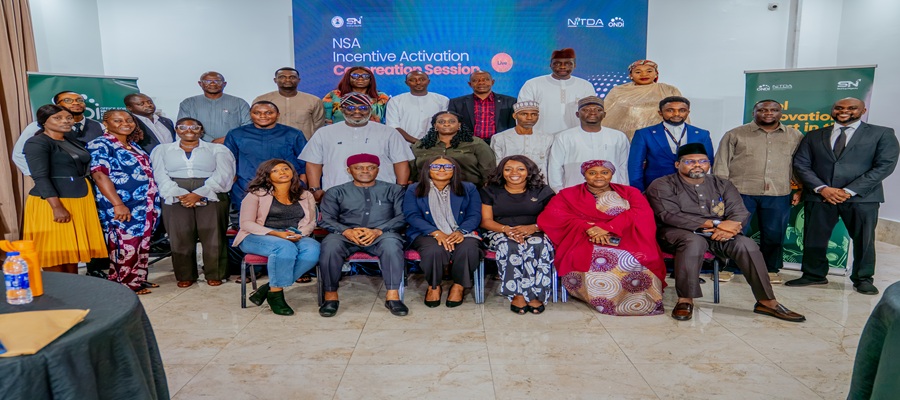
National Information Technology Development Agency (NITDA) is calling for a unified, cross-sector push to translate the framework of the Nigerian Startup Act (NSA) into practical benefits for local entrepreneurs and investors.

The Director-General of the National Information Technology Development Agency (NITDA), Kashifu Inuwa, CCIE, represented by the National Coordinator, Office for Nigerian Digital Innovation (ONDI), Ms Victoria Fabunmi, in a group photograph with participants from various Ministries, Departments and Agencies (MDAs) at the Nigerian Startup Act (NSA) Incentives Activation Co-Creation Workshop in Abuja.
Speaking at the NSA Incentives Activation Co-Creation Session in Abuja, organised by NITDA’s subsidiary, the Office for Nigerian Digital Innovation (ONDI), the NITDA boss stressed that while enacting the legislation was a historic milestone, its ultimate success will be measured by its tangible impact on everyday tech ventures.
Delivering remarks on behalf of NITDA Director-General Kashifu Inuwa, ONDI National Coordinator Victoria Fabunmi emphasised that Nigeria must now transition from policy design to operational delivery.
Inuwa noted that while early structural achievements such as setting up the Startup Consultative Forum and launching the digital startup portal have established vital channels for dialogue, the true test of the law lies in whether founders can easily access the relief and resources promised to them.
He said the establishment of the Startup Consultative Forum and its governance structures had created an important platform for sustained engagement among stakeholders, but stressed that the real test of the legislation would be its impact on businesses operating within the innovation ecosystem.
According to him, government agencies, private-sector actors and other ecosystem stakeholders must work collectively to remove institutional bottlenecks and ensure that startups can access the opportunities created by the Act.
Inuwa said the participating institutions possessed different mandates, resources and policy instruments that, if properly coordinated, could significantly improve the operating environment for Nigerian startups.
“We want to go to the next level. We want to be able to say that the actors in our ecosystem have been able to benefit significantly from the legislation that has been passed, and it wouldn’t happen without everyone sitting in this room,” he said.
He urged stakeholders to shift attention from the mere existence of the legislation to its practical implementation, particularly the activation of incentives designed to promote investment, innovation and enterprise growth.
The DG noted that the implementation of the NSA involved institutions across several sectors, including trade, finance, communications, innovation, digital economy, science and technology.
He said bringing these institutions together was necessary to identify gaps, clarify responsibilities and develop workable mechanisms for delivering the incentives to intended beneficiaries.
Inuwa also urged stakeholders to embrace continuous engagement and feedback, noting that the success of the Act would depend largely on the ability of implementing institutions to work together and respond to the evolving needs of the startup ecosystem.
He said recommendations from the session would contribute to ongoing efforts to strengthen the implementation framework and create an environment where Nigerian startups could scale, attract investment and compete effectively in global markets.
In a context-setting presentation, “Operationalising the Incentive Provisions of the Nigerian Startup Act,” Ms Elma Andah, Acting Lead, Strategy, Research and Analytics at ONDI, said the Act provides more than 31 incentives distributed across six major categories.
She identified the categories as tax and fiscal incentives, regulatory support, funding access, exports and trade, ecosystem enablers, and training and capacity building.
Andah explained that implementing the incentives required the participation of more than 15 government institutions, making inter-agency coordination central to the success of the legislation.
She said the Nigerian Startup Act, signed into law on October 19, 2022, was designed to promote innovation, improve access to funding, strengthen collaboration and position Nigeria as a leading technology and innovation-driven economy in Africa.
According to her, Nigeria’s startup ecosystem has continued to demonstrate significant potential, with more than 3,000 startups and several globally recognised technology companies.
She added that Nigerian startups attracted about $410 million in funding in 2024, despite the challenging economic environment.
Andah highlighted several areas of progress under the Act, including engagements with states on adoption, the operational startup support engagement portal, improved startup labelling timelines, the Startup Consultative governance framework, the Startup Investment Seed Fund framework and ongoing efforts to operationalise the regulatory sandbox framework.
She, however, stressed that the interconnected nature of the incentives meant that no single institution could deliver them independently.
“No single institution can deliver all these incentives alone. Implementation requires coordination across more than 15 MDAs,” she said.
Using practical examples, Andah explained that a startup seeking funding could simultaneously require tax incentives, while an enterprise seeking to export its products might need regulatory approvals. Investors seeking tax credits could also depend on access to the startup labelling system.
She consequently challenged participating institutions to clearly establish ownership of the incentives assigned to them, strengthen coordination, simplify access procedures and introduce effective monitoring and accountability mechanisms.
The session therefore provided stakeholders with an opportunity to identify implementation gaps and develop practical approaches for ensuring that the incentives contained in the Startup Act are accessible to startups, investors, innovation hubs and other beneficiaries.
The outcome, stakeholders noted, is expected to support a more coordinated implementation of the NSA and strengthen its contribution to Nigeria’s innovation, investment and economic development objectives.

FG Seeks to Half Burkina Faso’s Internet Cost while Nigerians Pay more

Cyberthreat: New Malware, Turns Phones into Tools for Card Fraud- Report

SEC Clears Blockchain for Accelerated Regulatory Incubation Programme

Union Bank Secures Global Payment Data Security Certification

NLNG, NCDMB Boost Engineering Research with Innovation Centre

EFCC Busts NIS Visa Overstay Racket, Uncovers N700m in an Account

Fact-Check: Elon Musk’s “Tesla Pi Phone” is Internet Rumor

NBC Tasks Broadcasting Stations over 2028 DSO Global Deadline

Glo Sponsored African Voices to Feature Netflix’s “The Polygamist” Stars

Access Bank Debunks Shutdown Report, Vows Action against Perpetrators




 Telecom2 days ago
Airtel Nigeria Adds Over 1,000Cell Sites in Nationwide Expansion to Surpasses 17,000

 E-Financial2 days ago
Mastercard, TeamApt Collaborate to Expand Digital Payments Across Africa

 E-Business2 days ago
MacOS Users Report More Cyber Threats than Windows Users – Survey Reveals

 News2 days ago
Access Holdings Sets New Benchmark in Nigeria’s Finance Talent Pipeline

 Telecom2 days ago
Nigerian Startup Act: NITDA Calls for Stronger Inter-Agency Collaboration

 E-Financial2 days ago
SEC Orders Immediate Freeze of Assets Linked to Six Terrorism Financiers, Three Entities

 General News2 days ago
Anambra Seeks Digital Inclusion in Rural Communities

 Broadcasting2 days ago
ESUT Workers Get N82,000 Minimum Wage as Enugu Approves Fresh Salary Increase