

General News
Professor Eric Hanushek, Rukmini Banerji Awarded 2021 Yidan Prize


Professor Eric A. Hanushek and Dr Rukmini Banerji have been awarded the 2021 Yidan Prize, the world’s highest education accolade, in recognition of their ground-breaking work addressing a crucial piece of the education puzzle: improving quality of education and outcomes for learners at scale.

Following a rigorous judging process, conducted by an independent judging committee of recognized education experts, Hanushek and Banerji were selected as the recipients of the 2021 Yidan Prize for Education Research and Yidan Prize for Education Development.
They will join nine laureates who have been awarded the Yidan Prize since its inception in 2016, established by the Yidan Prize Foundation – a global philanthropic education foundation that inspires progress and change in education.
Professor Hanushek, a Paul and Jean Hanna Senior Fellow and Professor, Hoover Institution of Stanford University, USA, is awarded the 2021 Yidan Prize for Education Research.
His work focuses on education outcomes and the importance of teaching quality and has transformed both research and policy internationally.
His work helped shape the United Nations Sustainable Development Goal 4 (ensure inclusive and equitable quality education) by reframing targets for learning outcomes and has shown that it’s how much students learn – and not how many years they spend in school – that boosts economies.
“Like no one else, Eric has been able to link the fields of economics and education. From designing better and fairer systems for evaluating teacher performance to linking better learning outcomes to long-run economic and social progress, he has made an amazing range of education policy areas amenable to rigorous economic analysis.” said Mr Andreas Schleicher, head of the Yidan Prize for Education Research judging panel, and director for the OECD’s Directorate of Education and Skills.
With the Yidan Prize funding, Professor Hanushek is planning a research fellow program in Africa, supporting analytical capacity to shape education policies from a local perspective.
Dr Banerji, Chief Executive Officer of the Pratham Education Foundation, India, is awarded the 2021 Yidan Prize for Education Development for her work in improving learning outcomes.
The Annual Status of Education Report (ASER) assessment approach, pioneered by Dr Banerji and her team in India, revealed literacy and numeracy gaps among children who had already spent several years at school , with the model spreading to several African countries as early as 2005 .
To close these gaps, her team’s “Teaching at the Right Level” (TaRL) program works with schools and local communities to provide basic reading and arithmetic skills, ensuring no children are left behind.
This systematic, replicable model reaches millions of children annually in India and is spreading around the globe. The approach is now being implemented in a number of African countries including Côte d’Ivoire, Kenya, Nigeria and Zambia, among others , through partnerships and the TaRL Africa initiative .
As a board member of the TaRL Africa initiative, Dr Banerji is supporting the growth and development of impactful programs on the continent.
“Dr Rukmini Banerji and the Pratham team have a clear mission: ‘Every child in school and learning well’. A reminder that we need to focus on education quality and not just school enrolments.
“The solutions that they have deployed towards this goal have proven to be cost-effective and scalable with a demonstrated potential to impact globally—disruptive education innovation with transformative results”, said Dorothy K. Gordon, head of Yidan Prize for Education Development judging panel, and board member of the UNESCO Institute for Information Technologies in Education.
With the support of the Yidan Prize, Dr Banerji plans to strengthen and expand Pratham’s work with young children so that strong foundations can be built early in a child’s life. Dr Banerji believes this will contribute significantly towards the goal of seeing “every child in school and learning well”.
“The quality and diversity of this year’s nominations reflect the drive and passion around the world to unlock new approaches to education.
“Our nominees are working on projects that span over 130 countries and territories. They are rethinking education systems from top to bottom, tackling inequities and empowering learners,” Dr Koichiro Matsuura, Chairman of the Yidan Prize Judging Committee and the former Director-General of UNESCO commented.
“We are also delighted to welcome five new judges to our panel — adding new perspectives and strengthening the voices of both women and representatives from more diverse regions to discuss big ideas from some of the world’s brightest minds.”
From developing play-based learning centres, to applying neuroscience to help dyslexic children, the Yidan Prize recognizes the people who are already making an impact. Each laureate will be awarded HK$30 million (approximately US$3.9 million), half of which is a project fund – enabling a series of innovative and progressive education projects to scale up and support millions of learners globally.
The 2020 Yidan Prize for Education Research Laureate, Professor Carl Wieman has pioneered the use of new teaching methods in STEM education. Today, his PhET Interactive Simulation model has delivered over 1 billion STEM simulations in 93 languages to date; Last year’s Yidan Prize for Education Development Laureates, Ms Lucy Lake and Ms Angeline Murimirwa of CAMFED, have created a unique model of girls’ education to drive systemic change, with 178,000 young women once excluded from education now leading programs to support another 5 million girls to learn, thrive and lead change.
All Yidan Prize laureates will join the Yidan Council of Luminaries to work collaboratively with distinguished education leaders. The Council works together and speaks with a collective voice to shed light on the importance of restoring and rethinking education with innovative ideas.
Sharing a diversity of expertise and insights, they: have contributed to the UNESCO Futures of Education initiative on how schools can prepare for the future; are working with the Global Mindset Initiative to build a foundation for a growth mindset research to achieve quality education for students globally; have spoken at high-level conferences such as the Asian Development Bank’s International Skills Forum, to discuss the latest education innovations needed for a new normal.
Now in its fifth year, the Yidan Prize has attracted many high-quality nominations, with projects reaching and positively impacting learners globally, representing diverse perspectives, cultures and geographies. Nominations for the 2022 Yidan Prize will be open from 19 October 2021 until March 2022.
Meanwhile, the 2021 laureates will be formally recognized at the Yidan Prize Awards Presentation Ceremony and the Yidan Prize Annual Summit held on 5 December 2021.



Nigeria Centre for Disease Control (NCDC) has intensified nationwide disease surveillance following reports of a Hantavirus infection cluster connected to international cruise ship travel involving several countries.

Dr Jide Idris, director-general, NCDC, in a public health advisory, confirmed that Nigeria has not recorded any confirmed Hantavirus case and stated that the overall public health risk remains low.
According to the agency, the reported outbreak currently involves a limited number of confirmed and suspected infections linked to cruise ship exposure, while international investigations and contact tracing efforts continue.
The NCDC explained that the advisory was released to strengthen national preparedness and encourage vigilance against emerging infectious diseases amid growing global concern surrounding the outbreak.
Health authorities noted that Hantaviruses are mainly transmitted through exposure to infected rodents, their urine, saliva, droppings, or contaminated dust particles. Symptoms may include fever, fatigue, muscle pain, gastrointestinal illness, and in severe cases, respiratory complications.
The current outbreak has reportedly been associated with the Andes virus strain, which has shown limited human-to-human transmission through close contact in previous cases.
The NCDC stated that enhanced monitoring systems have been activated nationwide to support early detection and rapid response efforts.
The agency also urged Nigerians to maintain proper hygiene, prevent rodent infestations, safely store food items, and avoid exposure to rodents and contaminated environments.
Officials further advised the public to rely only on verified information from recognized health authorities and avoid spreading misinformation regarding the outbreak.
General News
Moniepoint Partners GDG Lagos, Women Techmakers to Empower the Next Generation of Women Architects in Tech
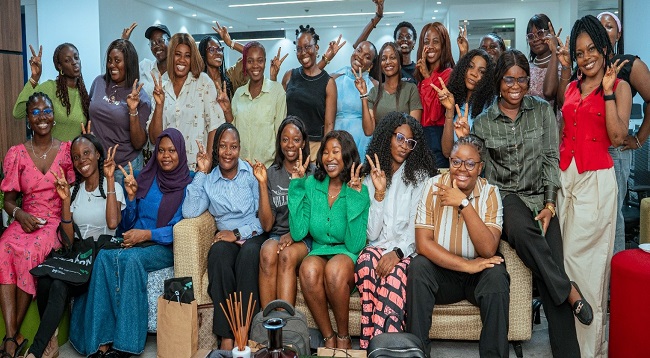
In a critical move to bolster talent density and accelerate Nigeria’s digital economy, Africa’s all in one financial ecosystem, Moniepoint hosted an International Women’s Day event bringing together women in technology for a day of leadership development and hands-on product building.

Held at Moniepoint’ Headquarters in Lagos, themed “Break the Pattern,” the event was organised in partnership with Women Techmakers Lagos and Google Developer Group (GDG) Lagos with participants spanning both technical and non-technical backgrounds, reflecting the breadth of women currently active across Nigeria’s digital economy.
In a keynote address delivered by Kemi Nwogu, Head of Product at Moniepoint Inc, titled “Breaking the Pattern: How Women Can Redefine the Future of Tech,” she made the case that progress for women in technology requires not just access to existing structures, but the tools and confidence to reshape them. Furthermore, Nwogu issued a bold call to action, urging attendees to move beyond traditional career playbooks and take ownership of shaping the industry’s future.
“From a young age, many girls have been subtly discouraged from pursuing science and tech. They are told sometimes directly, sometimes indirectly, that tech is too hard, too technical, or simply not for them. These patterns are not facts, they are constructs. And what has been constructed can be deconstructed! The future of tech needs leaders who build people, not just products, cultures, not just systems,”said Nwogu.
On building skills with purpose, she urged women to “show up everyday, make small, steady progress with online courses, coding bootcamps, open-source projects while leveraging the full ecosystem; take on challenging tasks as your greatest classroom using real problems to build real skills; while knowing why you’re building a skill as every learning goal can be tied to a career journey.”
This thematic fare of the event was further explored in a panel discussion, “Unscripted: Leading Beyond the Patterns We Inherited”, moderated by Atinuke Oluwabamikemi Kayode and featuring leaders from fintech, creative design, and software engineering space, including Chukwu Adaeze (Creative Director, CAV Digital), Chinenye Ogbu (Customer Experience Lead, Hydrogen), and Motunrayo Koyejo (Senior Software Engineer, Cowrywise).
The robust and extensive conversation examined the professional archetypes that have historically defined leadership in the Nigerian tech ecosystem: the engineering culture that equates output with exhaustion, the creative industry’s tendency toward top-down authority, the script-driven rigidity of customer-facing roles. The panelists also provided deep insights into how they had navigated and, in places, dismantled those patterns within their teams and organizations.
The event went beyond conversations to a hands-on workshop, Prompt to Production, facilitated by Taiwo Famakinde which guided attendees through modern product development from prompt design through rapid prototyping to the deployment of a functional application using AI tools.
A lot of the participants entered with little to no prior experience building software products. The workshop then fed directly into a Buildathon, where participants developed and deployed their own solutions in real time, with the strongest builds recognised and rewarded at the closing ceremony.
“IWD celebrations are often heavy on inspiration, but we wanted to offer something more, a proof of capability. Oftentimes, there is a gap between having ideas and actually building them, and we set out to bridge that by creating a space where women could easily deploy their ideas into live products with AI in just a few hours. By the end of the day, something that once felt complex due to the fast pace of AI started to feel possible.
“Our participants left with both the technical confidence to build and the leadership frameworks to navigate their careers on their own terms, ensuring they are no longer just participants in the tech ecosystem, but the architects of its future. They are now ready to test their ideas and lead without waiting for perfect conditions or a full team.” said Funke Olasupo, Co-organizer, Women Techmakers Lagos.
Interestingly, the “Break the Pattern” event sits within a broader investment in Nigeria’s technology talent pipeline that Moniepoint has deployed over the years. As one of Nigeria’s most significant fintech employers, the company runs a critical engine that sustains Nigeria’s formal and informal economy.
Moniepoint has invested in developer community partnerships including its ongoing collaboration with GDG Lagos as well as internal programmes designed to build engineering depth across product domains that include its highly successful Women in Tech initiative, DreamDevs, HatchDev and the government’s acclaimed 3MTT programme.


Google says it has disrupted an attempt by a criminal group to use artificial intelligence (AI) to exploit a previously unknown software vulnerability, highlighting growing concerns over the use of AI in cybercrime.

The technology company disclosed this on Monday, saying the hackers planned to exploit a “zero-day” vulnerability in an unnamed company’s digital system before the attack was intercepted.
A zero-day vulnerability refers to a software flaw unknown to the vendor or security teams, leaving no time to develop a protective fix before exploitation.
John Hultquist, Chief Analyst at Google’s threat intelligence arm, described the incident as a significant shift in cybersecurity threats.
“It’s here. The era of AI-driven vulnerability and exploitation is already here,” Hultquist said.
According to Google, the attackers intended to exploit a security flaw that would have allowed them to bypass two-factor authentication and gain access to a widely used online system administration tool.
The company said it had notified the affected firm and relevant law enforcement agencies, successfully disrupting the operation before any damage occurred.
Google, however, declined to identify the targeted company, the threat actors involved, or the AI model used in the attempted breach.
The firm said preliminary analysis suggests the hackers used a large language model, similar to those powering popular AI chatbots, to identify the vulnerability.
Google noted there was no evidence linking the attempted attack to any government-backed operation, although groups connected to China and North Korea have reportedly explored similar AI-enabled cyber techniques.
The disclosure comes amid growing debate over the regulation of increasingly advanced AI systems capable of coding, vulnerability discovery, and cybersecurity analysis.
Recent advancements in AI hacking tools, including Anthropic’s newly announced cybersecurity-focused model, Mythos, have intensified concerns among governments and technology firms worldwide.
The U.S. government has also stepped up oversight of advanced AI systems, with the Commerce Department recently announcing agreements with major technology firms, including Google, Microsoft, and xAI, to evaluate powerful AI models before public release.
Industry analysts warn that while AI could strengthen cybersecurity by helping organisations detect and patch software flaws faster, it could also accelerate cyber threats by enabling criminals to discover and weaponise vulnerabilities at unprecedented speed.
Dean Ball, Senior Fellow at the Foundation for American Innovation, said governments may need to consider stronger oversight of advanced AI tools.
“I don’t like regulation. I would prefer for things not to be regulated. But I think we need to in this case,” Ball said.
Experts say the growing use of AI in cybersecurity could create a transitional period of heightened digital risk before stronger defences are developed globally.

Mastercard, BMONI Launch Multi-Currency Payment Cards in Nigeria

NCDC Enhances Monitoring, Releases Advisory amid Rising Global Hantavirus Cases

Metro Digital, Nigerian Firm Accuses Multichoice Of Refusal to Obey Court Judgements

SERAP Demands Probe of Disappearance of N27.9Bn from USPF, Calls Out Minister, Secretary of Fund

Moniepoint Partners GDG Lagos, Women Techmakers to Empower the Next Generation of Women Architects in Tech

Kaspersky Discovers Vulnerability in Qualcomm Snapdragon Chips that can Lead to Data Loss & Device Compromise

MTN Suspends Data, Airtime Borrowing Service over New FCCPC Lending Rules

Bank Customers to Pay N1,500 for ATM Card Issuance, Replacement – CBN

FCCPC Licenses 5 Firms for Airtime, Data Lending as Telcos Step Aside

ATM Card Fees Jump to ₦1,500 as CBN Scraps Maintenance Charges




 E-Financial1 day ago
Transcorp Excites Shareholders with ₦20.3 Billion Dividend @20th AGM

 E-Financial1 day ago
Africa Prudential Launches Sabivest to Boost Digital Investment Access

 Telecom1 day ago
PAFON 3.0: Agency Banking Key to Reaching Millions of Unbanked Nigerians – AMMBAN

 General News1 day ago
Interswitch Inducts 3rd Interns into Its Developer Academy

 General News1 day ago
PIN Records 3.07Bn Media Reach, Expands Digital Rights Impact Across Africa in 2025

 General News1 day ago
UK Reaffirms Commitment to Press Freedom, Science Journalism Training for Nigerian Media

 Telecom6 hours ago
MTN, Airtel, Glo Under Pressure as FG Demands Better Service Delivery

 E-Business6 hours ago
Firm Warns of Phishing Attacks via Compromised Amazon Simple Email Service Accounts