

Broadcasting
A Policy Blueprint for a New Era of African Innovation

By Doron Avni, VP, Public Policy & Government Affairs, Emerging Markets, Google
The dawn of the AI age presents a unique opportunity for Africa. With the right policies, the continent can experience accelerated socio-economic progress. According to a recent study by Public First, AI could increase the Sub-Saharan African economy by over $30 billion annually, and is already revolutionizing various African sectors.

For instance, AI-powered ultrasound checks are accessible in remote areas, AI combined with satellite imagery helps assess village electrification, and AI and cloud connect youth with jobs via mobile search. As the AU Commissioner for Infrastructure and Energy, H.E. Dr. Amani Abou-Zeid wrote at the introduction to the recently adopted Continental AI Strategy: AI “is seen as a driving force for positive change, socio-economic transformation, and cultural renaissance.”
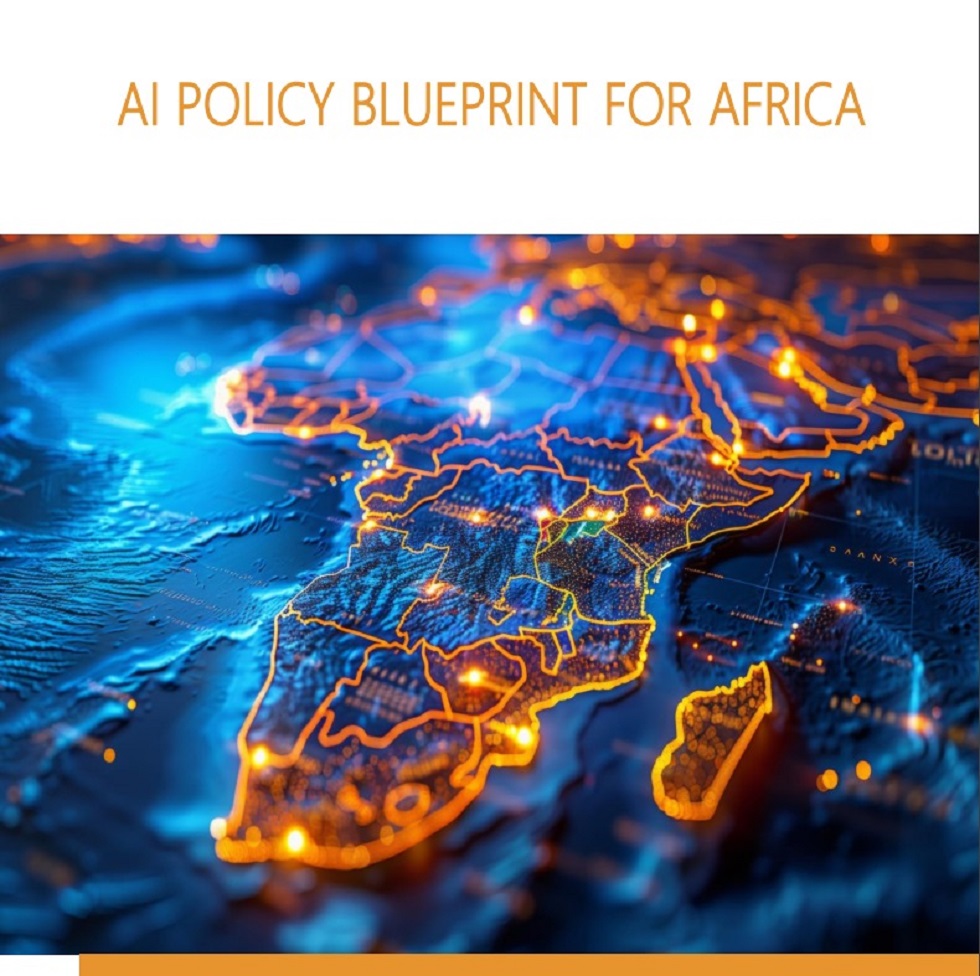
Strong government policy is crucial for unlocking Africa’s AI potential, and new research confirms this critical link. The Google-commissioned AI Policy Blueprint for Africa report by Nextrade Group, which surveyed over 2,000 African students, businesses, and organizations, reveals a striking connection between policy readiness and AI adoption. The report demonstrates a clear correlation: African countries with established, pro-AI digital policy frameworks also have significantly higher AI adoption rates than their peers with less mature policy frameworks. This is especially timely as governments across the continent are actively working on AI strategies at the national level, with some already having adopted them. This data underscores the vital role governments play in creating an environment where AI can flourish.
To guide this crucial government leadership, the AI Policy Blueprint report provides a practical roadmap. Building upon the foundational recommendations from Google’s AI Sprinters report, this blueprint offers specific policy guidance across four key pillars: infrastructure, skills development, investment in innovation, and responsible AI regulation. For each pillar, the blueprint outlines specific policy actions African nations can take to accelerate AI adoption and maximize its benefits for their citizens. The report was designed to help policymakers in the task of translating the exciting vision of the recent AU Continental AI Strategy into practical policies aimed at achieving it.
One of the most important recommendations the report makes is on data readiness. The blueprint emphasizes the importance of ensuring access to high-quality datasets that reflect Africa’s diversity. Governments can achieve this by opening up non-sensitive public data for AI development, promoting data transfer across borders, and encouraging the use of privacy-enhancing technologies (PETs). The blueprint also stresses the importance of harmonized data protection frameworks to ensure privacy and security as AI systems are deployed. Crucially, the blueprint advocates for a “cloud-first” approach in the public sector, where governments prioritize cloud-based solutions for data storage and service delivery.
By migrating to the cloud, governments can effectively manage and process the vast amounts of data required for AI, unlocking its potential to improve public services and address critical challenges. The report, scanning the global horizon for AI policies, mentions Singapore as a prime example, where the government has issued guidelines that allow for greater flexibility in using personal data for AI development while still protecting privacy.
This call for government leadership is echoed by the very people who stand to benefit most from AI. The report reveals a groundswell of excitement among African businesses, especially fast-growing firms, with many seeing AI as “absolutely transformative” for their operations and predicting significant revenue gains—as much as 20% annually. In fact, almost 90% are already applying AI to research, data analysis, marketing content creation, and even coding. Moreover, a majority of Africans believe AI can boost productivity and accelerate national development. These individuals and businesses expressed hope that governments will proactively support this progress by ensuring AI is used safely and responsibly, equipping young people with essential AI skills, and helping small businesses leverage this powerful technology.
Governments must also lead by example, actively adopting AI within their own operations to demonstrate its value and build public trust. The report found overwhelming support for this approach, with over 80% of respondents agreeing that governments should invest in AI to improve public service delivery. Adoption of AI by governments not only improves government efficiency but also inspires confidence in AI across all sectors, encouraging wider adoption.
At Google, we are committed to being a steadfast partner for African governments, businesses, and individuals on their journey to capture the vast opportunities presented by AI. We believe in the power of technology to drive progress and improve lives, and we are dedicated to supporting Africa’s digital transformation. Our recent announcements, including a $5.8 million commitment to AI skills development and the expansion of speech technology to include 15 more African languages, demonstrate our ongoing investment in the continent’s future. We are committed to working with African governments as they embrace AI, not just as policymakers but as active users, demonstrating its transformative potential to their citizens and the world. We are confident that by working together, we can unlock Africa’s immense potential and build a future where AI empowers everyone.



Canal+ is to cut jobs at MultiChoice as part of a sweeping restructuring plan aimed at stabilising the African pay-TV operator, following years of operational and financial pressure.

The move comes alongside a planned $115 million capital injection, underscoring the urgency of efforts to revive the business after the French media group took control.
The planned layoffs are expected to form a core element of a broader cost-cutting and efficiency drive, as Canal+ seeks to streamline MultiChoice’s operations and improve profitability.
The restructuring signals a shift toward leaner operations, with a focus on eliminating redundancies and optimising the company’s cost base.
MultiChoice has struggled in recent years with declining subscriber numbers across key African markets, weighed down by macroeconomic pressures, currency volatility, and changing consumer behaviour.
The rise of global streaming platforms has intensified competition, chipping away at the company’s traditional pay-TV dominance.
Canal+’s intervention marks a pivotal moment for MultiChoice, reflecting a more aggressive approach to repositioning the business.
By combining fresh capital with structural reforms, the new owners are aiming to both stabilise short-term performance and lay the groundwork for longer-term growth.
The $115 million injection is expected to provide immediate financial relief, supporting operations and potential strategic initiatives.
However, the accompanying job cuts highlight the depth of the challenges facing the company and the scale of transformation required to restore competitiveness.

Nigeria has ranked first globally in the ownership of the two largest stablecoins, Tether (USDT) and USD Coin (USDC), reflecting the country’s growing reliance on dollar-linked digital assets.

USDT, USDC
Stablecoins such as USDT and USDC are designed to maintain a fixed value against the U.S. dollar, allowing users to store money digitally while avoiding the price volatility associated with cryptocurrencies like Bitcoin.
According to the 2026 Stablecoin Utility Report released by BVNK, about 59 percent of Nigerian crypto users hold USDT, while 48 percent own USDC, giving the country the highest combined ownership rate among all nations surveyed.
The report placed Nigeria ahead of several major economies, including Australia and India, highlighting the country’s strong adoption of dollar-denominated digital assets. Australia ranked second with 34 percent USDT ownership and 29 percent USDC, while India placed third with 30 percent USDT and 27 percent USDC holdings.
The study also examined adoption levels across other regions. Countries such as Colombia and Singapore showed strong usage of both stablecoins, while adoption levels were also notable in South Africa and the United States.
Other markets included in the analysis were Philippines, Thailand and Argentina, where stablecoin ownership has also increased significantly. Among European economies, the report said France and Germany showed moderate levels of adoption, while Latin American markets such as Mexico and Brazil recorded smaller but growing usage rates.
The United Kingdom also appeared in the ranking with modest levels of stablecoin ownership. The report noted that USDT ownership exceeds USDC in many countries, including Nigeria, Australia, India, Singapore, the Philippines, Thailand, Argentina and France.
However, USDC is often viewed as a more compliance-focused stablecoin because of its stronger transparency and regulatory alignment. In some markets, including South Africa, Colombia, Germany and Brazil, the report found that USDC adoption slightly exceeds USDT.
More broadly, the data suggests that stablecoin adoption is being driven largely by emerging economies rather than advanced financial markets. According to the report, countries such as Nigeria, Argentina and the Philippines are among the biggest users of stablecoins, where people increasingly rely on dollar-pegged digital assets to protect savings from currency volatility and facilitate cross-border payments.

Spotify has unveiled Nigeria-specific data from its annual Loud & Clear report, highlighting how Nigerian artists generated more than ₦60 billion in revenue from the platform alone last year, amid explosive growth in streams, local consumption, and global discovery.

The report, which analyzes millions of data points to illuminate music streaming economics, shows Nigerian artists’ revenue surged over 140% in the past two years.
This boom stems from rising global appeal and stronger domestic engagement, with 30.3 billion streams and 1.6 billion listening hours on Spotify in 2025. First-time discoveries of Nigerian music hit 1.3 billion, up 26% from 2024.
Locally, Nigerian tracks dominated Spotify Nigeria’s Daily Top 50, accounting for over 80% of features, while consumption of homegrown artists jumped 170% year-on-year.
“Nigeria’s music scene thrives on creativity, innovation, and global influence,” said Jocelyne Muhutu-Remy, Spotify’s Managing Director for Africa. “Loud & Clear spotlights how artists are forging sustainable careers and deepening local ties.”
Key highlights include:
55% year-on-year growth in local streams for Nigerian female artists.
75% surge in streams for independent Nigerian artists.
Independents and indie labels earning 58% of all royalties from Nigerian artists on Spotify.
Spotify’s editorial playlists featured nearly 2,000 Nigerian artists in 2025, boosting visibility. Nigerian music appeared in 320 million global user playlists and over 12 million in Nigeria, totaling more than 60 million playlists worldwide.
The report also notes evolving tastes, with top-growing genres in Nigeria over five years including pop urbaine, alternative pop, anime, emo, and drill.
For full details, visit spotify.com/loudandclear.

Mobile Money Transactions Accounted for $2 trillion in 2025

MoneyMaster Enhances App, Rewards Users with Data and Airtime Bonuses

Nigeria, Finland Sign Cybersecurity Pact

Firm Shares Tips for Updating Your Digital Habits for an AI-driven World

EU Pumps €290m into Nigeria’s Digital, Health, Agri Sectors

Kaspersky Discovers New Phishing Campaign Exploiting Google Tasks Notifications to Steal Corporate Credentials

esentry 2025 Report Shows Healthcare, Financial Services and Telecoms as Staging Grounds for Increased Cyberattacks in Africa

AfDB, UNDP Launch $10Bn AI Initiative for Africa

MultiChoice Suspends Yearly DStv Price Hike as Canal+ Pushes Growth

MTN Nigeria Posts Record N1.70 Trillion Pre‑Tax Profit, Declares N20 Dividend for 2025




 E-Financial2 days ago
DLM SPV PLC Lists ₦9.00bn AAA-Rated Medium-Term Notes on FMDQ Exchange, Sets Benchmark in Corporate Bond Market

 News2 days ago
Metaverse Collapses, Horizon Worlds Shuts Down on Quest

 Telecom2 days ago
Legend Internet, Spectranet in Merger Talks

 News2 days ago
NITDA Reaffirms Commitment to Advancing Creative Economy with Digital Initiatives

 E-Financial2 days ago
SEC Issues Six-Week Ultimatum to Market Operators to Submit Recapitalisation Plan

 News2 days ago
Nigeria Spends $470m on AI-powered Surveillance Devices- Report
 E-Business2 days ago
Qualified Cybersecurity Staff Shortage Among Key Obstacles in Curbing Supply Chain Risks

 News2 days ago
FG Plans New HIV Prevention Injection in 8 States, FCT