

News
Abdulhameed: Global Recognition for Passionate Agribusiness Technocrat


By Cletus Adole
“A leader is one who knows the way, goes the way, and shows the way”. —John Maxwell
The recent announcement that Mr Aliyu Abdulhameed, MD/CEO of the Nigerian Incentive-Based Risk Sharing System for Agricultural Lending (NIRSAL PLC), is a winner of the prestigious Global Award of the CEO Today Magazine for 2021 will not surprise anyone familiar with the contributions which the man and the organization he leads are have made to the transformation of Nigerian agriculture and agribusiness over the past five years.

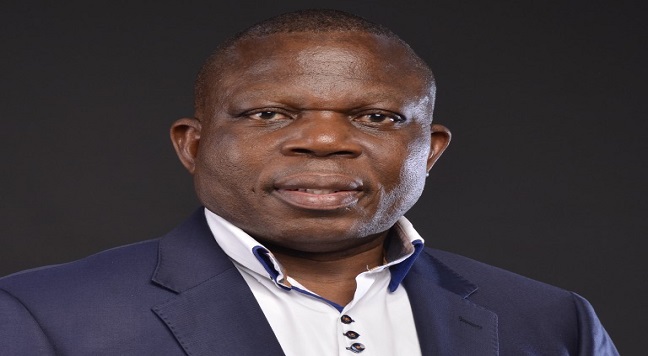
Mr Aliyu Abdulhameed, MD/CEO, NIRSAL PLC
As a result of the dynamic and innovative leadership of NIRSAL PLC under Abdulhameed’s watch, the young institution which was barely a blip on the radar five years ago has become a robust and respected presence with solid and measurable accomplishments making real impact at various levels of the agro-economy.
According to CEO Today, Abdulhameed, a highly experienced agricultural economist with over 30 years hands-on experience in agricultural value chains and markets in sub-Sahara Africa is deserving of recognition on account of the innovations and accomplishments that NIRSAL PLC has notched up under his leadership.
The evidence of the impact he is making is unimpeachable, starting from NIRSAL PLC’s core mandate of making agriculture more attractive to banks and encouraging more investment in the sector.
Among NIRSAL’s achievements under Abdulhameed’s watch is the facilitation of over $550 million to various actors across Agricultural Value Chains for mechanization activities, input distribution, and the production, processing, trading and marketing of agricultural commodities.
Related to this, commercial banks have pledged to provide an additional $500 million to fund agriculture in the short to medium-term based on their faith in NIRSAL PLC’s Credit Risk Guarantee (CRG) and structured Agro Geo-Cooperatives®.
It is an indication that financiers are growing more and more confident in lending to agriculture. This claim is supported by the remarkable growth in the rate of bank lending to agriculture, from 1.4% pre-NIRSAL to 4.8 per cent as of Q3 2020.
The CEO Today Magazine Award has been won by a select group of outstanding achievers on different continents over the years. It recognizes “strong and innovative leadership among the most inspiring CEOs and business leaders” across the world.
The highly regarded platform honours the most-respected companies and their C-Level executives who lead the way for others on a global stage.
According to the magazine, the 2021 awards are special because the CEOs selected, delivered despite the Coronavirus pandemic.
The 2021 award winners come from the academia, tech, e-commerce, public administration and more from several countries including the UAE, Germany, USA, Sweden, Bulgaria and China. The include:
Dr Abdullatif Al Shamsi, President and CEO of the Higher Colleges of Technology, the largest higher institution in the United Arab Emirates with 23,000 students across 16 campuses;
Michael Lampel, CEO and Founder of Qooper Media, an accomplished investor and business development expert based in south west Germany;
Philip Weiser, CEO of AnyDesk, an innovative remote solutions company in Germany which has witnessed impressive growth while disrupting the remote software solutions industry since the pandemic
As those who know him can attest, Abdulhameed is the kind of leader who is comfortable at all points of the leadership spectrum.
He is both a visionary passionate both about the big issues at the critical junction of agriculture and agribusiness as well as a hands-on technocrat who likes to immerse himself in the nitty-gritty details of small scale farming.
This passion shines through whether he is on the podium at a conference, marshaling his troops in the office to reach targets or on a field trip to inspect an agricultural project supported by NIRSAL PLC.
Always bustling with energy and big ideas, he is always focused on one priority whether he is discussing the latest technologies and techniques in global agriculture or the best methods to organize the millions of poor farmers for higher productivity: better results.
The award for innovative leadership is therefore well deserved because, at NIRSAL PLC, Abdulhameed is showcasing skills and experience spanning across a wide range of areas including, agricultural value chain development, agricultural value chain finance, research and innovation, extension services, agribusiness development, product marketing, strategy, project management as well as agricultural policy analysis and advocacy.
The passionate agribusiness manager and thought leader is fond of saying that NIRSAL PLC has “innovation in its DNA”. This is clear from the raft of innovations he is leading in the organization such as the creation of NIRSAL Agro Geo-Cooperative® (AGC) scheme, an ambitious, paradigmatic plan targeted at revolutionizing agricultural production and productivity in the country.
The scheme is structuring farmers and aggregating their farmlands into contiguous stretches of 250 hectares each and link them with training, inputs, mechanization, financing and produce buyers.
AGC will build on the increasing benefits of NIRSAL initiatives that are making a real difference in creating opportunities for farmers. So far, through NIRSAL’s facilitation, more than 370,000 direct jobs have been created and an estimated 1.8 million indirect jobs in the pre-upstream, upstream, midstream and downstream segments of the agricultural value chain, specifically in the areas of mechanization, input supply, primary production and processing.
Other innovations being progressed under Abdulhameed’s watch include the creation and mapping of Agricultural Commodity Ecological Areas (ACEAs); the development of the Mapping to Markets (M2M) strategy; the development of innovative index-based agricultural insurance products; the introduction of comprehensive field monitoring by remote sensing satellite systems and granular validation by UAS platforms; and the development of the Secured Agricultural Commodity Transport & Storage Corridor (SATS-C) model to address logistical inefficiencies in the agricultural value chain in Nigeria.
This is not the first significant recognition of NIRSAL under Abdulhameed’s leadership. The institution also won the Outstanding Development Finance Institution Award of the Annual BusinessDay Banks’ And Other Financial institutions (BAFI) Awards back to back in 2018 and 2019. BAFI recognizes and celebrates outstanding performance in Nigeria’s financial services industry including those that have brought revolutionary benefits to the sector.
The CEO Today award confirms the potent blend of quality and passion that defines this remarkable man and leader.
Perhaps more important, it is a credit to the unique institution he leads and the great difference that he, along with his hardworking team are making in the executive suites of the financial sector and fields of Nigeria’s agriculture and agribusiness.
*Cletus Adole is a policy analyst based in Abuja.



Artificial intelligence (AI) will this year become a central pillar of leadership strategy, shaping how organisations plan to grow, compete and reinvent their operating models.

However, the gap between ambition and execution will remain one of the defining challenges of 2026.
This is one of the key findings of Accenture’s latest Pulse of Change report, which shows that global executives’ intent around AI is strong and accelerating.
The study is grounded in a global survey of 8 000 executives and employees, and is designed to measure AI adoption, strategy and workforce impact across industries and regions.
According to the report, across industries, leaders are no longer asking whether AI should be adopted. Instead, they are focused on how AI can be scaled to deliver measurable enterprise value, transform decision-making and unlock new revenue streams.
A total of 86% of surveyed C-suite executives plan to increase their AI investments in 2026, signalling that AI has moved from experimentation to a board-level growth priority, it notes.
Shifting AI priorities
One of the most notable changes highlighted in the report is how executives now view the purpose of AI.
“While early adoption focused heavily on automation and cost reduction, company leaders are increasingly positioning AI as a driver of growth,” it states.
“Nearly eight in 10 surveyed executives believe AI will contribute more to revenue generation than cost savings in the year ahead, reflecting a strategic pivot toward AI-enabled products, services and customer experiences.”
According to the study, daily AI usage among senior leaders has risen sharply, with 38% of surveyed executives now using AI tools every day, compared to 8% at the start of 2024. This signals that AI is no longer delegated solely to technology teams; it is becoming embedded in executive workflows, strategic planning and decision-making processes.
While leadership engagement with AI is deepening, the report suggests that enthusiasm at the top does not automatically translate into impact across the organisation.
Scaling AI remains elusive
Despite growing investment and executive confidence, only 32% of respondents report achieving sustained, enterprise-wide impact from AI. Most companies remain stuck in isolated use cases or pilot programmes that fail to scale meaningfully across business units, the report notes.
“Executives largely believe they have articulated a clear vision for AI-driven change, but employee perceptions tell a different story. Just 18% of workers strongly agree that leadership has communicated a compelling AI vision, and only one in five say they understand how AI will affect their role in the future.
“This disconnect suggests that while executives are planning ambitious AI transformations, those plans are not always translating into clarity or confidence on the ground.”
The result is a growing execution gap: leaders are moving faster in strategy than organisations are moving in practice.
Human-AI collaboration
Despite these challenges, the report reveals a strong foundation for progress. Employees largely recognise the benefits of AI, with 79% stating that AI has positively influenced their ability to learn new skills.
Many also associate AI with increased innovation and problem-solving capacity, indicating that resistance is less about fear of technology and more about lack of involvement in change design.
“However, comfort with advanced AI capabilities remains limited. Only 27% of surveyed employees say they are comfortable delegating tasks to AI agents, and regular AI usage among workers has declined slightly compared to previous months. This points to the need for executives to focus not just on deployment, but on trust, enablement and shared ownership of AI systems.”
For executives planning to scale AI in 2026, the message is clear: value will come from treating AI as a workforce transformation initiative, not just a technology investment, the report asserts.
“In the year ahead, AI success will be defined less by how much organisations spend and more by how effectively executives align people, processes and technology. Those who bridge the gap between executive intent and employee experience will be best positioned to turn AI from a strategic promise into a sustained competitive advantage.”
New Horizons Nigeria has launched a N50 million initiative aimed at transforming 21 Almajiri children into skilled computer technicians within 90 days, to tackle youth unemployment and harness human potential.

The Almajiri-to-Tech programme, officially launched in Abuja on Monday, provides participants with full training, meals, clothing, tools, and logistics support, all fully funded.
Speaking at the launch, the Chief Executive Officer of New Horizons, Tim Akano, said the programme represents a new journey in the history of Nigeria by restoring the original purpose of the Almajiri system, which he described as “children sent out to seek knowledge.”
“The word Almajiri comes from an Arabic term meaning emigrant and seeker of knowledge. Historically, children were sent to learn morals, responsibility, and skills to add value to society,” Akano said.
He added that the disruption of this system during colonial times forced many children onto the streets, a challenge that persists today.
Akano highlighted the urgency of addressing the Almajiri issue, noting that there are an estimated 15 million Almajiris in the country, with a population growth rate of around three per cent annually.
“If we do not solve this problem as a country, we are sitting on a time bomb,” he warned.
According to him, the programme focuses on hands-on technical skills rather than theory. Trainees will learn to repair mobile phones, laptops, televisions, radios, standing fans, and other electronic devices, as well as build inverter batteries using recycled electronic waste.
“We are not teaching theory. We are teaching practical skills you can use to earn a living,” Akano said, stressing that the programme will not interfere with the participants’ Quranic education.
“We are still going to allow you, within the period of learning. Your learning computer here is not stopping your Quranic education.
“You still have time within our space here. Whenever you want to go and pray, you can pray, then come back to class,” the CEO stressed.
He added that participants will also receive daily meals, water, T-shirts identifying them as technicians-in-training, and access to all necessary tools and equipment throughout the 90-day programme.
Akano said the initiative is part of a larger mission by New Horizons Nigeria, which has spent the past 21 years training about 100,000 Nigerians annually in IT and related skills.
He said the new programme aims to “take human genius off the streets and convert it into human capital, enabling these youths to contribute meaningfully to the economy.”
He added that equipping Almajiris with skills could add 15 million people to Nigeria’s workforce and potentially increase the country’s GDP by as much as $20 billion, stressing that productivity depends on practical skills and opportunity.
“Everything that can be taught can be learned. If someone can memorize the Quran cover to cover, there is nothing that cannot be done. What they lack is information, opportunity, and infrastructure, and we are providing all of that,” Akano said.
Akano also stressed that the initiative is designed to inspire other organizations and government agencies to replicate similar programmes across the country.
“This is not just about 21 children; it is about showing Nigeria what is possible when resources meet intention and planning.
“If we succeed in empowering these Almajiris, we demonstrate that the country can turn social challenges into economic opportunities. It’s a blueprint for Nigeria’s future,” he said, noting that the initiative combines social reform, technical education, and economic empowerment.
Also speaking, one of the trainees, Fatima Umar, appreciated the organisers and promised to maximise the opportunity.
“We’ll make you proud of us. We have nothing to say here but to thank and appreciate you. May Almighty Allah continue to guide and protect you,” Umar said.


International Monetary Fund has upgraded Nigeria’s 2026 economic growth projection to 4.4 per cent, reflecting improved macroeconomic stability and sustained reforms.

IMF
The January 2026 World Economic Outlook Update forecasts Nigeria’s growth trajectory at 4.1 per cent in 2024, 4.2 per cent in 2025, and 4.4 per cent in 2026—a 0.2 percentage point increase from the October 2025 estimate.
This aligns with sub-Saharan Africa’s projected 4.6 per cent expansion in 2026 and 2027, driven by regional stabilisation efforts.
Globally, the IMF anticipates 3.3 per cent growth amid resilient conditions tempered by trade policy shifts and technology investments. For Nigeria, declining energy prices—expected to fall seven per cent due to weak demand—pose risks, though OPEC+ coordination and China’s stockpiling provide support.
Despite the optimism, downside risks persist from Middle East and Ukraine tensions, protectionism, high debt, and fiscal deficits. The Fund recommends rebuilding fiscal buffers, ensuring central bank independence, and limiting temporary fiscal measures to maintain stability.
Nigeria’s success hinges on consistent reforms and resilience against domestic and global shocks, the IMF concluded.

DG NCC Tasks University Dons on Research Commercialization, IP Management to Build Global Competitive Ecosystems

FG Expands 3MTT Programme Across the Country

Banks to Cut Fraud Response Times to Under 30 Minutes

Firms Face Gaps Between AI Ambition and Execution

Firm Detected a Scam Exploiting OpenAI’s Teamwork Features

Banks quietly move to enforce new ₦50 transfer levy from Jan. 1

FIRS says NIN, CAC Numbers to Serve as Tax IDs from 2026

FIRS Declares NIN, CAC Numbers as Tax IDs from 2026

Jumia CEO says Black Friday Signals Nigeria’s E-Commerce Maturity

Galaxy Backbone Celebrates the Federal Government’s Paperless Civil Service Milestone




 General News2 days ago
Cybersecurity Firm Detects a Wave of Crypto Phishing Following BlockFi Bankruptcy

 News2 days ago
IMF Upgrades Nigeria’s 2026 Growth Projection to 4.4%

 Telecom2 days ago
NCC Unveils Spectrum Roadmap to Power Nigeria’s $1tr Digital Economy
- Telecom2 days ago
NCC Gives Amazon’s Kuiper, BeetleSat Nod to Provide Satellite Broadband Services in Nigeria

 General News2 days ago
FG Rejects Northern Elders’ Gold Refinery Siting Claim

 News2 days ago
New Horizons Invests N50m to Empower Almajiris with Skills

 E-Financial2 days ago
KongaPay K-Save Users Save over N3.2Bn

 News2 days ago
Nigeria’s Crude Output Falls to 1.486mbpd in November – OPEC