

News
FG Approves First National Policy on Cosmetic Safety, Health


Cosmetic products are widely used in Nigeria, but many consumers remain unaware of the chemicals they may contain.

Federal government has therefore approved the first national policy on cosmetics safety and health after nearly two decades of stalled attempts.
The policy was launched at the Sixty sixth National Council on Health in Calabar.
It establishes a clear system to regulate how cosmetic products are manufactured, imported, sold, used and disposed of.
The new policy supports major government priorities.

It aligns with the National Strategic Health Development Plan II, the National Chemical Safety Policy and the National Environmental Health Action Plan.
It also advances the Nigeria Health Sector Renewal Investment Initiative and strengthens the country’s commitments under the International Health Regulations and the Minamata
Convention on Mercury.
By improving regulation and surveillance, the policy strengthens health security, protects consumers and supports economic diversification.
It also responds to state level priorities, since implementation will take place across all thirty six states and the Federal Capital Territory.
Everyday products, real health risks
Cosmetics are part of daily life for millions of Nigerians, but many people do not know what is inside the products they use.
Amina Yusuf, a shop attendant in Tarauni local government area, Kano State, said she developed skin irritation after using a product sold as a “natural toning oil”.
“I thought it was safe because it was called organic,” Yusuf said. “But my skin became sensitive, and small cuts took longer to heal.”
A health worker later explained that the product likely contained harmful chemicals.
In Kura local government area, community members described how some traders repackage creams without labels. One resident said a neighbour developed rashes after using a mixture bought at a weekly market.
“People buy what they can afford,” she said.
“Most of us do not have access to formally regulated shops.”
In Sabon Gari market, Kano State, an expectant mother, Gloria Okafor, learned during an antenatal visit that a cream she used for stretch marks might contain heavy metals.
“I was careful with food and medicine during pregnancy,” Okafor said. “I never imagined body cream could be a risk.”
These experiences reflect wider challenges: limited consumer awareness, informal distribution systems and economic pressures that make unregulated products common.
The scale of the problem
Recent national and global assessments highlight both the scale and the safety concerns within Nigeria’s cosmetics sector.
Nigeria’s cosmetics industry has grown into a dynamic and increasingly sophisticated sector, with a market valuation exceeding US$ 7.8 billion¹.
Globally, the cosmetics market is valued at over US$ 429.2 billion², presenting both economic opportunity and regulatory challenges, particularly in low and middle income countries (LMICs) such as Nigeria.
Since 2022, Nigeria has registered close to 9 000 cosmetic products that meet national regulatory requirements under the oversight of the National Agency for Food and Drug Administration and Control³, reflecting strengthened compliance efforts.
However, toxicological evidence remains concerning. Globally, over 100 known carcinogens and at least 15 endocrine disrupting chemicals have been identified in cosmetic formulations². In Nigeria, a study conducted in Anambra State found lead contamination in 62% of tested cosmetic products, with concentrations ranging from 0.10 to 42.12 mg/kg⁴ (exceeding the World Health Organization permissible limit of 10 mg/kg). Additional investigations in Ibadan and Lagos confirmed cadmium, lead and nickel levels above international safety limits in personal care products⁵⁻⁶.
These findings underscore the urgent need for strengthened surveillance, consumer awareness and enforcement to protect public health.
Why regulation matters
Studies in Nigeria have found high levels of lead, cadmium and other harmful substances in some cosmetic products.
These chemicals can cause kidney problems, skin damage and complications during pregnancy.
Market surveillance efforts in Kurmi market, Kano Municipal local government area, reveal widespread mislabelling and repackaging practices.
According to Audu Tanimu, National Agency for Food and Drug Administration and Control officer, “Some products are intentionally labelled to avoid suspicion, but laboratory testing shows restricted substances. Enforcement efforts are ongoing, yet informal supply chains continue to complicate traceability.”
Turn the vision to reality
After years of Nigeria’s vision to develop a cosmetic policy, World Health Organization (WHO) worked with the Federal Ministry of Health and Social Welfare, the National Agency for Food and Drug Administration and Control, the Nigeria Economic Summit Group, state governments, Resolve to Save Lives (RTSL), civil society and industry groups in 2025 to turn this into reality.
It provided technical guidance, reviewed evidence, supported meetings with partners and helped strengthen surveillance and reporting systems.
This support built on years of collaboration to improve chemical safety and International Health Regulations core capacities.
This work was supported by funding from the Foreign, Commonwealth and Development Office (FCDO) and RTSL.
What will change
The new policy introduces three main areas of action:
- Regulatory oversight and governance — A unified national system will ensure all cosmetic products meet safety and quality standards and improve coordination across agencies.
- Cosmetics vigilance and health intelligence — A national early warning system will help detect harmful products faster and support quicker public health responses.
- Strengthening the cosmetics value chain — The policy supports safer manufacturing and responsible trade. It also aligns with African Continental Free Trade Area opportunities, helping local industries grow while protecting workers and consumers.
These changes are expected to reduce exposure to harmful chemicals, lower the number of cosmetic related health complications and improve consumer confidence.
A collective effort
Implementation will begin across all states and the Federal Capital Territory.
The Federal Ministry of Health and Social Welfare, the National Agency for Food and Drug Administration and Control, the Nigeria Economic Summit Group, state governments, civil society and private sector actors will lead the rollout. WHO and Resolve to Save Lives will continue supporting government efforts to strengthen surveillance, raise awareness and promote safer markets.
This milestone reflects the combined efforts of government, regulators, communities and partners working toward a shared goal: protecting Nigerians from harmful exposures and strengthening national health security.
A call to action
- Political and financial commitment from government counterparts at all levels to prioritise implementation of the policy.
- Consumers should choose labelled and registered cosmetic products to safeguard their health.
- Industry actors should follow national safety standards.
- Health workers play a critical role in identifying cosmetic related health effects early and responding appropriately.
- Everyone should help raise awareness about the health effects of cosmetics and protect communities from preventable harm.


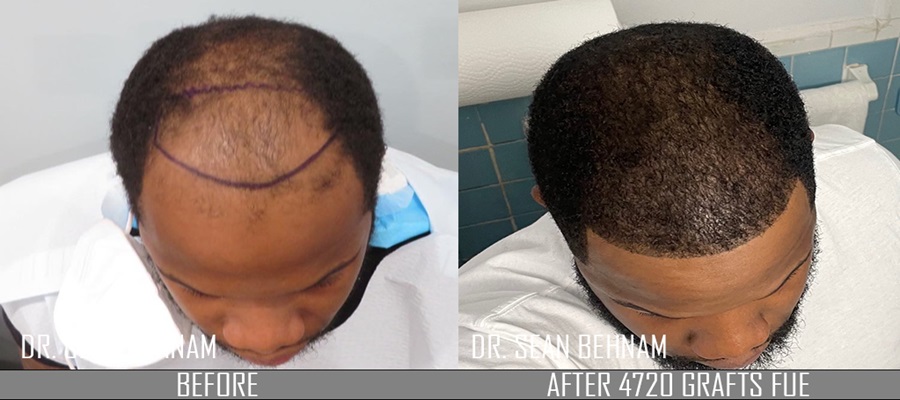
Atte Ayodeji, a Nigerian computer scientist,has developed an artificial intelligence algorithm capable of detecting, counting, grouping and generating healthy hair follicles during hair transplant procedures, an innovation that earned him the Best Innovative Technology award.

Atte Ayodeji
Ayodeji also graduated with a Distinction in his Master of Science (MSc) in Computer Science from Birmingham City University on Friday, adding another milestone to an impressive academic year.
Beyond his award-winning hair transplant innovation, the Nigerian researcher developed a system and framework on Explainable Artificial Intelligence (XAI) as a professional responsibility in the diagnosis of lung cancer.
His dissertation received a silver award at the PGXPO2026 Winter, further highlighting the impact of his research in applying artificial intelligence to healthcare.
Sunday Dare, special adviser on Media and Public Communication to President Tinubu, celebrated Ayodeji’s achievements in a post on X, recalling how he first met him in 2019 during his National Youth Service.
“In 2019 when I became a Minister of the Republic, I met a young man of medium height, genteel with penetrating eyes: Atte Ayodeji. His words rarely come out and he could easily be passed by unnoticed. But I noticed him especially when my SA Kemi Areola brought him to me asking my approval for him to do his Youth Service in my office. I approved. From then on he was unstoppable. His brilliance shown and he developed skills beyond his frame.”
Highlighting Ayodeji’s recent accomplishments, Dare congratulated him saying, “Congratulations Atte. I am proud of you!”

Mr. Joseph Tegbe, minister of Power, has said that the federal government plans to end power sector subsidies from 2027 and that there are no immediate plans for tariff increases.

Mr. Joseph Tegbe, minister of Power
The minister told journalists during the media interactive session at the weekend that the government has announced plans to phase out electricity subsidy payments from 2027 as part of efforts to address mounting liabilities in the power sector.
He explained that the planned removal forms part of the broader reforms aimed at ensuring the long-term sustainability of the electricity sector, while tackling the financial challenges confronting the industry.
According to the minister, despite the planned subsidy withdrawal, there are no immediate plans to increase electricity tariffs, reassuring consumers that the government is not considering a tariff hike in the short term.

Patience Okala, the National Coordinator and Chief Executive Officer of the Nigeria AfCFTA Coordination Office has urged African countries to stop exporting raw materials and instead focus on adding value to its natural resources if it is to fully harness the opportunities offered by the African Continental Free Trade Area.

She stated this on Thursday at the Streamsowers & Köhn 20th Anniversary Business Forum, where she stressed that value addition and beneficiation are essential to Africa’s industrialisation and long-term economic growth.
According to a statement issued on Friday by the Nigeria AfCFTA Coordination Office, she said the AfCFTA goes beyond the elimination of tariffs, serving as a framework for industrialisation, value addition, and job creation across the continent.
“AfCFTA is not only about tariffs; it is also about value addition. Africa has to stop exporting raw materials. We need to add value and ensure that beneficiation is done on the continent,” she said.
Okala also said Africa’s economic transformation would depend on the effective implementation of the AfCFTA rather than on the signing of trade agreements alone.
“We have moved beyond negotiations. The success of AfCFTA will be measured by the extent to which businesses can access new markets, trade seamlessly across borders, and benefit from the opportunities created by the agreement,” she said.
She noted that Nigeria had intensified efforts to implement the agreement under the leadership of the Minister of Industry, Trade and Investment, Dr Jumoke Oduwole, including the development of simplified AfCFTA guides in six languages to help businesses understand and take advantage of opportunities under the trade pact.
Okala called for stronger collaboration among governments, regulators, and the private sector to eliminate barriers to trade and investment and build a truly integrated African market.
“As we move from policy to implementation, our collective responsibility is to ensure that the opportunities created by AfCFTA become practical realities for businesses, particularly MSMEs, women-owned enterprises, and young entrepreneurs across the continent,” she said.

SERAP Asks Tinubu to Probe Alleged N6.79Bn Missing Police Funds, Firearms

FCT Court Awards Ex-Customers N15m against Stanbic IBTC over Data Privacy Breach

CBN Exposes over 13,000 BVNs Tied to Fraud as Banks Tighten Security

Atte, Nigerian Develops AI Algorithm for Hair Transplants

Dare Tackles Onaiyekan over Criticism of Tinubu, Says Economic is Working

NRC, Ponzi Scheme Collapses Resulting Loss of Billions of Naira

EFCC Busts NIS Visa Overstay Racket, Uncovers N700m in an Account

From Scarcity to Scale: What Africa Can Learn from India’s Agricultural Transformation

BON Establishes Six Ad Hoc Committees to Modernize Broadcasting

Tokenization, Blockchain Technology will Transform Financial Institutions – IMF




 Broadcasting2 days ago
Davido Shares Past Suicidal Thoughts, Drops Oriadé Album

 E-Business2 days ago
How Temu Helped a Madagascan Vanilla Family Business Sell Direct to Consumers Across Europe

 General News2 days ago
MTN Nigeria Posts N707.5bn H1 Profit, Declares N26 Interim Dividend

 News2 days ago
Cisco Explores AI for Nigeria Farmers

 General News2 days ago
Gavi Okays $500m for Vaccines, PHCs in Nigeria

 News2 days ago
AfCFTA Urges Africa to Stop Exporting Raw Materials

 E-Business2 days ago
82% of Organizations Concerned about AI Risks Even as Adoption Accelerates – Survey Reveals

 General News2 days ago
Police Uncover Fake Diplomatic Number Plate Syndicate in Abuja