

General News
Access to Finance Requisite for Economic Growth – EFInA

Enhancing Financial Innovation and Access (EFInA) in its finding has submitted that given significant financial sector reforms and private sector innovations, access to finance is poised for growth in Nigeria.
The report provides a diagnostic of access to finance and identifies key issues for microfinance, branchless banking and SME finance.
Microfinance
The Microfinance Policy, Regulatory and Supervisory Framework for Nigeria developed by the CBN in 2005 initiated an important turning point in the industry with the creation of the Microfinance Bank (MFB) as an institutional vehicle for privately owned, deposit-taking microfinance institutions (MFIs). Prior to this, a few notable Non Governmental Organisations (NGOs) were established that have grown to provide microfinance in a sustainable manner according to international standards of good practice. However, until recently the majority of institutions have been smaller NGOs, community banks, cooperatives, and non-bank financial institutions with uneven management capacity, low outreach to clients, and challenges to becoming profitable.
The framework is designed to unite the best of the NGO credit organizations, the privately owned community banks and the new MFI initiatives under a common legal, regulatory and supervisory regime. The microfinance framework catalyzed two driving forces in the microfinance industry at an extraordinary pace and scale. First is the immediate investment of capital by large number of Nigerian and international investors in newly created MFBs. The second force is the new regulation and supervision framework for this emerging industry. The rate of growth in the microfinance industry, measured by number of institutions, capitalization, or portfolio growth, is among the fastest of any microfinance industry globally at similar early stages of development.
As part of the microfinance policy framework, the CBN in collaboration with the bankers Committee created the Micro Credit Fund (MCR) to partner with state governments to channel credit to the micro enterprise sector. The CBN reports that the balance of funds available to the MCF at the end of 2007 was around N20 billion. Specific lending policies for the MCF were not shared with the diagnostic team. In itself, the MCF reflects an emphasis on credit that is pervasive in Nigerian policy discussions around access to finance. If large volumes of wholesale funds are made available to the MFBs, they will have less interest in providing savings services and may become dependent on wholesale borrowing to fund growth.
Branchless Banking
The main payment instruments available in Nigeria include large-value credit transfers, cheques, retail electronic debit and credit transfers, and payment card systems, among others. Electronic purses (a form of stored value cards), internet-based banking along with mobile payment services. Fir the first seven months of 2009, ATM transactions represented nearly 91 percent of the value of all electronic fund transfers in Nigeria. For the first seven months of 2008, point of sale (POS) transactions represented over 4 percent of the value of all electronic fund transfers in Nigeria. The POS penetration rate represents a ratio of less than 50 POS terminals per 1million inhabitants. The CBN is in the process of drafting mobile payment guidelines to promote branchless banking. Discussions with members of the CBN’s Banking Operations Department indicates that there is a well developed understanding of the many legal domains implicated by a comprehensive branchless banking regulatory regime. These domains include the often complicated issues presented by the use of agents, Anti-money laundering/combating financing of terrorism (AML/CFT) and consumer protection. Given that effective branchless banking requires the cooperation of parties outside the control of the CBN, such as telecommunications service providers and consumer protection agencies, it is unclear how effective the mobile payments guidelines will be in practice. In addition, even parties under CBN supervision, such as private switch operators, appear to be resistant to CBN efforts at promoting interoperatability, a primary component of expanding access to finance. However, reports indicate that draft operational rules for interoperatability through a national switch are awaiting CBN approval.
SME Finance
SME finance is constrained by lack of data, regulations and infrastructure for collateral and insufficient credit information. Policy making for the sector is severely constrained by the lack of data that would allow a better understanding of the problems and performance of ongoing initiatives. Regulations require loans to be collateralized and limit the types of acceptable collateral. At the same time the laws relating to security over movables (i.e., equipment) are antiquated, fragmented and do not offer Nigerian businesses an effective means of raising capital. The current credit information system does not address the needs of the SME sector. However, with quick approval of well designed regulations, a competitive and open credit information industry where private credit bureaus working alongside the Credit Risk Management System (CRMS) can quickly begin to cover the population.
With some exceptions, there are no real SME finance products. Banks and other authorities tend to treat SMEs as “small corporates” with no clear understanding of SME profiles. Globally, leasing is a widely-used service for SMEs, although the lack of a leasing law is constraining development of this sector in Nigeria. Finance companies have limited tools for credit risk assessment and lack of information and understanding of value chains that are important in the development of factoring services.
Recommendations
Greater transparency of financial performance and market information and strengthening capacity at all levels.
Moving quickly on promoting financial infrastructure could help Nigeria’s financial sector modernize and significantly expand access to finance through the design of new laws, regulations and guidelines to upgrade the payment system, private credit registries and collateral registries.
Harmonize all AML/CFR regulations to permit clear operation of risk-based approach.
Enhancing consumer protection by facilitating consumer access to credit reports and requiring disclosure of “disputed” status.
The establishment of a consumer protection body dedicated to protecting consumers of all financial services, not just mobile payment services, given the growing diversity and complexity of the market.


The African Continental Free Trade Area (AfCFTA) secretariat signed a Memorandum of Understanding with nonprofit organisation Alliance for a Green Revolution in Africa (AGRA), towards improving agricultural trade in the continent.

On the margins of the 39th African Union Summit over the weekend when the MoU was signed, Wamkele Mene, secretary-general of the African Continental Free Trade Area (AfCFTA) Secretariat, said the three-year ‘Agriculture Trade Action Plan’, was created to ensure better distribution of food products and solve enduring food insecurity for producers, processors and consumers across the continent.
“The continent of Africa in the last few years has been undergoing a food crisis. Africa has the grains but we continue to be a net food importer.” The Secretariat would leverage on the “technical skills,” and “the expertise of AGRA combined with trade tools to enable movement of agric products across the African continent.”
“The main objective is to reduce the cost of food import bill in Africa,” he added.
On its website, AGRA says it is an African-led institution focused on scaling agricultural innovations that help smallholder farmers to increase incomes, live better, and improve food security.
Mene said the Secretariat had spent the last three years working on the plan that is expected to “reduce the cost of food and help to develop agro processing industries. Ministers of trade will adopt it and take it to heads of state for adoption,” he said.
Alice Ruhweza, president of AGRA said the partnership was about “virtual water.”
“When we trade maize, citrus and processed dairy across borders, we’re also trading the water we use to produce them,” she said “And by integrating our markets, water-abundant regions can nourish water-scarce regions,” she said.
AGRA and the AfCFTA said they will commit to protecting food systems from drought and floods, by linking food corridors and food baskets into agro-processing zones that utilise sustainable water management
“We will empower smallholder farmers to ensure the free trade prosperity reaches farmers and youth who farm our land and protect our streams,” they promised, with the end goal being that “ no child goes to bed hungry.” “Let this partnership prove that when Africa trades with itself, it feeds itself,” Ruhweza said.

Nigeria Data Protection Commission (NDPC) has launched an immediate investigation into the data processing activities of popular e-commerce platform Temu, amid allegations of violating key provisions of the Nigeria Data Protection (NDP) Act.

Dr Vincent Olatunji, National Commissioner/CEO of NDPC, personally directed the probe following mounting concerns over Temu’s handling of personal data, including issues of online surveillance, accountability deficits, failure to uphold data minimisation principles, lack of transparency, inadequate duty of care, and questionable cross-border data transfers.
Preliminary inquiries by the commission reveal that Temu, a fast-growing global online marketplace, processes personal information belonging to approximately 12.7 million data subjects within Nigeria alone, while boasting 70 million daily active users worldwide. These figures underscore the platform’s massive reach and the potential scale of any non-compliance with local data laws.
In a stern public advisory, Dr Olatunji warned data processors engaging in activities on behalf of controllers to rigorously verify their partners’ adherence to the NDP Act, stressing that failure to do so could expose them to direct liability under the legislation.
The investigation was formally announced by Babatunde Bamigboye Esq., CDPRP, NDPC’s Head of Legal, Enforcement and Regulations, who emphasised the commission’s commitment to safeguarding Nigerians’ privacy rights in the digital age.
This action fits into NDPC’s broader enforcement drive against data mishandling in Nigeria’s booming tech sector. Just last year, the commission probed over 1,369 firms for similar infractions and launched sector-wide audits targeting fintechs and other high-risk processors. Earlier cases included investigations into the National Identity Management Commission (NIMC) over alleged privacy lapses and Optasia for data rights violations.
Experts view the Temu probe as a signal of heightened regulatory vigilance, particularly for foreign platforms tapping into Nigeria’s vast consumer base without full alignment to local laws. “Cross-border transfers without safeguards pose real risks to data sovereignty,” noted one digital rights advocate, speaking anonymously.
For millions of Nigerian shoppers drawn to Temu’s bargain deals, the development raises urgent questions about the security of their personal details, from payment information to browsing habits. NDPC urged affected users to monitor official channels for updates and report suspicious activities.
As the investigation unfolds, processors across the e-commerce ecosystem are bracing for potential audits, with non-compliant entities facing fines, operational curbs, or forced data localisation under the NDP Act.
NDPC reaffirmed its mandate to enforce compliance, promising swift action to protect citizens in an era of pervasive data-driven commerce.
General News
Leo Stan Ekeh Foundation, Zinox Group To Invest 10B on 1000 University Tech Scholarships for Indigent Nigeria Wiz-kids

By Eunice Omokaro
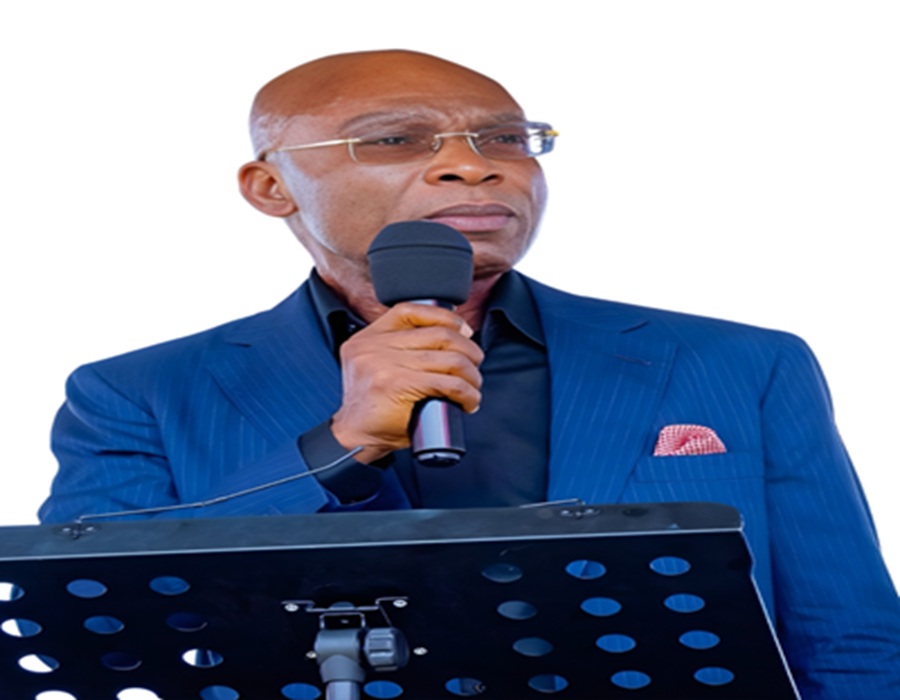
Africa’s foremost tech icon and Chairman of Zinox Group, Leo Stan Ekeh, who turns 70 on February 22, this year, has explained why he is not celebrating his 70th birthday with a mega party, preferring to offer University scholarships to additional 1000 Nigerian indigent wiz-kids to study Computer Science in Federal Universities so that the country’s private and public sectors could have a new generation of tech wiz-kids to support the growth of the economy.

Leo Stan Ekeh
He anticipates that these students who will not be bonded, shall disrupt global wealth equation in favour of Nigeria and defend our tech independence. Selection shall be based on a minimum Intelligent Quotient and age nationwide, and they shall be schooled and exposed beyond tech to become global Tech Citizens.
Speaking on phone, Ekeh said “Each shall have a tech mentor from year one, as I plan a partnership with Computer Society of Nigeria and every vocation they shall be engaged resourcefully. Beneficiaries shall be from poor homes and those with parents who earn below Government Level 10 and its equivalent in the private sector. The first batch starts this September, and I expect each to earn first class degree. This is my Group of companies’ and my little way of appreciating my country, individuals and corporates that gave us the opportunities in the last 40 years and still patronizing our Tech Group – Task Systems, TD Africa, Zinox Technologies, Konga etc. If we are successful with this spiritual mandate, I can then celebrate my 100 years on earth with a bang. With God and AI, I am aiming to make 120 years,” he said.
Ekeh, a largely humble and private person not known for celebrating birthday milestones, explained that rather than throwing a lavish birthday party befitting his newly attained septuagenarian age, he has chosen with his Group’s Management to provide world-class tech human capital to support growth of the nation’s economy.
“We need quality and tech-savvy wiz-kids who can drive the future of government and e-governance and those who will become change-makers in the private sector.
“I have been blessed and bruised in this country and I thank God. Frankly, I don’t see enough Nigerian tech wiz-kids who can defend the massive development anticipated in the next 5 – 10 years in the oil and gas, banking, agriculture, manufacturing, mining, entertainment, etcetera, and public sectors. We are becoming slaves in our own country in a knowledge century which is unfortunate. We are all arrogantly living just for today, forgetting that only four God-anointed tech wiz-kids can alter the GDP of this country in five years. The man who controls your tech resources decides your profit level and how far your country and corporations can grow in this second quarter of the 21st Century and in future,” he said.
Ekeh, who was once decorated by President Olusegun Obasanjo as ‘Icon of Hope’ on Nigerian Independence Day in 2003, for his tech-driven transformative impact on Nigerian economy and the youths, said Nigeria must begin to plan for the disruptions coming.
“The future is here but very fragile and disruptive, it’s either you are something or nothing at all. No middle ground. We need to alter the digital trajectories of our people. Technology is realistically the only profession in the world today that can alter the destiny of brilliant and humble kids from poor families and position them as huge wealth creators and sustainers. Though I am not really from a very poor family, but I am a testimony and shall tell the whole story in my book that shall be published last quarter of 2027. It shall be most revealing.
“This is my additional contribution amongst others to appreciate Nigerians, the Federal Government, sub- nationals and corporations that have been supporting my tech commitments and innovations on this side of the Atlantic,“ the soon-to-be septuagenarian said.
When asked how much it will cost to undertake such gigantic project, he said: “It is a spirit-driven project to thank those who supported and are still supporting companies within the Zinox Group. It has an annual cost that shall run into billions of Naira and my group is committed to it amongst other social responsibility projects like TD Africa Project to produce 10,000 female tech experts out of which 400 have graduated and are fully employed in different corporates in Nigeria. This is a 10-year project with other perks. The full package shall be revealed online on April 22, 2026,” he said.
However, beyond his birthday and the scholarship initiative, Ekeh in the last 40 years has been a worthy role model for philanthropy and a living exemplar of what it means to live for public good. He has been decorated with a lot of local and international awards. His group has trained and retrained over 3000 Nigerians and donated tech centres to over 25 institutions nationwide just to mention a few.
Ekeh was a former mass servant and chorister in his local community Catholic Church at Ubomiri, a sprawling community on the fringes of Owerri, Imo State.
One of his favourite pastimes is to seek out the poor and help them come up the ladder of life. He is an entrepreneur who draws a distinct line between capitalism and welfarism? He believes that capitalism must wear a human face; that profit must not take the place of empathy as no one came with and shall leave this earth with cash.
His philanthropy is not limited by geography. From south to the north, his imprints of charity dot many educational institutions. A couple of years ago, he built a church complete with rectory in his Ubomiri community, the same church where he was once a mass servant.
At the dedication of the church, he recalled in an emotion-laden voice: “My grandfather produced a Reverend Father who was ordained same day with Rev Canon Tansi. My father as a past time was a soloist in this church, and he served God with all his might; I was a mass servant and a member of this choir (pointing to the horde of choristers robed in red outfit). I have never tasted alcohol or smoked since I was born and I don’t know why. It was something that never appealed to me or fascinated me. I believe our good God decided to save me from birth.
“I come from a lineage of people who served God dedicatedly. I think I am a miracle child and was clear who I wanted to be from the day I launched out as a tech entrepreneur. I saw myself as an only Child even though I have siblings and, as an orphan even though my parents were alive and a bit civilized because no person around me even though educated, had tech knowledge to advise me, so I decided to take the pain before pleasure alone.
“I love God and will never hesitate to do anything in the service of God and humanity. I built this church as a mark of God’s special love and mercy towards me. I have the best wife any man would wish to have. She is a super star. She is intelligent, beautiful and unlike some women, she is not expensive and more importantly, we operate on the same tech wavelength. If for any reason I get stuck, she is the one to figure out the solution for me. God blessed me with brilliant and responsible children too. I am grateful to God because He has seen me through the valleys and mountains of life. As a mark of God’s mercy to me, I pay corporate tithes for all my companies. I didn’t read it in the Bible but I do it”, he told the audience.
“God is the architect of my success. As an entrepreneur, I have strategised, stayed up late, made projections but if there was no mercy of God and His grace to help me implement these, there will be no success. God has done me well; even for me to be alive, to come from the family I come from, the village, town, region and country I come from. Most importantly, God has managed me because He gave me a proactive personality, removing all the holes in my life. The temptations are there, you can imagine them. Maybe if I was taking alcohol, I would have been a mental guy. I work an average of 20 hours a day and near zero holidays and I have no health challenges,” he once told some journalists.
For Ekeh, the Forbes Best of Africa Leading Tech Icon, the scholarship for 1,000 Nigerian students remains a tiny drop in the ocean of multitude of philanthropies he has extended to persons and institutions across the continent quietly. Through his Leo Stan Ekeh Foundation (LSEF), his family’s non-profit, and the various companies under the Zinox Group, he has impacted humanity and institutions both in cash and kind, especially human-capital development, upskilling the hitherto unskilled in tech-techniques, institutionalising entrepreneurship in select universities and awarded countless local and overseas scholarships to Nigerians of all tribes and tongues to advance their quest for knowledge.
In the last two years alone, the Foundation launched three entrepreneurship centres at St. Augustine University in Epe, Lagos, Federal University, Birnin Kebbi, Kebbi State, Imo State University (IMSU) etc. The centres had been upskilling young men and women turning them to wealth and job creators, rather than job-seekers. At the IMSU centre, it was a moment of joy for about 200 young Nigerians who were the first set of beneficiaries of a 3-month entrepreneurship boost programme.
They were taught the fundamentals of entrepreneurship by the best coaches and experts drawn from Nigeria, United States and United Kingdom. Not only were they tutored by the best whizzes in diverse fields of human endeavour, they were also kept on a stipend throughout the duration of the programme to augment their weekly commute to the centre. In addition, each trainee was gifted a brand-new Z-pad tablet to aid their learning and upskilling process. Some also received interest free loans to launch their businesses.
What’s unique about Ekeh and his philanthropy is that he does them behind the scene. No cameras flashing. No media buzz. Just humane acts of a man fated for greatness and encased in God’s grace.

LG Nigeria Begins Nationwide Search for Oldest Working TV, Rewards Loyalty with AI QNED Upgrade

AfCFTA, AGRA Collaborate to Reduce Non-tariff Barriers to Intra-African Food Trade

African Leaders Highlight Africa’s AI Ambitions

MTN, BUA, Dangote & Other Industry Giants Triumph at NGX Made of Africa Awards

Nigeria’s Internet Users Hit 148.2m Amid Data Cost Surge

Firm Detected a Fivefold Surge in QR Code Phishing Attacks in the Second Half of 2025
Nigeria’s 9 Top FinTech Firms Valued at $10.6Bn in January 2026

DG NCC Tasks University Dons on Research Commercialization, IP Management to Build Global Competitive Ecosystems

Firm Detected a Scam Exploiting OpenAI’s Teamwork Features

Kaspersky Launches OT Calculator to Align Cybersecurity Investments with Business Goals




 General News1 day ago
Nigeria’s Banks Race to Meet CBN Recapitalisation Deadline Amid Verification Push

 General News1 day ago
Jumia Targets Break-even in 2026 After Strong Q4 Surge

 General News1 day ago
BOI, MTN Foundation Unveil N1Bn Fund for Women Entrepreneurs

 General News1 day ago
UBA Unveils Diaspora Platform to Connect Global Africans with Investment, Wealth Opportunities

 E-Financial1 day ago
No VAT on Land, Buildings and Rent Under New Tax Law — Oyedele

 E-Financial1 day ago
Is Nigeria Borrowing to Survive or to Build?

 E-Financial1 day ago
CBN Slams Up to N10m Fine on Banks and Cheque Printers for Security Breaches

 General News18 hours ago
Leo Stan Ekeh Foundation, Zinox Group To Invest 10B on 1000 University Tech Scholarships for Indigent Nigeria Wiz-kids