

E-Financial
AfDB Approves $150m for Fidelity Bank to Support Economic Growth

Board of Directors of the African Development Bank (AfDB) has approved a $75-million medium-term line of credit (LoC) to Fidelity Bank Plc to fund selected projects in sectors that are critical to Nigeria’s transformation agenda and economic growth such as infrastructure, manufacturing and Small and Medium Enterprises (SMEs).
The LoC will be complemented by AfDB arranged-syndicated financing of up to US $75 million on a best-effort basis.
Fidelity Bank Plc is an indigenous universal bank that has been operational since 2001. It has over 200 branches and over two million customers located in the six geopolitical zones of Nigeria. It is thus strategically placed to tap into various sectors and ensure diversification of its client base.
As at December 2012, Fidelity had a total shareholders fund amounting to $1.04 billion. Fidelity is ranked among the top six banks in Nigeria by equity base and eighth in terms of deposits and totals assets.
The LoC will complement Fidelity’s other fundraising efforts through deposits mobilization and financing lines from Development Finance Institutions (DFIs), commercial banks and proceeds from its recent bond issuance.
The AfDB’s LoC will contribute to bridging Fidelity’s financing gap by providing much-needed longer-term liquidity to meet its pipeline demands against the background of a financial market that has hitherto slanted towards short-term liquidity inhibiting access to medium- to long-term lending.
This financing will allow Fidelity to better serve and fund its clients, increase the tenors of loans to subprojects and expand its loan portfolio, particularly in the manufacturing and infrastructure sectors.
20 per cent of the LoC proceeds will be dedicated to SMEs.
This LoC is in recognition of the positive impact of the Central Bank of Nigeria’s efforts to strengthen its supervisory framework, stabilize and instill confidence in the local financial system as well as improve liquidity and credit flows.
This LoC sends strong signals that Nigeria’s financial sector has stabilized and confirms a return of confidence to the Nigerian banking sector.
It is also symbolic of AfDB partnership role in supporting the private sector to play its rightful and important part in building the Nigerian economy.
Moreover, it also highlights the AfDB’s commitment to supporting its Regional Member Countries and their governments in strengthening in their financial markets, diversifying their economies and revamping their infrastructure to facilitate stronger private sector participation and contribution to the economy.
Ultimately, this transaction will contribute to improved and longer term liquidity in the banking sector, increase government revenues, import substitution and job creation.



The National Insurance Commission (NAICOM), has signed a Memorandum of Understanding (MoU) with the Bureau of Public Procurement (BPP) for collaboration and strengthening of the insurance industry, in the area of public procurement processes.

The Commissioner for Insurance, Olusegun Ayo Omosehin, welcoming the Director-General of BPP, Adebowale Adedokun, and his delegation to NAICOM for a working visit, during which the agreement was signed, highlighted the role of NAICOM as the statutory regulator charged with supervising, regulating and promoting the growth of Nigeria’s insurance industry.
He further stated that NAICOM’s current reform priorities include policyholder protection, regulatory capacity building, legal modernisation, recapitalisation, and increasing insurance penetration.
He emphasised that the collaboration would reinforce the principles of public procurement and insurance practice in Nigeria. He noted that achieving President Bola Ahmed Tinubu’s vision of transforming Nigeria’s economy into a one-trillion-dollar economy required strong inter-agency cooperation.
He stressed that the commission’s reform objectives could not be fully realised without strategic collaboration with agencies such as BPP. The Commissioner further disclosed plans to establish a platform to monitor and verify insurance coverage for public procurement items and assured that insurance operators would strictly adhere to established rules and standards.
In his remarks, the Director-General of BPP, Adedokun, commended the ongoing transformation in the insurance industry, describing the Commission’s environment as serene and reflective of its readiness to support the Federal Government’s economic growth agenda.
Adedokun, welcomed the partnership and highlighted implementation as the critical next phase: “Signing MoU is only the beginning — what matters is delivery. BPP has moved to a fully digital submission model to speed approvals and reduce opportunities for corruption”, he stated.

Binance, the world’s largest cryptocurrency exchange, has reported a 96 per cent drop in direct exposure to illicit activities between January 2023 and June 2025, underscoring its commitment to regulatory excellence and user safety amid Nigeria’s growing digital finance sector.

Binance
The exchange highlighted investments in a robust compliance framework, including over 580 global compliance professionals and 970 staff in related roles, advanced transaction monitoring, stringent Know Your Customer (KYC) protocols, and anti-money laundering (AML) systems.
These measures align with evolving regulations across key markets, including Nigeria, where crypto adoption surges despite Central Bank of Nigeria (CBN) guidelines.
Binance’s Chief Compliance Officer, Noah Perlman, said: “At Binance we’ve built a system that doesn’t just react to threats, it anticipates them. A 96% reduction in illicit exposure is a testament to our infrastructure and the 1,500+ professionals working behind the scenes to protect our 300M users.”
Key achievements include a 96.8 per cent plunge in sanctions-related exposure—from 0.284 per cent in January 2024 to 0.009 per cent in July 2025.
In 2025 alone, Binance responded to over 71,000 law enforcement requests, helping seize more than $130 million (over ₦200 billion) in illicit funds.
Collaborations with agencies like Europol, DEA, UK’s NCA, and national cybercrime units have dismantled ransomware groups, darknet markets, and trafficking networks.
Binance co-CEO Richard Teng added: “Our mission has always been to increase the freedom of money, but that freedom is only sustainable if it is built on a foundation of trust. By integrating compliance into our product DNA, we are proving that the world’s largest exchange can also be the most secure.”
The platform engages regulators and policymakers to shape balanced rules supporting innovation while prioritising transparency and financial integrity. Since 2017, Binance has served over 300 million users, publishing regular compliance updates to build trust.
Industry watchers note Binance’s efforts resonate in Nigeria, where crypto trading volumes exceed $50 billion annually, but challenges like fraud and regulatory scrutiny persist. The exchange’s progress could bolster confidence as the CBN refines fintech policies.
Binance reaffirmed its dedication to a safer crypto ecosystem through ongoing investments and partnerships.
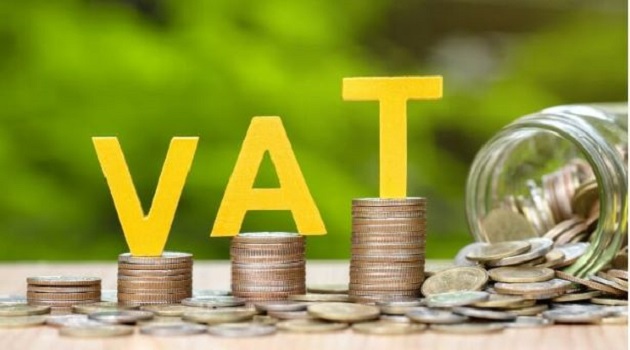
Nigeria’s non-oil tax collections posted robust growth in the first nine months of 2025, with Value Added Tax (VAT) rising 34 per cent to ₦6.4 trillion and Company Income Tax (CIT) jumping 48 per cent to ₦7.72 trillion, bolstering federal revenue amid oil price volatility.

NBS
Data from the National Bureau of Statistics (NBS) showed VAT climbing from ₦4.77 trillion in 9M’24, reflecting stronger domestic consumption and imports. Quarterly trends indicated a slight 1.4 per cent dip to ₦2.03 trillion in Q2’25 from ₦2.06 trillion in Q1’25, followed by a 10.66 per cent rebound to ₦2.28 trillion in Q3’25—a 28.1 per cent year-on-year gain.
In Q3’25, local VAT hit ₦1.12 trillion, foreign VAT ₦680.23 billion, and import VAT ₦479.79 billion. Sectorally, Administrative and Support Services led with 89.28 per cent quarter-on-quarter growth, trailed by Arts, Entertainment and Recreation (82.49 per cent) and Human Health (32.4 per cent). Real Estate contracted sharply by 51.33 per cent. Manufacturing dominated contributions at 25.89 per cent, followed by Information and Communication (18.77 per cent) and Mining/Quarrying (14.85 per cent).
CIT followed suit, surging from ₦5.22 trillion in 9M’24. It stood at ₦1.98 trillion in Q1’25, leaped 40 per cent to ₦2.78 trillion in Q2’25, and grew 5.7 per cent to ₦2.96 trillion in Q3’25—a 67.19 per cent year-on-year rise. Domestic CIT reached ₦1.21 trillion in Q3, while foreign CIT hit ₦1.75 trillion, underscoring multinational firms’ role.
Economists attribute the uptick to improved tax administration, digital tracking, and post-reform consumption, though sectoral disparities signal real estate headwinds. The gains support President Tinubu’s revenue diversification drive, reducing oil dependency as global crude fluctuates.
NBS data highlights non-oil taxes’ potential to fund infrastructure and social programmes, with analysts eyeing sustained momentum into 2026.

NAICOM Signs MoU with BPP to Deepen Insurance Compliance in Public Procurement

FG Approves GIS-enabled Digital Postcode to Tackle Logistics Gaps, Boost E-commerce

Firm Enhances its Security Awareness Platform with SCORM and PDF Support

AfDB Approves €6.5m for Tech Startups

GSMA, African Operators, Others to Launch Low-cost 4G Devices

Dr. Cairo Ojougboh Foundation Bolsters Nigeria’s Education Drive with ₦2.7m Student Support
Kaspersky Brings more Transparency to Threat Detection with New Hunt Hub

NDPC Commits to Balancing Data Privacy, Protection Information

OADC Lagos Reinforces Commitment to Local Data Hosting and Digital Transformation @ NDPC’s National Privacy Week Summit

PwC Reveals AI Scaling Gap Slows Africa’s Digital Transformation




 Telecom3 days ago
Sunil Bharti Mittal Conferred GSMA Lifetime Achievement Award for Transforming Global Telecommunications

 Telecom3 days ago
Why Digital Trust Matters: Secure, Responsible AI for African SMEs?

 E-Business3 days ago
Jumia Tech Week 2026 Begins with Tech Deals on Smartphones, Electronics, and Everyday Technology

 General News3 days ago
Krishnan Exits Africa Data Centre to Embark on Professional Chapter

 E-Financial2 days ago
NRS Targets N40trillion in Tax, Royalty Revenue in 2026
 News3 days ago
AfDB Supports Francophone Africa Start-ups with €6.5M

 E-Business3 days ago
House Queries NDIC: ₦5m Max Payout for Failed Bank Depositors

 Telecom3 days ago
House Probes Fintech Regulation via Public Hearing on New Commission Bill