

General News
AfDB Board Approves Establishment of African Pharmaceutical Technology Foundation

The African Development Bank’s Board of Directors has approved the establishment of the African Pharmaceutical Technology Foundation, a new groundbreaking institution that will significantly enhance Africa’s access to the technologies that underpin the manufacture of medicines, vaccines, and other pharmaceutical products.

Dr. Akinwumi Adesina, African Development Bank Group President, said: “This is a great development for Africa. Africa must have a health defense system, which must include three major areas: revamping Africa’s pharmaceutical industry, building Africa’s vaccine manufacturing capacity, and building Africa’s quality healthcare infrastructure.”
During the African Union Summit in Addis Ababa in February 2022, the continent’s leaders called on the African Development Bank to facilitate the establishment of the African Pharmaceutical Technology Foundation.
Adesina, who presented the case for the institution to the African Union said: “Africa can no longer outsource the healthcare security of its 1.3 billion citizens to the benevolence of others.” With this bold initiative, the African Development Bank has made good on that commitment.
The decision is a major boost to the health prospects of a continent that has been battered for decades by the burden of several diseases and pandemics such as Covid19, but with very limited capacity to produce its own medicines and vaccines. Africa imports more than 70% of all the medicines it needs, gulping $14 billion per year.
Global efforts to rapidly expand the manufacturing of essential pharmaceutical products including vaccines in developing countries, particularly in Africa, to assure greater access, have been hampered by intellectual property rights protection and patents on technologies, know-how, manufacturing processes and trade secrets.
African pharmaceutical companies do not have the scouting and negotiation capacity, and bandwidth to engage with global pharmaceutical companies. They have been marginalized and left behind in complex global pharmaceutical innovations. Recently, 35 companies signed a license with America’s Merck to produce Nirmatrelvir, a Covid-19 drug. None of them was African.
No institution exists on the ground in Africa to support the practical implementation of Trade Related Intellectual Property Rights (TRIPs) on non-exclusive or exclusive licensing of proprietary technologies, know-how and processes.
The African Pharmaceutical Technology Foundation will fill this important and glaring gap. When fully established, it will be staffed with world-class experts on pharmaceutical innovation and development, intellectual property rights, and health policy; acting as a transparent intermediator advancing and brokering the interests of the African pharmaceutical sector with global and other Southern pharmaceutical companies to share IP-protected technologies, know-how and patented processes.
Adesina said “Even with the decision of the TRIPS Waiver at the World Trade Organization (WTO), millions are dying -and will most likely continue to die – from lack of vaccines and effective protection. The African Pharmaceutical Technology Foundation provides a practical solution and will help to tilt the access to proprietary technologies, knowledge, know-how and processes in favor of Africa”.
The World Trade Organization and the World Health Organization, respectively, welcomed and lauded the African Development Bank’s decision to establish the African Pharmaceutical Technology Foundation.
Dr. Ngozi Okonjo-Iweala, the Director-General of the World Trade Organization, said “The African Pharmaceutical Technology Foundation is innovative thinking and action by the African Development Bank. It provides part of the infrastructure needed to assure an emergent pharmaceutical industry in Africa”.
Dr. Tedros Ghebreyesus, the Director-General of the World Health Organization, said “Establishing the African Pharmaceutical Technology Foundation, by the African Development Bank, is a game changer on accelerating the access of African pharmaceutical companies to IP-protected technologies and know-how in Africa”.
The African Pharmaceutical Technology Foundation will prioritize technologies, products and processes focused primarily on diseases that are widely prevalent in Africa, including current and future pandemics. It will also build human and professional skills, the research and development ecosystem, and support upgrading of manufacturing plant capacities and regulatory quality to meet World Health Organization standards.
While the African Pharmaceutical Technology Foundation is being established under the auspices of the African Development Bank, it will operate independently and raise funds from various stakeholders including governments, development finance institutions, philanthropic organizations among others.
The Foundation will boost the African Development Bank’s commitment to spend at least $3 billion over the next 10 years to support the pharmaceutical and vaccine manufacturing sector under its Vision 2030 Pharmaceutical Action Plan. The Foundation’s areas of work will also be an asset to all other current investments into pharmaceutical production in Africa.
Rwanda will host the African Pharmaceutical Technology Foundation. A common benefits entity, the Foundation will have its own governance and operational structures. It will promote and broker alliances between foreign and African pharmaceutical companies.
The African Pharmaceutical Technology Foundation will strengthen local pharmaceutical companies to engage in local production initiatives with systematic technology learning and technology upgrading at the plant level.
The Foundation will work with African governments, research and development centers of excellence to strengthen the regional pharmaceutical and vaccine innovation ecosystem for Africa and build skills of the kind needed for the pharmaceutical sector to flourish.
It will also promote closer coordination of the various ongoing medicines and vaccines’ manufacturing initiatives at the regional level to increase collaborative linkages, leverage synergies and partnerships in a pan-African context.
The African Pharmaceutical Technology Foundation will work closely with the African Union Commission, European Union Commission, the World Health Organization, the Medicines Patent Pool, the World Trade Organization, philanthropic organizations, bilateral and multilateral agencies and institutions, and will foster collaboration between the public and private sectors in developed countries and developing countries.



Federal Competition and Consumer Protection Commission (FCCPC) has warned Lagos traders against enforcing the unlawful “no return, no refund” policy, declaring it illegal under the Federal Competition and Consumer Protection Act (FCCPA) 2018.

FCCPC
Dr Olubunmi Otti, FCCPC Southwest Zonal Coordinator, issued the directive during the inauguration of new executives of the Phone and Allied Products Dealers Association (PAPDA) on Wednesday, stressing consumer education as the strongest defence against market exploitation.
“There is no such thing as ‘no return, no refund’. If a product does not fulfil its intended purpose, the consumer has the right to return it,” Otti declared, adding the commission mediates complaints for refunds, replacements, or exchanges.
Non-compliant businesses face fines, product withdrawals, seizures, prosecutions, or shutdowns. Otti noted thousands of monthly complaints via the FCCPC portal in the Southwest alone, with sensitisation expanding to Alaba Market and Trade Fair Complex.
She urged consumers: “When your rights are violated, do not just say, ‘You give it to God.’ Bring your complaints to the FCCPC. The law empowers us to protect you,” while calling for traders’ collective responsibility to ensure quality products and services.


African Development Bank Group (AfDB) has approved a €6.5 million investment in the Saviu II venture capital fund to boost technology start-ups across Francophone West and Central Africa.

The Bank Group will contribute €4.5 million as equity investment and an additional €2 million as a first-loss hedging tranche on behalf of the European Commission under the Boost Africa Programme.
The investment is expected to strengthen early-stage financing for innovative businesses with strong technological and digital components, particularly in French-speaking countries.
Saviu II, the second investment vehicle managed by Saviu Partners, plans to invest between €500,000 and €3 million in about 20 seed-stage or early institutional fundraising start-ups. The fund will primarily target B2B technology-oriented companies with scalable models.
At least 60 per cent of the fund’s commitments will focus on French-speaking countries in West and Central Africa, including Côte d’Ivoire, Cameroon, Benin, Senegal, Togo, Burkina Faso and Mali.
The fund may also co-invest in promising East African technology firms seeking expansion into Francophone markets.
In addition, Saviu II will dedicate a special funding envelope for pre-seed investments, mainly through minority equity stakes, often in collaboration with incubators, venture studios and other ecosystem partners.
Industry observers say the AfDB’s backing is expected to de-risk early-stage investment and crowd in more private capital into Africa’s growing digital economy.
Saviu Partners previously launched Saviu I in 2018 with a capitalization of €10 million.
The first fund invested in 12 start-ups, mainly based in French-speaking West Africa, offering not just funding but hands-on support in business development, recruitment, international expansion and fundraising.
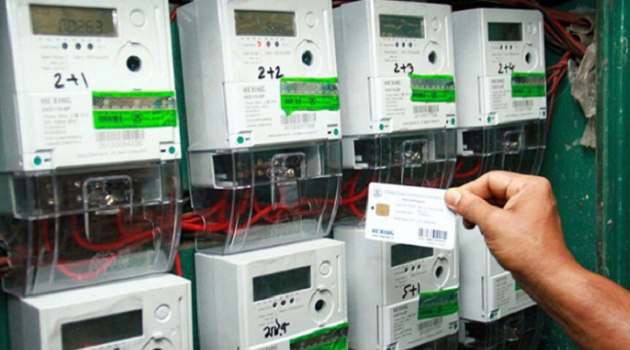
Nigerian Electricity Regulatory Commission (NERC) has ruled in favor of electricity consumers, directing distribution companies (DisCos) to refund ₦20.33 billion in outstanding costs for meters bought under the Meter Asset Provider (MAP) framework.

NERC
Signed on February 27, 2026, by Musiliu Oseni, chairman,NERC and Dafe Akpeneye, commissioner Order No. NERC/2026/025 amends a 2023 directive.
It requires DisCos to disburse the funds via energy credits over 12 months starting March 1, 2026, addressing years of slow refunds.
As of December 31, 2025, DisCos owed this amount due to delays in reimbursing prepaid customers who funded their own meters.
DisCos must automate credits for the full MAP meter cost upon activation, disbursed monthly over 120 months based on the customer’s tariff—credits cannot offset legacy debts.
Prepaid customers will receive a monthly token by the 4th day equivalent to the reimbursement value; for arrears, they’ll get two tokens per month.
Postpaid customers will see a distinct credit line on bills subtracted from totals, with two line items monthly for arrears.
NERC mandates monthly reports on reimbursement values using an approved template, plus dedicated email channels for complaints with resolution status included.
The order aims to end delays, improve notifications, and boost sector trust. DisCos must accelerate arrears recovery over 12 months without further excuses.
This follows NERC’s February 2026 compliance review, amid ongoing power sector challenges highlighted by Power Minister Adebayo Adelabu.

MultiChoice to Discontinue Showmax Streaming Platform

GCR Affirms Afreximbank’s International Scale Ratings of A, A2

SmartCash Launches ‘No Be Cho Cho Cho’ Campaign to Boost Digital Banking in Nigeria

MTN Nigeria Non-Executive Director Mazen Mroue Quits to Focus on Group Role

Google Adds Yorùbá, Hausa to AI Search, Boosting Access for Millions of Nigerians

Dr. Cairo Ojougboh Foundation Bolsters Nigeria’s Education Drive with ₦2.7m Student Support

Kaspersky Brings more Transparency to Threat Detection with New Hunt Hub

NDPC Commits to Balancing Data Privacy, Protection Information

PwC Reveals AI Scaling Gap Slows Africa’s Digital Transformation

Firm Reviews the Evolution of Phishing Threats in 2025




 E-Financial2 days ago
NRS Targets N40trillion in Tax, Royalty Revenue in 2026

 E-Financial2 days ago
SEC Revokes Registration of Kensington Agro Trading Limited

 General News2 days ago
Purple Woman 3.0 Is Back, to Empower Women in Tech this IWD 2026

 News2 days ago
EFCC Arraigns Two FSDH Bank Officials Over $307k, €50k Fraud

 Telecom2 days ago
Konga Launches ‘Berekete Sales’ with Up to 50% Discounts Across Major Categories
 E-Business2 days ago
NDPC, 60 DPAs Collaborate on Enforcing Privacy Rights in the Use of Al

 General News2 days ago
NCDC Raises Alarm over Lassa Fever Ravaging 18 States in Nigeria

 E-Financial2 days ago
Nigeria’s Net Reserves Surge 50% to $34.8bn in 2025 – CBN Governor