

News
AfDB Launches First Electricity Regulatory Index for Africa


Though the majority of African countries have developed relatively robust institutional frameworks for the regulation of their electricity sectors, much work remains in strengthening regulatory independence, says the Electricity Regulatory Index for Africa (ERI) – a crucial new report by the African Development Bank.
The Report, released on the sidelines of the 2018 Africa Energy Forum (AEF) in Mauritius, measures the level of development of regulatory frameworks in 15 African countries and examines their impact on the performance of their respective electricity sectors.
ERI also identifies areas in which improvement is most needed in Cameroon, CÔte d’Ivoire, Gambia, Ghana, Kenya, Lesotho, Malawi, Namibia, Nigeria, Senegal, South Africa, Tanzania, Togo, Uganda, and Zimbabwe.
“The main goal with the ERI is to incite key stakeholders in the African power sector to address regulatory performance and the gaps identified in the study,” said Amadou Hott, Vice President, Power, Energy Climate and Green Growth Complex at the African Development Bank.
The ERI is expected to become a benchmarking tool that will track progress made by African countries as they align the regulatory frameworks governing their electricity sectors with international standards and best practices.

The African Forum for Utilities Regulators (AFUR) described the Index as a useful tool for improving electricity regulation and pledged to work with the Bank to sustain the initiative.
Debbie Roets, Executive Secretary of AFUR said: “We are glad that the African Development Bank has indicated that it will produce new, updated Index results on an annual basis, and will seek to encourage more countries to participate in subsequent editions. AFUR will provide the needed support.”
The Index pointed to how the past two decades had witnessed a transformation of the electricity market in Africa following the gradual opening, liberalization, and reform of national electricity markets.
It was observed that regulators have a fundamental role in attracting private investment into national energy and power assets. Investors seek transparency, predictability, and good governance in sectors in which they operate, all of which well-developed regulators are expected to provide.
Periodic evaluation of regulators as practiced in many developed countries is important as it enables early identification of problems or gaps so that corrective actions can be implemented as soon as possible.
“Significant progress has been made in each of the areas covered by the study. However, more efforts are required to facilitate the type of environment in which private sector actors would feel comfortable investing.
“The African Development Bank will work together with its partners in regional member countries to provide the support, advice and assistance required to align regulation in the energy sector to international best practice,” said Wale Shonibare, the Bank’s Director, Energy Financial Solutions, Policy and Regulation Department.
The Report noted: “On average, well developed electricity regulatory governance systems exist in all fifteen sample countries. However, there is room for improvement with respect to accountability and independence to align with international best practices often necessary to attract future investment into the sector.
“Although many sample countries had established the legal and institutional frameworks for electricity sector regulation, regulators are yet to build an adequate level of capacity and develop appropriate mechanisms to effectively carry out their mandates and make decisions under key aspects of regulatory substance.
“In spite of falling well short of international best practices, regulators in the sample countries have a moderately positive impact in the sector, especially when it comes to measures being instituted to promote energy access and enhance commercial quality of electricity to consumers; however on average, regulators faltered most with respect to instituting cost-reflective tariffs.”


Yola Electricity Distribution Company (YEDC) has alerted its customers to a fraudulent message circulating on social media, falsely claiming that electricity consumers can receive an additional 20 per cent bonus units when recharging their prepaid meters through unofficial channels.

In a statement issued by the company’s management on Monday, YEDC described the claim as false and urged customers to disregard the misleading information, stressing that it did not originate from the company.
According to the statement, YEDC does not offer bonus electricity units through individuals, agents, personal bank accounts, phone numbers, or social media contacts.
The company advised customers to purchase electricity tokens only through approved cashless payment platforms, including the YEDC Pay App, OPay, Interswitch, and other authorised vending channels, or to visit the nearest YEDC office for assistance.
YEDC also cautioned customers against sharing their meter details or personal information, or making payments to unauthorised persons claiming to represent the company.
The company further urged customers to rely exclusively on information disseminated through its official communication channels to avoid falling victim to fraud.
The management thanked customers for their continued cooperation and reaffirmed its commitment to serving them.
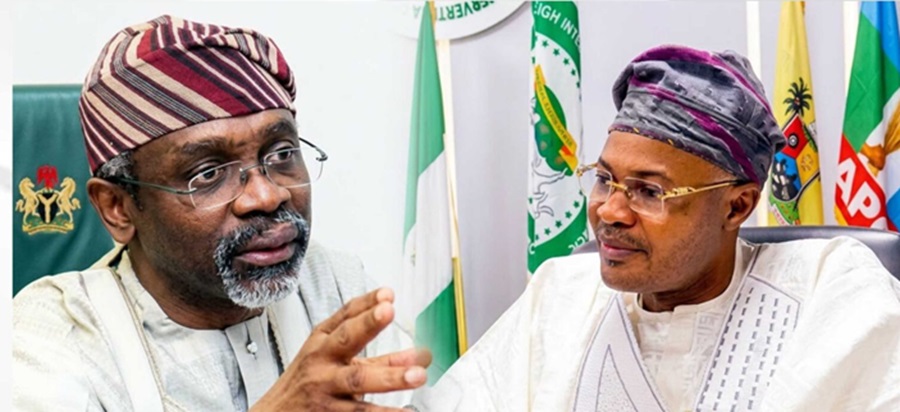
Central Bank of Nigeria (CBN) has disclosed that two foreign currency accounts opened in connection with the controversial Presidential Foreign Investment Promotion Council (PFIPC) have remained inactive since their creation, with no funds deposited and no transactions recorded.

The revelation emerged on Monday during the ongoing investigation by the House of Representatives Ad-hoc Committee probing the circumstances surrounding the establishment and operations of the council.
Lawmakers are investigating allegations that the PFIPC was created and operated without a valid legal framework and outside the established procedures required for government agencies and institutions.
Appearing before the committee, representatives of both the Central Bank of Nigeria and the Office of the Head of the Civil Service of the Federation (OHCSF) distanced their institutions from the establishment of the council.
The Office of the Head of the Civil Service of the Federation stated that it neither created the council nor possessed the constitutional authority to establish federal agencies.
Representing the office, officials explained that the OHCSF is only responsible for approving administrative structures of government agencies after all necessary requirements have been fulfilled.
According to the office, records showed that the council submitted a request on August 6, 2025, seeking approval for its organisational structure.
However, the application was not approved because the required supporting documents were not attached.
The committee heard that despite the rejection of the request, officials linked to the Presidential Economic Advisory Council (PEAC)/PFIPC later appeared during the 2025 manpower budget defence exercise and sought approval for staffing and recruitment arrangements.
The office disclosed that the council informed government officials that its activities were being carried out largely through personnel seconded or deployed from other institutions.
Lawmakers were told that the council requested approval for a total of 314 positions. The figure consisted of 14 existing officers and an additional 300 proposed positions.
The Office of the Head of the Civil Service further revealed that concerns later arose regarding documents presented by the council as evidence of its legal backing.
Officials told the committee that upon examination, the documents failed to display essential features expected of an enabling law or valid legal instrument establishing a government body.
Mrs. Didi Esther Walson-Jack, head of the Civil Service of the Federation, also rejected claims that her office deployed civil servants to work for the council.
She maintained that the office did not assign personnel to the body and did not provide office accommodation for its operations.
According to her, matters relating to the creation, supervision and oversight of government agencies fall under the responsibilities of other relevant institutions, including the Office of the Secretary to the Government of the Federation.
The Central Bank of Nigeria also provided details regarding accounts linked to the council.Nigerian current events
Hamisu Abdullahi, director at the apex bank, who represented the CBN Governor before the committee, explained that the bank opened two foreign currency accounts following a formal request from the Office of the Accountant-General of the Federation.
He told lawmakers that the request was received on July 30, 2025, and instructed the bank to create a United States dollar domiciliary account and a Pound Sterling domiciliary account.
Abdullahi stressed that the CBN only opens accounts for government agencies after receiving official authorisation from the Accountant-General’s office.
However, he disclosed that the accounts never became operational because the council failed to provide authorised signatories required for activation.
As a result, both accounts remained dormant from the day they were opened.
He informed the committee that neither account had received deposits nor processed withdrawals. The accounts also recorded no foreign exchange allocations, remittances, inflows or outflows.Governor election news
According to him, the balances in both accounts remain at zero.
The CBN official further stated that the council did not engage directly with the apex bank regarding the management or operation of the accounts after they were created.
Following the submissions, members of the committee demanded more information as part of efforts to determine the full scope of the council’s activities.
Hon. Abdulmalik Danga, chairman of the committee, directed the Central Bank to submit comprehensive records relating to both the Presidential Foreign Investment Promotion Council and the Presidential Economic Advisory Council.
The committee requested details covering the opening of the accounts, their operational history and any information connected to related banking activities.
Lawmakers also instructed the CBN to work with commercial banks to identify and provide records of any accounts linked to the entities under investigation.
However, the committee is expected to continue its hearings as more government agencies and officials appear before lawmakers to provide explanations on the controversial council and the circumstances surrounding its operations.

STEM Africa Fest, an annual science, technology, engineering and mathematics (STEM) education event designed to expose children to hands-on learning, returned to Lagos, with organisers urging greater integration of practical STEM education into Nigeria’s school curriculum to prepare young people for future careers.

The organisers said the initiative has reached over 25,000 children across Africa in six years, renewing calls for greater integration of practical STEM education into Nigeria’s school curriculum.
The festival, which began in 2021 during the COVID-19 lockdown, has expanded beyond Nigeria to Ghana, Sierra Leone, The Gambia, Zambia, Rwanda and Kenya, promoting experiential learning through science, technology, engineering, arts and mathematics (STEAM). The sixth edition which held in Lagos, attracted about 3,500 children and parents from all over.
Conveners, Titi Adewusi and Jadesola Adedeji, said the initiative was conceived to address the gap between classroom theory and practical learning, giving children opportunities to build, experiment and interact with emerging technologies.
According to Adewusi, this year’s theme, “Building Future Innovators”, reflects the organisers’ vision of nurturing Africa’s next generation of innovators, problem-solvers and creative thinkers.
“Children are learning the theories and we wanted to bring the real thing, hands-on. If you’re teaching a child about 3D printing, we want them to actually experience it. If you’re teaching a child about building robots or AI, we wanted them to experience it,” she said.
Adedeji, said the idea for the festival emerged from a shared desire to make science education more engaging after discussions between the founders several years ago.
She said the maiden edition, held during the pandemic, attracted over 1,000 participants globally, while the first physical edition recorded over 6,000 attendees.
They identified funding, stakeholder mobilisation and expanding the festival to other locations as some of the challenges encountered since its inception. They noted that increasing demand from different states and African countries had prompted them to adopt a partnership model that allows collaborators replicate the programme using an established framework.
They also urged governments at all levels to strengthen support for STEM education by integrating practical learning into school curricula and partnering with private organisations to improve access to science and technology education.
Adewusi said they have developed a STEM curriculum that is being implemented in some schools and expressed readiness to collaborate with the government to expand its adoption in line with the United Nations Sustainable Development Goal on quality education.
Adedeji added that government support should go beyond funding to include curriculum development, teacher training and institutional backing for STEM-focused initiatives.
Representing Access Holdings, Programme Manager for Sustainability, Ikechukwu Iheagwam, said the company’s continued support for the festival aligns with its commitment to advancing education and technology.
He said exposing children to emerging technologies such as artificial intelligence and robotics would better prepare them for the future, adding that private sector participation should complement government efforts in improving STEM education.
Some pupils who attended the festival said the practical sessions strengthened their interest in science and technology.
A student of Court Hill College, Opebi, Jason Lawal, said he participated in activities including a Rubik’s Cube challenge and an artificial intelligence masterclass where participants created short AI-generated animations.
Another student of Greater Ecstasy High School, Iyana-Ipaja, Fatima Namama said attending the festival over the years had deepened her interest in laboratory science and technology. She called for wider integration of STEM education into the school curriculum and more opportunities for pupils to participate in similar learning events.
The organisers said the festival’s impact extends beyond attendance figures, noting that some former participants have returned in recent years as exhibitors in coding and robotics, reflecting its contribution to nurturing future innovators.

YEDC Warns Customers, Says 20 Percent Electricity Bonus is Scam

FG to Support 12 Tech Startups with N482m under iDICE

NBC, INEC, Plan Joint Broadcast Monitoring Framework ahead of 2027 Elections

No Going Back on July 31 Deadline for Insurance Firms’ Recapitalisation – NAICOM

Court Affirms FCCPC’s Power to Regulate Digital Lending

NRC, Ponzi Scheme Collapses Resulting Loss of Billions of Naira

NASENI Moves to Digitize CCB’s 5m Assets Declaration and Operations

Lebara Nigeria Launches Lebara Play, Africa’s First Telecom-Owned Micro-Drama Platform

CANAL+ Partners Samsung to Pre-Load DStv Stream on New Samsung TVs In Nigeria, Other African Countries

Tokenization, Blockchain Technology will Transform Financial Institutions – IMF




 News1 day ago
NIMASA Unveils Accelerator Scheme to Drive Innovation, Sustainable Growth

 E-Financial1 day ago
Access Holdings Sells 7.44% Stake in Ghana Unit

 E-Financial1 day ago
NRS Issues July 31 Deadline for e-Invoicing Compliance

 E-Business1 day ago
SERAP to Sue NASS over Bill Empowering NDPC to Regulate Social Media

 News1 day ago
ICPC Secures Final Forfeiture of N941m Linked to IPPIS Fraud

 E-Financial1 day ago
NDIC Urges Youths to Shun Ponzi Schemes, Embrace Savings

 News1 day ago
Adebutu, PDP Chieftain Accuses Nigerian Governors of Embezzling LG Allocations

 News1 day ago
eBusinessLife Advocates Greater Support for Girls in ICT as Students Showcase AI Innovations