

E-Financial
AfDB Supports Low-carbon Development in Africa

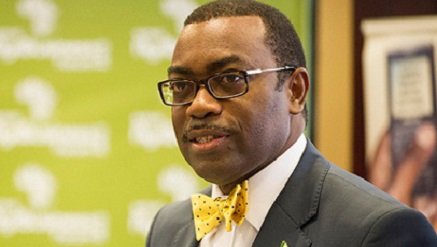
The African Development Bank (AfDB) has reaffirmed its commitment to mobilize resources to help African countries adopt and mitigate climate change.
This commitment underpins its 2013-2022 Strategy promoting inclusive and green growth in Africa. Almost US $7 billion has been committed to projects in support of climate resilient and low-carbon development in the past four years.
However, ahead of the upcoming UN climate talks, COP22, which will be held in Marrakesh, Morocco, from November 7 to 18, 2016, the Bank is calling for implementation of the Paris Agreement, especially ensuring that climate financing is urgently delivered for African countries which are most vulnerable to climate change shocks.
Last year, the Bank’s support contributed significantly to ensuring that Africa’s concerns were addressed in the Paris Agreement at COP21.
The Bank has also committed to triple its climate change finance to about US $5 billion per year and to provide US $12 billion on renewable energy investments by 2020.
In keeping with the Bank’s New Deal on Energy for Africa, that provides a good entry point for the implementation of the Paris Agreement, and given that COP22 is a key milestone for the implementation of that agreement, it is important that Africa is fully on board, while ensuring linkages with the Bank’s High 5 priorities.
According to Akinwumi Adesina, President of the African Development Bank Group, the current climate financing architecture is not providing the finance Africa needs.
“Much more needs to be done to increase Africa’s access to climate finance,” Adesina said Friday, May 27, 2016, during a high-level panel on climate change, “Towards COP22 in Marrakech : What are the issues at stake?”, on the last day of the Bank’s 2016 Annual Meetings.
Adesina pointed out that Africa, which contributes less than 3 per cent of the global greenhouse emissions, is suffering from the effects of El Niño, which has caused severe drought in 14countries with 13 located in East and Southern Africa.
Citing Kenya and Rwanda, which have had devastating floods, with over 8.4 million people facing food insecurity in Malawi and 15 million in Ethiopia, as well as vast areas of South Africa, Zambia, Zimbabwe, Lesotho and Botswana, Adesina pointed out that the continent is already feeling the shocks of climate change.
To support these countries, AfDB has allocated funds to the tune of US $549 million.
Adesina demanded for “climate justice” for Africa, calling on the Green Climate Fund and the Global Environment Facility to “pay for the insurance premium of African countries to the Africa Risk Capacity Agency.”
“This will allow them to cope with extreme climate events … like Senegal which received US $17 million payout to mitigate the impacts of drought. AfDB will lead the way and triple its climate finance to US $5 billion per year by 2020,” Adesina said.



Federal court in Lagos has suspended the enforcement of Nigeria’s most comprehensive framework for regulating digital lending apps.

On April 15, Justice Ambrose Lewis-Allagoa of the Federal High Court in Lagos granted an interim injunction blocking the enforcement of the Digital, Electronic, Online, or Non-Traditional Consumer Lending Regulations 2025, better known as the DEON Regulations.
The order followed an urgent ex parte application filed the previous day by the Wireless Application Service Providers Association of Nigeria (WASPA Nigeria), the industry body representing wireless application service providers operating mainly within the telecoms ecosystem.
The suit targets twelve specific provisions of the text, covering licensing, sanctions, compliance obligations and data-handling rules, according to court documentation published by Lawyard.
Until the next hearing on April 27, 2026, the regulator cannot impose sanctions, enforce compliance directives, or issue new instructions to WASPA members.
The judge also barred the Federal Competition and Consumer Protection Commission (FCCPC) from interfering with the ongoing commercial operations of association members.
The case pits two actors whose respective mandates the Nigerian legal framework has never clearly separated.
On one side stands the FCCPC — the federal agency established in 2018 to enforce consumer protection and competition — which gazetted the DEON Regulations on July 21, 2025, under sections 17, 18 and 163 of its founding Act.
In a press statement dated September 3, 2025, Tunji Bello, executive vice chairman, FCCPC, justified the rules by citing “a long history of complaints” involving exploitative practices, data breaches, abusive debt recovery, and harassment.
On the other side, WASPA Nigeria contests the very legitimacy of the FCCPC’s intervention, arguing that services tied to telecoms — airtime credit, data loans, mobile-financing products — fall exclusively under the Nigerian Communications Commission (NCC), the telecoms regulator created by the Nigerian Communications Act of 2003.
In the affidavit deposed by Ayo Stuffman, the association contends that the FCCPC is acting ultra vires and creating a regulatory regime parallel to the NCC’s.
A jurisdictional war that stretches far beyond a procedural dispute
The conflict is not limited to a question of legal boundaries. It strikes at the commercial core of the market: who collects the licensing fees, who sets the operational conditions, who governs the financial products embedded in telecom networks.
Nigeria’s consumer credit stock reached 3.82 trillion naira at the end of December 2024, up 21.27% on September, according to Central Bank of Nigeria (CBN) data relayed by The Cable and AFP.
In the fourth quarter of 2024 alone, personal loans disbursed amounted to approximately 470 billion naira.
A growing share flows through mobile applications and telecom-embedded lending products — including MTN’s MoMo Airtime Lending, operated by the country’s largest telecom operator.
If the court validates WASPA’s position, these products fall outside the FCCPC’s scope and come under the sole authority of the NCC, a regulator historically less active on consumer protection issues.
Available data on demand illustrate the social stakes. Between 2021 and 2023, the FCCPC recorded more than 11,000 consumer complaints for harassment, data abuse and unethical debt recovery practices, according to the agency.
The number of lending applications approved by the FCCPC rose from 269 in September 2024 to 408 in March 2025, while 47 apps were delisted and 88 were placed on the watchlist, according to data compiled by AFP and OneSafe.
The DEON Regulations were meant to introduce interest-rate caps, precontractual disclosure obligations, continuous supervision of recovery practices and fines of up to 100 million naira per violation, according to Legit.ng. The compliance deadline was set for January 5, 2026, and the FCCPC had issued written compliance notices to operators with an April 16 deadline, according to WASPA’s affidavit.
It is precisely this enforcement pressure that triggered the legal challenge.

Federal government has said that Nigeria has no plans to seek a loan from the International Monetary Fund’s proposed $50 billion support package for economies hit by the Middle East crisis.

Wale Edun, minister of Finance, who stated this, said that Nigeria’s current reliance on domestic economic reforms and fund mobilisation was working.
Edun gave these insights during the African Finance Ministers’ briefing, on Thursday, at the ongoing IMF/World Bank annual meetings, in Washington, DC.
He noted that for over two years, Nigeria’s investment in economic reforms have begun to yield results, restoring policy credibility and strengthening the country’s resilience against global economic shocks.
Edun told the global west and the rest of the world that Nigeria now prioritises market-based adjustments, avoiding administrative controls, particularly in foreign exchange and petroleum pricing mechanisms.
His assertion follows the disclosure by the IMF that a possible $50 billion support to cushion vulnerable economies against the crisis in the Middle East, was on the pipeline.
Despite clarifying Nigeria’s lack of interest in borrowing, Edun, urged the IMF to ensure faster financial assistance for African countries who will need help from the $50 billion global support package.
“Nigeria has no plans at the moment to approach the IMF or any other such body,” Edun said, emphasising that Nigeria’s reliance on market mechanisms had led to smoother economic adjustments, reduced disruptions and is sustaining the country’s macroeconomic trajectory.
“The IMF talked about $50 billion and we all know that the funding will largely go to Africa, because those are the most vulnerable countries. And the reality is that what we’re asking for in this instance, is that the funds and the support be released quickly and at scale.
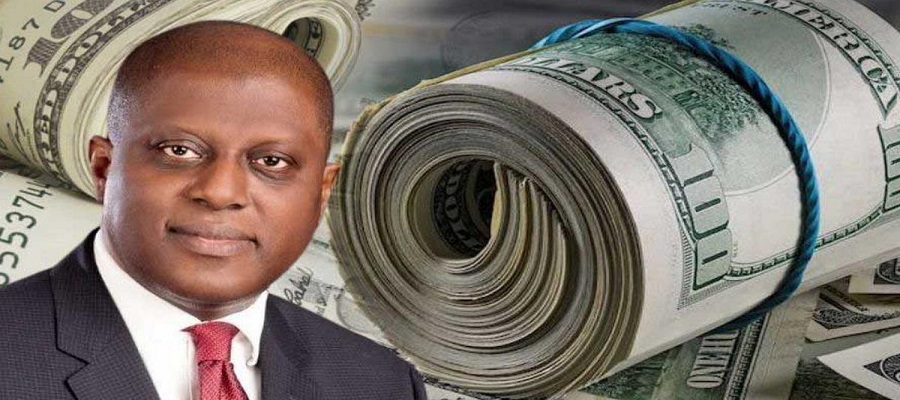
Central Bank of Nigeria (CBN), in collaboration with financial market dealers, has introduced the Nigerian Overnight Financing Rate (NOFR), a standardized benchmark designed to enhance transparency and strengthen monetary policy transmission.

Olayemi Michael Cardoso, CBN gov
Hakama Sidi Ali, spokesperson of the CBN in a statement on Friday, said that the the NOFR is expected to improve price discovery and transparency, while promoting consistent pricing of money market instruments across Nigeria’s financial system.
The regulator noted that the new benchmark positions Africa’s most populous country alongside leading global reference rates such as SOFR in the United States, SONIA in the United Kingdom, €STR in the Eurozone, and TONA in Japan.
“It also complements African benchmarks such as JIBAR (South Africa). Following a stakeholder engagement session held on February 27, 2026, where market participants formally adopted the benchmark, and subsequent regulatory approval, NOFR is now in use, with the CBN serving as the benchmark administrator.
“The bank will ensure governance, transparency, and regular publication of the rate,” CBN stated.

FCCPC Denies Banning Airtime Borrowing, Blames Cartel for Misinformation

Court Suspends Enforcement of FCCPC’s Reform on Loan Apps

FG Rules Out Borrowing from IMF’s $50Bn Support Fund

CBN Introduces Overnight Financing Rate to Compete with US, EU

AfriStakes Unveils Platform to Connect SMEs with Investors

Canal+ to Cut Jobs as Part Sweeping Restructuring

NBC Boss Urges Content Ceators to Participate in DSO

NITDA Takes Over National Digital Architecture System

DLM SPV PLC Lists ₦9.00bn AAA-Rated Medium-Term Notes on FMDQ Exchange, Sets Benchmark in Corporate Bond Market

FG Shifting Focus to “Meaningful Connectivity” to Drive Inclusion – Minister




 News3 days ago
Lagos Targets Vulnerable Residents in Expanded Social Register

 E-Business3 days ago
CAC Urges Users to Secure Accounts after Cyberattack Scare

 E-Financial3 days ago
IMF Downgrades Nigeria’s GDP Outlook, Warns of Rising Risks
 Telecom2 days ago
MTN Suspends Data, Airtime Borrowing Service over New FCCPC Lending Rules

 E-Financial3 days ago
NDIC Seeks Court Nods to Liquidate 89 Failed Banks

 E-Financial3 days ago
CBN Proposes 30-Member Mediation Panel for Loan Disputes

 News3 days ago
Study Shows 38% of Northern Women Lack Access to Financial Services

 E-Financial3 days ago
SEC Sets N7.5Bn Capital Floor to Shield Investors in FTZE Public Offerings