

E-Financial
After the Capital Rush: Who Really Wins Nigeria’s Bank Recapitalisation?


By Blaise Udunze
By any standard, Nigeria’s ongoing bank recapitalisation exercise is one of the most consequential financial sector reforms since the 2004-2005 consolidation that shrank the number of banks from 89 to 25. Then, as now, the stated objective was stability to have stronger balance sheets, better shock absorption, and banks capable of financing long-term economic growth. The Central Bank of Nigeria (CBN), in 2024, mandated a sweeping recapitalisation exercise compelling banks to raise substantially higher capital bases depending on their license categories.

CBN
The categorisation mandated that every Tier-1 deposit money bank with international authorization is to warehouse N500 billion minimum capital base, and a national bank must have N200 billion, while a regional bank must have N50 billion by the deadline of 31st March 2026. According to the apex bank, the objectives were to strengthen resilience, create a more robust buffer against shocks, and position Nigerian banks as global competitors capable of funding a $1 trillion economy.
But in the thick of the race to comply and as the dust gradually settles, a far bigger conversation has emerged, one that cuts to the heart of how our banking system works. What will the aftermath of recapitalisation mean for Nigeria’s banking landscape, financial inclusion agenda, and real-sector development? Beyond the headlines of rights issues, private placements, and billionaire founders boosting stakes, every Nigerians deserve a sober assessment of what has changed, and what still must change, if recapitalisation is to translate into a genuinely improved banking system. The points are who benefits most from its evolution, and whether ordinary Nigerians will feel the promised transformation in their everyday financial lives, because history has taught us that recapitalisation is never a neutral policy. The fact remains that recapitalization creates winners and losers, restructures incentives, and often leads to unintended outcomes that outlive the reform itself.
Concentration Risk: When the Big Get Bigger
Recapitalisation is meant to make banks stronger, and at the same time, it risks making them fewer and bigger, concentrating power and risks in an ever-narrowing circle. Nigeria’s Tier-1 banks, those already controlling roughly 70 percent of banking assets, are poised to expand further in both balance sheet size and market influence. This deepens the divide between the “haves” and “have-nots” within the sector. A critical fallout of this exercise has been the acceleration of consolidation. Stronger banks with ready access to capital markets, like Access Holdings and Zenith Bank, have managed to meet or exceed the new thresholds early by raising funds through rights issues and public offerings. Access Bank boosted its capital to nearly N595 billion, and Zenith Bank to about N615 billion.
In contrast, banks that lack deep pockets or the ability to quickly mobilise investors are lagging. The results always show that the biggest banks raise capital faster and cheaper, while smaller banks struggle to keep pace.
As of mid-2025, fewer than 14 of Nigeria’s 24 commercial banks met the required capital base, meaning a significant number were still scrambling, turning to rights issues, private placements, mergers, and even licensing downgrades to survive.
The danger here is not merely numerical. It is systemic: as capital becomes more concentrated, the banking system could inadvertently mimic oligopolistic tendencies, reducing competition, narrowing choices for customers, and potentially heightening systemic risk should one of these “too-big-to-fail” institutions falter.
Capital Flight or Strategic Expansion? The Foreign Subsidiary Question
One of the most contentious aspects of the recapitalisation aftermath has been the deployment of newly raised capital, especially its use outside Nigeria. Several banks, flush with liquidity from rights issues and injections, have signalled or executed investments in foreign subsidiaries and expansions abroad, like what we are experiencing with Nigerian banks spreading their tentacles to the Ivory Coast, Ghana, Kenya, and beyond. Zenith Bank’s planned expansion into the Ivory Coast exemplifies this outward push.
While international diversification can be a sound strategic move for multinational banks, there is an uncomfortable optics and developmental question here: why is Nigerian money being deployed abroad when millions of Nigerians remain unbanked or underbanked at home?
According to the World Bank, a large number of Nigeria’s adult population still lack access to formal financial services, while millions of SMEs, micro-entrepreneurs, and rural households remain on the edge, underserved by traditional banks that now chase profitability and scale.
Of a truth, redirecting Nigerian capital to foreign markets may deliver shareholder returns, but it does little in the short term to advance domestic financial inclusion, poverty reduction, or grassroots economic participation. The optics of capital flight, even when legal and strategic, demand scrutiny, especially in a nation still struggling with deep regional and demographic disparities.
Impact on Credit and the Real Economy
For the ordinary Nigerian, the most important question is simple: will recapitalisation make credit cheaper and more accessible?
History suggests the answer is not automatic. The tradition in Nigeria’s bank system is mainly to protect returns, and for this reason, many banks respond to higher capital requirements by tightening lending standards, raising interest rates, or focusing on low-risk government securities rather than private-sector loans, because raising capital is expensive, and banks are profit-driven institutions. Small and medium-sized enterprises (SMEs), often described as the engine of growth, are usually the first casualties of such risk aversion.
If recapitalisation results in stronger balance sheets but weaker lending to the real economy, then its benefits remain largely cosmetic. The economy does not grow on capital adequacy ratios alone; it grows when banks take measured risks to finance production, innovation, and consumption.
Retail Banking Retreat: Handing the Mass Market to Fintechs?
In recent years, we have witnessed one of the most striking shifts, or a gradual retreat of traditional banks from mass retail banking, particularly low-income and informal customers.
The question running through the hearts of many is whether Nigerian banks are retreating from retail banking, leaving space for fintech disruptors to fill the void.
In recent years, players like OPAY, Moniepoint, Palmpay, and a host of digital financial services arms have become de facto retail banking platforms for millions of Nigerians. They provide everyday payment services, wallet functionalities, micro-loans, and QR-enabled commerce, areas traditional banks once dominated. This trend has accelerated as banks chase corporate clients where margins are higher and risk profiles perceived as more manageable. The true picture of the financial landscape today is that the fintechs own the retail space, and banks dominate corporate and institutional finance. But it is unclear or uncertain if this model can continue to work effectively in the long term.
Despite the areas in which the Fintechs excel, whether in agility, product innovation, and customer experience, they still rely heavily on underlying banking infrastructure for liquidity, settlement, and regulatory compliance. Should the retail banking ecosystem become split between digital wallets and corporate corridors, rather than being vertically integrated within banks, systemic liquidity dynamics and financial stability could be affected. Nigerians deserve a banking system where the comforts and conveniences of digital finance are backed by the stability, regulatory oversight, and capital strength of licensed banks, not a system where traditional banks withdraw from retail, leaving unregulated or lightly regulated players to carry that mantle.
Corporate Governance: When Founders Tighten Their Grip
The recapitalisation exercise has not been merely a technical capital-raising exercise; it has become a theatre of power plays at the top. In several banks, founders and major investors have used the exercise to increase their stakes, concentrating ownership even as they extol the virtues of financial resilience.
Prominent founders, from Tony Elumelu at UBA to Femi Otedola at First Holdco and Jim Ovia at Zenith Bank, have all been actively increasing their shareholdings. These moves raise legitimate questions about corporate governance when founders increase control during a regulatory exercise. Are they driven by confidence in their institutions, or are they fortifying personal and strategic influence amid industry restructuring?
Though there might be nothing inherently wrong with founders or shareholders demonstrating faith in their institutions, one fact remains that the governance challenge lies not simply in who holds the shares, but how decisions are made and whose interests are prioritised. Will banks maintain robust internal checks and balances, ensuring that capital deployment aligns with national development goals? The question is whether the CBN is equipped with adequate supervisory bandwidth and tools to check potential excesses if emerging shareholder concentrations translate into undue influence or risks to financial stability. These are questions that transcend annual reports; they strike at the heart of trust in the system.
Regional Disparity in Lending: Lagos Is Not Nigeria
One of the persistent criticisms of Nigerian banking is regional lending inequality. It has been said that most bank loans are still overwhelmingly concentrated in Lagos and the Southwest, despite decades of financial deepening in this region; large swathes of the North, Southeast, and other underserved regions receive disproportionately smaller shares of credit. This imbalance not only undermines inclusive growth but also fuels perceptions of economic exclusion.
Recapitalisation, in theory, should have enhanced banks’ capacity to support broader economic activity. Yet, the reality remains that loans and advances are overwhelmingly concentrated in economic hubs like Lagos.
The CBN must deploy clear incentives and penalties to encourage geographic diversification of lending. This could include differentiated capital requirements, credit guarantees, or tax incentives tied to regional loan portfolios. A recapitalised banking system that does not finance national development is a missed opportunity.
Cybersecurity, Staff Welfare, and the Technology Deficit
Beyond balance sheets and brand expansion, there is a human and technological dimension to the banking sector’s challenge. Fraud remains rampant, and one of the leading frustrations voiced by Nigerians involves failed transactions, delayed reversals, and poor digital experience. Banks can raise capital, but if they fail to invest heavily in cybersecurity, fraud detection, staff training, and welfare, the everyday customer will continue to view the banking system as unreliable. Nigeria’s fintech revolution has thrived precisely because it has pushed incumbents to become more customer-centric, agile, and tech-savvy. If banks now flush with capital don’t channel a portion of those funds into robust IT systems, workforce development, fraud mitigation, and seamless customer service, then the recapitalisation will have achieved little beyond stronger balance sheets. In short, Nigerians should feel the difference, not merely in stock prices and market capitalisation, but in smooth banking apps, instant reversals, responsive customer care, and secure platforms.
The Banks Left Behind: Mergers, Failures, or Forced Restructuring?
With fewer than half the banks having fully complied with the recapitalisation requirements deep into 2025, a pressing question is: what awaits those that lag? Many banks are still closing capital gaps that run into hundreds of billions of naira. According to industry estimates, the total recapitalisation gap across the sector could reach as much as N4.7 trillion if all requirements are strictly enforced.
Banks that fail to meet the March 2026 deadline face a few options:
– Forced M&A. Regulators could effectively compel weaker banks to merge with stronger ones, echoing the consolidation wave of 2005 that reduced the sector from 89 to 25 banks.
– License downgrades or conversions. Some banks may choose to operate at a lower license category that demands a smaller capital base.
– Exits or closures. In extreme cases, banks that can neither raise capital nor find a merger partner might be forced out of the market.
This regulatory pressure should not be construed merely as punitive. It is part of the CBN’s broader architecture of ensuring that only solvent, well-capitalised, and risk-prepared institutions operate. However, the transition must be managed carefully to prevent contagion, protect depositors, and preserve confidence.
Why Are Tier-1 Banks Still Chasing Capital?
Perhaps the most intriguing puzzle is why some Tier-1 banks, long regarded as strong and profitable, are aggressively raising capital. Even banks thought to be among the strongest, such as UBA, First Holdco, Fidelity, GTCO, and FCMB, have struggled to close their capital gaps. UBA, for instance, succeeded in raising around N355 billion toward its N500 billion target at one point and planned additional rights issues to bridge the remainder.
This reveals another reality that capital is not just numbers on paper; it is investor confidence, market appetite, and macroeconomic stability.
One can also say that the answer lies partly in ambition to expand into new markets, infrastructure financing, and compliance with stricter global standards.
However, it also reflects deeper structural pressures, including currency depreciation eroding capital, rising non-performing loans, and the substantial funding required to support Nigeria’s development needs. Even giants are discovering that yesterday’s capital is no longer sufficient for tomorrow’s challenges.
Reform Without Deception
As the Nigerian banking sector recapitalization exercise comes to a close by March 31, 2026, the ultimate test will be whether the reforms deliver on their transformational promise.
Some of the concerns in the minds of Nigerians today will be to see a system that supports inclusive growth, equitable credit distribution, world-class customer service, and resilient financial intermediation. Or will we see a sector that, despite larger capital bases, still reflects old hierarchies, geographic biases, and operational friction? The cynic might say that recapitalisation simply made big banks bigger and empowered dominant shareholders. But a more hopeful perspective invites stakeholders, including regulators, customers, civil society, and bankers themselves, to co-design the next chapter of Nigerian banking; one that balances scale with inclusion, profitability with impact, and stability with innovation. The difference will be made not by press releases or shareholder announcements, but by deliberate regulatory action and measurable improvements in how banks serve the economy.
For now, the capital has been raised, but the true capital that counts is the confidence Nigerians place in their banks every time they log into an app, make a transfer, or deposit their life’s savings. Only when that trust is visible in everyday experience can we say that recapitalisation has truly succeeded.
Blaise, a journalist and PR professional, writes from Lagos and can be reached via: [email protected]



The World Bank has approved a fresh $1.25 billion loan for Nigeria under its Nigeria Actions for Investment and Jobs Acceleration (NAIJA) programme.

The approval was announced this week as the World Bank unveiled a new Country Partnership Framework (CPF) for Nigeria covering the 2026–2032 period.
According to the bank, the six-year framework is designed to support Nigeria’s development priorities by promoting private sector-led growth and creating more employment opportunities across the country.
“The World Bank Group has endorsed a new Country Partnership Framework for Nigeria spanning 2026–2032, setting out a strategy to create more and better jobs at scale by unlocking private sector-led growth,” the statement read.
It added that the bank had “also approved the Nigeria Actions for Investment and Jobs Acceleration Development Policy Financing operation, which supports Nigeria’s transition toward a more inclusive growth model that spurs growth and creates jobs.”
The latest approval follows recent criticism after reports emerged that the Federal Government was seeking another $1.25 billion facility from the World Bank to finance economic reforms, improve competitiveness and stimulate job creation.
The move drew concerns from many Nigerians, who argued that increasing foreign loans had not translated into better living conditions.
The World Bank said its new partnership framework builds on the country’s recent macroeconomic reforms, which it believes have strengthened economic growth, improved government revenue, increased external reserves and boosted investor confidence.
As part of the programme, the bank plans to help expand electricity access to 32 million Nigerians, provide broadband connectivity to 58 million people, improve health and nutrition services for 40 million citizens and support about 9.5 million farmers.
The framework also targets improvements in human capital development, agricultural productivity, energy supply and digital infrastructure.
Mathew Verghis, country director for Nigeria, World Bank, said the institution’s support would focus on ensuring that recent economic reforms deliver tangible benefits for Nigerians.
“Our new Country Partnership Framework provides the strategy for how the World Bank Group will support Nigeria over the coming years, with a strong focus on helping to create more and better jobs, particularly by enabling private sector-led growth.
“The recent macroeconomic gains have been critical to help stabilise the economy. Translating improved macroeconomic conditions into better living standards will require addressing the structural constraints to spur private sector investment and job creation,” he said.
The bank said the $1.25 billion Development Policy Financing operation is expected to back reforms aimed at improving Nigeria’s business environment and strengthening long-term economic growth.
According to the statement, the planned reforms include expanding capital markets, updating regulations for the digital economy and e-governance, accelerating electricity sector reforms, reducing trade barriers in line with Nigeria’s commitments under the Economic Community of West African States and the African Continental Free Trade Area, improving access to quality agricultural seeds and increasing domestic revenue generation.
“The NAIJA DPF operation, which amounts to $1.25bn, supports a set of Government reforms to strengthen the foundations for growth and competitiveness.
“These include deepening capital markets, modernising the regulatory framework for the digital economy and e-governance, advancing power sector reforms to accelerate electrification, lowering trade barriers in line with Nigeria’s ECOWAS and AfCFTA commitments to help ease price pressures, improving access to quality agricultural seeds, and strengthening domestic revenue mobilisation.”
Dahlia Khalifa,divisional director for Nigeria, International Finance Corporation, said ongoing reforms had positioned the country to attract more private sector investment.
“Nigeria’s long-term growth potential will be shaped by the economy’s ability to attract investment, raise productivity, and unleash private sector job creation, building on the capital of a rapidly growing population,” she said.
Also speaking, Ed Mountfield, vice-president and chief financial officer, Multilateral Investment Guarantee Agency, said although Nigeria’s reforms had created opportunities for investors, risks remained.
“Nigeria’s reform progress is creating important opportunities for private investment, but risks remain for investors. MIGA’s role is to help manage these risks—through guarantees and political risk insurance—so that investors can step in with confidence,” he said.
The newly approved facility is the second-largest single World Bank loan secured by Nigeria since President Bola Ahmed Tinubu assumed office, behind the $1.5 billion Reforms for Economic Stabilisation to Enable Transformation Development Policy Financing approved in June 2024.

The Securities and Exchange Commission (SEC) has admitted seven new companies into its Accelerated Regulatory Incubation Programme (ARIP), expanding the number of digital asset firms operating under its regulatory sandbox as Nigeria continues efforts to formalise oversight of the sector.

The Commission disclosed this in a statement issued on Friday, noting that the newly admitted firms would receive Approval-in-Principle (AIP), allowing them to operate within the defined scope of the programme, subject to regulatory and supervisory conditions.
The seven companies are Bitbarter Technologies Limited, Luno Fintech Nigeria Limited, GetEquity Limited, Koinkoin Global Network Limited, Wrapped CBDC Ltd, Trovotech Ltd, and Blockvault Custodian Ltd.
The latest approval follows the SEC’s admission of Quidax and Busha into its regulatory framework in August 2024, as the Commission continues efforts to formalise oversight of Nigeria’s digital asset industry.
According to the SEC, the Approval-in-Principle confirms that each company has satisfied the admission requirements for participation in the programme.
However, the regulator stressed that the approval does not amount to a final operating licence.
“An Approval-in-Principle confirms that an entity has satisfied the Commission’s admission requirements for the Programme. Please note that it is not a final licence and remains conditional on the entity’s continued compliance with all applicable regulatory, operational, and supervisory obligations,” the Commission said.
The SEC added that the latest admissions reflect its commitment to promoting responsible innovation while protecting investors and preserving market integrity.
Announcing the development in a separate statement, one of the approved companies, Luno, said the approval comes after an extensive engagement process with the SEC and marks another step in its regulatory journey in Nigeria.
The company, which began operations in Nigeria in 2015, said the approval provides a clearer regulatory pathway as it expands its operations in the country.
Luno Nigeria Chief Executive Officer, Ayotunde Alabi, described the approval as an important milestone for the business.
“This is an important milestone for Luno Nigeria and a strong validation of our commitment to building responsibly in one of Africa’s most important cryptocurrency markets,” Alabi said.
He added that the approval would strengthen the company’s engagement with customers and institutional partners while supporting its expansion into business-to-business (B2B) services.
Luno said regulatory clarity has become increasingly important as more financial institutions, fintechs, payment providers, asset managers, and corporate organisations explore digital asset services.
According to the company, it intends to expand offerings for institutional clients, including digital asset infrastructure, stablecoin applications, treasury solutions, and crypto-as-a-service products.
The Accelerated Regulatory Incubation Programme is the SEC’s regulatory sandbox designed to fast-track the onboarding of digital asset service providers and other investment service providers while allowing the Commission to supervise their operations under controlled conditions.
The framework enables the regulator to assess emerging technologies and business models while ensuring investor protection and market integrity before granting full operational licences.
The initiative forms part of the SEC’s broader efforts to establish a structured regulatory framework for virtual asset service providers in Nigeria following years of uncertainty surrounding the sector.
Nigeria remains one of Africa’s largest cryptocurrency markets, with growing adoption by retail users despite periods of regulatory uncertainty.
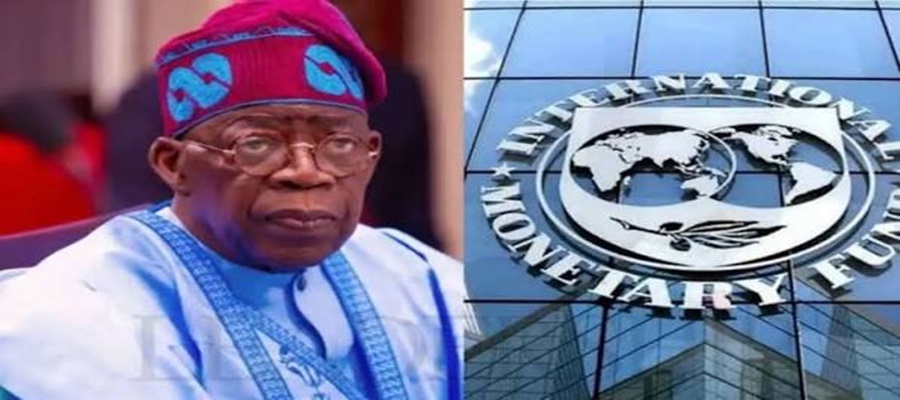
International Monetary Fund (IMF) has raised concerns over Nigeria’s fiscal transparency, disclosing that about two per cent of the country’s Gross Domestic Product (GDP), estimated at N8.83 trillion, was omitted from recent official budget documents.

Bola Tinubu
Unreported public spending—also known as off-budget expenditure—happens when a government spends money on public projects or services without including those costs in official budget documents.
This practice hides the true size of the government’s deficit, hides debt accumulation, and distorts overall economic data.
The IMF said the unreported expenditure has created a significant gap between Nigeria’s reported fiscal deficit and its actual financing requirements, making government borrowing appear lower than it truly is.
Speaking at an industry event in Lagos, Christian Ebeke, resident representative of IMF in Nigeria, said the expenditure should have been reflected in the country’s fiscal accounts to present a more accurate picture of public finances.
“So far we think that there are about two per cent of GDP of expenditure that were not reported that should be reported and should be recorded, so that this statistical discrepancy will disappear,” Ebeke said.
The estimate translates to approximately N8.83 trillion, based on the National Bureau of Statistics’ (NBS) latest nominal GDP figure of N441.5 trillion for 2025.
According to the NBS, Nigeria’s nominal GDP increased from N372.8 trillion in 2024 to N441.5 trillion in 2025 following improved performance across both the oil and non-oil sectors.
Using the Central Bank of Nigeria’s average exchange rate of N1,436 to the dollar for 2025, the omitted expenditure amounts to about $6.15 billion.
Ebeke attributed the discrepancy largely to capital projects executed outside the formal budget framework, noting that the omission had distorted assessments of Nigeria’s fiscal position and public investment profile.
He explained that some government spending was neither captured in approved budget documents nor reflected in budget implementation reports, resulting in an understatement of the country’s actual fiscal deficit.
According to him, the lack of comprehensive reporting also complicates coordination between fiscal and monetary authorities, as policymakers are left without a complete picture of government finances.
“The lack of full reporting can also complicate coordination between fiscal and monetary policy, as policymakers may not have a clear picture of the true deficit,” he said.
Ebeke warned that off-budget spending raises broader concerns about accountability, procurement processes and institutional oversight, stressing that improving fiscal transparency should remain a priority for the government.
“Improving transparency is critical,” he added, noting that expenditures outside the formal budget process undermine effective oversight and public accountability.
The IMF representative, however, acknowledged that the Federal Government has begun taking steps to address the problem through legislative reforms aimed at bringing previously unreported expenditures within the formal budget framework.
He said the authorities were working to amend existing budget laws to ensure greater disclosure of government spending but stressed that such reforms must be accompanied by timely and comprehensive budget implementation reports.
According to him, closing the reporting gap is essential to strengthening public financial management, improving transparency and restoring confidence in Nigeria’s fiscal framework.
The IMF’s latest observations come months after the National Bureau of Statistics rebased Nigeria’s economy, changing the GDP base year from 2010 to 2019, a revision that significantly increased the size of the country’s economy and, by implication, the value of expenditure estimates expressed as a percentage of GDP.
The concerns also follow the IMF’s recent Article IV Consultation on Nigeria, in which the Fund commended the Federal Government’s ongoing economic reforms for improving macroeconomic stability and boosting investor confidence, while cautioning that persistent structural weaknesses continue to limit the impact of the reforms on the broader population.

World Bank Okays New $1.25Bn Loan for Nigeria

Xenophobia: MTN Nigeria Belongs to Nigerians, Not Only South Africans — Toriola

SEC Grants Approval to Luno, Other Crypto Firms under Regulatory Sandbox

MTN Nigeria Celebrates Volunteers at Y’ello Care Impact Showcase

Listicle: 10 Essential Meta Safety Tools Every Parent and Teen Should Know

Mobile Internet Gender Gap Widest in Africa – GSMA

London Strengthens Global Investment Ties with Africa @ First Ever London-Africa Business Summit

FG Targets Alleged N3tn Capital Flight, Opens Airtime Credit Market to Nigerian Fintechs

Nigeria Launches FreeTV Nationwide

NASENI Trains 50 Women in Kano on Renewable Energy Technologies Under She-Powers Initiative



 Telecom2 days ago
MTN Foundation, Microsoft Empower Nigerian Educators with AI Integration Skills

 Telecom2 days ago
NCC Raises Alarm as Nigeria Lags in Fibre Internet, Pushes for Urgent Expansion

 E-Financial3 days ago
UBA Surprises Thousands of Customers with Over ₦400 Million Cash Bonus

 Broadcasting2 days ago
Spotify partners Afro Nation Portugal to expand African music experience

 Telecom2 days ago
Airtel Nigeria CEO Urges Adoption of Intelligent Technology Platforms to Accelerate National Growth

 E-Financial2 days ago
CBN Cracks Down, Revokes Licences of 46 Microfinance Banks

 E-Business2 days ago
Report Reveals More than Half of Users Encountered Fraud or Scams Online

 Telecom2 days ago
Google Rolls Out Fresh AI Projects Across Africa, Opens New Innovation Hub