

General News
Again, Gambaryan, Binance Executive Accuses 3 Lawmakers, NSA of Demanding $150m Bribe

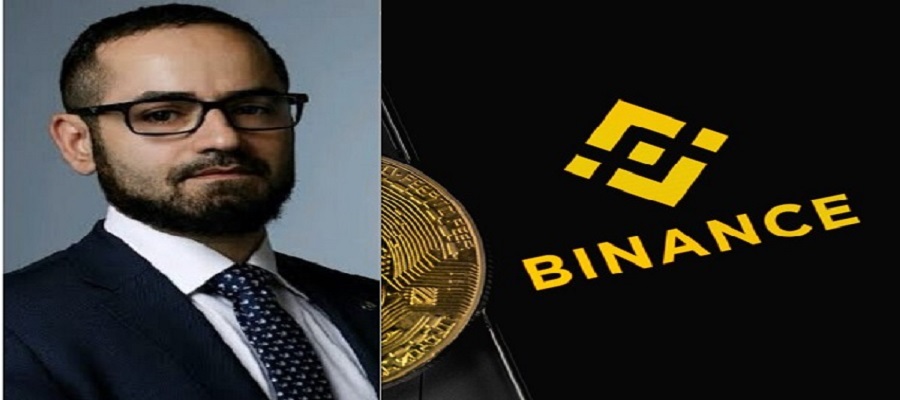
Tigran Gambaryan, head, Financial Crime Compliance Unit at Binance, cryptocurrency firm, who was detained in Nigeria for several months last year, has again alleged that three Nigerian lawmakers demanded a $150 million bribe from him.

Tigran Gambaryan, head, Financial Crime Compliance Unit at Binance
Gambaryan, also alleged that, Nuhu Ribadu, National Security Adviser (NSA) demanded billions worth of crypto accounts to fund his future political ambitions. He, however, did not say in which currency the alleged demand was made.
Tweeting on his X handle, formerly known as Twitter, with the name @TigranGambaryan on Friday, Gambaryan named two lawmakers involved in a meeting of January 5, 2024, at the National Assembly as Peter Akpanke and Philip Agbese, whom he said were working under the committee of Ginger Obinna Onwusibe, while he could not recall the name of the third lawmaker.
Narrating his alleged ordeal in Nigeria on X, Gambaryan said that the lawmakers set up fake cameras and media to make the meeting with his team official but that the cameras were not even plugged in.
Onwusibe is the chairman of the House of Representatives Committee on Financial Crimes, Akpanke is a member of the committee, and Agbese is the deputy spokesperson of the House.
The NSA’s office and the lawmakers have all denied the allegations. This is just as the federal government called on Nigerians to disregard the accusations, saying there are false and outrageous.
Gambaryan, who was detained in February 2024 on a five-count allegation of money laundering, was released on October 23, 2024, on diplomatic grounds due to ill health.
Continuing, Gambaryan said ‘@NuhuRibadu invited us to the official meeting and worked through Sa’ad Abubakar. Another key figure in this situation was Hamma Adama Belloji. Ogunjobi was just a pawn; they used him too. This was sold as a friendly meeting with the NSA, the head of the SEC (Securities and Exchange Commission), and the CBN (Central of Bank of Nigeria) governor and includes a discussion of the briber that was solicited by the House of Representatives.
‘The $26 billion figure they kept pushing publicly as some mystery money escaping Nigeria is complete BS. This information was provided in response to their request and was simply cumulative trade data for Nigerians on the platform. This money didn’t leave Nigeria-it was just people buying and selling crypto. For example, if you trade $100 a hundred times, that’s $10,000 in trade volume, but in reality, you only used $100. Again, just another example of them lying to cover up their BS investigation.
‘They lied about Nadeem escaping during mosque prayers. In reality, he returned and escaped afterwards. I don’t know exactly how he managed to flee. He emailed me in November, but we haven’t discussed the details of his escape. It’s possible he paid someone off, but I have no proof. If Belloji had simply checked his passport for a visa, he would have realized that Nadeem did not use that passport to travel to Nigeria.
‘They sent a letter to the U.S. Embassy and the British High Commission, falsely claiming that we were voluntarily participating in strategic talks. This was a blatant lie’, he said.
While noting that some Economic and Financial Crimes Commission (EFCC) officials, who were not present when Nadeem escaped, were detained, he added that: ‘Nadeem did not escape lawful detention-we were being held illegally. Belloji even admitted that he would fabricate evidence to obtain a court order to detain us for 14 days. Once the court order expired, they were unable to get an extension from the judge. At that point, they continued holding us illegally and had no justification for doing so.
‘There was a lot of noise about using Interpol to capture Nadeem. As someone who has been involved in multiple extradition cases, I can confidently say this was a joke. Extradition is a lengthy legal process, and no rational judge in Kenya or wherever would ever approve extradition for someone who escaped illegal detention at the hands of rogue law enforcement-especially when that detention involved holding employees hostage to pressure their employer. All noise’, he said.
Our company was a scapegoat’
Gambaryan stated further that Binance was made a scapegoat for the naira’s devaluation, when it was the direct result of President Bola Ahmed Tinubu’s ‘monetary policy’. According to him, the Nigerian operatives violated international privacy laws on user data on all Nigerians to target opposition members for allegedly ‘manipulating the price of the naira.’
Accusations against Ribadu
Gambaryan said Ribadu emphasised that he wanted billions in payouts to fund his future political ambition but was ‘trapped’ because any settlement would be perceived as a bribe. He added: ‘I guess he really wanted his boss’ job.’
He added: ‘Ribadu even hired a U.S. law firm to negotiate my release, but this failed due to their incompetence and greed.
‘Ribadu overstepped his authority and embarrassed Nigeria in front of U.S. National Security Advisor Jake Sullivan. Ribadu acting like… angered the White House and led to diplomatic repercussions-the U.S. limited visas to the Nigerian delegation for UNGA (United Nations General Assembly), and (President Joe) Biden refused to meet with Tinubu until my situation was resolved.
‘In the end, Ribadu overestimated his influence. They thought they could secure a quick win, but instead, they created an international incident, exposing his incompetence on a global scale,’ the Binance executive said.
The federal government has however called on Nigerians to disregard what it called falsehoods being peddled by the Binance executive.
In a statement issued last night, Mohammed Idris, the Minister of Information and National Orientation.
It noted with concern the ‘outrageous allegations, misinformation, and defamatory statements being disseminated by Tigran Gambaryan’.
He said while the federal government is hesitant to engage Mr Gambaryan, ”given the high-level diplomatic intervention that resolved his case, we are obliged to set the records straight to stop his falsehoods from gaining grounds.
‘The first visit by Mr Gambaryan and his colleagues to Nigeria was discretional on their part and government was not officially involved. However, when the attention of the government was called to an alleged bribery demand during that trip, an investigation was immediately opened into it, though there was no formal complaint by anyone.
‘Mr Gambaryan’s second visit to Nigeria was part of a wider probe into the criminal manipulation of the Nigerian currency through peer-to-peer platforms like Binance, but investigators were frustrated by the tactics deployed by Gambaryan and his team.
‘Mr Gambaryan was released by the Nigerian government in October 2024, on humanitarian grounds and following a high-level diplomatic intervention that ended with tangible benefits for Nigeria.
The government rejected Binance’s offer of a $5 million down payment in exchange for Mr Gambaryan’s freedom, in favour of a more beneficial settlement with the American government.’
The minister added, ‘we categorically deny the retaliatory claims made by Mr. Gambaryan against Nigerian officials involved in his case, and we urge the public to disregard these false accusations in their entirety.
‘It is essential to note that Mr. Gambaryan’s allegations are not only unsubstantiated but also lack credibility, given his apparent motive to discredit and intimidate those who ensured he faced justice.
‘However, we are confident that both the Nigerian and American judicial systems will provide Mr. Gambaryan with a fair opportunity to substantiate his claims in court. Until then, we advise the public to exercise caution and not be swayed by Mr. Gambaryan’s unfounded and malicious claims.’
Also speaking on the allegations, the lawmakers mentioned denied demanding bribe from Binance, asking Mr Gambaryan to provide evidence to back his allegations or be ready to face consequences.
One of the affected lawmakers and deputy spokesman of the House, Agbese, said he was ‘outraged’ by the ‘false’ allegation as he was not part of any meeting with the Binance team, but had a chance encounter with them when he visited his friend, Akpanke.
He said: ‘Let it be on record that I am not a member of the Committee on Economic and Financial Crimes. I visited my colleague, Peter Akpanke, in his office, where he was meeting with some visitors about the activity of his committee, with Peter Anekwe, a member of the committee present. We exchanged pleasantries and, in character with my person as an avid pursuer of knowledge, discussed Binance’s activities that did not include any demand from anyone.
‘It was during this visit to the office of Peter Akpanke, with Peter Anekwe present, that he told me they were interfacing with the Binance team from abroad over a referral to their committee. What transpired between the two of them and the Binance executive after I left the office is left to them. I never saw those visitors again after that chance meeting and did not afterwards attend any meeting with Binance executives, the EFCC, or the DSS (Directorate of State Services).
‘I am aware that when this issue was first raised, the chairman of the committee went to court and Binance apologised. So, all inquiries should be directed to the committee, not to Philip Agbese.
‘I have never used any cryptocurrency as I do not have a crypto wallet anywhere in the world, so I could not have asked for funds to be credited to a non-existent wallet.
‘Gambaryan and his associate, who escaped from prison, should return to the EFCC and defend themselves. Instead of trying to implicate me, they should focus on addressing the allegations against them’, he said.
Agbese demanded a retraction and an apology from Gambaryan within seven days if he failed to provide evidence or face legal action from his lawyers.
When contacted, Akpanke also denied demanding bribe from Binance executives as alleged and challenged Gambaryan to provide evidence that he (Akpanke) and other members of the committee demanded gratification from him as alleged.
Akpanke said: ‘Whatever we did with Binance was transparent; it was an open thing. Is it just to allege; how did we demand? This is the question you people should ask them as journalists. Where did we demand it? What for? Did the Nigerian government not charge them to court? If there were such a thing, why did they charge them to court? It is not true. I have not met Binance executives since we had a meeting with him in my office, in which I represented the chairman and everything was open and transparent. There was nothing hidden’.
While maintaining that he had no contact with the firm after submitting his investigation report to the chairman of the committee, Akpanke said the allegation had been made before and there is a pending court case about it and the firm had failed to show up.
Meanwhile, efforts to get the reaction of the chairman of the Financial Crimes Committee, Ginger Onwusibe, were not successful as he did not respond to calls and WhatsApp messages sent to him.
But a top government source said Gambaryan was being economical with the truth.
Efforts to speak with the NSA, Ribadu, were not successful. Also, Zakari Mijinyawa, who speaks on behalf of the office, could not be reached.
‘He (Gambaryan) contradicted himself because in one place he said Ribadu asked him for bribe to fund his future political ambition, and in another place, he said any money collected by Ribadu will be seen as bribe’, said the source.


Nigerian Communications Commission (NCC) has unveiled plans to introduce a Telecoms Identity Risk Management System (TIRMS) platform to tackle SIM-related fraud, strengthen digital security and boost confidence in Nigeria’s digital economy.

Aminu Maida, executive vice chairman of the commission, disclosed this on Thursday in Abuja at a stakeholders’ consultative forum on the proposed platform and planned regulatory changes.
Maida, represented by Rimini Makama, executive commissioner, Stakeholder Management, said the Mobile Station International Subscriber Directory Number (MSISDN), commonly known as SIM or mobile phone number, had become central to financial transactions, digital identity and access to services, but warned that its widespread use had also created vulnerabilities.
He noted that fraudulent activities linked to recycled, swapped, churned and barred SIMs had emerged as a major channel for identity theft and financial crimes, weakening trust in digital platforms.
He said, “The Mobile Station International Subscriber Directory Number commonly known as the SIM or mobile phone number has evolved into a critical identifier underpinning financial transactions, digital authentication, and access to essential services across all sectors of our economy.
“This evolution, however, has created new and challenging vulnerabilities. The fraudulent use of churned, recycled, swapped, and barred MISISDN’s has become a significant vector for financial fraud and identity theft, eroding public trust in our digital platforms and undermining the identity of systems we have worked hard to build.
“It is in direct response to these challenges that the Commission has initiated the Telecoms Identity Risk Management System Platform.”
According to him, the platform will enable service providers to verify mobile numbers flagged for suspicious or fraudulent activities before granting access, a move expected to reduce exposure to fraud and improve accountability.
He added that the system would enhance coordination among regulators, financial institutions and security agencies to build a more resilient digital ecosystem.
To support the rollout, the commission has proposed amendments to its Quality of Service Business Rules and the Registration of Communications Subscribers framework.
The proposed changes will require telecom operators to notify subscribers at least 14 days before recycling their lines and to upload details of churned numbers to the platform within seven days.
The amendments also introduce stricter provisions for blocking fraudulently registered or misused SIMs, aimed at improving transparency and protecting consumers.
Maida said the initiative reflects the commission’s commitment to collaboration and a whole-of-government approach to addressing digital risks, urging stakeholders to actively contribute to shaping the framework.
Also speaking, Olatokunbo Oyeleye, director of Cybersecurity and Internet Governance at the commission, emphasised the importance of trust in the digital economy.
“As rightly noted, digital trust is the operating licence of modern economy. Without it, nothing scales and with it everything accelerates. For our sector, this trust must be embedded across the entire value chain,” she said.
It was reported earlier that the NCC proposed that telecom operators must give subscribers a minimum of 14 days’ notice before deactivating their SIM cards over inactivity or post-paid churn.
The proposal was contained in a consultation paper titled Stakeholders Consultation Process for the Telecoms Identity Risks Management Platform, dated February 2026 and published on the Commission’s website.
Under the proposed amendments to the Quality-of-Service Business Rules, the NCC stated that “prior to churning of a post-paid line, the Operator shall send a notification to the affected subscriber through an alternative line or an email on the pending churning of his line.”
It added, “This notification shall be sent at least 14 days before the final date for the churn of the number.”
A similar provision was proposed for prepaid subscribers. The commission said, “prior to churning of a pre-paid line, the Operator shall send a notification to the affected subscriber through an alternative line or an email on the pending churning of his line,” stressing again that the notice “shall be sent at least 14 days before the final date for the churn of the number.”

Dr. Kabir Adamu, a security expert, has raised concern that kidnappers in Nigeria are now using banks to collect ransom payments.

Pix… CNBC
Adamu explained that in the past, kidnappers typically demanded cash payments for ransom.
However, there has been a noticeable shift to using mainstream banks for transactions.
Speaking on Arise News, Adamu, who is the CEO of Beacon Security and Intelligence Ltd, said this trend is worrying. In the past, kidnappers usually demanded cash, but now they are asking victims’ families to pay money through bank accounts.
He revealed that his team has tracked cases where ransom money was paid into bank accounts and successfully withdrawn.
Although he did not mention the banks involved, he said some progress is being made to address the issue.
Adamu explained that criminals previously used fintech platforms, but have now moved to traditional banks. This shift raises serious concerns about how well banks are monitoring transactions and following regulations.
He said Nigeria has improved its financial intelligence systems, especially after being removed from the Financial Action Task Force (FATF) gray list.
However, he noted that there are still weaknesses in how rules are enforced.
According to him, “A lot has been done in terms of policy, but there are still major gaps in operations and compliance.”
“We’ve monitored kidnapping for ransom cases where the ransom is being collected by formal banks,” Adamu said.
“My team and I were shocked when the ransom demand was made in a formal bank. It was paid and collected. I don’t want to mention the names of the two banks that were extremely guilty, but even for those two, progress is being made,” he said.
The security expert noted that although fintech platforms had previously been linked to ransom payments, criminals have now shifted their operations to traditional banking channels, raising significant concerns about compliance and oversight in the banking industry.
Adamu emphasized that this shift in tactics underscores the urgent need for stronger accountability measures and compliance standards within Nigeria’s financial institutions.
He also pointed out the challenges faced by regulatory bodies in fully addressing the issue, despite recent advancements in financial intelligence efforts.
“From the point of view of policy, a lot has been done, but from the point of view of operations, there is still a lot that remains to be done,” Adamu stated.
According to a report by SBM Intelligence, Nigeria’s kidnap-for-ransom crisis generated at least N2.57 billion for criminal groups between July 2024 and June 2025.
The report, titled “The Year Ahead at an Inflexion Point,” highlighted that despite kidnappers’ demands totaling N48 billion during the year, they only received N2.57 billion in actual payments.
General News
Stakeholders at Crisis Management Flagship Conference 2026 Call for AI-Driven Preparedness, National Coordination


CMC Connect LLP (Perception Consulting) convened the Crisis Management Advocacy Month Flagship Conference 2026 in Lagos, spotlighting the urgent need for artificial intelligence-driven strategies and more coordinated systems to address today’s rapidly evolving crisis landscape.

The conference, held at the Metropolitan Club, Lagos, brought together key stakeholders from government, industry, and the communications ecosystem under the theme, “Crisis Management in the AI Milieu: Fresh Threats, Smarter Responses.” Discussions throughout the event reinforced the need to shift from reactive crisis management to a more proactive, intelligence-led approach to preparedness.
In his welcome address, Yomi Badejo-Okusanya, Lead Partner at CMC Connect LLP, called for a fundamental repositioning of crisis management within organisational leadership. He noted that crisis management must move from the background to the centre of leadership, stressing the importance of anticipation, preparation, and decisive leadership in navigating crises. He described the conference as part of a broader movement aimed at redefining preparedness in an increasingly volatile environment.
Badejo-Okusanya also announced the launch of Crisis-X, an AI-driven crisis management platform developed by CMC Connect LLP, describing it as “built for speed, intelligence, and the demands of the current moment.”
“In the age of AI, a stitch in time doesn’t just save nine, it preserves reputation, leadership, and the trust that underpins both,” he added.
Delivering the keynote address, Bosun Tijani, Honourable Minister of Communications, Innovation and Digital Economy, highlighted the growing importance of data, technology, and coordinated systems in managing modern crises.
He emphasised the need for a forward-looking approach, stating that while crises are inevitable, responses can be shaped through preparedness. “With the right data and systems, organisations can move from reacting to crises to anticipating risks and managing them in real time,” he said.
A key highlight of the conference was the unveiling of the CMC Connect Crisis-X Intelligence Engine, an AI-powered platform designed to enhance how organisations detect, analyse, and respond to crises. The solution integrates real-time monitoring, sentiment analysis, strategic response planning, and recovery mechanisms. It also incorporates emotional intelligence capabilities to help organisations better interpret and respond to public sentiment during critical situations.
In addition, a Public Verification Portal was introduced to help combat misinformation by enabling organisations to validate and disseminate accurate information in real time, thereby safeguarding credibility and strengthening public trust.
Discussions at the conference reflected a shared concern about the speed and complexity of modern crises, particularly in an era shaped by digital platforms and artificial intelligence. Speakers noted that misinformation now spreads faster than institutional responses, placing credibility and trust at the centre of effective crisis management.
As one of the key observations from the sessions highlighted, “today, crises are faster than facts, louder than truth, and increasingly engineered,” reinforcing the urgency for organisations to adopt faster, more coordinated, and intelligence-driven responses.
As the conference drew to a close, participants collectively underscored the importance of embedding preparedness as a strategic priority. There was a shared commitment to leveraging innovation, collaboration, and responsible use of technology to navigate an increasingly complex risk environment.
In his goodwill message, Olalekan Fadolapo, Director General and Chief Executive Officer of the Advertising Regulatory Council of Nigeria, who represented the Honourable Minister of Information and National Orientation, Mohammed Idris Malagi, commended the Board and Management of CMC Connect LLP for its forward-thinking approach to crisis management.
He raised concerns about the growing misuse of artificial intelligence by unregulated content creators to spread misinformation and amplify negative narratives, urging stakeholders to deploy AI more responsibly in support of national development.
Dignitaries at the event also included Femi Olubanwo, Immediate Past President of Igbobi College Old Boys Association and Partner at Banwo & Ighodalo; Kunle Elebute, Immediate Past Chairman of KPMG Africa and current Chairman of CMC Connect LLP; and Bolajoko Bayo-Ajayi, the first female President and Chairman of Council of the Nigerian Institute of Marketing, among other distinguished guests.
The Crisis Management Advocacy Month Flagship Conference ultimately reinforced a central message, while crises are inevitable, organisations that invest in anticipation, intelligence, and coordinated response will be better positioned to protect trust and emerge stronger.

Breaking…..Kuda Lays Off Many Employees in Broad Restructuring

NCC to Curb SIM Fraud, Strengthen Digital Security with New Platform

NBC Boss Urges Content Ceators to Participate in DSO

Kidnappers Now Use Banks to Collect Ransoms — Expert

CBN Says Bank Customers Won’t Lose Deposits because of Recapitalisation

Kaspersky Discovers New Phishing Campaign Exploiting Google Tasks Notifications to Steal Corporate Credentials

esentry 2025 Report Shows Healthcare, Financial Services and Telecoms as Staging Grounds for Increased Cyberattacks in Africa

Spotify’s Loud & Clear Report Reveals Over ₦60Bn Revenue for Nigerian Artists in 2025

MTN Nigeria Posts Record N1.70 Trillion Pre‑Tax Profit, Declares N20 Dividend for 2025

China Threatens to Shut Nigeria’s Satellite Over $11.44m Unpaid Debt




 E-Financial3 days ago
CBN Directs IMTOs to Open Naira Settlement Accounts

 Telecom3 days ago
Nigerians Lose N12.5Bn to AI-Driven Scams- PwC

 General News3 days ago
Court Remands Hacker for Allegedly Stealing N3.09Bn from FCMB

 Telecom3 days ago
Airtel Africa, Starlink Mobile Data and Messaging Testing Take off in Kenya

 E-Financial3 days ago
DLM Capital Group’s AAA-Rated Sovereign Bond-Backed Composite Notes (“SBCNS”) Strengthens Investor Confidence with Successful First Principal & Interest Payment

 E-Business3 days ago
AU Sees AI Adoption Evolving to Boost Economic Growth in Africa

 Telecom3 days ago
GATEWAY Programme Opens Doors for 340,000 Nigerian Youths to Tap into $1.85trn Global Gig Economy

 News3 days ago
Kaspersky, AFRIPOL Conduct Joint Cybersecurity Training for African law Enforcement