

E-Financial
Agama, New SEC Boss Goes Tough on Illegal Trading

Securities and Exchange Commission (SEC) has said that it will go all out to act decisively to uphold the integrity of the capital market and protect the interests of all investors.

This is in a bid to rid the capital market space of illegal trading activities.
This was stated by Dr Emomotimi Agama, acting director general of the SEC, during a virtual meeting with the Blockchain Industry Coordinating Committee of Nigeria (BICCoN), the umbrella body of all major blockchain and cryptocurrency Associations in Nigeria.
Agama stated that the SEC Nigeria will not hesitate to utilize all the powers within its mandate to handle issues that are negative and pose a threat to national interest saying that the Commission has come as a partner to seek collaboration in making sure that the capital market community is respected globally for decency and fair play.
The SEC boss said the recent concerns regarding crypto P2P traders and their perceived impact on the exchange rate of the Naira has underscored the need for collective action and dialogue within the financial market ecosystem.
He said “There are basic practices as enshrined in the Investments and Securities Act 2007 and we expect that everyone will abide by those rules. Some may say no rules to play by, but do not forget that we have the Investments and Securities Act 2007 that some actions by participants today may be violating, hence the law is the law irrespective of the technology used.
“However, for specific Digital Asset regulatory regime that many have been calling for, we want to assure you that we are working tirelessly to establish an accommodating regulatory guideline for digital assets. The SEC as your regulator is desirous to work with you by providing a level of assurance that is needed by all that are operating within the rules of the market”.
The DG stated that the proposed regulatory guidelines which are currently being fine-tuned with suggestions by various stakeholders, will encompass various activities within the cryptocurrency ecosystem ranging from Wallet providers, digital asset custodians and fund managers, Cryptocurrency Crowdfunding, Initial Coin Offerings (ICOs), Security Token Offerings (STOs), Initial Exchange Offerings (IEOs), Cryptocurrency Exchange platform providers, Virtual Asset brokerage services etc., ensuring that every Nigerian playing within the industry with the potential to contribute to economic progress is included, supported and properly regulated.
“I am poised for an innovative digital asset regulatory regime that will sustain Nigeria as Africa’s Digital Asset Powerhouse with diverse solutions like Real World Asset Tokenization (RWA) that will drive wealth and catalyse our capital market. We must explore innovative solutions to this problem and strike the right balance between encouraging innovation and safeguarding our national economic interests. This we will do in afriendly and firm manner, to enable us to achieve the desired result”.
“We have a great market ahead of us and we have the talents and the people to make the market great. Mr President is concerned about the teeming youths involved in this space and would encourage them to do the right thing and develop an ecosystem that we all will be proud of. It becomes necessary that we do what is right. Manipulations and all forms of activities that undermine our national interest would not be acceptable. It is therefore very important that we know that the SEC by Section 13 of the ISA speaks to the regulation of all capital market activities.”
Agama expressed his gratitude to the leadership of the Blockchain Industry Coordinating Committee of Nigeria (Biccon) the umbrella body of all major blockchain and cryptocurrency Associations in Nigeria, and assured them of the commission’s readiness to work closely with all stakeholders in the cryptocurrency ecosystem to create a better country for all of us.
“With our deep understanding of this industry and the cryptocurrency sub-sector, we recognize the importance of collaboration and cooperation in addressing the challenges we face; hence your insights and suggestions are invaluable as we seek to navigate these complexities together. We need your support as much as you need ours.
“On that note, I want to emphasize that we are working on different fronts to sustain decent practices within our market, however, we are here to meet ourselves to know those playing within the sector decently and are open to hearing your suggestions on how we can effectively manage all obscure cryptocurrency trading activities within our jurisdiction p2p inclusive irrespective of the challenge we all know that p2p trading posses.
We must explore innovative solutions to this problem and strike the right balance between encouraging innovation and safeguarding our national economic interests. This we will do in a friendly and firm manner, to enable us to achieve the desired result.
Agama stated that one of the things that need to be done is delisting the naira from the P2P space to avoid the level of manipulation that is currently happening enjoining participants in the crypto space to be patriotic enough to name and shame those that are involved in disrupting the markets negatively.
“I want to seek your co-operation in dealing with this as we roll out in the coming days the regulations that would take control of these areas. We want to ensure that this management will ensure that people or institutions that require registration with the SEC are quickly licenced. We assure you that we will give guidance when necessary and do well to streamline the processes to make it less difficult.
“We ask that those involved in sharp practices that undermine national interest should cease. It is in our interest as a people to protect what belongs to us. We encourage you to reach out to us by naming and shaming the bad actors. Together, I am confident that we can weed out bad actors and harness the immense potential of this progressive technology for the benefit of all Nigerians in tandem with this government’s renewed hope agenda” he added.
In his remarks, Dr Babatunde Oghenobruche Obrimah, chairman of the Fintech Association of Nigeria commended the director general for his bold steps and the relationship with the ecosystem and pledged their commitment to work with the DG and granted him all the support that will help him succeed in sanitizing the virtual ecosystem.
On their part, BICCoN requested the setting up of a working group to tackle the various challenges facing the crypto space in a bid to move the market forward.



Galaxy Backbone (GBB) has engaged banks, fintech firms and other technology stakeholders in fresh discussions on strengthening digital trust, regulatory compliance and secure digital infrastructure in Nigeria’s financial sector.

The engagement took place during the organisation’s second-quarter webinar, which brought together Chief Information Officers (CIOs) and industry leaders to examine strategies for building resilient digital infrastructure as financial services become increasingly technology-driven.
The webinar, themed “Building Digital Trust in Nigeria’s Financial Sector: Navigating Regulatory Compliance and Infrastructure Performance,” comes amid the Central Bank of Nigeria’s (CBN) directive requiring banks, fintech companies, mobile money operators and other payment service providers to store payment transaction data generated within the country on local servers.
The CBN had said the policy is aimed at strengthening regulatory oversight, improving transparency, reducing concentration risks and ensuring that critical payment data remains within Nigeria’s jurisdiction.
Opening the webinar, GBB’s Executive Director, Finance, Ibrahim Sani, said the rapid transformation of the country’s financial services industry had made trusted digital infrastructure indispensable to the delivery of secure, reliable and future-ready financial services.
He noted that Galaxy Backbone already provides digital infrastructure supporting both public and private sector organisations, including several financial institutions that rely on its secure connectivity, cloud computing and data centre services.
According to him, “Galaxy Backbone continues to provide the digital backbone that supports both public and private sector institutions. We remain well positioned to support the industry’s compliance journey by delivering resilient infrastructure that meets evolving regulatory and business requirements.”
Also speaking, the Executive Director, Digital Exploration and Technical Services, Olumbe Akinkugbe, stressed that compliance with CBN directives and other regulatory frameworks was essential to strengthening transparency, accountability, consumer confidence and the security of financial data in an increasingly digital economy.
He maintained that regulatory compliance had become a key pillar in safeguarding Nigeria’s financial ecosystem as digital transactions continue to expand.
The webinar also featured a presentation by GBB’s Head of Automation and Integration, Thomas Oghenebhumhe, who showcased the organisation’s sovereign cloud platform and highlighted the importance of secure cloud adoption across the financial services industry.
He explained that resilient cloud infrastructure enables financial institutions to innovate more rapidly, improve operational efficiency, safeguard sensitive information and comply with evolving regulatory standards.
His presentation was followed by an interactive session during which participants sought practical insights on cloud migration, data sovereignty and regulatory compliance.
Head of Data Centre Operations, Samuel Olusola Oyeleke, later highlighted Galaxy Backbone’s globally certified Tier III and Tier IV data centre infrastructure, describing it as resilient enough to guarantee uninterrupted digital services, disaster recovery and business continuity for mission-critical financial operations.
Closing the webinar, Executive Director, Customer Centricity and Marketing, Olusegun Olulade, said building digital trust required sustained collaboration among regulators, technology providers and financial institutions.
“As Nigeria’s financial ecosystem becomes increasingly digital, organisations must invest in infrastructure that not only meets regulatory requirements but also guarantees resilience, security, business continuity and customer confidence,” he said.
Olulade reaffirmed Galaxy Backbone’s commitment to supporting the financial services industry with secure, resilient and globally aligned digital infrastructure that enables institutions to innovate with confidence while maintaining compliance with changing regulatory standards.
The organisation said its Uptime-certified data centres, Payment Card Industry Data Security Standard (PCI DSS) certification, sovereign cloud platform and nationwide fibre-optic network provide trusted platforms for secure data hosting, payment security, regulatory compliance, business continuity and disaster recovery.
According to GBB, the infrastructure also supports Nigeria’s growing data sovereignty agenda by ensuring that critical financial data is securely hosted, readily accessible and remains within the country’s jurisdiction in line with regulatory expectations.
With more than two decades of delivering shared ICT infrastructure and digital services, Galaxy Backbone said it has continued to support digital transformation across both the public and private sectors through secure connectivity, cloud services, cybersecurity, managed ICT services and enterprise-grade data centre solutions.

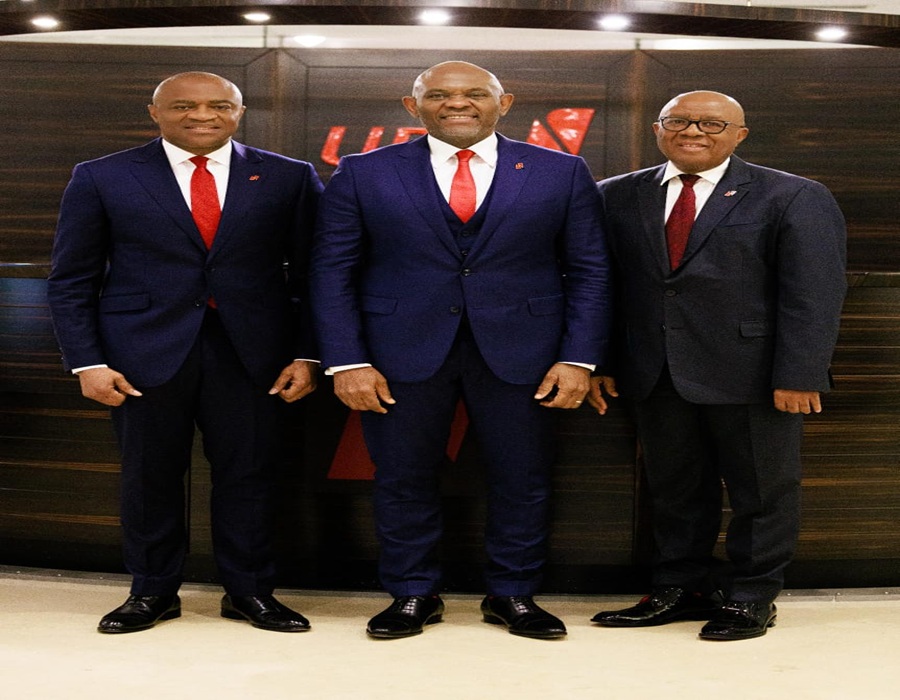
United Bank for Africa (UBA) Plc has announced that its Group Chairman, Mr Tony O. Elumelu, will retire from the Board of Directors on Aug. 21, 2026, upon completing the 12-year tenure limit for non-executive directors prescribed by the Central Bank of Nigeria (CBN).

The bank disclosed this in a statement issued following a meeting of its Board of Directors held on July 6.
According to the statement, the board accepted Elumelu’s retirement and elected Mr Emmanuel N. Nnorom, a Non-Executive Director of the bank, as his successor with effect from Aug. 21, 2026.
The board expressed appreciation to Elumelu for what it described as his visionary leadership and immense contributions to the growth and institutional development of the UBA Group.
It noted that under his leadership, UBA expanded into a leading pan-African financial institution with operations in 20 African countries and four global financial centres, serving more than 50 million customers.
The board described Elumelu’s tenure as a defining period in the bank’s history.
Nnorom, who will assume office as chairman upon Elumelu’s retirement, is a chartered accountant with more than 40 years of experience in banking, finance and auditing.
The statement said he brings extensive leadership experience and deep institutional knowledge of the bank to his new role.
Speaking on his retirement, Elumelu described serving UBA as one of the greatest privileges of his professional career.
“Serving United Bank for Africa has been one of the great privileges of my career.
“UBA has established a unique competitive position across Africa and globally, and I leave the Board with great confidence in UBA’s future.
“Emmanuel Nnorom is a leader of integrity, experience and sound judgement, and I am confident that the bank will continue to thrive under his leadership,” he said.
Responding to his appointment, Nnorom expressed gratitude to the board for the confidence reposed in him.
“I am honoured by the trust the Board has placed in me and deeply conscious of the legacy I inherit.
“I look forward to working with my colleagues on the Board, Management and our staff across all our markets to sustain UBA’s momentum and continue delivering long-term value to our shareholders, customers and stakeholders,” he said.
UBA operates in 20 African countries as well as the United Kingdom, the United States, France and the United Arab Emirates.
The bank provides retail, commercial and institutional banking services and serves more than 50 million customers globally, with a workforce of about 25,000 employees across its operations.

Zedvance Finance Limited has appointed Professor Pius ‘Deji’ Olanrewaju as Chairman of its Board of Directors, effective July 1, subject to the approval of the Central Bank of Nigeria (CBN).

Professor Pius ‘Deji’ Olanrewaju
The company disclosed this in a statement, describing the appointment as a significant step in strengthening its corporate governance structure and positioning the organisation for its next phase of growth.
According to Zedvance, the appointment reflects its commitment to building a robust governance framework capable of driving innovation, sustainable growth and long-term value creation for stakeholders.
The company said Olanrewaju brings extensive boardroom experience, leadership credentials and expertise in governance, strategy and organisational transformation to the role.
It noted that the strengthened board structure would enhance oversight and support the company’s strategic growth ambitions.
Speaking on his appointment, Olanrewaju expressed appreciation for the confidence reposed in him.
“I am honoured to assume the role of Chairman of the Board of Zedvance Finance.
“The company has established a strong reputation as a trusted financial partner, leveraging innovation and technology to create meaningful impact.
“I look forward to working with the board and management to support the company’s strategic aspirations and deliver sustainable value for our stakeholders,” he said.
Olanrewaju is a legal scholar, banking expert and corporate leader with more than four decades of experience spanning banking, finance, academia and institutional governance.
He holds degrees in Law, Arts and Social Sciences, including a Bachelor of Laws (LL.B), Bachelor of Laws (B.L.), Bachelor of Arts (B.A.), Master of Science (M.Sc.), Master of Laws (LL.M.) and a Doctor of Philosophy (Ph.D.).
He is a Fellow of the Chartered Institute of Bankers of Nigeria (FCIB), Fellow of the Institute of Capital Market Registrars (FIMA), Fellow of the Institute of Management and Administrative Technology (FCMR), and Fellow of the Enterprise Risk Management Professionals (FERP).
Olanrewaju is also a member of several professional bodies and served as the immediate past President and Chairman of the Council of the Chartered Institute of Bankers of Nigeria (CIBN).
During his more than 35 years of service to the institute, he held several strategic positions, including Chairman of its Capacity Building and Certification Committee.
He is currently a Professor of Banking Law at Babcock University, where he previously served as Provost and Dean of the School of Law and Security Studies.
He has authored and co-authored several academic publications and serves on the boards of a number of organisations, including Babcock University Microfinance Bank.
The company expressed confidence that his experience in strategic leadership, corporate governance and financial services oversight would support its long-term growth and institutional development.

DSS Spyware Acquisition Enables Illegal Wiretaps, Detentions – The ICIR

Microsoft to Lay Off 4,800 Workers

Access Bank, Fifth Chukker and UNICEF Renew Commitment to Expanding Educational Opportunities for Nigeria’s Most Vulnerable Children

IHS Nigeria, FCT-HSES Concludes Clean Cooking Energy Campaign “Project Breathe Clean Air” in Abuja

Kaspersky Transforms Threat Intelligence Reporting into an Interactive Content Hub

Mobile Internet Gender Gap Widest in Africa – GSMA

NASENI Moves to Digitize CCB’s 5m Assets Declaration and Operations

Nigeria Launches FreeTV Nationwide

CANAL+ Partners Samsung to Pre-Load DStv Stream on New Samsung TVs In Nigeria, Other African Countries

UK, Nigeria Launch £15m Growth Programme to Accelerate Economic Transformation




 E-Financial2 days ago
Tokenization, Blockchain Technology will Transform Financial Institutions – IMF

 General News2 days ago
NIS Deploys Advanced Surveillance Masts, other Critical Infrastructure to Boost Border Security

 Broadcasting2 days ago
Obi, NDC Presidential Candidate Faces N50Bn Defamation Claim over Alleged Podcast Remark

 E-Business2 days ago
Weebly Websites to Shut Down for Nigeria, 66 Other Countries from September

 Telecom2 days ago
No Plans for Fresh Tariff Hike – MTN

 E-Financial2 days ago
FG Denies N8 Trillion ‘Shadow Budget’, Says IMF Quoted out of Context

 General News2 days ago
PufferPay CEO to Keynote Business Journal Fintech & Financial Inclusion Roundtable 2026

 Telecom2 days ago
Airtel Africa Foundation Equips 200 Young Women with Digital Skills to Drive Nigeria’s Tech Economy