

General News
Air Peace Begins Inaugural Flight from MMA2


A Nigerian Airline, Air Peace, on Wednesday said it had expanded its operations to the Murtala Muhammed Airport 2 (MMA2), Lagos with an inaugural flight to Kaduna.
Air Peace Reports have it that the airline’s Embracer 145 jet, with registration number, took off at 7:20 a.m. from the MMA2 enroute Kaduna Airport.
Speaking on the development, Mr Chris Iwarah, the Corporate Communications Manager, Air Peace, said the airline was delighted to have been able to move some part of its operations to the MMA2.
Iwarah noted that although Air Peace had its main hub at the General Aviation Terminal (GAT), Murtala Muhammed Airport, Lagos, the expansion aimed at positioning the Airline for better services.
He said Air Peace would henceforth operate its Lagos-Akure, Lagos-Asaba, Lagos-Kaduna and Lagos-Port Harcourt as well as NAF Base flights from MMA2.
Iwarah said other new domestic routes to be will be launched soon would also be done from the terminal which would in future accommodate all flights under the airline’s subsidiary, Air Peace Hopper.
“ We are quite hopeful that the expansion of our Lagos base to MMA2 will afford us the space and convenience to deliver first-class flight experience to our loyal customers.
“As a customer-oriented carrier, it is only strategic that we seek a better operational atmosphere for seamless passenger facilitation and exceptional customer service experience.
“This exactly is what MMA2 offers with its state-of-the-art facilities and we are indeed proud of our decision to annex it to our Lagos hub,” he said.
Mr Rodger Whittle, Executive Director, MMA2 described the action of the Airlime as a fantastic thing for the operator and same for the MMA2.
He said: “I think it is very exciting for us that Air Peace has come to MMA2 and we can now happily say that all the airlines in Nigeria operate from the MMA2. “It brings the destinations of MMA2 to 24. Air Peace is bringing Akure as well as Port Harcourt NAF Base.
Mrs Eniola Ade-Solanke, Head, Corporate Communications, MMA2 said the airport terminal had the capacity for regional operations and attracting major airlines through the provision of excellent passenger experience.


DalaHill Law Practice and the Bank of Agriculture (BoA) have signed a Mutual Accountability Framework (MAF), marking a milestone in the launch of a climate finance initiative funded by the African Climate Foundation (ACF) and valued at US$100,000.

According to a statement by the firm, the signing took place during a kickoff ceremony at the BoA headquarters in Abuja and formalised the roles, responsibilities and shared commitments of both institutions in delivering the project. The framework was signed by Ayo Sotinrin, BoA Managing Director, and Mohammed Hamza, Managing Associate at DalaHill.
The ACF-funded initiative is designed to support BoA’s institutional transition towards climate-aligned agricultural finance. Central to the programme is the establishment of a Clean Energy Delivery and Innovation Unit (CEDIU), a dedicated function that will integrate climate risk considerations, environmental data and sustainability principles into the bank’s strategy, operations and investment decision-making.
Under the initiative, BoA will also be supported to develop Clean Energy Access Systems and Climate Finance Development Frameworks, alongside a pipeline of bankable, climate-aligned agricultural projects.
These projects are expected to attract domestic and international capital into the sector, contributing to efforts to bridge Nigeria’s estimated $247.3 billion financing gap for its green energy transition.
Speaking on behalf of DalaHill, Mohammed Hamza described the initiative as a pivotal intervention in Nigeria’s agricultural and climate finance landscape. He said the firm is acting as a trusted adviser, working with institutions to deliver catalytic and transformative solutions.
According to him, DalaHill is deploying a multidisciplinary technical team to support BoA’s transition into a climate-aligned institution capable of attracting finance for scalable, investment-ready agricultural projects.
He highlighted the strategic importance of the project, noting that while ACF has traditionally focused on renewable energy, climate alignment within the agricultural sector is critical to driving Nigeria’s broader energy transition. He added that the initiative represents ACF’s first climate finance grant promoting agriculture in Nigeria.
In his remarks, Sotinrin expressed appreciation to the project partners and acknowledged longstanding gaps within Nigeria’s agricultural finance ecosystem. He reaffirmed BoA’s commitment to driving systemic change by attracting climate-aligned expertise, strategic funding and increased national and international attention to the sector.
Sotinrin also noted that the initiative aligns with the Federal Government’s climate and sustainability agenda, referencing Nigeria’s participation at an ongoing global climate sustainability conference in Abu Dhabi.
He further highlighted strong government backing for BoA’s transformation, including presidential approval in October 2024 of a US$1 billion recapitalisation plan aimed at strengthening the bank’s capacity to support national development.
DalaHill Law Practice is a full-service commercial law firm headquartered in Abuja, with a strong track record in advising on economically catalytic projects across sectors including energy, infrastructure, finance, trade and emerging markets.
The firm is known for structuring complex transactions, managing regulatory risk and supporting projects that promote sustainable growth and long-term economic impact in Nigeria and beyond.

Kaspersky’s new global research reveals that 65% of online shoppers believe they can detect fraud on their own, while only 42% actually use security software to protect their payments and block malicious links.

Experts consider this a major risk for online buyers. Over the past year Kaspersky identified nearly 6.7 million phishing attacks globally impersonating online stores, payment systems, and banks, with 55.6% targeting online shoppers.
As the post-holiday and summer sales season kicks off, Kaspersky conducted a survey to examine consumer cybersecurity practices employed during online shopping. The findings show that 97% of respondents demonstrate a substantial level of awareness of online security risks and implement at least some measures to safeguard their digital transactions.
However, the survey found that fewer than half the participants use dedicated security software to block phishing attempts and protect payment transactions. This concerning trend is particularly pronounced among the 55+ year old generation, with only 32% of respondents in this age group actually using security software when making online purchases.
The most commonly adopted security protocols include being vigilant about potential warning signs, such as suspicious hyperlinks or unusual website design (65%) and verifying seller authenticity (62%).
Kaspersky experts emphasise that while these practices are essential protective measures for online shopping, they constitute only foundational protection strategies rather than the comprehensive fraud prevention provided by a security solution.
Other steps that could protect online shoppers, like using a separate credit card for digital purchases or using a separate email address to register with unfamiliar online shops, were chosen by 33% and 26% of survey participants, respectively.
Meanwhile, 30% claimed to consult with friends and relatives before making a purchase. Interestingly, this option is highly popular among the younger generation, with 37% opting for it, while it is less common among older people (21%).
“Throughout the year, we’ve observed that online shoppers have consistently been one of the most desirable targets for scammers. During sales periods, their scams can become even more pervasive. Staying vigilant is crucial, but protecting yourself requires more than just awareness.
It is particularly concerning how scammers are now using AI to craft more sophisticated, targeted phishing attempts that are increasingly difficult for regular users to recognise,” comments Olga Altukhova, Senior Web Content Analyst at Kaspersky.
Sales seasons are peak times for scammers. To protect yourself against emerging threats, implement the following security practices:
– Don’t save your full credit card details on websites unless absolutely necessary.
– Consider using a separate debit card specifically for online purchases and set up transaction alerts on your bank and credit card accounts.
– Be extra cautious of “flash sales” that seem too good to be true. Watch out for websites that pressure you into making quick decisions, and be wary of sellers who refuse returns or exchanges.
– Use different passwords for each online account and enable two-factor authentication wherever possible.
– Apply a security solution with a strong anti-phishing component. For instance, Kaspersky Premium received the annual ‘Approved’ certification from the leading testing lab AV-Comparatives in 2025 for detecting 93% of phishing URLs, demonstrating outstanding anti-phishing capabilities, powered by AI technology.
– Scammers constantly evolve their methods, so staying informed about new phishing techniques can help you recognise and avoid them. The Kaspersky Security blog will help you keep your finger on the pulse of emerging cyberthreats.
The study was conducted by Kaspersky’s market research center in November 2025. A total of 3000 respondents from 15 countries (Argentina, Chile, China, Germany, India, Indonesia, Italy, Malaysia, Mexico, Saudi Arabia, South Africa, Spain, Turkey, the United Kingdom, and the United Arab Emirates) took part in the survey.

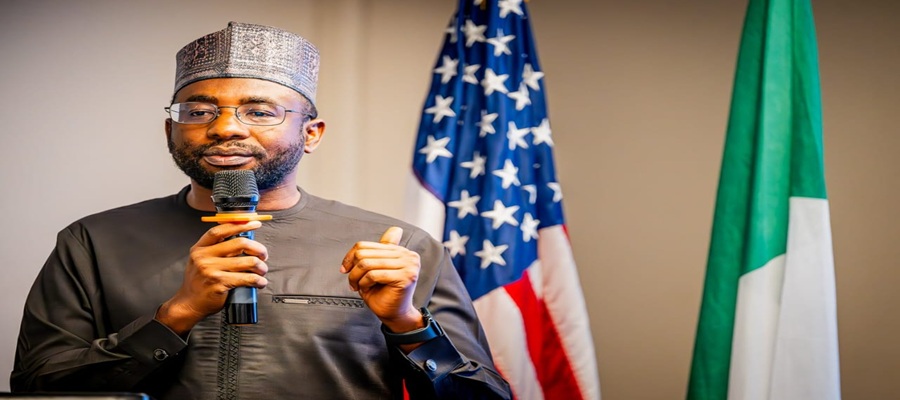
Kashifu Inuwa Abdullahi, Director General of the National Information Technology Development Agency (NITDA), has reaffirmed Nigeria’s commitment to strengthening collaboration with the United States in building a secure, trusted, and resilient digital ecosystem, with a particular focus on data privacy, artificial intelligence, cybersecurity, and capacity building.

NITDA
He stated this while delivering an address at the Nigeria Data Privacy Capacity Building Workshop organised by the United States Department of State, in collaboration with the Nigerian Mission and relevant stakeholders in the digital ecosystem.
Expressing his excitement at the engagement, Inuwa described the workshop as a strong revalidation of the long-standing partnership between Nigeria and the United States in advancing the country’s technical and digital systems.
According to him, the collaboration is not a new initiative but part of a growing and deliberate effort by both countries to jointly address emerging digital challenges and opportunities.
Inuwa recalled that in April 2024, Nigeria and the United States, through the U.S.–Nigeria Binational Commission, agreed to work together on key areas including data privacy, artificial intelligence, cybersecurity, capacity building, and other aspects of digital development.
He further noted that the same year witnessed the successful hosting of an Artificial Intelligence Conference, co-hosted by the Nigerian Government and the U.S. Mission in Nigeria, as well as Nigeria’s participation in engagements with U.S. cybersecurity companies to explore partnerships aimed at strengthening Nigeria’s technical ecosystem.
He explained that NITDA’s emphasis on data privacy, AI, cybersecurity, and policy is anchored on one central objective: building trust in the digital ecosystem, adding that trust is a critical enabler of digital transformation, as its absence slows down innovation and increases costs, while its presence accelerates progress and reduces barriers to growth.
The NITDA Boss stressed that building a prosperous digital economy requires deliberate efforts to safeguard data privacy, strengthen security frameworks, and deploy AI responsibly.
He noted that artificial intelligence relies on data, data demands privacy, and privacy can only be guaranteed through strong security, making it impossible to address these issues in isolation.
Inuwa described the workshop as the beginning of broader engagements and deeper collaboration in other strategic areas, particularly as Nigeria continues to position itself as a key player in the global digital economy.
He disclosed that following the participation of the U.S. Mission in Nigeria’s National Cybersecurity Conference last year, plans are underway to expand the conference into an international cybersecurity platform this year.
According to him, the international conference will provide an opportunity for U.S. cybersecurity companies to showcase their technologies, explore partnerships with Nigerian firms developing local cyber solutions, and jointly strengthen Nigeria’s cybersecurity ecosystem.
Inuwa also reassured partners and stakeholders of NITDA’s commitment to building the right policies and enabling environment for innovation to thrive.
He noted that Nigeria, alongside Africa, represents the next frontier of the digital economy, driven by a young, digital-native population and a large, expanding market.
He said that while many public and private sector organisations in Nigeria rely on U.S. technologies to build their digital systems, the country also possesses significant local talent capable of developing homegrown solutions to address national and regional challenges.
He added that NITDA remains committed to working with international partners to build local capacity and promote Nigeria’s digital self-determination.
According to the DG, digital technology is no longer optional, as it represents the future of economic growth and development, and no nation can afford to be left behind.
He emphasised that the only way to fully harness the opportunities of the ongoing AI revolution is by safeguarding privacy, establishing sound policies, and laying a strong digital foundation capable of supporting rapid technological advancement.
He appreciated the U.S. Department of State and the U.S. Mission in Nigeria for their continued partnership and support, expressing optimism that the collaboration will be further strengthened to explore new areas of cooperation, particularly in cybersecurity and artificial intelligence, for the mutual benefit of both countries.

Paystack Expands Beyond Payments into Banking

DalaHill, BoA Partner on $100,000 ACF Climate Finance Initiative

How to Stay Safe Online During Sales Periods

FG Directs Banks, Fintechs to Remit VAT on Service Fees

Nigeria Targeted with 4,622 Cyber-attacks Per Week in December 2025

Banks quietly move to enforce new ₦50 transfer levy from Jan. 1

FIRS says NIN, CAC Numbers to Serve as Tax IDs from 2026

Nigeria Takes the Lead in the Global WSIS+20 Digital Agenda

Nigeria Police Arrest Okitipi, Nigerian Allegedly Linked to Microsoft 365 Hack

PalmPay Launches N400 Million World Travel Carnival, Rewarding Users with Free Global Trips




 General News2 days ago
PalmPay, Premier Cool to Reward 10,000 Nigerians with ₦100m in “10k for 10k Campaign”

 News3 days ago
Nigeria, Others Lag Behind as Egypt Tops Africa in AI Readiness

 E-Financial2 days ago
Ecobank Joins Trillion-naira Club for the First Time in 20 Years

 E-Business2 days ago
Kaspersky Warns Telecom Threats from 2025 will Carry into 2026 as New Technology Adds New Risk

 E-Business2 days ago
Nigerian Terra Industries Secures $11.8m for Expansion

 Telecom2 days ago
SHELT Named in Prestigious 2025 MSSP 250 List for Cybersecurity Excellence

 E-Financial1 day ago
Angst as FG Demands 7.5 Percent VAT on Mobile Bank Transfers, USSD

 News1 day ago
Moniepoint Launches Second Cohort of DreamDevs Initiative to Double Down on Africa’s Tech Talent Pipeline