

Telecom
Airtel Africa Launches its Long-term Sustainability Strategy, Building on its Corporate Purpose to Transform Lives

Airtel Africa, a leading provider of telecommunications and mobile money services, with a presence in 14 countries across Africa, has launched a comprehensive sustainability strategy which sets out its detailed plans to improve the lives of millions of people across Africa through digital and financial inclusion and access to education.

The strategy also includes specific goals around environmental protection and the ongoing development of a rewarding, diverse and inclusive workplace.
We have worked hard to identify the technical programmes needed to respond to all our material topics and to have a genuine and positive impact on people and communities across Africa. Our strategy sets specific goals and commitments, and for each of these, we have identified exactly how we will achieve them and the milestones along the way.
Our Board and Executive Committee have been integral to developing this strategy which is fully aligned with the Company’s corporate strategy and plans. We have engaged with our stakeholders throughout the development of the strategy and undertook a detailed stakeholder consultation ahead of this launch.
Our strategy is delivered through four sustainability pillars: ‘Our business’ which reflects our operations and the expansion of our network, ‘Our people’ which sets commitments around employee engagement, development, diversity and inclusion, ‘Our community’ which details our dedication to improving access to education, and ‘Our environment’ which is focused on reducing the environmental impact of our operations.
We have identified six of the United Nations Sustainable Development Goals to which we believe our work will make a genuine and tangible contribution- they are SDG 4: Quality education, SDG 5: Gender equality, SDG 8: Decent work and economic growth, SDG 9: Industry, innovation and infrastructure, SDG 10: Reduced inequalities, and SDG 12:
Responsible consumption and production.
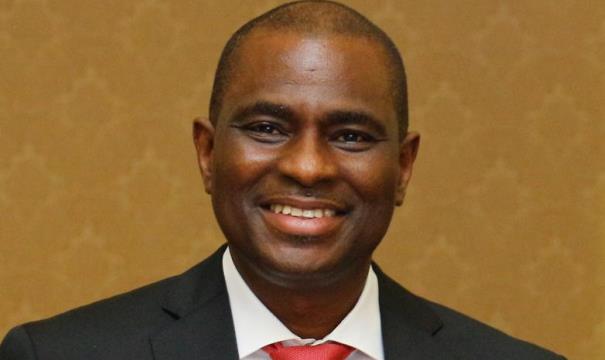
Segun Ogunsanya, CEO, Airtel Africa, said: “Today is a significant milestone in Airtel Africa’s journey. Our new strategy provides a solid foundation for us to accelerate change for the communities we serve and the environment in which we operate. We have worked closely with our stakeholders to ensure that this strategy is ambitious, robust and credible.
This partnership approach underpins all the work we will deliver through our strategy. We will look to collaborate across the industry, recognising that by working together, we will be able to drive a more significant impact for the people who need it most. We are more committed than ever to ensuring open and honest communication on our progress as Airtel Africa embarks on its long journey towards a more sustainable future.
Goals and commitments
The sustainability strategy includes nine goals and commitments, with corresponding programmes that address the business’ material topics (identified through an extensive consultation at the beginning of the year) and enable the Group to continue delivering sustainable growth and uphold the best governance standards:
- Data security goal: Establish industry-leading data security for our customers through investments in technology and expertise, updated processes and consumer awareness – with focus areas around confidentiality, integrity and availability.
- Service quality goal: Provide underserved communities with access to reliable networks and connectivity through the rollout of new infrastructure and technology, improved fibre connectivity and capacity – with focus areas on service accessibility, delivery and reliability.
- Supply chain goal: Ensure all our suppliers are aligned with our sustainability agenda through programmes to increase supplier disclosure and audit ESG performance – with focus areas on enhanced supplier due diligence and ongoing ESG compliance.
- Commitments to our people: with our ongoing commitment to provide rewarding employment opportunities and to achieve genuine diversity and inclusion at all levels across the business through:
– Delivering equality in our workforce through recruitment and programmes to provide training and advancement for everyone regardless of gender, nationality or disability;
– Providing best practice training and development through upskilling and reskilling initiatives to ensure they can succeed in their future careers. And through supporting female entrepreneurs through training and increasing women’s participation in the technology and engineering sectors;
– Providing the highest standards of health and safety for our employees and contractors through the introduction of a best practice social and health and safety management system, improved policies and full compliance with all legislation and regulation; and,
– Maintaining the highest levels of employee engagement through the introduction of additional channels that provide every one of our people with a voice.
- Digital inclusion goal: significantly improve digital Inclusion across Africa by driving the penetration of mobile, smartphones and home broadband in rural areas through the provision of retail and support services.
- Financial inclusion goal: significantly increase financial inclusion in Africa, with particular support for women through the development of affordable financial products to meet the needs of the un- and under-banked, a reliable service and financial confidence and literacy.
- Access to education goal: helping transform the lives of over one million children through improving access to education – with programmes around connectivity, the provision of zero-rated education content under a five-year UNICEF partnership, connecting 1,400 schools to the internet by 2027, and the adoption and support of schools in all our markets.
- Greenhouse gas emissions reduction goal: Our ambition is to achieve net zero greenhouse gas (GHG) emissions ahead of the 2050 deadline set out in the Paris Agreement. To do this we must fully identify, measure and reduce our GHG emissions which can only be achieved in partnership with our peers and the wider industry. We will establish and launch a sector leading and credible decarbonisation pathway in 2022, ahead of the publication of our first Sustainability Report.
- Environmental stewardship: Eliminate hazardous waste from our operations, significantly reduce our non-hazardous waste and minimise our water consumption with programmes to replace damaging materials, expand recycling schemes and build employees’ awareness around the protection of our natural resources.



Google has launched its Search Live feature globally to over 200 countries, including Nigeria, where AI Mode is available, enabling voice-and-camera conversations in users’ preferred languages.

Powered by the new multilingual Gemini 3.1 Flash Live model, it delivers natural, real-time interactions via the Google app on Android or iOS—tap the Live icon under the Search bar.
Ideal for hands-free help, users can speak queries for audio replies, follow-ups, or web links. Camera integration adds visual context, like troubleshooting a shelving unit, or pairs with Google Lens for real-world chats.
From the app or Lens, Nigerians can now explore, learn, or solve tasks instantly, boosting everyday productivity worldwide.
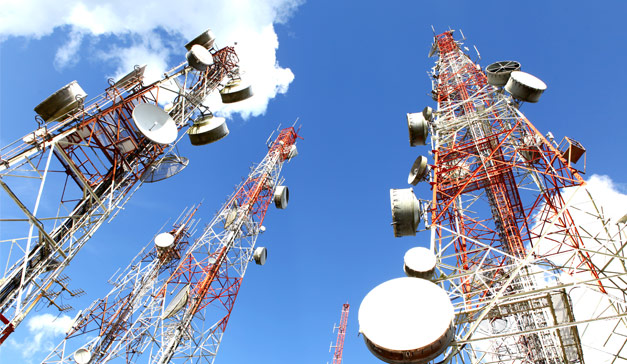
Clean and reliable power for telecom networks in Ethiopia, Liberia, and Sierra Leone will be expanded following a $45 million investment by the International Finance Corporation (IFC) in IPT PowerTech.

The investment targets countries where limited power supply continues to slow digital connectivity and broader economic participation, the institution stated earlier this week.
To enable this expansion, the IFC is providing a $45 million corporate financing package consisting of an A-loan of $27 million and $18 million in blended finance.
The blended portion is sourced from the Canada-IFC Blended Climate Finance Programme and the IDA20 Private Sector Window Blended Finance Facility.
The initiative marks the IFC’s first direct infrastructure engagement in Liberia in a decade and in Sierra Leone in six years.
It will help scale solar- and battery-based power systems that reduce reliance on diesel and support greener, more resilient telecom networks.
By improving the quality and stability of power to telecom towers, the initiative will strengthen mobile coverage and ensure that households, schools, health centres, and small businesses can depend on consistent digital services, said the IFC.
The funding supports the modernisation, operation, and maintenance of 2 235 telecom sites across the three nations. More than 90% of these are located in off-grid or weak-grid locations.
With new solar and battery systems powering these sites, mobile networks will experience fewer outages and improved service quality.
Optimising the energy mix is estimated to reduce power costs for operators by up to 30% in Liberia, 26% in Sierra Leone, and 52% in Ethiopia.
This transition is also expected to cut emissions by more than 10 624 tonnes of carbon dioxide annually. Furthermore, the partnership will promote gender inclusion by expanding opportunities for women in technical, operational, and leadership roles within the sector, says the IFC.
This agreement reflects a shared vision for a greener telecom industry and empowers the company to scale its innovative energy platforms, according to Nabil Haddad, CEO of IPT PowerTech Group.
Reliable and affordable power for telecom networks is a cornerstone of Africa’s digital transformation, said Nathalie Kouassi-Akon, IFC regional director for West Africa and the Gulf of Guinea.
Through this partnership, the institution is supporting a scalable, private sector-led solution that enables mobile operators to reach underserved and fragile communities more sustainably, added Kouassi-Akon.
The project advances the World Bank Group and African Development Bank’s Mission 300 initiative, which aims to provide electricity to 300 million Africans by 2030.

Expedier has unveiled “Expedier for Business,” an online pro-banking platform to simplify global payments, multi-currency transactions, and financial operations for expanding companies.

Kingsley Madu
The tool centralizes payments, invoicing, payroll, and treasury into one secure dashboard, tackling challenges like fragmented systems and poor visibility that hinder international scaling.
Kingsley Madu, Co-Founder and CEO of Expedier, said: “African businesses are increasingly global… Expedier for Business was built to simplify how companies manage money across borders while maintaining visibility, control, and compliance.”
Key features include customizable dashboards for payments, invoices, and workflows; support for USD, CAD, GBP, EUR, and more; virtual cards; automated payroll/invoicing; currency swaps; and real-time tracking.
Security measures cover two-factor authentication, KYC/KYB verification, and team access controls.
As cross-border trade and remote work boom in Africa, the platform aids firms dealing with international suppliers, teams, and customers. It is now available for organizations scaling globally.

Anti Graft Agencies Raise Alarm over Rising Crypto-Linked Financial Crimes

NITDA Takes Over National Digital Architecture System

NDIC Insures 99 Percent of Bank Customers

FG Shifting Focus to “Meaningful Connectivity” to Drive Inclusion – Minister

CBN Bars Chronic Loan Defaulters from Accessing Loans

Kaspersky Discovers New Phishing Campaign Exploiting Google Tasks Notifications to Steal Corporate Credentials

Spotify’s Loud & Clear Report Reveals Over ₦60Bn Revenue for Nigerian Artists in 2025

China Threatens to Shut Nigeria’s Satellite Over $11.44m Unpaid Debt

MTN Nigeria Posts Record N1.70 Trillion Pre‑Tax Profit, Declares N20 Dividend for 2025

Madonna University Taps Tech Guru Adote for Strategic Board Role




 Telecom2 days ago
US Jury Finds Meta, Google Liable in Landmark Social Media Addiction Case

 News2 days ago
EU Pumps €290m into Nigeria’s Digital, Health, Agri Sectors

 News2 days ago
Firm Shares Tips for Updating Your Digital Habits for an AI-driven World

 E-Business2 days ago
5 Wealth-Building Strategies for Nigerian Women-led Businesses

 E-Business2 days ago
Nigeria, Finland Sign Cybersecurity Pact

 Telecom2 days ago
Mobile Money Transactions Accounted for $2 trillion in 2025

 E-Financial2 days ago
MoneyMaster Enhances App, Rewards Users with Data and Airtime Bonuses

 General News1 day ago
NCC to Curb SIM Fraud, Strengthen Digital Security with New Platform