

Telecom
Airtel CEO, Carl Cruz says Investment, Collaboration are Essential for Telecoms to Keep Enabling Other Industries

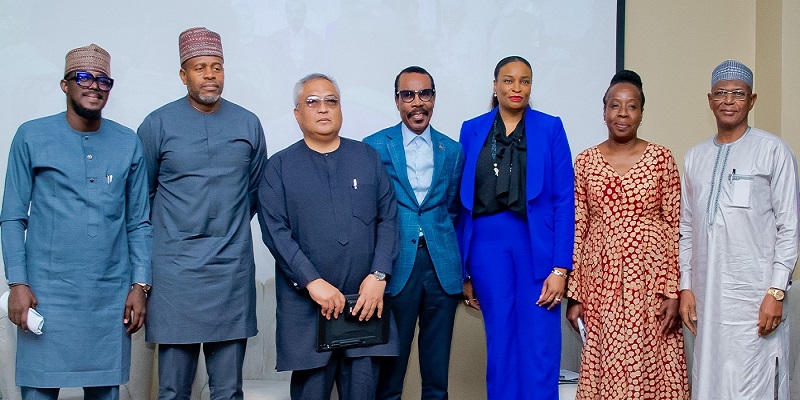
Carl Cruz, Chief Executive Officer of Airtel Nigeria, has emphasized the critical importance of creating an investment-friendly environment to sustain the role of the telecoms industry in driving digital inclusion and economic growth in Nigeria.

This was remarked at the Telecoms Industry Townhall, themed ‘Two Decades After: What Next for the Telecoms Industry’, on Tuesday, August 13, 2024.
The hybrid event, organized by the Financial Derivatives Company (FDC), took place at Four Points Hotel, Victoria Island, Lagos, brought together industry leaders to discuss the future of Nigeria’s telecommunications sector.
Aside from Mr Cruz, the panel also featured Karl Toriola, Chief Executive Officer, MTN Nigeria; Kazeem Oladepo, Chief Operations Officer, HIS Towers; Funke Opeke, Chief Executive Officer, MainOne; and Olatunji Bello, Chief Executive Officer, Federal Competition & Consumer Protection Commission (FCCPC).
During the event, Carl Cruz discussed challenges and ways forward for the telecoms industry, highlighting the need for an atmosphere that would encourage investors to help telecom operators thrive. Telecom, he explained, is an enabler for digital inclusion and economic growth.
Mr. Cruz said, “One of the major challenges faced by the telecoms industry is the issue of security. The cases of sabotage and fiber theft on a monthly basis are over a thousand. Now, capital being invested in Nigeria is being compared to capital being invested in other countries due to some of the impacts of these challenges.
However, At Airtel, we understand that investing in infrastructure can be challenging, so we adopt a forward-looking approach as we believe that a country’s growth is significantly boosted by substantial investments.
“To illustrate this, I’m pleased to share that Airtel has established a digital lab here in Nigeria, serving our operations across the 13 other countries where we have a presence.”
Mr. Cruz further underscored the necessity of a strong regulatory collaboration to support industry growth.
“Industry collaboration with regulators is also very essential for the country to progress. It is therefore imperative for players in the telecoms industry to engage in constant communication with our regulators, especially to address the limiting factors affecting the telecoms business.
“On this note, I can say that Airtel and other operators in the telecoms industry are currently doing this and are optimistic about favorable deliberations and outcomes that will boost the success of the telecoms industry,” he said.
Other industry leaders also contributed their perspectives on the telecoms industry as it relates to the financial sector and other business areas such as aviation and banking.
Some of these speakers include Chief Executive Office, Nigerian Exchange Group (NGX Group), Temi Popoola, Special Adviser to the President on Industry, Trade, and Investment, John Uwajumogu; and Special Adviser to the Honorable Minister of Finance, Budget and National Planning, Armstrong Katang.



Federal Government plans to channel $460m World bank loan, representing about 92 per cent of a $500m, into the proposed fibre infrastructure company set up to deploy 90,000 kilometres of climate-resilient broadband fibre across the country.

This is contained in the Financing Agreement for the Building Resilient Digital Infrastructure for Growth project between the Federal Government and the International Development Association, the concessional lending arm of the World Bank.
Under the agreement, the World Bank approved a $500m concessional credit to support Nigeria’s drive to expand access to high-quality and climate-resilient broadband internet in unserved and underserved areas.
Of this amount, $460m is earmarked specifically for equity financing and capitalisation of a new Project Company that will drive the fibre rollout. The remaining $40m will cover goods, works, consulting and non-consulting services, training, operating costs, and the refund of a preparation advance used to develop the project framework.
According to the document, the proposed Project Company will be established “as an independent, majority privately-owned and managed special purpose vehicle-joint venture with the objective of the deployment of 90,000 kilometres of climate-resilient fibre infrastructure following a phased approach, limited to provision of wholesale, open access services to licensed telecommunications operators, and management of associated investments, including the carrying out of preparatory activities and provision of transaction advisory services, and provision of equity financing in and capitalization of the Project Company.”
The Federal Government will participate in the company as a shareholder through the Ministry of Finance Incorporated, which manages the government’s investment interests. However, the agreement explicitly caps the government’s shareholding at a maximum of 49 per cent, ensuring that the company remains majority privately owned.
The $460m equity injection is broken into four tranches, tied to strict performance and operational milestones. The first tranche of $150m will be released once the Project Company is incorporated as a joint venture with private partners selected through a process acceptable to the World Bank, and after its memorandum, articles of association, and shareholding agreement are approved.
A second tranche of $100m will only be disbursed after the company adopts fiduciary and administrative procedures approved by the lender and completes at least 5,000 kilometres of fibre deployment. The third tranche of $100m is linked to the completion of an additional 20,000 kilometres of network construction.
The final tranche of $110m will be released after the company launches wholesale open-access services through a published reference offer and completes a further 40,000 kilometres of fibre deployment, bringing the total rollout to at least 65,000 kilometres before the final equity drawdown.
Once each tranche is withdrawn, the agreement requires that the funds be transferred to the Project Company’s dedicated account within five working days, showing the equity nature of the financing rather than traditional budgetary spending.
The project will be implemented under the oversight of the Federal Ministry of Communications, Innovation and Digital Economy, and the Federal Ministry of Finance will receive semi-annual progress updates.
A dedicated Project Implementation Unit will manage day-to-day execution, with overall financial management handled by the Federal Project Financial Management Department in the Office of the Accountant General of the Federation.
Beyond the fibre rollout, the project also includes technical assistance to federal government agencies to support the use of high-quality broadband in targeted areas, as well as funding for project management, monitoring and evaluation, environmental and social safeguards, grievance redress mechanisms and independent audits.
The agreement places strong emphasis on environmental and social standards, requiring compliance with an Environmental and Social Commitment Plan. It also mandates the establishment of an accessible grievance mechanism for affected communities and strict reporting obligations to the World Bank.


A Federal High Court in Lagos has dismissed a N1 billion lawsuit filed against MTN Nigeria Communications Plc by Walls and Gates Ltd and Okechukwu Udeichi, its managing director, over alleged copyright infringement, breach of confidentiality, and trademark violations arising from MTN’s 20th anniversary promotional campaign.

Delivering judgement on Tuesday, Justice Ayokunle Faji held that the plaintiffs failed to establish any legally protectable right in their proposal titled “20 for 20”, describing the action as frivolous, speculative, and vexatious.
The court dismissed the suit in its entirety and awarded N3m in costs against the plaintiffs.
The plaintiffs instituted the action under Suit No. FHC/L/CS/1935/2021, alleging that MTN unlawfully used their “20 for 20” proposal, which they claimed to have submitted to the telecoms company on 17 September 2019, ahead of MTN’s 20th anniversary celebration in 2021.
They argued that MTN’s anniversary promotion, in which 20 sport utility vehicles were given out to subscribers, emanated from their proposal and amounted to infringement of their copyright, confidential information, and trademark.
Based on those claims, the plaintiffs sought N1bn in damages or, alternatively, an order directing MTN to render an account of revenue generated from the promotion and remit 50 per cent of it to them.
MTN denied the allegations, contending that the proposal was an unsolicited business idea that imposed no contractual or confidential obligation on the company.
The telecoms firm maintained that its 20th anniversary programme was independently developed and that the plaintiffs’ document was merely a general business concept not protected under Nigerian copyright law.
MTN further argued that the plaintiffs lacked a valid registered trademark and failed to demonstrate access to or copying of any protected expression.
In resolving the dispute, Justice Faji noted that the plaintiffs conceded during oral submissions that they failed to prove their claim of trademark infringement, leaving only the issues of alleged breach of confidentiality and copyright infringement for determination.
On confidentiality, the court held that no confidential relationship existed between the parties.
Justice Faji observed that before sending the proposal to MTN, the plaintiffs had already submitted it to the Nigerian Copyright Commission and relied on it for a trademark application, thereby placing the document in the public domain.
The judge further noted that after transmitting the proposal to MTN, the plaintiffs admitted circulating it to other organisations, which extinguished any claim to confidentiality.
According to the court, MTN had no obligation to respond to an unsolicited proposal in the absence of a contractual, fiduciary, or business relationship, or a non-disclosure agreement.
On the allegation of copyright infringement, the court held that registration with the Nigerian Copyright Commission does not confer copyright, stressing that Nigerian law protects expressions, not ideas or business concepts.
Justice Faji ruled that the plaintiffs’ “20 for 20 Millennium Promotion” amounted to no more than an idea of rewarding customers during an anniversary celebration and lacked the originality and intellectual effort required for copyright protection.
He described the proposal as a bare business concept devoid of original qualities capable of attracting copyright. The judge also held that MTN’s use of the phrase “MTN 20th Anniversary” was a natural description of an anniversary event and did not originate from any protectable work of the plaintiffs.
He further relied on evidence showing that MTN affiliates in other jurisdictions had implemented similar anniversary reward ideas before the plaintiffs’ proposal.
Justice Faji characterised the suit as a “gold-digging exercise” aimed at forcing a commercial relationship on MTN. He criticised the plaintiffs for using MTN’s trademark in their proposal without authorisation and then seeking to ground a billion-naira claim on the same document, adding that the case wasted valuable judicial time.
While affirming that citizens should have access to the courts, the judge stressed that such access must be limited to suits with prima facie merit.
He therefore awarded N3m in costs in favour of MTN, holding that costs must follow the event.
The court accordingly dismissed the suit in its entirety and ordered the plaintiffs to pay the awarded costs to the defendant.
Credit: Punch

Africa’s data center landscape is rapidly evolving from small, isolated initiatives into a large-scale, fast-paced expansion.

According to Africa Telecom Review, between 2025 and 2030, capacity demand is expected to soar, driven by rising cloud adoption, generative AI workloads, and the growth of digital services.
Leading this momentum are Nigeria in West Africa and Egypt in North Africa, which are drawing significant investment, carrier-neutral facilities, and increased interest from hyperscalers, even as developers and governments work to overcome challenges in power, connectivity, and talent.
Nigeria: West Africa’s Gateway to Scalability
Nigeria’s data center market has rapidly shifted from discussions to active development. Driven by a vibrant digital economy, a large mobile-first population, and a dynamic startup ecosystem, Lagos has emerged as the prime location for both colocation facilities and hyperscale projects.
Nigeria’s data center market is expanding rapidly, with an estimated 136.7 MW capacity in 2025 and projections to reach 279.4 MW by 2030 at a 15% CAGR, driven by recent facilities such as Equinix’s LG2.3 expansion in Lagos, and upcoming projects including MTN Nigeria’s 1,500-rack center and new 38-MW and 24-MW facilities under construction.
However, growth is challenged by severe power constraints, as Nigeria’s grid, capable of about 6,000 MW, fails to meet the nation’s total demand (100,000 MW), forcing data centers to rely on costly backup generation like diesel and gas, with limited current adoption of renewables despite some efficiency gains.
Growing demand from enterprises, banks, telcos, and government platforms for low-latency, sovereign hosting is driving a fundamental shift away from dependence on foreign landing points and offshore cloud regions. Developers are answering this need with multi-purpose campuses that offer carrier neutrality, cloud on-ramps, and edge infrastructure tailored for content delivery, fintech, and e-commerce surges.
The business case is strong and industry studies consistently rank Nigeria’s market growth and capacity outlook among the fastest-rising on the continent through 2030.
Egypt: The North African anchor
Egypt’s strategic geography, sizeable domestic market, improving policy environment, and Digital Egypt initiative have made it a prime destination for large-scale data hub projects. Cairo and the Nile Delta corridor offer fiber connectivity routes to Europe and the Middle East, and recent corporate deals and project pipelines point to a race to build hyperscale-ready campuses.
As of mid-2025, Egypt has 15 operational submarine cables with three more under construction. The country is targeting 18 by year-end to enhance low-latency access to Europe and Asia and the data center market is projected to grow from USD 278 million in 2024 to USD 694 million by 2030 at a robust pace.
These Egyptian developments matter beyond national borders as a consolidated Cairo hub creates new routing options and resiliency for MENA traffic and provides another competitive alternative to Western European clouds and submarine routes. For pan-African architects, Egypt represents both a distribution point and a home market for AI-scale infrastructure.
Demand Drivers and the AI Inflection Point
Two intertwined forces are powering the boom. First, enterprise cloud migration, digital payments, and streaming service growth require regional capacity to meet latency and sovereignty demands. Second, the rise of AI, from localized language models to enterprise inference farms, is intensifying the need for dense compute that is both scalable and economical.
According to McKinsey, the expansion of data centers is crucial for Africa’s businesses and consumers to achieve global competitiveness. Its latest report estimates that an investment of USD 10 billion to USD 20 billion in new capital is required to achieve this. As a result, this investment could unlock an estimated revenue pool of USD 20 billion to USD 30 billion across the data center value chain by 2030.
Furthermore, the firm projects that AI-driven demand for data center capacity could grow significantly, increasing by 3.5 to 5.5 times its current base within the same timeframe, translating to a total installed capacity of 1.5 to 2.2 GW by 2030.
The Infrastructure and Policy Hurdles
Despite the strong growth outlook, developers are contending with significant challenges. Power availability and grid stability remain the biggest obstacles to scaling quickly, often forcing projects to rely on costly hybrid energy setups that blend grid supply, on-site generation, and renewable sources.
By 2025, industry analysts had already identified power constraints as a major factor slowing data center rollouts across EMEA, highlighting why energy planning has become the decisive factor for African deployments.
Additional barriers include slow permitting processes, land acquisition difficulties, high import costs for specialized equipment, and a shortage of skilled technicians trained in modern data center operations.
For investors, managing these operational risks alongside rising demand will require stronger public–private collaboration and more innovative financing models.
Local Partnerships and the Path Forward
The coming five years will be critical for Nigeria and Egypt. By simplifying regulatory processes, strengthening grid infrastructure, and promoting green energy, both countries can establish themselves as leading data center hubs in Africa. For operators and cloud providers, achieving success will rely on providing reliable, sovereign, and energy-conscious capacity that supports both enterprise needs and AI-driven workloads.
Nigeria and Egypt are leading the charge, each offering distinct advantages that, together, are reshaping the continent’s digital backbone. The potential rewards are substantial: improved latency, local cloud sovereignty, and a strong foundation for AI-powered economies.

SERAP Sues INEC Over Alleged ₦55.9Bn Election Funds Diversion

NDIC Declares Second Liquidation Dividend for Heritage Bank Depositors

FG Inaugurates N40Bn CCTV Control Centre for Third Mainland Bridge

Ministry of Finance Leads FG-Backed Deal to Deliver Quality Homes and Boost Agriculture in Niger State

FG Plans to Invest $460m World Bank Loan in Fibre Infrastructure

Banks quietly move to enforce new ₦50 transfer levy from Jan. 1

FIRS says NIN, CAC Numbers to Serve as Tax IDs from 2026

Nigeria Takes the Lead in the Global WSIS+20 Digital Agenda

PalmPay Launches N400 Million World Travel Carnival, Rewarding Users with Free Global Trips

Check Point Reveals Nigeria as Second Most Targeted African Country for Cyberattacks in November




 E-Financial2 days ago
19 Nigerian Banks Meet CBN Recapitalization Targets Ahead of March Deadline

 E-Financial2 days ago
KPMG Identifies ‘Flaws, Inconsistencies, and Omission’ in New Tax Law

 Telecom2 days ago
Nigeria, Egypt to Lead Africa’s Data Center Boom

 General News2 days ago
FG to Empower Artisans for Global Value

 General News2 days ago
Bill Gates Pays Ex-Wife $8Bn Charity Payout in Divorce Settlement

 Telecom2 days ago
Court Dismisses N1Bn Suit against MTN, Awards N3m Costs

 General News2 days ago
FG Introduces Reusable Textbooks, Uniform School Calendar to Cut Education Costs

 General News2 days ago
CBN Projects Petrol to Hover around N905/Litre this Year