

Telecom
Airtel Commences Renovation of Infectious Disease Centre at LUTH

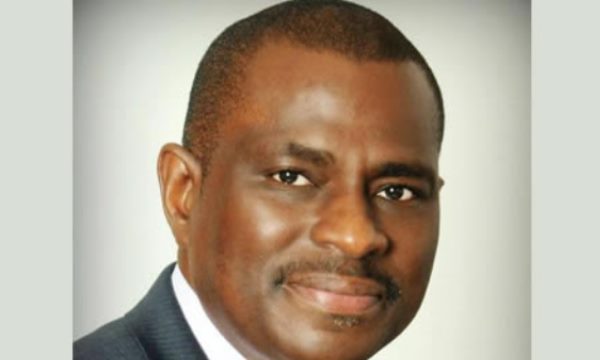
Airtel Nigeria has commenced the refurbishing and equipping of a 4-storey infectious disease center and admission facility for the use of Specialist Units in the Department of Medicine at the Lagos University Teaching Hospital (LUTH), Idi-Araba.

Airtel Nigeria had announced in July that as part of activities marking a decade of doing successful business in Nigeria, it would be spending N300m to support the fight against COVID-19, being the final part of the N1.9b it promised last April at the early stages of the pandemic.
According to Segun Ogunsanya, Managing Director and Chief Executive Officer of Airtel Nigeria, N200m would be invested in refurbishing and equipping the infectious disease center at LUTH; N50m to Lagos State Government to procure Personal Protective Equipment (PPEs) for Lagos State Health Workers and N50m for the procurement of a Molecular Laboratory to be provided by 54 Gene with the capacity for 300 tests per day for Ogun State.
Responding to Airtel’s move in fulfilling its pledge to LUTH, Professor Chris Bode, the Chief Medical Director, LUTH, expressed his heartfelt gratitude to the telco for its kind gesture, citing it as a significant contribution from the private sector to bolster efforts to curtail the spread of infectious disease such as Coronavirus in the country.
“Airtel has further demonstrated its altruistic nature through this commitment, as this will not only help us combat the virus effectively but also give us a cutting-edge medical infrastructure post COVID-19.
“The ward that Airtel is currently renovating was commissioned 58 years ago under the directive of the Federal Government of Nigeria and this marks a momentous occasion in the hospital’s history.
“I would like to say a huge thank you to the management of Airtel and its stakeholders for this laudable project. I’m positive this will significantly reinforce Nigeria’s efforts in tackling the pandemic and ultimately defeating it,” he said.
Also acknowledging Airtel’s contribution towards the provision of Personal Protective Equipment (PPEs) for health workers in Lagos, the Governor of Lagos State, Babajide Sanwo-Olu, expressed appreciation to Airtel Nigeria for standing to be counted during this uncertain and critical period just as he reiterated his administration’s commitment to fighting the pandemic as well as mitigating the impact on the people of Lagos State.
Sanwo-Olu recalled that Airtel Nigeria employees were the first employee group to make a donation of N20m from their personal contributions which, to him, was a highly thoughtful and commendable gesture worthy of emulation.
Commending Airtel for its support to Ogun State, the Governor of the State, Prince Dapo Abiodun, said: “I wish to express our profound appreciation to your organization for magnanimously offering to support the efforts of Ogun State Government to contain the spread of COVID-19 with the procurement of a State-owned Molecular Laboratory.
“It is widely believed that the war against Coronavirus could only be fought and won by aggressive testing, hence, your support will go a long way in ensuring that the State can provide continued testing for her citizenry while also building our capacity for a sustainable testing regime,’ he stated.
On the fight against the Covid-19 pandemic in Nigeria, the Airtel Nigeria CEO stated that the company had already committed various amounts and support in kind covering donations to the Nigeria Centre for Disease Control (NCDC), the Federal Ministry of Health and Port Health Authority as well as free Short Message Service (SMS) to its customers, a media awareness campaign, toll-free lines and zero-rated access to important health and educational sites.


In the wake of increasing geopolitical tension, Cassava Technologies has unveiled its National Sovereign Cloud offering for African governments.

The solution, the company claims, will help the continent’s governments ensure data is kept on infrastructure that remains under local legal and operational jurisdiction.
According to the official announcement, made yesterday, the solution provides “secure, locally-governed digital infrastructure that enables the deployment of AI-enabled public services”.
The overarching solution encompasses cloud, cyber security, AI computing infrastructure, as well as local language AI models and skills support for governments.
The announcement comes amid increasing uncertainty over the hosting of sensitive national data on cloud services operated by foreign hyperscalers, which are subject to legal frameworks, such as the U.S. CLOUD Act. The CLOUD Act opens the door to allow American authorities to access data stored on the servers of US hyperscalers, wherever those servers are physically located.
Cassava has claimed separately that currently, “approximately 33% to 45% of the world’s data is hosted in the USA”.
The company added: “A sovereign cloud reduces exposure to extraterritorial laws, improves cyber resilience, and ensures that model weights and training data for public AI remain under national custody.”
The Africa Data Centres Association’s 2026 Economic Report states that “data sovereignty has evolved from a legal aspiration into a strategic policy lever”.
Ahmed El Beheiry, Group COO and Group Chief Technology and AI Officer, Cassava Technologies said: “Across Africa, governments are accelerating their digital transformation agendas and are increasingly focused on ensuring that data and digital infrastructure remain secure and sovereign.”
Announced at the Mobile Word Congress in Barcelona, this week, the Sovereign Cloud offering launch accompanied the launch of Cassava’s Cloud Partner programme.
The partner programme targets mobile network operators and system integrators across Africa to resell and distribute AI, cloud, and other digital services using Cassava’s infrastructure and technology platforms.
El Beheiry added: “We are expanding Africa’s sovereign AI ecosystem to build solutions that address the continent’s unique challenges while creating new opportunities for growth and digital inclusion.”
The programme offers partners access to NVIDIA Cloud Partner solutions, Cassava’s AI Factory, its own native AI solutions and its AI Multi-Model Exchange, which supports both Anthropic’s Claude and Google’s Gemini models.


Mazen Mroue, a non-executive director at MTN Nigeria Communications Plc, has resigned effective February 27, 2026, to prioritise other responsibilities within the MTN Group, the company announced in a Nigerian Exchange Limited (NGX) filing.

MTN Nigeria
The notice, signed by company secretary Uto Ukpanah, stated: “This is to enable Mr. Mroue to focus on other priorities within MTN Group Limited. The Board wishes to express its appreciation to Mr. Mroue for his immense service to MTN Nigeria and wishes him success in his future endeavours.”
Mroue joined MTN Nigeria’s board on June 1, 2022, bringing over 28 years of telecom experience. A veteran MTN executive, he previously served as CEO of MTN Uganda and MTN Liberia, non-executive director at MTN Cyprus, and held leadership roles at MTN Ghana.
Since February 2022, he has been MTN Group’s Chief Technology and Information Officer, overseeing technology strategy and governance. Earlier, as MTN Nigeria’s COO from August 2018 to January 2022, he also sat on the MTN Nigeria Foundation board.
The exit follows MTN Nigeria’s stellar 2025 results, posting a ₦1.70 trillion profit before tax—reversing a ₦550.3 billion loss in 2024 driven by forex woes—marking one of the telco’s strongest rebounds.

Google has rolled out support for Yorùbá and Hausa languages in its AI-powered Search features—AI Overviews and AI Mode—enabling millions of Nigerians to get quick answers, summaries, and conversational web exploration in their mother tongues.

The update forms part of Google’s push to cover 13 African languages, including Afrikaans, Akan, Amharic, Kinyarwanda, Afaan Oromoo, Somali, Sesotho, Kiswahili, Setswana, Wolof, and isiZulu, selected based on high search activity across the continent.
Now, a Kano student can ask complex questions in Hausa, while an Ibadan trader seeks business tips in Yorùbá—both receiving culturally nuanced AI responses via text or voice on Android, iOS, or web.
Taiwo Kola-Ogunlade, Google’s West Africa Communications Manager, said: “Building truly global Search requires nuanced local understanding. With Gemini-powered AI, we’ve made advanced capabilities relevant in Yorùbá and Hausa, so Nigerians converse naturally with Search in their mother tongues.”
To use: Open the Google app, tap AI Mode, and query in Hausa or Yorùbá for personalised guidance—breaking language barriers and making technology reflect Nigeria’s diverse identity.

Police Says Victims Enable Cyber Attacks Out of Ignorance

Bank Accuses Magistrate, Lawyer of Using Fake Order to Steal N3.5m from Account

FG Launches NERD to Combat Certificate Fraud

NCDC Issues Public Advisory on Cerebrospinal Meningitis

Goodnews Naija Launches ‘Building in Nigeria’ Series on Entrepreneurs, Real Sector Builders

Dr. Cairo Ojougboh Foundation Bolsters Nigeria’s Education Drive with ₦2.7m Student Support

Kaspersky Brings more Transparency to Threat Detection with New Hunt Hub

PwC Reveals AI Scaling Gap Slows Africa’s Digital Transformation

Kaspersky Discovers New Phishing Campaign Exploiting Google Tasks Notifications to Steal Corporate Credentials

esentry 2025 Report Shows Healthcare, Financial Services and Telecoms as Staging Grounds for Increased Cyberattacks in Africa




 General News2 days ago
FCCPC Bans Lagos ‘No Refund’ Policy, Vows Fines and Shutdowns for Traders

 E-Financial2 days ago
Senate Targets Fintech Overreach, Vows Ponzi Crackdown After ₦1.3trn CBEX Scam
 E-Business1 day ago
Police Says Victims Enable Cyber Attacks Out of Ignorance

 Telecom2 days ago
Google Adds Yorùbá, Hausa to AI Search, Boosting Access for Millions of Nigerians

 E-Financial1 day ago
Quest Merchant Bank Achieves CBN Regulatory Recapitalisation Milestone

 E-Financial2 days ago
SmartCash Launches ‘No Be Cho Cho Cho’ Campaign to Boost Digital Banking in Nigeria

 Telecom2 days ago
MTN Nigeria Non-Executive Director Mazen Mroue Quits to Focus on Group Role

 Telecom2 days ago
NativeID Launches Free Digital Identity Platform to Shield Nigerian SMEs from Scammers