

News
‘Airtel Touching Lives’ Premiere: A Splendid Night in Honour of Charity


The third series of Airtel Touching Lives premiered last weekend in an elegant event in Lagos. The Lantana Hall of Eko Hotel and Suites was decked in the brand’s rich red to welcome high profile guests who had come from the length and breadth of the country.
Apart from the Wife of the Ogun State Governor, Mrs Olufunso Amosun, who was the guest of honour, several other bigwigs were in attendance and made the night a remarkable achievement for Airtel.
Some of the telecom VIP guests included the Chairman of First Bank, Mrs. Ibukun Awosika; Director General of NIMASA, Mr Dakuku Peterside; CEO, Channels Television, Mr John Momoh; afrobeat musician and human rights activist Dede Mabiaku; Special Adviser to President Muhammadu Buhari on Media and Publicity, Mr Femi Adesina; Chairman, Brilla FM, Dr Larry Izamoje; and Chairman, Airtel Networks, Justice Salihu Modibo Alfa Belgore, RTD, (GCON), among many others.
On a night adorned with some of the brightest stars from the world of business, entertainment, and politics, Airtel took the stage to spotlight the extraordinary stories of Touching Lives’ several beneficiaries. It also used the occasion to restate the reason it has continued to sponsor the philanthropic programme.
The night’s proceedings, interspersed with heartening performances by comedian Akpororo, Xplicit Dancers, and The Voice Africa finalist, Cornel, culminated in the first ever showing of the first, and tremendously emotive episode, of the 2017 season of Airtel Touching Lives.
The episode features the Aina family, a barely comfortable family of six thatwas struck with a devastating fire accident in October 2016. In the brutal inferno, the Ainas lost all the property they owned. Three of their children, including a set of four-year-old twins, were killed in the accident, too.
Nearly six months after their shattering nightmare, Olusegun Aina, his wife, and their surviving son Korede, are still struggling with the attendant mental scarring.
Now, for the emotional pain, Airtel is offering compassion, and for the physical loss, the company has delivered financial and medical relief so the family can begin to rebuild their lives.
All of this assistance is in line with the grand purpose of Airtel Touching Lives, according to Mr Segun Ogunsanya, Airtel’s managing director and chief executive officer. Wherever the disadvantaged are found in Nigeria, he said, Airtel Touching Lives would make an effort to step in with compassion.
“We will like to restate our commitment to providing succour and hope to the less privileged in the society,” he said. “While the Government and Non-Governmental Organisations (NGOs) cannot do it all, we have a responsibility to contribute our quota in making Nigeria a better place.”
For the telecom giant, Touching Lives is a journey that must continue because in its achievements lies its payoff.
Since 2015 when the project was launched, Ogunsanya said it has continued to spread inspirational messages to more people, promoting the spirit of “giving, self-sacrifice and love among Nigerians.”
Some of the encouraging stories the company has recorded include those of a police officer who had lost his sight in an armed robbery attack but, in Season One, he received aid from Airtel to live a more productive life. Another involves a businessman who had chosen to become an aid worker after his arms were gruesomely amputated by RUF (Revolutionary United Front) rebels in Liberia during that country’s civil war. Airtel worked with him to expand his humanitarian efforts.
But Airtel is convinced that more would be accomplished when more corporate and private citizens joined in the quest to save helpless Nigerians from vicious poverty, disease, and disasters. On Saturday, the telco called on these capable persons in the audience to sign symbolic pledge cardsas personal commitments to charity giving.
“We cannot embark on this journey alone. We call on all well-meaning Nigerians to join this noble cause of giving back to the society because we believe that there are many kind-hearted, empathetic and selfless Nigerians that are willing to render succor to underprivileged people.
“The pledge card is a symbol to underscore your commitment to helping the underprivileged people around you. The truth is, you can make a difference. You may never know how helping just one person will impact tens or even hundreds of lives,” said Ogunsanya.
The third season of Airtel Touching Lives, hosted by star radio and TV personality Wana Udobang, will, as usual, be broadcast on terrestrial and satellite television channels across Africa. The airing schedule, Airtel said, would be announced soon.


Microsoft has rolled out a new set of features for its Microsoft 365 Copilot platform, including tools for complex, multi-step work and deeper research tasks, as competition in workplace artificial intelligence (AI) intensifies.

The update introduces Copilot Cowork, a capability aimed at handling long-running tasks across Microsoft 365 applications.
The feature is being made available through the company’s Frontier programme, which typically gives early access to experimental tools.
Microsoft is also integrating technology linked to Claude – an AI model developed by Anthropic –into Copilot, signalling a broader shift toward using multiple AI systems within a single product rather than relying on a single model.
Jared Spataro, chief marketing officer for AI at Work at Microsoft, says the company is positioning Copilot as a system embedded directly into workplace software, rather than a standalone tool.
“Microsoft 365 Copilot is your AI for work,” he says, adding that it draws on multiple AI models and is integrated into existing workflows.
Alongside this, Microsoft has upgraded its Researcher feature, which is designed to analyse information from multiple sources and generate structured reports.
A new “Critique” function separates the drafting and review process between different AI models – one generates an initial response, while another evaluates and refines it.
The company says this approach improves output quality, with Researcher showing gains on its internal benchmark for accuracy, completeness and objectivity.
Another addition, called Model Council, allows users to compare outputs from different AI models side-by-side, highlighting differences in responses and reasoning.
The updates form part of what Microsoft calls “Wave 3” of Copilot, as it pushes to embed generative AI deeper into enterprise software. The move reflects a wider industry trend towards combining models from multiple providers, including OpenAI and Anthropic, to improve performance and reliability.

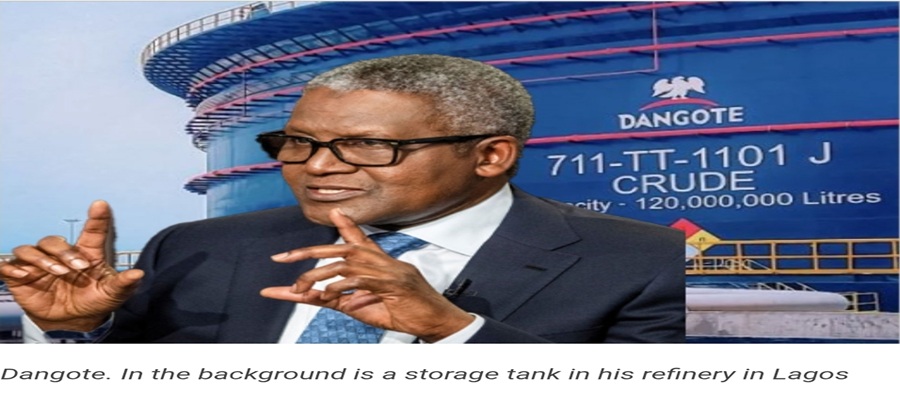
Dangote Petroleum Refinery and Petrochemicals (DPRP) has debunked recent circulation of unauthorised information regarding a potential Initial Public Offering (IPO).

In a statement, DPRP noted that several online platforms and unofficial sources have published unverified, and in some instances inaccurate, information relating to a potential offering.
“Such reports do not originate from DPRP and should be treated with caution. All official updates regarding any potential transaction will be communicated strictly through DPRP’s formal public disclosures and announcements issued by its appointed advisers, in line with applicable laws and regulatory requirements.
“Accordingly, the public, investors, and all market participants are strongly advised to disregard speculative commentary and rely solely on verified information formally issued by DPRP or its authorised representatives,” the statement said.
The firm assured stakeholders that, when appropriate, comprehensive, and accurate details regarding any proposed transaction will be made available through official channels, including regulatory filings, authorised press releases, and coordinated communications by the Enterprise and its appointed advisers.
News
Descasio Launches “Give to Gain” Leadership Insights Report, Hosts Executive Brunch for Women in Leadership

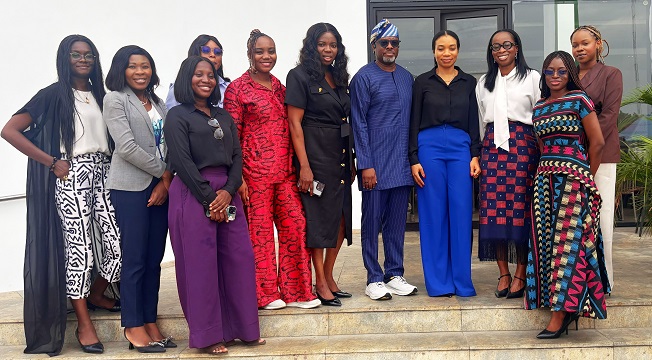
In celebration of International Women’s Day, Descasio hosted an intimate executive brunch bringing together distinguished women leaders from its customer community for a thoughtful conversation on leadership, partnership, and shared growth.

Centered around the 2026 International Women’s Day theme, “Give to Gain,” the gathering created space for accomplished women in enterprise leadership to reflect on mentorship, collaboration, and investing in people as key drivers of sustainable growth.
Held in Lagos, the event convened leaders from organizations including Honeywell Group Limited, Finchglow Travels, NGCOM, and Eroton Exploration & Production Company.
Guests were personally welcomed at the start of the gathering by Mr. Dele Nedd, CEO of Descasio; who greeted each of the women leaders and expressed his appreciation for their presence before leaving the session to allow the women lead the conversation among themselves.
The gesture reflected Descasio’s leadership culture; one where women are not only recognized, but actively supported and empowered. It also underscored the company’s belief that meaningful progress in leadership requires partnership and allyship across the organization.
Rather than a traditional panel discussion, the brunch was designed as a candid and reflective exchange among peers navigating leadership in complex industries. Throughout the conversation, participants shared perspectives shaped by experience, responsibility, and the realities of leading teams and organizations.
A recurring theme in the discussion was the role of execution and accountability in leadership. For many organizations, strategy alone is not enough; consistent delivery is what ultimately builds credibility and trust.
Reflecting on this, Josephine Adebola, Data Compliance & Process Automation Manager at Finchglow Travels, emphasized the importance of reliability in leadership and the discipline required to translate vision into results. “Get it done on time and in full.”
The conversation also explored the role of curiosity and continuous learning in shaping effective leaders. In rapidly evolving industries, the ability to ask questions, remain open to new perspectives, and keep learning is often what enables leaders to grow alongside their organizations.
Sharing her perspective, Tomi Otudeko, Chief Operating Officer at Honeywell Group Limited, reflected on how curiosity has shaped her leadership journey.
“Asking questions and continuously learning have always stood me in good stead as a leader.”
She also spoke about the importance of leading with empathy and understanding the people behind the roles within organizations.
“Everyone has multiple dimensions to who they are. Leadership has taught me to see people in their totality. That awareness doesn’t make a leader weak; it makes them more effective.”
Another important theme that emerged from the conversation was authenticity in leadership. In an environment where leaders often face pressure to conform to traditional expectations, remaining true to one’s identity while continuing to evolve is essential.
For Helen James-Eziashi, General Manager at NGCOM, authenticity and curiosity remain key guiding principles. “Be yourself, keep learning, and stay curious.”
The discussion also highlighted the role of self-awareness in sustaining leadership journeys, particularly in complex and high-responsibility environments. Understanding one’s values, motivations, and support systems often becomes the anchor that allows leaders to navigate uncertainty with confidence.
Reflecting on this, Ifeanyi Onyejekwe, IT Manager at Eroton, emphasized the importance of knowing what grounds a leader.
“Know who you are and understand what supports and sustains your leadership journey.”
According to Descasio, the event reflects its broader commitment to building strong partnerships and fostering meaningful leadership conversations across its enterprise customer community.
“For us, this was about more than marking International Women’s Day,” said Umama David-Ogebe, The HR Manager at Descasio. “It was about creating a space where leaders could learn from one another and reflect on the kind of leadership that builds strong organizations. The most meaningful partnerships grow from conversations like these.”
To extend the impact of the discussion, Descasio has published “The Give to Gain Leadership Report: Insights from Women Leading Enterprise Organizations,” a curated publication capturing key reflections and leadership lessons shared during the session.
The report highlights themes including:
- The role of curiosity and continuous learning in leadership
• Building stronger teams through empathy and accountability
• The importance of authenticity and self-awareness in navigating leadership journeys
• How investing in people drives stronger partnerships and resilient organizations
The Give to Gain Leadership Report is now available for download Here.

How Recycled SIM Card Linked to N50m Kidnapping Nearly Landed me in Jail – Businesswoman

Senate Gives Tinubu Nod to Borrow Fresh $6Bn

FG Earmarks $2Bn to Launch 2 Satellites in 2028, 2029

CBN Directs Banks, Fintechs to Complete Cybersecurity Audit Tool

FG Launches CLHEEAN to Streamline Access to Government Services

Spotify’s Loud & Clear Report Reveals Over ₦60Bn Revenue for Nigerian Artists in 2025

Madonna University Taps Tech Guru Adote for Strategic Board Role

China Threatens to Shut Nigeria’s Satellite Over $11.44m Unpaid Debt

Jumia Tech Week 2026 Begins with Tech Deals on Smartphones, Electronics, and Everyday Technology

FCCPC Bans Lagos ‘No Refund’ Policy, Vows Fines and Shutdowns for Traders




 E-Financial3 days ago
CBN bars large‑ticket loan defaulters from banking services in tough new crackdown

 General News3 days ago
ARN Rejects Medical Bill over Attempt to ‘Scrap’ Profession

 Telecom3 days ago
NIGCOMSAT Supports Startups Growth with the Launch of Accelerator 3.0

 News3 days ago
Meningitis Kills a Quarter Million People a Year -Study

 Telecom3 days ago
FG Unveils Digital Economy Research Fund Scheme

 News3 days ago
Stakeholder says AI is Crucial to Nigerian Data Centres Amid Persistent Grid Collapse
- General News3 days ago
Nigeria Advances Digital Governance as NITDA takes over NGEA Portal

 E-Financial2 days ago
NGX REGCO Fines 5 Firms N291m for Market Manipulation