

Broadcasting
Lai Mohammed, Ex-Minister to Testify in N2.5Bn DSO Project Trial

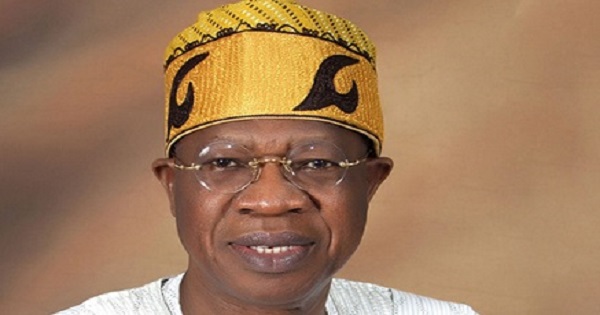
Federal High Court in Abuja on Thursday granted an application to list Alhaji Lai Mohammed, former minister of Information and Culture, , as prosecution witness in a trial of alleged misapplication of N2.5 billion Federal Government Digital Switch-Over (DSO) programme.
Justice Folashade Ogunbanjo-Giwa granted the application by the prosecution, the Independent Corrupt Practices and Other Related Offences Commission (ICPC), following the withdrawal of the objection earlier raised by the defendants.
ICPC is prosecuting the Director-General of the National Broadcasting Commission (NBC) Ishaq Kawu in the court for alleged abuse of office and money laundering.
The Commission had filed a 12-count charge against Kawu, Lucky Omoluwa and Dipo Onifade, the Chairman and Chief Operating Officer of Pinnacle Communications Limited respectively.
After calling two witnesses, the ICPC filed the application seeking to add the former minister and Shuaibu Sabo, a Bureau de Change operator, as additional witnesses in the trial.
Dr Alex Izinyon (SAN), counsel to Omoluwa and Onifade, had filed a motion prohibiting the prosecution from listing Mohammed and Sabo as additional witnesses.
At the resumed hearing of the trial on Thursday, Mr Abayomi Oyelola, who held the brief of Iziyon, said they were withdrawing the motion opposing the list of additional witnesses by the ICPC.
Justice Oginbanjo-Giwa thereafter struck out the motion by the defendants.
The judge has also granted the applications by the defendants seeking the release of their international passports to enable them travel abroad for official functions.
The court’s decision was also sequel to the withdrawal of the counter affidavit of the ICPC challenging the release of the travelling documents.
ICPC lawyer, E. A. Shogunle, said he was withdrawing the counter affidavit because the period the applicants would be travelling fell within the court’s vacation.
The lawyer also informed the court that the prosecution had complied with the directive of the court to verify the addresses of the sureties to the second and third defendants as given in the bail bonds and filed same.
Shogunle however said the prosecution could not verify the address of the surety to the first defendant (Kawu) because there was an error in the house number provided in the bail bond.
He said the lawyer to the first defendant would have to correct the error in the house address at the court registry before he could file a verifying affidavit.
The judge, however, held that since the prosecution had withdrawn the counter affidavit to the motion, the travel documents of all the defendants should be released to them.
She ordered that the defendants should be given their international passports in the custody of the Deputy Chief Registrar (DCR) and be allowed to travel within the time they stipulated in their motions
The judge, however, ordered that the defendants should return the travelling documents to the custody of the DCR upon their return not later than September 25.
She directed the sureties to the defendants to swear respective affidavit to the effect that they would surrender themselves for trial in case the defendants abscond.
Specifically, she said the sureties would take the place of the defendants and would remain in detention until the defendants surrender themselves for trial.
Justice Oginbanjo-Giwa adjourned the case until October 2 for continuation of hearing


Afro-pop star Joeboy takes centre stage this week as he features on the Easter edition of African Voices, the Globacom-sponsored magazine programme on CNN.

In this episode, the Nigeria-born singer sits down with show anchor, Larry Madowo, in Lagos, where he shares the story of his journey from a young university student with big dreams to becoming one of Afrobeats’ most recognised voices.
Long before global attention, Joeboy, born Joseph Akinwale Akinfenwa-Donus, started out experimenting with music and sharing covers online. His 2017 cover of Ed Sheeran’s “Shape of You” marked a turning point, helping him transition fully into singing and setting the stage for what was to come.
That moment soon opened new doors, including a connection with Mr. Eazi, who brought him into the emPawa Africa talent programme. This provided support and exposure for his music to reach a wider audience, laying the foundation for his professional career. The alliance also birth “Fààjí,” which featured Mr. Eazi in 2018, after which he was signed to Warner Music Africa.
Under this partnership, Joeboy released his hit single “Baby” in 2019, followed by “Beginning,” which has 23 million views on YouTube. He also released “Love & Light” the same year and featured Mayorkun in the tracks “Don’t Call Me” and “All for You”
Since then, the 29-year-old has gone on to release two albums, Somewhere Between Beauty & Magic in February 2021 and Body & Soul in 2023, while earning recognition across the continent, including awards for his contributions to African pop music. He won Best Artist in African Pop at the 2019 All Africa Music Awards and Best Pop at the 2020 Soundcity MVP Awards Festival.
The programme will air on Saturday at 7.30 a.m., with several repeat broadcasts scheduled across the weekend and into the following week. 11 a.m. on Saturday; on Sunday at 3.30 a.m. and 6 p.m. This continues on Monday at 3 a.m. and 5.45 p.m, and on Tuesday at 5.45 p.m. The schedule will be repeated next week until 3 a.m. on Monday.

The Court of Appeal sitting in Abuja has dismissed an appeal filed by the National Broadcasting Commission (NBC), seeking to overturn a Federal High Court judgement that restrained it from imposing fines on radio and television stations across the country.

NBC
Delivering the lead judgement, Justice Oyebiola Oyewumi, on behalf of a three-member panel, upheld the earlier ruling and set aside the fines imposed by the NBC on 45 broadcast stations on March 1, 2019, for alleged breaches of the Nigeria Broadcasting Code.
The panel was presided over by Justice Abba Mohammed, with Justice Donatus Okorowo as the third member.
According to a statement issued by Idowu Adewale, Communications Officer of Media Rights Agenda (MRA), the unanimous decision of the Court of Appeal stemmed from a suit filed by the non-governmental organisation in November 2021, challenging the NBC’s powers to impose fines on broadcasters.
The Federal High Court, in its judgement delivered on May 10, 2023, by Justice James Omotosho, ruled in favour of MRA after the NBC failed to defend the suit.
The court held that fines are sanctions imposed on persons found guilty of criminal offences and, under Nigerian law, only courts of law have the authority to impose such penalties.
Setting aside the fines of ₦500,000 each imposed on the affected stations, Justice Omotosho stated that the NBC “is neither a court nor a judicial tribunal to make pronouncements on the guilt of broadcast stations, notwithstanding what the NBC Code says.”
He added that the Commission’s actions violated the Constitution.
Dissatisfied with the ruling, the NBC filed a motion in July 2023, urging the same court to set aside the judgement on the grounds that it lacked jurisdiction and had reached its decision without considering relevant facts.
However, in November 2023, Justice Omotosho dismissed the application, describing it as futile and an afterthought, noting that available evidence showed the Commission had been duly served but failed to appear in court to defend the case.
The NBC subsequently approached the Court of Appeal in July 2024, seeking to overturn the judgement.
Advertisement
At the hearing on February 4, 2026, Mr Victor Ogude (SAN), leading Mr Kehinde Wilkey for the NBC, adopted his brief of argument and made additional submissions.
Counsel to MRA, Ezenwa Anumnu, also adopted his brief and responded accordingly.
In its ruling, the appellate court agreed with MRA’s position that the NBC, having failed to contest the suit at the Federal High Court, could not raise fresh challenges at the appellate level.
Justice Oyewumi held that the appeal lacked merit and accordingly dismissed it.
With this decision, MRA has secured victory in the first of two appeals involving the NBC over separate Federal High Court judgements barring the Commission from imposing fines on broadcast stations.
The second appeal, filed by the NBC against a similar judgement delivered on January 17, 2024 by Justice Rita Ofili-Ajumogobia of the Federal High Court, Abuja, is still pending. The Court of Appeal heard arguments in that matter on March 25, 2026 and has reserved judgement.
In that case, the NBC is challenging a ruling arising from a suit filed by MRA after the Commission imposed fines of ₦5 million each on a television station and three pay-TV platforms in 2022 for allegedly undermining national security through the broadcast of documentaries on banditry in Nigeria.
Dr.Shaibu Husseini, the Executive Director/Chief Executive Officer of the National Film and Video Censors Board (NFVCB), has called for stronger distribution frameworks within Nigeria’s film industry to ensure that locally produced content achieves global visibility.

He urged film festivals across the country to evolve beyond networking platforms into active marketplaces where filmmakers could secure distribution deals. He stressed that festivals must attract distributors, exhibitors, streaming platforms, and marketers to create tangible opportunities for filmmakers.
Husseini made this call while delivering the keynote address at the opening ceremony of the 2026 edition of the Coal City Film Festival held in Enugu.
“Film festivals must become gateways to distribution where filmmakers leave not just with applause, but with real opportunities,” he said.
Husseini expressed personal delight at hosting the event in Enugu, his birth state, noting the city’s rich cultural heritage and longstanding contribution to Nigeria’s creative landscape.
He commended the festival organisers, particularly the Festival Director, Uche Agbo, for their resilience and commitment in sustaining the
initiative. According to him, the Coal City Film Festival has grown into a significant cultural platform and a must-attend cinematic event in South East Nigeria.
Speaking on the festival’s theme, “Local Stories, Global Screens,” Husseini emphasised the importance of authenticity in storytelling. He noted that films rooted in local realities, languages, and cultural truth often resonate more strongly with global audiences.
He cited notable Nigerian productions such as King of Boys by Kemi Adetiba, The Wedding Party by Mo Abudu, Anikulapo by Kunle Afolayan,
“Black Book” by Editi Effiong, and “Lionheart” by Genevieve Nnaji as examples of culturally grounded stories that have gained international recognition on platforms such as Netflix and at global film festivals.
While acknowledging the growth in film production across Nigeria, the NFVCB boss identified distribution as a major bottleneck in the industry. He observed that many high-quality films struggle to reach audiences both locally and internationally due to limited distribution channels.
Reaffirming the Board’s commitment to industry development, Husseini stated that the NFVCB has continued to reposition itself as a partner in progress by engaging stakeholders, improving classification processes, and promoting a balance between creative freedom and social responsibility.
However, he raised concerns over increasing non-compliance with regulatory requirements, noting that some filmmakers bypass the Board by releasing unclassified films or operating without proper licensing.
He said all films and video works must be submitted to the NFVCB for classification and registration before being released on any platform, including digital platforms such as YouTube.
“This is a legal obligation, and the Board will not hesitate to take decisive action against defaulters,” he warned, adding that regulation is essential for protecting the industry, audiences, and national values.
Looking ahead, Husseini assured stakeholders of the Board’s continued collaboration with filmmakers and festival organisers to build a structured, sustainable, and globally competitive Nigerian film industry.
He concluded by commending the organisers of the Coal City Film Festival for their vision and contribution to Nigeria’s cultural economy, urging filmmakers to continue telling authentic stories that can resonate across global screens.

Offset Communications Slams N50m Suit against Qore Technologies for Alleged Copyright Infringement

Compensation for Poor Service Quality is Automatic- NCC

SERAP Sues CCB over Electoral Act, New Tax law

Tinubu Approves N3.3 Trillion Payment Plan to Boost Power Supply

NDPC Investigates Remita, Others over Alleged Data Breaches

Spotify’s Loud & Clear Report Reveals Over ₦60Bn Revenue for Nigerian Artists in 2025

Madonna University Taps Tech Guru Adote for Strategic Board Role

China Threatens to Shut Nigeria’s Satellite Over $11.44m Unpaid Debt

Healthcare Under Attack: Why Cybersecurity is Now Critical Care

Why JustMarkets Is a Strong Choice for Gold Trading




 General News3 days ago
FG, Others Say Nigeria Wastes 38m Tonnes of Food Annually

 E-Financial3 days ago
CBN, Banks, Fintechs Launch PSPC to Boost Nigeria’s Payment System

 News3 days ago
NITDA Strengthens Collaboration with NIPSS to Drive Digital Innovation, Orange Economy Growth

 E-Financial3 days ago
Anchor Gets Nigerian, Canadian Licences as Transactions Crosses $2.5Bn

 E-Financial3 days ago
CycleFlow, IFC Launch Supply Chain Finance Platform in Nigeria

 E-Financial3 days ago
Ecobank Assures of Seamless Easter Banking Services

 News3 days ago
NRS Takes Over Mineral Royalties Collection Under New Tax Laws

 E-Financial2 days ago
N4.65 Trillion in the Vault, but is the Real Economy Locked Out?