

E-Financial
How to Deepen Financial Inclusion in Nigeria, by ALMPO Mobile Money Confab 2019

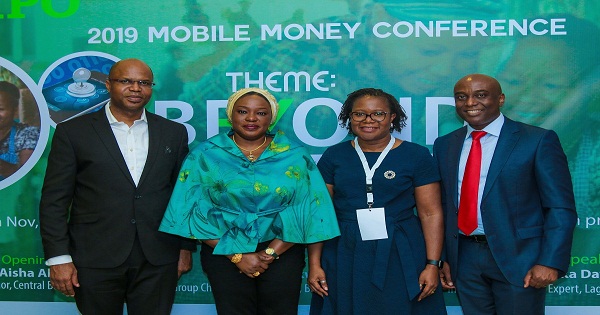
The burden of delivering financial inclusion to the last mile has become one that needs the strategic participation of all industry stakeholders in the ecosystem, so as to deliver value propositions that will deepen financial services culture for the benefit of the citizenry.
These were the views of participants at the 2019 Mobile Money Conference, organized by Association of Licensed Mobile Payment Operators (ALMPO).
The event themed: ‘Beyond Payments’ was held on Wednesday, 27th November, 2019 at Four Points by Sheraton, Victoria Island, Lagos.
Chinedu Onuoha, chairman, Association of Licensed Mobile Payment Operators (ALMPO), noted that the aims of financial inclusion should not be limited to payments alone, that is, paying and receiving of money.
He stated that financial services should be made to cover areas that are germane for the average citizen if we are to achieve the objectives of financial inclusion.
He explained that financial services should be all encompassing and focused on rendering everyday services that go beyond payments services.
According to him, “The theme of this year’s conference aptly captures the general direction of the industry. We are of the opinion, and rightfully so, that for the objectives of financial inclusion to be realized, we must go beyond payments, as we try to attract more people into formal financial services.
“We are aware that the financial needs of the average citizen are much more than pay and receive. People want to save and earn interest.
“They want to participate in pensions, they need some form of insurance, and many more. We also know that for all of this to realized, there must be adequate security and trust in the system.”
Onuoha called for collaboration of security agencies and other government agencies, which according to him, would create the right synergy that will secure the payment system and provide adequate protection to operators as they go about their business.
Aishah Ahmad, deputy governor, Financial Systems Stability, Central Bank of Nigeria (CBN), stated that Mobile Money (MM) is vital to CBN as a regulator and as such, they are open to suggestions on the way forward, without holding on to rigid regulations.
Ahmad who was represented by Aisha Isa-Olatinwo, assistant director, Payments System Management Department, CBN, noted that since estimated reports show that Nigeria has over 100 million unique mobile numbers, if mobile money operations work, there will be over 100 million subscribers.
She enjoined everybody present at the conference to work together to create a success story that will be beneficial to the ecosystem and the entire citizenry.
Uzo Eziukwu, group CEO, BlueTag Group, in a keynote address said that Mobile Money is fast becoming Africa’s legacy to the world, using Kenya’s MPESA as a typical example, doing about 1.7 billion transactions per year and making up to 50% of Kenya’s GDP.
He revealed that there are over 120 Mobile Money Operators (MMOs) in Sub-Saharan Africa (SSA), and they came into Nigeria in 2010 with a focus to drive financial inclusion and as an adjunct to mainstream banking.
He dissected the journey of MM in Nigeria into four stages, according to him, the first stage was the pilot stage between the years 2010 and 2012, which served as linkage of MM into mainstream banking.
According to the Eziukwu, “this was a time to understand the regulatory environment and regulators. This period saw confusion between collaboration and competition.
“This stage saw operators understanding the peculiarities and challenges of the Nigerian landscape. The need to collaborate and align effectively with telcos was also noticed.This stage had the challenges of integration and knowledge sharing”.
The second stage, according to him began from 2013 to 2015, which saw constructive engagement and alliance, as bank and non-bank MMOs engaged with one another and CBN. Also, partnerships arose between MMOs and banks, as CBN further streamlined MM policies.
“These moves saw growth in MM adoptions and in the number of bank accounts, noting also that this stage saw significant growth in MM acceptance driven majorly by the already banked.
He further revealed that innovation in mobile money operation has to be wrapped around consumer needs and not just payments, needs like micro-credits and service-based lending.
He also suggested products to be created for those at the bottom of the pyramid, products like health insurance, micro-pension, interest-based micro-savings, and rotational savings.
Acknowledging that the theme of the conference was apt, he concluded by sharing that as MM is moved forward, the sound benefits of financial inclusion will be unraveled.
Professor Olayinka David-West, academic director, Lagos Business School, delivering a paper Titled ‘Harnessing New Opportunity Areas for Mobile Money Adoption in Nigeria’, decried that only 4% increase in digital payments was recorded since 2016.
She further revealed that out of the estimated 99.8 million adults in Nigeria, only 3.3 million are MM users, and of the 36.8% excluded, most are women.
She reminded that engaging the bottom of the pyramid does more than gaining financial inclusion, but it also enhances the social and economic development of the society.
She also shared that a compelling value proposition is needed to get the attention of the customers. She argued that if the products and services don’t fill the proposition, MM won’t get to the Promised Land.
She also talked about taxes and levies, cybersecurity and fraud, connectivity and power, sharing how the setbacks and challenges in the sectors affect the adoption of MM by the masses.
Mrs Bunmi Ogunlewe, head of Product, e-tranzact, who spoke about shared services platforms as enablers for Mobile Money Growth, said that with the various needs faced by people at the bottom of the pyramid, collaboration is needed to address them.
She advised that the MMOs should come together and build an informed credit system which will help in the journey of MM through the last mile.
She shared that while each MMO collates data, until collaboration is done the data will be useless whereas with collaboration, fresh, enormous, insight will be gotten.
She opined that shared services and shared infrastructure will help get an additional 50 million customers and without shared platform services, the adoption and growth hoped for by MMOs won’t be attained.
The conference had different panel sessions that proffered solutions on how we can reach the last mile and as well set a new agenda for the next decade which will see the implementation of the solutions achieved in driving financial inclusion in Nigeria and indeed Africa.



Galaxy Backbone (GBB) has engaged banks, fintech firms and other technology stakeholders in fresh discussions on strengthening digital trust, regulatory compliance and secure digital infrastructure in Nigeria’s financial sector.

The engagement took place during the organisation’s second-quarter webinar, which brought together Chief Information Officers (CIOs) and industry leaders to examine strategies for building resilient digital infrastructure as financial services become increasingly technology-driven.
The webinar, themed “Building Digital Trust in Nigeria’s Financial Sector: Navigating Regulatory Compliance and Infrastructure Performance,” comes amid the Central Bank of Nigeria’s (CBN) directive requiring banks, fintech companies, mobile money operators and other payment service providers to store payment transaction data generated within the country on local servers.
The CBN had said the policy is aimed at strengthening regulatory oversight, improving transparency, reducing concentration risks and ensuring that critical payment data remains within Nigeria’s jurisdiction.
Opening the webinar, GBB’s Executive Director, Finance, Ibrahim Sani, said the rapid transformation of the country’s financial services industry had made trusted digital infrastructure indispensable to the delivery of secure, reliable and future-ready financial services.
He noted that Galaxy Backbone already provides digital infrastructure supporting both public and private sector organisations, including several financial institutions that rely on its secure connectivity, cloud computing and data centre services.
According to him, “Galaxy Backbone continues to provide the digital backbone that supports both public and private sector institutions. We remain well positioned to support the industry’s compliance journey by delivering resilient infrastructure that meets evolving regulatory and business requirements.”
Also speaking, the Executive Director, Digital Exploration and Technical Services, Olumbe Akinkugbe, stressed that compliance with CBN directives and other regulatory frameworks was essential to strengthening transparency, accountability, consumer confidence and the security of financial data in an increasingly digital economy.
He maintained that regulatory compliance had become a key pillar in safeguarding Nigeria’s financial ecosystem as digital transactions continue to expand.
The webinar also featured a presentation by GBB’s Head of Automation and Integration, Thomas Oghenebhumhe, who showcased the organisation’s sovereign cloud platform and highlighted the importance of secure cloud adoption across the financial services industry.
He explained that resilient cloud infrastructure enables financial institutions to innovate more rapidly, improve operational efficiency, safeguard sensitive information and comply with evolving regulatory standards.
His presentation was followed by an interactive session during which participants sought practical insights on cloud migration, data sovereignty and regulatory compliance.
Head of Data Centre Operations, Samuel Olusola Oyeleke, later highlighted Galaxy Backbone’s globally certified Tier III and Tier IV data centre infrastructure, describing it as resilient enough to guarantee uninterrupted digital services, disaster recovery and business continuity for mission-critical financial operations.
Closing the webinar, Executive Director, Customer Centricity and Marketing, Olusegun Olulade, said building digital trust required sustained collaboration among regulators, technology providers and financial institutions.
“As Nigeria’s financial ecosystem becomes increasingly digital, organisations must invest in infrastructure that not only meets regulatory requirements but also guarantees resilience, security, business continuity and customer confidence,” he said.
Olulade reaffirmed Galaxy Backbone’s commitment to supporting the financial services industry with secure, resilient and globally aligned digital infrastructure that enables institutions to innovate with confidence while maintaining compliance with changing regulatory standards.
The organisation said its Uptime-certified data centres, Payment Card Industry Data Security Standard (PCI DSS) certification, sovereign cloud platform and nationwide fibre-optic network provide trusted platforms for secure data hosting, payment security, regulatory compliance, business continuity and disaster recovery.
According to GBB, the infrastructure also supports Nigeria’s growing data sovereignty agenda by ensuring that critical financial data is securely hosted, readily accessible and remains within the country’s jurisdiction in line with regulatory expectations.
With more than two decades of delivering shared ICT infrastructure and digital services, Galaxy Backbone said it has continued to support digital transformation across both the public and private sectors through secure connectivity, cloud services, cybersecurity, managed ICT services and enterprise-grade data centre solutions.

United Bank for Africa (UBA) Plc has announced that its Group Chairman, Mr Tony O. Elumelu, will retire from the Board of Directors on Aug. 21, 2026, upon completing the 12-year tenure limit for non-executive directors prescribed by the Central Bank of Nigeria (CBN).

The bank disclosed this in a statement issued following a meeting of its Board of Directors held on July 6.
According to the statement, the board accepted Elumelu’s retirement and elected Mr Emmanuel N. Nnorom, a Non-Executive Director of the bank, as his successor with effect from Aug. 21, 2026.
The board expressed appreciation to Elumelu for what it described as his visionary leadership and immense contributions to the growth and institutional development of the UBA Group.
It noted that under his leadership, UBA expanded into a leading pan-African financial institution with operations in 20 African countries and four global financial centres, serving more than 50 million customers.
The board described Elumelu’s tenure as a defining period in the bank’s history.
Nnorom, who will assume office as chairman upon Elumelu’s retirement, is a chartered accountant with more than 40 years of experience in banking, finance and auditing.
The statement said he brings extensive leadership experience and deep institutional knowledge of the bank to his new role.
Speaking on his retirement, Elumelu described serving UBA as one of the greatest privileges of his professional career.
“Serving United Bank for Africa has been one of the great privileges of my career.
“UBA has established a unique competitive position across Africa and globally, and I leave the Board with great confidence in UBA’s future.
“Emmanuel Nnorom is a leader of integrity, experience and sound judgement, and I am confident that the bank will continue to thrive under his leadership,” he said.
Responding to his appointment, Nnorom expressed gratitude to the board for the confidence reposed in him.
“I am honoured by the trust the Board has placed in me and deeply conscious of the legacy I inherit.
“I look forward to working with my colleagues on the Board, Management and our staff across all our markets to sustain UBA’s momentum and continue delivering long-term value to our shareholders, customers and stakeholders,” he said.
UBA operates in 20 African countries as well as the United Kingdom, the United States, France and the United Arab Emirates.
The bank provides retail, commercial and institutional banking services and serves more than 50 million customers globally, with a workforce of about 25,000 employees across its operations.

Zedvance Finance Limited has appointed Professor Pius ‘Deji’ Olanrewaju as Chairman of its Board of Directors, effective July 1, subject to the approval of the Central Bank of Nigeria (CBN).

Professor Pius ‘Deji’ Olanrewaju
The company disclosed this in a statement, describing the appointment as a significant step in strengthening its corporate governance structure and positioning the organisation for its next phase of growth.
According to Zedvance, the appointment reflects its commitment to building a robust governance framework capable of driving innovation, sustainable growth and long-term value creation for stakeholders.
The company said Olanrewaju brings extensive boardroom experience, leadership credentials and expertise in governance, strategy and organisational transformation to the role.
It noted that the strengthened board structure would enhance oversight and support the company’s strategic growth ambitions.
Speaking on his appointment, Olanrewaju expressed appreciation for the confidence reposed in him.
“I am honoured to assume the role of Chairman of the Board of Zedvance Finance.
“The company has established a strong reputation as a trusted financial partner, leveraging innovation and technology to create meaningful impact.
“I look forward to working with the board and management to support the company’s strategic aspirations and deliver sustainable value for our stakeholders,” he said.
Olanrewaju is a legal scholar, banking expert and corporate leader with more than four decades of experience spanning banking, finance, academia and institutional governance.
He holds degrees in Law, Arts and Social Sciences, including a Bachelor of Laws (LL.B), Bachelor of Laws (B.L.), Bachelor of Arts (B.A.), Master of Science (M.Sc.), Master of Laws (LL.M.) and a Doctor of Philosophy (Ph.D.).
He is a Fellow of the Chartered Institute of Bankers of Nigeria (FCIB), Fellow of the Institute of Capital Market Registrars (FIMA), Fellow of the Institute of Management and Administrative Technology (FCMR), and Fellow of the Enterprise Risk Management Professionals (FERP).
Olanrewaju is also a member of several professional bodies and served as the immediate past President and Chairman of the Council of the Chartered Institute of Bankers of Nigeria (CIBN).
During his more than 35 years of service to the institute, he held several strategic positions, including Chairman of its Capacity Building and Certification Committee.
He is currently a Professor of Banking Law at Babcock University, where he previously served as Provost and Dean of the School of Law and Security Studies.
He has authored and co-authored several academic publications and serves on the boards of a number of organisations, including Babcock University Microfinance Bank.
The company expressed confidence that his experience in strategic leadership, corporate governance and financial services oversight would support its long-term growth and institutional development.

DSS Spyware Acquisition Enables Illegal Wiretaps, Detentions – The ICIR

Microsoft to Lay Off 4,800 Workers

Access Bank, Fifth Chukker and UNICEF Renew Commitment to Expanding Educational Opportunities for Nigeria’s Most Vulnerable Children

IHS Nigeria, FCT-HSES Concludes Clean Cooking Energy Campaign “Project Breathe Clean Air” in Abuja

Kaspersky Transforms Threat Intelligence Reporting into an Interactive Content Hub

Mobile Internet Gender Gap Widest in Africa – GSMA

NASENI Moves to Digitize CCB’s 5m Assets Declaration and Operations

Nigeria Launches FreeTV Nationwide

CANAL+ Partners Samsung to Pre-Load DStv Stream on New Samsung TVs In Nigeria, Other African Countries

UK, Nigeria Launch £15m Growth Programme to Accelerate Economic Transformation




 E-Financial2 days ago
Tokenization, Blockchain Technology will Transform Financial Institutions – IMF

 General News2 days ago
NIS Deploys Advanced Surveillance Masts, other Critical Infrastructure to Boost Border Security

 Broadcasting2 days ago
Obi, NDC Presidential Candidate Faces N50Bn Defamation Claim over Alleged Podcast Remark

 E-Business2 days ago
Weebly Websites to Shut Down for Nigeria, 66 Other Countries from September

 E-Financial2 days ago
FG Denies N8 Trillion ‘Shadow Budget’, Says IMF Quoted out of Context

 Telecom2 days ago
No Plans for Fresh Tariff Hike – MTN

 News2 days ago
World Bank Sounds Alarm: Low Revenue, Not Debt, Is Nigeria’s Biggest Fiscal Threat

 Telecom2 days ago
Airtel Africa Foundation Equips 200 Young Women with Digital Skills to Drive Nigeria’s Tech Economy