

/home/kenneth/web/nigeriacommunicationsweek.com.ng/public_html/wp-content/themes/zox-news/parts/post-single.php on line 153
">
Warning: Undefined array key 0 in /home/kenneth/web/nigeriacommunicationsweek.com.ng/public_html/wp-content/themes/zox-news/parts/post-single.php on line 153
Warning: Attempt to read property "cat_name" on null in /home/kenneth/web/nigeriacommunicationsweek.com.ng/public_html/wp-content/themes/zox-news/parts/post-single.php on line 153
Anco Dialogues With Ministry Of Communication and CRD

Association of Nigeria Courier Operators ( Anco ), has engaged in a dialogue with the ministry of communication and the Courier Regulatory Department ( CRD ) on the establishment of the Nigeria Postal Commission.
Siyambola Oladapo, general secretary of Anco who disclosed this to Nigeria CommunicationsWeek, said the board of the Nigeria Postal Commission should involve the courier / express operators.
Oladapo is of the opinion that since the association has been in the vanguard for the reform of the postal sector in Nigeria, it is necessary that they should be represented in the board because they will represent the private sector perspectives.
However, he noted that if the bill is finally signed into law, the cost of courier / express services will double as a result of imposed levies on operators of the industry and operators will also be at a disadvantage when compared to providers of similar services operating outside the postal industry.
On the fixing and regulating of charges for services, he said market forces should be allowed to dictate the tariff and charges to be paid by the consumers of the services.
Furthermore, Oladapo reinstated that the association will continue to ensure that its members are kept abreast of the developments in the industry.


Warning: Undefined array key 0 in /home/kenneth/web/nigeriacommunicationsweek.com.ng/public_html/wp-content/themes/zox-news/parts/post-single.php on line 493
Warning: Attempt to read property "cat_ID" on null in /home/kenneth/web/nigeriacommunicationsweek.com.ng/public_html/wp-content/themes/zox-news/parts/post-single.php on line 493


Galaxy Backbone (GBB) has unveiled a new corporate identity, signalling what the organisation described as a new phase of growth and readiness to support the future of digital governance in Nigeria.

The unveiling of the identity was part of activities marking 20 years of providing critical digital infrastructure and services to government institutions.
According to GBB, the rebranding signals the organization’s strategic evolution from a core government ICT infrastructure provider to a broad national digital transformation enabler connecting governments, businesses, and institutions.
Speaking at the 20th anniversary celebration and awards ceremony in Abuja, Senator George Akume, secretary to the Government of the Federation, urges GBB to lead the next phase of Nigeria’s digital transformation.
Represented by Dr Ibrahim Kana, permanent secretary, General Services Office, Akume, described the organisation as a key driver of modern governance, cybersecurity and digital service delivery across Nigeria.
He said Galaxy Backbone has evolved from a modest initiative into the nation’s foremost provider of secure government connectivity, cloud infrastructure, data hosting and shared ICT services, helping to improve efficiency, transparency and collaboration across Ministries, Departments and Agencies.
‘Digital transformation is no longer an option but a necessity. Nations that embrace technology and innovation are better positioned to achieve sustainable economic growth, improve governance outcomes and enhance the quality of life of their citizens,” he said.
Senator Akume stressed that digital transformation is now essential for economic growth and effective governance. He urged Galaxy Backbone to strengthen its role in emerging technologies, including artificial intelligence, cloud computing, blockchain and big data analytics, to support Nigeria’s digital economy and public sector modernisation.
“The next phase of Nigeria’s digital transformation will require greater innovation, stronger cybersecurity capabilities, expanded broadband infrastructure and deeper collaboration among stakeholders,” he added.
Earlier in his remarks, Professor Ibrahim Adeyanju, managing director of Galaxy Backbone, said the organisation’s journey began with a bold vision to connect government institutions and make digital infrastructure a strategic national asset. He noted that two decades later, the organisation has become a critical pillar of Nigeria’s digital ecosystem.
“Twenty years ago, a bold idea was born. An idea that government could be more connected, that technology could transform governance, and that digital infrastructure could become a strategic national asset,” Adeyanju said.
Professor Adeyanju said Galaxy Backbone’s achievements were made possible through the support of the Federal Government, stakeholders, partner agencies and generations of staff who helped build the institution.
He added that the organisation’s greatest strength remains its workforce and reaffirmed its commitment to innovation, service delivery and talent development.

Association of Licensed Telecommunications Operators of Nigeria (ALTON), official industry body and advocacy group for major telecommunications providers in Nigeria, has backed the Central Bank of Nigeria’s (CBN) directive requiring banks and fintechs to host payment transaction data locally.

Gbenga Adebayo, chairman, ALTON
Gbenga Adebayo, chairman, ALTON, said this in an interview with the News Agency of Nigeria (NAN) in Lagosat the weekend.
His position follows a recent CBN directive mandating that banks, fintechs, and other payment service providers store payment transaction data generated in Nigeria on local servers from January 1, 2027.
The directive forms part of measures aimed at strengthening oversight of the country’s rapidly growing digital payments ecosystem.
Adebayo said data sovereignty required countries to take responsibility for their entire data value chain.
According to him, this covers data collection, management, storage, and integrity assurance.
“We cannot continue to outsource that to other jurisdictions.
“The more we host our data locally, the better for us,” he said.
Adebayo said local hosting would enable Nigeria to manage data end-to-end and guarantee the integrity of critical information.
He noted that hosting payment data outside the country increased communication requirements, latency, and retrieval costs.
“For every transaction involving data hosted outside our shores, communication has to take place from your location to the host and back.
“It increases latency and also increases the cost of data retrieval,” he said.
The ALTON chairman described the directive as an important first step toward achieving national data sovereignty.
He also dismissed concerns about infrastructure readiness, saying Nigeria already had significant data center capacity.
According to him, several Nigerian-owned facilities currently host data for organisations operating from other jurisdictions.
“I’m happy to say that we have a lot of data centres owned and managed by Nigerians that are hosting data from other jurisdictions.
“If people overseas can host their data here, why can’t we host our own data here?” he queried.
Adebayo argued that local hosting would reduce dependence on foreign infrastructure while improving national control over data security.
He said concerns about security and reliability should not justify continued reliance on foreign hosting providers.
“No one can protect your house better than yourself.
“You have more at stake in terms of security and safety than somebody else hosting your data,” he said.
The telecom industry leader also highlighted the cost implications of local hosting.
He said organisations that host data locally would pay in local currency rather than foreign currency.
According to him, this would help reduce exposure to exchange rate pressures and lower long-term operating costs.
Adebayo said Nigeria currently had about six Tier III data centres, with additional facilities under development.
He, however, stressed that capacity was more important than the number of facilities.
“It’s not just about the numbers; it’s about the capacity of what they can host.
“So far, we can,” he said.
He urged stakeholders to accelerate efforts toward domestic data hosting and management.
“The earlier we begin to domesticate our data hosting and data management, the better for us,” Adebayo added.
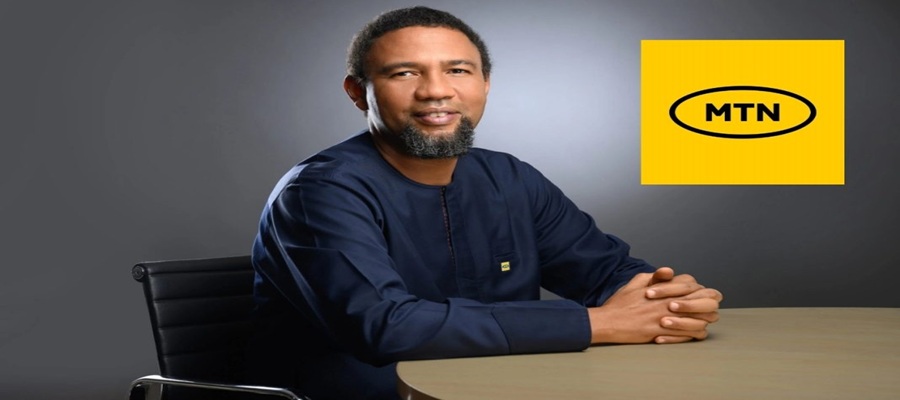
MTN Nigeria has raised the bar for corporate disclosure in Africa after publishing its 2025 sustainability report in full compliance with International Financial Reporting Standards S1 and S2.

Dr. Karl Toriola, CEO of MTN Nigeria,
The report, independently assured by Ernst & Young, marks the telecom operator’s seventh consecutive annual sustainability publication and third year as an early adopter of the global framework ahead of its mandatory implementation.
Dr. Karl Toriola, CEO of MTN Nigeria, said, “strong governance and ethical conduct are foundational to our sustainability strategy. We reinforced compliance through our Conduct Passport Framework and robust internal controls.”
He added that “in May 2025, we became the first telecommunications company in Nigeria to publicly present a sustainability report on the Nigerian Exchange Group platform, an important milestone in our commitment to IFRS S1 and S2- aligned disclosure and accountability.”
The company also secured Carbon Disclosure Project ratings of ‘B-’ for climate change and ‘C’ for water security.
Under the IFRS S2 framework, the telecoms operator disclosed climate-related risks linked to flooding, heat stress, regulatory changes and possible future taxes or charges on carbon emissions, following a climate scenario analysis completed in 2024.
The report also showed that MTN Nigeria now uses a digital reporting format – XBRL. This makes its sustainability and governance data easier for investors and ESG rating agencies to access and analyse through automated systems.
The Company also carried out assessments to understand how sustainability issues affect both its business operations and society at large, while measuring its overall economic, environmental and social impact from 2021 to 2024.
In addition, over one-third of MTN Nigeria’s biggest suppliers (based on spending) have committed to supporting the company’s net-zero emissions goals, although these commitments have not yet gone through an independent audit or verification process.

Galaxy Backbone @ 20, Unveils New Identity

ALTON Backs CBN on Local Data Hosting Rule for Banks, Fintechs

MTN Nigeria Commits to Ethical Conduct with IFRS S1, S2 Compliance

NDPC to Review Data Law to Address AI, Privacy Concerns

FG Moves to End Double Taxation

CBN Extends PoS Geo-Fencing Enforcement Deadline to August 2026

London Strengthens Global Investment Ties with Africa @ First Ever London-Africa Business Summit

FG Targets Alleged N3tn Capital Flight, Opens Airtime Credit Market to Nigerian Fintechs

Japan, UNESCO Boost Digital Learning in 15 CoEs with Donation of ICT Equipment

African Electric Vehicle Platform Raises $215m to Scale Electric Mobility in Nigeria, Others




 E-Financial3 days ago
How Fraudsters Stole N134Bn from Banks, Customers in 6 Years – CBN

 General News3 days ago
Police Uncovers N7.7Bn Telecom Data Fraud Syndicate, Recovers Assets Worth Millions

 Telecom2 days ago
TikTok, ICC Gather Nigeria’s Entrepreneurs to Drive Small Business Growth and Digital Transformation

 E-Business2 days ago
Payaza Launches AI-powered Storefront Platform to Drive Cross-border Commerce

 Telecom2 days ago
How a New NITDA-TikTok Partnership Could Transform Thousands of Nigerian Businesses

 Telecom2 days ago
Nigeria Moves to End Solar Imports as NASENI, REA Seal Major Renewable Energy Deal

 E-Financial2 days ago
NAICOM’s 18 Months Management Spill @ African Alliance Ends

 General News2 days ago
Indwelt Studios Seeks Increased Awareness @ World Sickle Cell Day