

Telecom
Angry Reps Threaten to Arrest Bello-Osagie, Airtel Boss

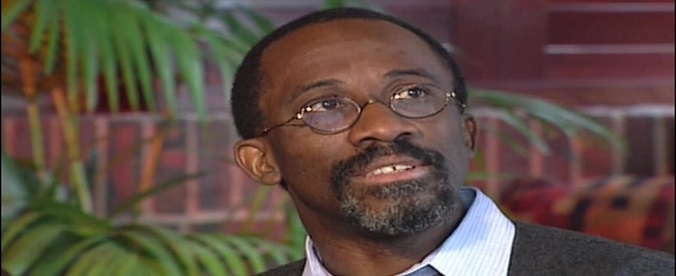

Segun Ogunsanya, chief executive officer & managing director, Airtel Nigeria
House of Representatives adhoc committee investigating the operational activities of telecoms operators panel Thursday threatened to issue an arrest warrant against Hakeem Bello-Osagie, chairman of the defunct Etisalat Nigeria, as well as Segun Ogunsanya, chief executive officer & managing director, Airtel Nigeria for shunning the panel’s summons.
According to the Hon. Ahmed Abu- headed committee, Bello-Osagie and the Airtel CEO refused to honour the invitations by the panel to answer questions on alleged tax evasion by Airtel and former Etisalat
Abu while speaking at the National Assembly during a public hearing Thursday described the behaviour of the two men as unacceptable adding that an arrest warrant would be issued against them should they fail to appear on the next invitation.
His words: “It’s important that your MD is here. Public interest overrides any other interest. We don’t want anybody to play this card to say people will lose their jobs. Nigerian workers are ultimate.
“It’s only in Nigeria where what happened in the transition between Etisalat and 9Mobile will happen. We looked into the books, and the balances are annoying. You must bring Bello-Osagie here, else we’ll issue arrest warrant against him.
He said while speaking on the Airtel CEO: “when next we do a letter to the CEO of Airtel and he doesn’t turn up, we’ll issue an arrest warrant against him.”
However, because he was in a meeting at the Presidential villa, the Chairman of the Federal Inland Revenue Service (FIRS), Babatunde Fowler could not appear before the lawmakers hence the spect of 5 percent Value Added Tax charges on sales of recharge cards could not be treated.
Meanwhile, another ad-hoc panel of the House which is probing the various intervention funds by the Central Bank of Nigeria (CBN), has summoned the Managing Director of the Assets Management Company of Nigeria (AMCON), Ahmed Kuru.
At the same committee hearing, the Director General of the Nigeria Lottery Commission, Lanre Gbajabiamila said that while approximately 295 licensed Value-added Service (VAS) providers have generated about N80 billion revenues across the four operators within the past 4 years , MTN alone is grossing about 50 percent of the entire revenue
He said it is therefore evident that there is need for the revenue sharing formula between Mobile Network Operators and Value-added Service (VAS)/Digtal content and Mobile- based lottery providers be reviewed upwards in favour of the VAS providers.
Gbajabiamila, said the sharing formulae should now be 60- 40 in favour of the VAS providers.
“VAS partners are largely responsible for running lottery/promo services in behalf of the operators. As these initiatives are very resource consuming, it is important that any partner looking to engage in it is well prepared in terms of funding and planning of their expectations and returns.
” The resources and creativity the continues to be applied to VAS and digital content generation are the key components to the success of the industries..
“Over the years, collaborations between MNOs and the VAS partners have seen revenue share continue to take a fall from 60 to 30 percent on the average, to as low as 15 percent to VAS providers in some cases.”
He said previously, VAS partners who held licenses from the Lottery Regulatory Commission were guided by certain sets of provisional rules which are easily applied according to the type and scale of promo offering being proposed..
But that the guideline seems to be varying in ways that VAS partners are struggling to comply with. “And this is the basis of the presentation of our position to this honorable assembly.”
Gbajabiamila said the current lottery ACT 2005 seems to address mostly main stream lottery services, usually based in ticket sales and returns.
While citing, sections 20, 24, 35 and 57 of the Act he said a minimum of 50 percent of the proceeds of the National Lottery is to be paid to a prize fund, which is dedicated to the payment of prizes.
He however said that approximately 295 licensed VAS providers have generated about N80 billion revenues across the four operators within the past 4 years “of which MTN is grossing about 50 percent of the entire revenue.”
Members of the committee agreed that there is need to upgrade the share of the VAS providers adding that the Mobile Network Operators are obviously not treating the VAS providers fairly.


Telecom
First Batch of Nigerian Undergraduates Emerged in Airtel Africa Foundation Scholarships Programme


Airtel Africa Foundation has inducted the first Nigerian cohort of the Airtel Africa Tech Fellowship that offers fully paid scholarships for students pursuing undergraduate courses in science, technology, engineering and mathematics across the continent.

During a ceremony held at Airtel Nigeria headquarters in Lagos, Airtel Africa Foundation’s Chairman, Dr Segun Ogunsanya, alongside Airtel Nigeria’s CEO, Dinesh Balsingh, presented the full-ride scholarship awards to 70 students from universities across Nigeria.
The undergraduates studying technology courses, were drawn from the University of Lagos, Obafemi Awolowo University, the University of Benin, Tai Solarin University of Education, the University of Ilorin, Ahmadu Bello University, and the University of Nigeria.
Selected from thousands of applicants through an independently managed process, which took nearly six months, these fellows are beneficiaries of Airtel Africa Foundation’s continentwide financial aid programme, which covers tuition, laptop computers, living expenses, and essential learning resources. The Nigerian cohort joins a prestigious network of Airtel Africa Foundation fellows currently studying in Tanzania, the Democratic Republic of Congo (DRC), Uganda, and India.
In his address, Dr. Ogunsanya, emphasised the need for initiatives such as the Airtel Africa Foundation’s undergraduate tech scholarship for the future of the continent.
The Airtel Africa Foundation Chairman said, “True legacy is not measured by the awards we win or the volume of SIM cards we sell; it is measured by the lives we save, the people we feed, and the students we support when the line between success and failure is at its thinnest.
At the Airtel Africa Foundation, we believe that lifting people out of poverty is the ultimate benchmark of a great company. Today, we are writing that legacy by tilting the balance in favour of the brilliant but underserved, ensuring that the fourth industrial revolution, driven by AI and Data Science is built by African talent for the African continent.”
Dr Ogunsanya further revealed that this fellowship, executed through Airtel Nigeria, is designed to bridge the gap where funding, skills, and opportunity often fail to meet. In addition to the N500,000 yearly budget for the fellows’ four-year or five-year courses, each fellow would be integrated into a structured support system for academic guidance and career mentorship, intended to ultimately transition students from the classroom to the global tech workforce.
Addressing the students, Mr Balsingh emphasised that youth development is a strategic imperative for Airtel.
He said, “At Airtel Nigeria, we view youth development as essential nation-building. When young people succeed, innovation accelerates, and social stability improves. By connecting these brilliant scholars to knowledge, skills, and confidence, we are fulfilling our core mission to connect people to opportunity.
“To our recipients: you earned your place here through merit and discipline. You are now ambassadors of excellence, and we expect your leadership to be defined by your conduct as you help shape a more inclusive digital future for Nigeria.”
The initiative underscores a broader commitment to technology education, youth development, and Nigeria’s digital economy. By aligning academic excellence with industry requirements, Airtel Africa Foundation and Airtel Nigeria continue to demonstrate their dedication to skills as the new currency in a rapidly evolving global market.


Dimension Data Nigeria has formally executed its N20 billion ($15m) Bond Programme under Dimension Data SPV Funding Plc, following approval from the Securities and Exchange Commission (SEC).

The signing ceremony, which marked the completion of the programme documentation and regulatory clearances, was held recently at the Capital Club, Victoria Island, Lagos.
Speaking during the signing ceremony, Gbenga Olabiyi, Managing Director of Dimension Data Nigeria, explained that the capital raise is focused on long-term value creation. “Sustained infrastructure investment is essential to maintaining competitiveness and unlocking future growth. When deployed thoughtfully, infrastructure secures the business, future-proofs operations, and allows efficient scaling as data demand and complexity increase.”
Nigeria continues to face significant digital infrastructure gaps, including limited metro and access fiber coverage, constrained enterprise connectivity, and rising demand driven by cloud adoption, fintech, digital public services and artificial intelligence. These gaps increase costs, limit service quality, and slow the country’s digital economy.
Olabiyi said the bond programme is designed to help expand critical digital infrastructure capacity, strengthen network resilience, and support enterprise and carrier-grade services needed to meet Nigeria’s growing data and connectivity requirements.
He also expressed appreciation to the company’s advisers and partners for their professionalism and support throughout the process and signaled his intention to continue working closely with them as Dimension Data moves into subsequent phases of funding and execution.
In his comments, Shatse Kakwagh, Managing Partner, Mbavaa Partners Limited, the Private Equity company backing Dimension Data Limited, described the transaction as a watershed moment for the company and a validation of its long-term infrastructure strategy.
“This is a journey we began years ago, and it proves that the opportunities we see in the market can be realised,” Shatse said. “We believe strongly in working with partners to address the critical infrastructure deficit in Nigeria and across Africa. This programme enables us to secure the right type of capital to finance the aggressive growth we have planned.”
He noted that the bond programme has received a strong vote of confidence from rating agencies. At the same time, the company’s first market issuance was heavily oversubscribed, reflecting investor belief in Dimension Data’s ability to execute and deliver at scale.
The transaction advisers on the bond programme include Pathway Advisors Limited as Book Runner; Greychapel Legal and Alliance Law Firm as Solicitors; CardinalStone Registrars Limited and STL Trustees Limited as Registrar and Trustees; Deloitte & Touche as Reporting Accountant alongside Mascot Okpori & Co as Auditors; Fidelity Bank as Receiving Bank; and Agusto & Co as Rating Agency.

In the wake of increasing geopolitical tension, Cassava Technologies has unveiled its National Sovereign Cloud offering for African governments.

The solution, the company claims, will help the continent’s governments ensure data is kept on infrastructure that remains under local legal and operational jurisdiction.
According to the official announcement, made yesterday, the solution provides “secure, locally-governed digital infrastructure that enables the deployment of AI-enabled public services”.
The overarching solution encompasses cloud, cyber security, AI computing infrastructure, as well as local language AI models and skills support for governments.
The announcement comes amid increasing uncertainty over the hosting of sensitive national data on cloud services operated by foreign hyperscalers, which are subject to legal frameworks, such as the U.S. CLOUD Act. The CLOUD Act opens the door to allow American authorities to access data stored on the servers of US hyperscalers, wherever those servers are physically located.
Cassava has claimed separately that currently, “approximately 33% to 45% of the world’s data is hosted in the USA”.
The company added: “A sovereign cloud reduces exposure to extraterritorial laws, improves cyber resilience, and ensures that model weights and training data for public AI remain under national custody.”
The Africa Data Centres Association’s 2026 Economic Report states that “data sovereignty has evolved from a legal aspiration into a strategic policy lever”.
Ahmed El Beheiry, Group COO and Group Chief Technology and AI Officer, Cassava Technologies said: “Across Africa, governments are accelerating their digital transformation agendas and are increasingly focused on ensuring that data and digital infrastructure remain secure and sovereign.”
Announced at the Mobile Word Congress in Barcelona, this week, the Sovereign Cloud offering launch accompanied the launch of Cassava’s Cloud Partner programme.
The partner programme targets mobile network operators and system integrators across Africa to resell and distribute AI, cloud, and other digital services using Cassava’s infrastructure and technology platforms.
El Beheiry added: “We are expanding Africa’s sovereign AI ecosystem to build solutions that address the continent’s unique challenges while creating new opportunities for growth and digital inclusion.”
The programme offers partners access to NVIDIA Cloud Partner solutions, Cassava’s AI Factory, its own native AI solutions and its AI Multi-Model Exchange, which supports both Anthropic’s Claude and Google’s Gemini models.

First Batch of Nigerian Undergraduates Emerged in Airtel Africa Foundation Scholarships Programme

Mojisola Sayo-Kazeem Reflects on Leadership, Opportunity, Women in Tech @ IWD

Experts Weigh Blockchain Option for Nigeria’s Elections Process

CBN Affirms Alpha Morgan Bank’s Capitalisation

Dimension Data Nigeria Seals N20bn Bond Deal to Bridge Digital Infrastructure Gap

Dr. Cairo Ojougboh Foundation Bolsters Nigeria’s Education Drive with ₦2.7m Student Support

Kaspersky Brings more Transparency to Threat Detection with New Hunt Hub

Kaspersky Discovers New Phishing Campaign Exploiting Google Tasks Notifications to Steal Corporate Credentials

esentry 2025 Report Shows Healthcare, Financial Services and Telecoms as Staging Grounds for Increased Cyberattacks in Africa

AfDB, UNDP Launch $10Bn AI Initiative for Africa




 E-Business2 days ago
Police Says Victims Enable Cyber Attacks Out of Ignorance

 E-Financial2 days ago
Quest Merchant Bank Achieves CBN Regulatory Recapitalisation Milestone

 Telecom2 days ago
Cassava Launches Sovereign Cloud for Africa’s Public Sector

 General News2 days ago
FG Launches NERD to Combat Certificate Fraud

 E-Financial2 days ago
Bank Accuses Magistrate, Lawyer of Using Fake Order to Steal N3.5m from Account

 General News2 days ago
Goodnews Naija Launches ‘Building in Nigeria’ Series on Entrepreneurs, Real Sector Builders

 News2 days ago
FG Can Now Track, Prosecute Visa Overstayers – Interior Minister

 Broadcasting2 days ago
South Africa’s Nomzamo Mbatha Appears on Glo-Sponsored African Voices