

General News
Angry Soldiers Shoot @ GOC in Maiduguri

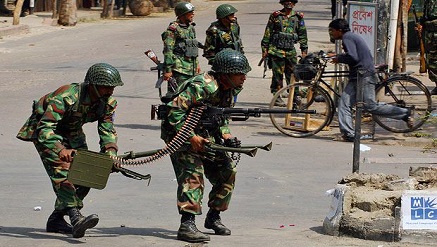
Ahmadu Mohammed, major general who is the general officer commanding (GOC) 7 Division, Nigerian Army, narrowly escaped death on Wednesday when aggrieved soldiers opened fire on his official vehicle, as he arrived to address them at the Maimalari Military Barracks in Maiduguri, Borno State capital.
Sources close to the military barracks disclosed that some troops who went to Chibok Local Government area for an operation where over 234 schoolgirls were recently abducted by suspected Boko Haram terrorists carried out the mutiny against their boss after returning to Maiduguri.
One of the sources spoke of how they were on their way back to Maiduguri when they realised that the Maiduguri-Damboa road was not safe, as darkness had set in, and then requested the GOC to allow them spend the night in one of the villages considered to be safe for them.
The GOC was said to have insisted that the soldiers must come back to Maiduguri the same night.
However, on their way back to Maiduguri, according to investigation, the soldiers were ambushed by suspected terrorists, and many of them (soldiers) were killed.

Military sources further said when the GOC tried to address troops on the ongoing operation against the insurgents, the soldiers on sighting the arrival of corpses of their deceased colleagues got angry and started shooting sporadically.
Some of them were said to have indeed intentionally opened fire on the GOC’s vehicle but that he narrowly escaped.
“What angered the soldiers most is the unnecessary deduction of their allowances and subjecting them to harsh working conditions without proper equipment to carry out their rules of engagement.
“As a result of this, many of them were being killed like rats by the insurgents,” a source noted.
A statement later last night from the Defence Headquarters said the 7 Division of the Nigerian Army is to institute a military board of inquiry into the circumstances surrounding the conduct of the soldiers who fired some shots while the GOC was addressing the troops.
The statement issued by a Major General Chris Olukolade, director, Defence Information/Coordinator, said the incident occurred when the corpses of four soldiers who died in an ambush while returning from patrol duties in Chibok was being conveyed to the morgue.
He said there is now calm in the cantonment and that all normal operations activities are ongoing .
Another report said residents of Kalabalge village also in Borno State took their destiny in their hands on Tuesday when they fought off gun-wielding Boko Haram insurgents who invaded the village in an early morning attack.
The villagers succeeded in killing several of the invaders and arrested about 10 of them alive.
The insurgents had repeatedly attempted to attack Kalabalge, an agro-nomad community near the Cameroon borders, but failed to gain entry into the village on each attempt.
Eyewitnesses said the villagers had made security preparations around the village and this has made it impossible for the Boko Haram terrorist to launch successful attacks.
The village is the headquarters of Kalabalge Local Government area of Borno State.
“We have told them (Boko Haram) that they cannot take their attacks to our village because, we have taken measures both security wise and spiritually to prevent them,” said a vigilance member in the community who did not give his name when he spoke to a news agency on phone.
“They wanted to attack us just the way they did in Bama, Konduga and Damboa, but we got the wind of it and all of us laid ambush for them; when they neared the village, we opened fire using our dane guns, double barrel rifles and bows and arrows.
“Most of them who were shocked took to their heels, but many of them died, some that were injured have been caught alive and are with the security people as I am talking to you”, said the vigilance member.
An official of the State Security Service (SSS) who pleads anonymity confirmed the incident to reporters on phone.
“The insurgents tried to attack the village as at 5.00 a.m. (on Tuesday) but the vigilante and some members of the village who got the hint of the attack laid ambush and were able to kill as many of them as possible, while about ten of them were caught alive; they also recovered two trucks from the insurgents,” the security source said.
The Boko Haram has raided several villages in Borno State, killing thousands of people and destroying countless property.
Meanwhile, security has been beefed up along some strategic roads and institutions in Akwa Ibom State following widespread suspicion that Boko Haram may launch attack.
In the last few weeks, there has been unusual heavy military presence within the University of Uyo (UNIUYO), some major roads, especially the IBB Way and some Hausa-Fulani locations, including Eka Street, Iba Oku village where the Nasarawa Livestock Market is located and other settlements.
The unusual military surveillance on Uyo was said to be informed by alleged seizure recently of large consignment of arms brought into the state in a truck loaded with cows and suspected to the sponsored by Boko Haram.
State Police Public Relations Officer (PPRO), Etim Dickson, in a telephone interview said it was the practice for Northerners doing business in the state to be escorted by securities agents.
“Intelligence reports received at this Department indicate that the University has been earmarked as one of the major targets in the event of an attack in Akwa Ibom State.
“Consequently, every member of the University community is urged to please be security conscious, observant and report any suspicious movement or thing to the security officer nearest to him or her.
“As a pre-emptive measure to safeguard the University from attack, all small gates leading into both Annex and Town campuses would be closed to all between 12 noon and 3.00 p.m. every Friday.
“Members of the University community are pleased advised to use the main gates during the period as other measures deemed necessary for the safety of the community will be communicated to you from time to time.”
—


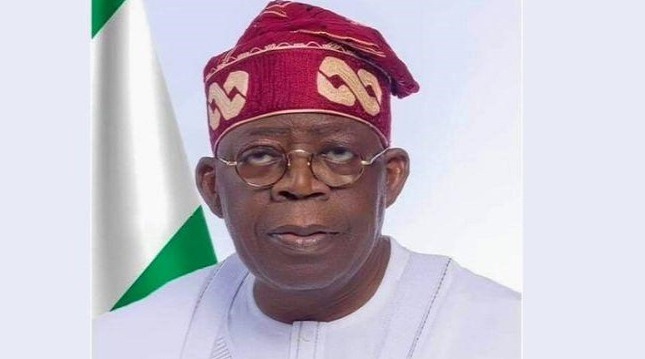
United States Government has said that Nigeria is not making significant progress in fiscal transparency, referencing gaps in the country’s budget disclosure, expenditure reporting, public procurement transparency and audit processes.

The assessment is contained in a report by the United States Department of State, which reviewed Nigeria’s fiscal transparency practices in its 2026 fiscal transparency report for countries published on Tuesday.
The report noted that the US government stated that Nigeria made some key fiscal documents available to the public, significant shortcomings remained in the disclosure of budgetary information and the management of public finances.
The report noted that “the government made its enacted budget and end-of-year report widely and easily accessible to the public, including online, but did not publish its executive budget proposal within a reasonable period.”
It also stated that while the Nigerian government had made information concerning the country’s debt obligations publicly available, its budget documents failed to provide a comprehensive picture of government revenues and expenditures.
“The government made information on debt obligations, including major state-owned enterprise debt, publicly available, but budget documents did not provide a substantially complete picture of the government’s revenues and expenditures, or break down expenditures to support executive offices in the budget,” the report stated.
The US government further raised concerns about discrepancies between Nigeria’s approved budget and the actual revenues and expenditures recorded during implementation.
It said, “Actual revenues and expenditures did not reasonably correspond to those in the enacted budget.”
The report also criticised the country’s supreme audit institution, stating that it did not meet international standards of independence and did not publish substantive reports, although it had access to the entire executed budget.
“The supreme audit institution did not meet international standards of independence or publish substantive reports but did have access to the entire executed budget,” it stated.
The assessment, however, acknowledged that Nigeria’s sovereign wealth fund had an adequate legal framework and disclosed information about its funding and the general approach to withdrawals.History
“The sovereign wealth fund had a sound legal framework and disclosed its source of funding and general approach to withdrawals,” the US government said.

The World Bank Group is supporting the expansion of Africa’s digital commerce infrastructure to help small businesses reach new markets, create jobs, and strengthen economic opportunities across the continent.

Through Jumia, Africa’s leading e-commerce platform, the investment is expected to enable approximately 60,000 local annual active sellers to participate more fully in the digital economy, support around 1,800 direct jobs, and create income-generating opportunities for more than 100,000 independent sales agents.
As digital commerce continues to grow across Africa, reliable access to online marketplaces, logistics networks, and digital payments are becoming increasingly important for entrepreneurs and small businesses seeking to expand beyond local markets. Strengthening this infrastructure can help firms increase sales, improve productivity, and connect consumers with a wider range of affordable goods and services.
To support this effort, the International Finance Corporation (IFC), the private sector arm of the World Bank Group, is investing US$25 million in equity in Jumia Technologies AG (Jumia), Africa’s largest public e-commerce platform. The investment will support Jumia’s next phase of growth across its core African markets, strengthening its integrated marketplace and logistics network.
By expanding access to digital commerce tools and services, the investment will help businesses grow, improve price transparency, and contribute to more inclusive and resilient private sector development across Africa.
“The support of the World Bank Group is a milestone for Jumia and for African e-commerce more broadly. It validates both the discipline we have brought to our business in recent years and the tangible impact our platform has on small businesses, jobs, and consumers across our eight markets. With partners like the IFC, we can accelerate the digital commerce infrastructure Africa needs” said Francis Dufay, CEO of Jumia.
“Jumia demonstrates how pan-African e-commerce platforms can expand economic opportunity at scale. Our investment supports the company’s next phase of growth while contributing to create jobs, digitizing supply chains and distributions channels and mobilizing private investment” said Farid Fezoua, Director for Equity, Funds, and Venture Capital at the International Finance Corporation, World Bank Group.

Nigerian Upstream Petroleum Regulatory Commission (NUPRC) has cautioned the public against fake recruitment offers and fraudulent employment letters circulating in the agency’s name.

Eniola Akinkuotu, head of Media and Corporate Communications of the Commission, stated that NUPRC has received reports of counterfeit and AI-generated appointment letters bearing names not known to the regulator.
The Commission also said fraudsters have been extorting money from jobseekers by promising placement within the agency.
NUPRC has reported the incidents to law enforcement and said investigations are underway.
The regulator reiterated that there is no ongoing recruitment exercise and warned members of the public not to make any payments for supposed job offers.
“Whenever the Commission decides to recruit, the process will be conducted strictly in accordance with extant laws and government regulations,” the statement said.
The Commission urged jobseekers to verify any purported offer and to rely only on official NUPRC communications for recruitment information.
The warning follows growing concerns about the misuse of digital tools, including artificial intelligence, to fabricate apparently authentic documents that can deceive the public.

Nigeria Not Making Progress in Fiscal Transparency –US

NCAA to Introduce RFID Technology to Tackle Missing Luggages

SEC Directs Operators to Subscribe to NigSac Alerts, Freeze Terrorists-Linked Funds

Davido Bets $1m in Hit-for-Hit Battle with Colleagues

GSMA Industry Services Unveils Circularity Services to Help Operators Reduce E-Waste and Unlock Value

EFCC Busts NIS Visa Overstay Racket, Uncovers N700m in an Account

Fact-Check: Elon Musk’s “Tesla Pi Phone” is Internet Rumor

NBC Tasks Broadcasting Stations over 2028 DSO Global Deadline

NBC Scraps Annual Digital Access Fee on DSO

Glo Sponsored African Voices to Feature Netflix’s “The Polygamist” Stars




 Telecom2 days ago
ipNX Joins Calls for Innovation-Friendly Ecosystem and Stronger Local Opportunities at Regenesys AI Summit

 E-Business2 days ago
NDPC Probes UNILAG, Lotus Bank, Hackerbella over Alleged Students’ Data Misuse

 News2 days ago
PalmPay Reinforces Commitment to Youth Empowerment on International Youth Day

 Telecom2 days ago
NCC Reports over 5,000 Fibre Cuts in 6 Months

 E-Financial2 days ago
KudiWave Asks for Clarification over N750m Transfer from PalmPay Account

 Telecom2 days ago
Google Selects Six Nigerian News Creators for Emerging Voices Growth Lab

 E-Financial2 days ago
Nigerians Borrow More to Buy Homes as Mortgage Demand Climbs – CBN

 General News2 days ago
NUPRC Warns of Counterfeit, AI-Generated Appointment Letters