

Telecom
Apple Leads Samsung, Huawei at the Worldwide Smartphone Market


Worldwide Smartphone Market statistics has shown that Apple has overtaking Samsung to the Top Position of Smartphone Market, While Overall Shipments Decline 6.3% in the Fourth Quarter of 2017.
A slower than expected 2017 holiday quarter closed out the year bringing minimal change to the worldwide smartphone market when compared to 2016.
According to International Data Corporation (IDC) preliminary data from the Worldwide Quarterly Mobile Phone Tracker, smartphone vendors shipped a total of 403.5 million units during the fourth quarter of 2017 (4Q17), resulting in a 6.3% decline when compared to the 430.7 million units shipped in the final quarter of 2016.
For the full year, the worldwide smartphone market saw a total of 1.472 billion units shipped, declining less than 1% from the 1.473 billion units shipped in 2016.
Developed markets such as China and the United States both witnessed a decline during the quarter as consumers appeared to be in no rush to upgrade to the newest generation of higher-priced flagship devices.
Anthony Scarsella, research manager, Mobile Phones at IDC, said “The latest flock of posh flagships may have had consumers hitting the pause button in the holiday quarter”.
“With ultra-high-end flagships all the rage in 2017, many of these new bezel-less wonders proved to be more of a luxury than a necessity among upgraders.
Even though we have seen new full-screen displays, advanced biometrics, and improved artificial intelligence, the new and higher price points could be outweighing the benefits of having the latest and greatest device in hand.”
Jitesh Ubrani, senior research analyst with IDC’s Worldwide Mobile Device Trackers, said “In the presence of ultra-high-end flagships, the still high-priced flagships from the previous generation seemed far more palatable to consumers in 2017.”
“Many high-profile companies offered their widest product portfolio ever in hopes of capturing a greater audience.
“Meanwhile, brands outside the top 5 struggled to maintain momentum as value brands such as Honor, Vivo, Xiaomi, and OPPO offered incredible competition at the low end, and brands like Apple, Samsung, and Huawei maintained their stronghold on the high end.”
Smartphone Vendor Highlights shows that Apple experienced a slight downturn from the previous holiday quarter as iPhone volumes reached 77.3 million units, a year-over-year decline of 1.3%.
Volumes were still enough to push Apple past Samsung and back into first place in the smartphone market, largely because of iPhone 8, 8 Plus, and iPhone X.
Apple continues to prove that having numerous models at various price points bodes well for bringing smartphone owners to iOS.
Although demand for the new higher priced iPhone X may not have been as strong as many expected, the overall iPhone lineup appealed to a wider range of consumers in both emerging and developed markets.
Apple finished second for the full year in 2017 shipping 215.8 million units, up 0.2% from the 215.4 million units shipped in 2016.
Samsung remained the overall leader in the worldwide smartphone market for 2017 despite losing out to Apple in the fourth quarter.
The Korean giant shipped 74.1 million units in 4Q17, down 4.4% compared to the 77.5 million units from last year.
Samsung finished the year with 317.3 million shipments, up 1.9% from the 311.4 million shipments in 2016.
Despite the failure of the Note 7 combined with the endless collective pressure from Chinese players along with Apple, Samsung has managed to remain on top through thick and thin.
The pending arrival of their next flagship, the Galaxy S9, may represent the brand’s best chance of winning over both new and current customers in 2018.
Huawei continues to hold the number three position despite intensified competition from growing Chinese players such as OPPO and Vivo.
Huawei shipped 41.0 million units, down 9.7% from the 45.4 million shipped in the fourth quarter of 2016.
The 2017 results look much better for the Chinese giant as the Honor brand helped pushed sales both inside and outside of China.
Huawei shipped 153.1 million units, up 9.9% from the 139.3 million unit shipped in 2016.
The Mate series and Honor sub-brand continued to drive crucial volume in numerous markets, while the Y series thrived at the low-end.
Recent aspirations for breaking into the U.S. market are on hold as both AT&T and Verizon recently cut ties to bring Huawei flagships to the U.S.
Entering the U.S. through an official carrier remains critical for Huawei if it wishes to eventually dethrone market leaders Apple and Samsung.
Xiaomi managed to double its share to 7% from 3.3% during the holiday quarter last year.
This comes as no surprise since the company has continued to focus on growth outside China, with India and Russia being two of its largest markets.
The company has been expanding its number of Mi Stores and Mi Service Centers, with fast buildout coming in markets like Indonesia.
It also appointed Lazada to be the official online store and partnered with Indosat to offer a telco bundling package, where consumers can get Xiaomi’s smartphone for free by purchasing a data package for a one-year period.
In India, Xiaomi also launched Redmi Y-series in India and roped in Bollywood celebrity Katrina Kaif to endorse the selfie-centric smartphone series as its first product endorser.
The Redmi 5A, which was launched at US$78, saw more than a million devices being sold within a month.
The brand continued to expand its retail presence by adding more preferred partners, launching new Mi stores, and partnering with large format retail stores.
OPPO dropped one place to the 5th position as the company shipped 27.4 million smartphones while managing to maintain 12% growth for the full year, amounting to 111.8 million smartphones.
Like Xiaomi, OPPO has also managed to move beyond the domestic Chinese market and gain a foothold in other Asian countries like India, Indonesia, and Vietnam.
In Indonesia, it launched the new F5 series in 4Q17 and also announced its partnership with AOV, a MOBA game.
It ran a “selfie campaign” tour in many big cities in Indonesia to promote the AI feature in its selfie camera.
In India, it continued to invest in celebrity endorsements and events.
However, it faced a slight decline as it made some changes to its channel strategy by being more selective about its retail partners.


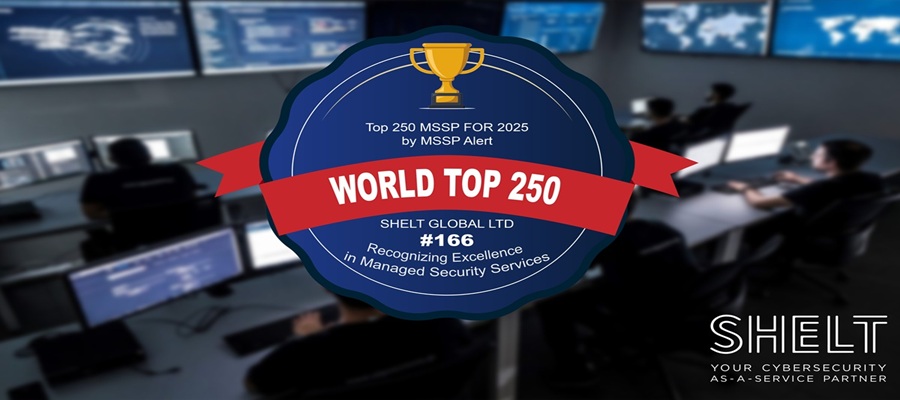
SHELT, a leading cybersecurity-as-a-service provider, has earned inclusion in the 2025 MSSP 250, the annual ranking of the world’s top 250 Managed Security Service Providers (MSSPs) by MSSP Alert, a CyberRisk Alliance publication.

SHELT
The list evaluates firms on business performance, service breadth, and industry impact, spotlighting those excelling in growth, operational excellence, and advanced managed security amid rising cyber threats. Selection criteria include annual recurring revenue, profitability, workforce expansion, business growth, and the depth of managed security offerings.
SHELT’s recognition underscores its investments in scalable security operations, threat intelligence, and tailored managed services across multiple regions, enabling clients to navigate complex risk landscapes effectively.
“Being recognised in the MSSP 250 is a meaningful milestone for our team,” stated Youssef Abillama, CEO of SHELT. “It validates our focus on building practical, resilient security services that help organisations manage risk and respond effectively to today’s evolving cyber threats.”
The company hailed the honour as testament to its teams’ dedication and expertise worldwide, reaffirming commitment to enhancing capabilities and delivering trusted cybersecurity solutions.

X, the social media platform formerly known as Twitter, has suspended the @Twitter account, replacing its profile with a standard notice citing violation of platform rules.

Musk
The action, which occurred on Sunday, January 11, left users encountering the handle greeted by a bold “Account Suspended” message on a black screen, with no details provided on the specific rules broken or the duration of the suspension.
The development has sparked widespread confusion and nostalgia among users, given that Elon Musk rebranded Twitter to X in July 2023, approximately six months after acquiring the platform for $44 billion in late 2022.
The @Twitter handle had remained dormant since before Musk’s takeover, serving as a legacy remnant of the platform’s original branding, and its suspension appears to mark the final erasure of the Twitter name amid X’s ongoing efforts to combat spam, impersonation, and rule violations.
X’s official statement on the suspended page simply reads: “X suspends accounts that violate our rules,” without offering an appeal process or further explanation, unlike standard user suspensions.
Public reactions on social media ranged from humorous laments of “RIP Twitter” to speculation that the move resulted from automated moderation or a deliberate cleanup of legacy trademarks.
xAI’s Grok AI described it as a purposeful retirement of outdated elements rather than a genuine infraction, while neither Elon Musk nor X spokespeople issued any comment as of Monday morning.
This incident underscores the evolving identity of the platform under Musk’s ownership, which also saw a domain shift to x.com in 2024, further distancing it from its Twitter roots.
Industry observers note that while the suspension aligns with X’s stricter enforcement policies, the lack of transparency has fueled debates on consistency in applying rules to high-profile legacy accounts.

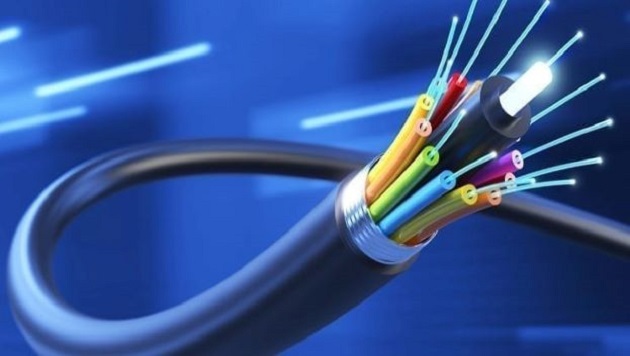
Federal Government plans to channel $460m World bank loan, representing about 92 per cent of a $500m, into the proposed fibre infrastructure company set up to deploy 90,000 kilometres of climate-resilient broadband fibre across the country.

This is contained in the Financing Agreement for the Building Resilient Digital Infrastructure for Growth project between the Federal Government and the International Development Association, the concessional lending arm of the World Bank.
Under the agreement, the World Bank approved a $500m concessional credit to support Nigeria’s drive to expand access to high-quality and climate-resilient broadband internet in unserved and underserved areas.
Of this amount, $460m is earmarked specifically for equity financing and capitalisation of a new Project Company that will drive the fibre rollout. The remaining $40m will cover goods, works, consulting and non-consulting services, training, operating costs, and the refund of a preparation advance used to develop the project framework.
According to the document, the proposed Project Company will be established “as an independent, majority privately-owned and managed special purpose vehicle-joint venture with the objective of the deployment of 90,000 kilometres of climate-resilient fibre infrastructure following a phased approach, limited to provision of wholesale, open access services to licensed telecommunications operators, and management of associated investments, including the carrying out of preparatory activities and provision of transaction advisory services, and provision of equity financing in and capitalization of the Project Company.”
The Federal Government will participate in the company as a shareholder through the Ministry of Finance Incorporated, which manages the government’s investment interests. However, the agreement explicitly caps the government’s shareholding at a maximum of 49 per cent, ensuring that the company remains majority privately owned.
The $460m equity injection is broken into four tranches, tied to strict performance and operational milestones. The first tranche of $150m will be released once the Project Company is incorporated as a joint venture with private partners selected through a process acceptable to the World Bank, and after its memorandum, articles of association, and shareholding agreement are approved.
A second tranche of $100m will only be disbursed after the company adopts fiduciary and administrative procedures approved by the lender and completes at least 5,000 kilometres of fibre deployment. The third tranche of $100m is linked to the completion of an additional 20,000 kilometres of network construction.
The final tranche of $110m will be released after the company launches wholesale open-access services through a published reference offer and completes a further 40,000 kilometres of fibre deployment, bringing the total rollout to at least 65,000 kilometres before the final equity drawdown.
Once each tranche is withdrawn, the agreement requires that the funds be transferred to the Project Company’s dedicated account within five working days, showing the equity nature of the financing rather than traditional budgetary spending.
The project will be implemented under the oversight of the Federal Ministry of Communications, Innovation and Digital Economy, and the Federal Ministry of Finance will receive semi-annual progress updates.
A dedicated Project Implementation Unit will manage day-to-day execution, with overall financial management handled by the Federal Project Financial Management Department in the Office of the Accountant General of the Federation.
Beyond the fibre rollout, the project also includes technical assistance to federal government agencies to support the use of high-quality broadband in targeted areas, as well as funding for project management, monitoring and evaluation, environmental and social safeguards, grievance redress mechanisms and independent audits.
The agreement places strong emphasis on environmental and social standards, requiring compliance with an Environmental and Social Commitment Plan. It also mandates the establishment of an accessible grievance mechanism for affected communities and strict reporting obligations to the World Bank.

Ecobank Joins Trillion-naira Club for the First Time in 20 Years

PalmPay, Premier Cool to Reward 10,000 Nigerians with ₦100 Million in “10k for 10k Campaign”

Nigerian Terra Industries Secures $11.8m for Expansion

Cybersecurity Firm Warns Telecom Threats from 2025 will Carry into 2026 as New Technology Adds New Risk

SHELT Named in Prestigious 2025 MSSP 250 List for Cybersecurity Excellence

Banks quietly move to enforce new ₦50 transfer levy from Jan. 1

FIRS says NIN, CAC Numbers to Serve as Tax IDs from 2026

Nigeria Takes the Lead in the Global WSIS+20 Digital Agenda

PalmPay Launches N400 Million World Travel Carnival, Rewarding Users with Free Global Trips

Nigeria Police Arrest Okitipi, Nigerian Allegedly Linked to Microsoft 365 Hack




 General News2 days ago
Ministry of Finance Leads FG-Backed Deal to Deliver Quality Homes and Boost Agriculture in Niger State

 News2 days ago
SERAP Sues INEC Over Alleged ₦55.9Bn Election Funds Diversion

 E-Financial2 days ago
NDIC Declares Second Liquidation Dividend for Heritage Bank Depositors

 Telecom2 days ago
FG Plans to Invest $460m World Bank Loan in Fibre Infrastructure

 News2 days ago
AI Founders and Developers to Converge in Lagos for AI in Action 2026 conference

 News2 days ago
FG Inaugurates N40Bn CCTV Control Centre for Third Mainland Bridge

 Telecom1 day ago
X Suspends Twitter Account for Rules Violation

 General News2 days ago
Tax Reforms Panel Rejects KPMG’s Critique of New Laws